
If Kyoto and Kobe keep repeating, the last few minutes to Osaka Station matter twice a day
A hotel that is three minutes closer to the station does not look dramatically better on a map. But if Osaka is your fixed base and you leave for Kyoto, Kobe or Himeji on several mornings, that small difference is paid once on the way out and again when you come back tired. Over four or five nights, “just a few minutes” becomes a repeated part of the trip rather than a one-off inconvenience.
That does not mean every Kansai itinerary should move to Umeda. If you are still deciding between the north and south sides of Osaka, start with Namba vs Umeda. The question here is narrower: when does repeated intercity travel make the Osaka Station area worth prioritising over your evenings elsewhere?
30-second answer: choose by what repeats, not by which hotel looks best
↔ Scroll table left or right
Your repeat pattern | Start here | What you are really buying | Main trade-off |
Kyoto / Kobe / Himeji on 3+ days | Hotel Granvia Osaka | Direct JR Osaka Station connection; the outside walk almost disappears | Station itself is huge, so platform-to-room time still exists |
Mostly JR day trips, but you do not need station-top convenience | Hotel Hankyu RESPIRE OSAKA | About 3 minutes from JR Osaka Station Bridge Exit | Large-hotel / 9F lobby circulation adds indoor walking |
You return around 7–9 p.m. and will actually use the hotel | Hotel Intergate Osaka Umeda | Station access plus lounge / bath recovery value | If you come back very late, much of the amenity value is wasted |
You can accept a 5-minute walk for a more comfortable room | Hotel Vischio Osaka | North-side Osaka Station base with larger-room options | The extra walk repeats every departure and return |
The four hotels solve four different versions of the same problem. Granvia compresses the station leg as far as possible. Hankyu RESPIRE gives you a very short walk without paying only for being directly above the station. Intergate asks you to trade a little more walking for recovery time inside the hotel. Vischio lets you accept roughly five minutes on foot in exchange for room comfort. The correct choice depends on what you repeat most often.
Most JR-heavy itinerary: Hotel Granvia Osaka
Granvia is the cleanest transport-first answer because it is directly connected to JR Osaka Station. That matters most when you are leaving through the JR network on multiple days, particularly if Kyoto Station, Kobe-Sannomiya or Himeji are recurring destinations rather than a single excursion. The value is not that you never walk; Osaka Station is enormous. The value is that you remove most of the outside station-to-hotel leg every morning and evening.
Do not confuse “directly connected” with “every platform is beside the room.” Different gates and platforms still create station navigation. If you want the room-size trade-offs as well as the access advantage, read the Hotel Granvia Osaka room guide.
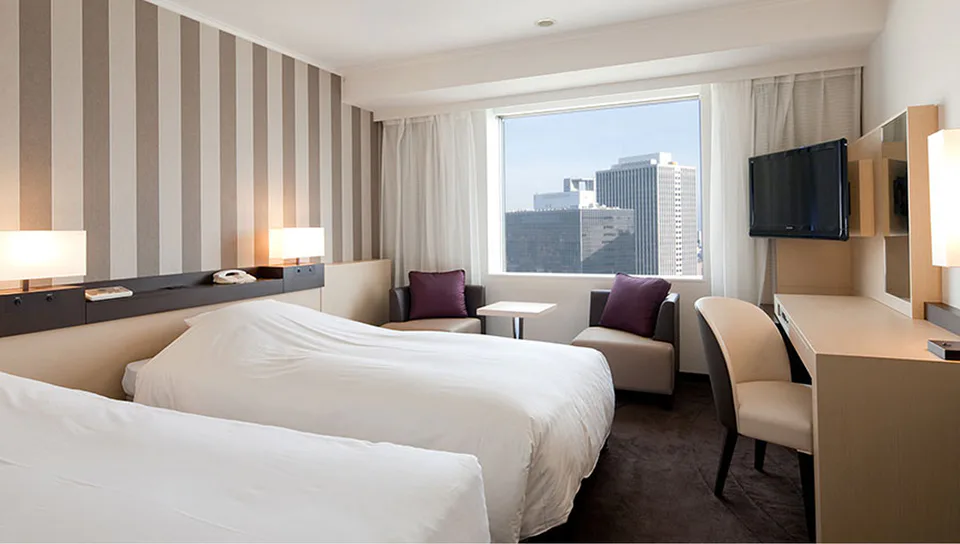
Hotel Granvia Osaka. Direct station access is most valuable when the same JR departure and return pattern repeats several days in a row.
Verify Hotel Granvia Osaka rooms for your dates
Near JR Osaka Station without needing the station-top answer: Hotel Hankyu RESPIRE OSAKA
Hankyu RESPIRE sits in a useful middle ground. The official route from JR Osaka Station Bridge Exit is about three minutes, so the station leg remains short, but the hotel experience is very different from Granvia: the lobby is on the ninth floor and the building is a large high-rise operation. If you like the location but dislike the idea of paying purely for the shortest possible station connection, this is often the more balanced comparison.
It is also useful when your Kansai days are not exclusively JR. Hankyu Osaka-Umeda serves both the Kyoto and Kobe lines, so some itineraries to Kyoto-Kawaramachi or Kobe-Sannomiya may make Umeda useful even when JR is not your only railway. The detailed hotel trade-offs are in the Hankyu RESPIRE Osaka Station guide.
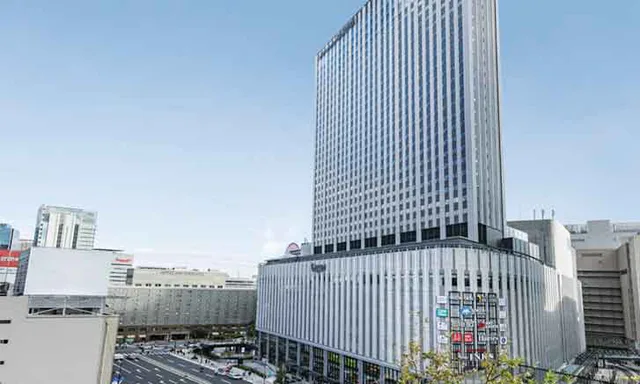
Hotel Hankyu RESPIRE OSAKA. The practical question is whether a roughly three-minute station walk is short enough without needing a station-connected hotel.
Verify Hotel Hankyu RESPIRE OSAKA rooms for your dates
If you come back early enough to recover at the hotel: Hotel Intergate Osaka Umeda
Intergate only makes sense as the “better hotel day” answer if you will use what you are paying for. Its official access is about five minutes from JR Osaka Station, and that is clearly more walking than Granvia or the Bridge Exit route to RESPIRE. In return, you get a hotel where the lounge schedule and public bath can become part of your recovery routine after a day trip.
This is why your return time matters. If you are back in Umeda around dinner time, have a drink, use the bath and wind down early, the hotel is doing more than providing a bed. If you return at 11 p.m. after eating in Namba every night, the amenity premium can become theoretical.
Before paying for that trade-off, check the actual lounge and bath rhythm in the Hotel Intergate Osaka Umeda guide.
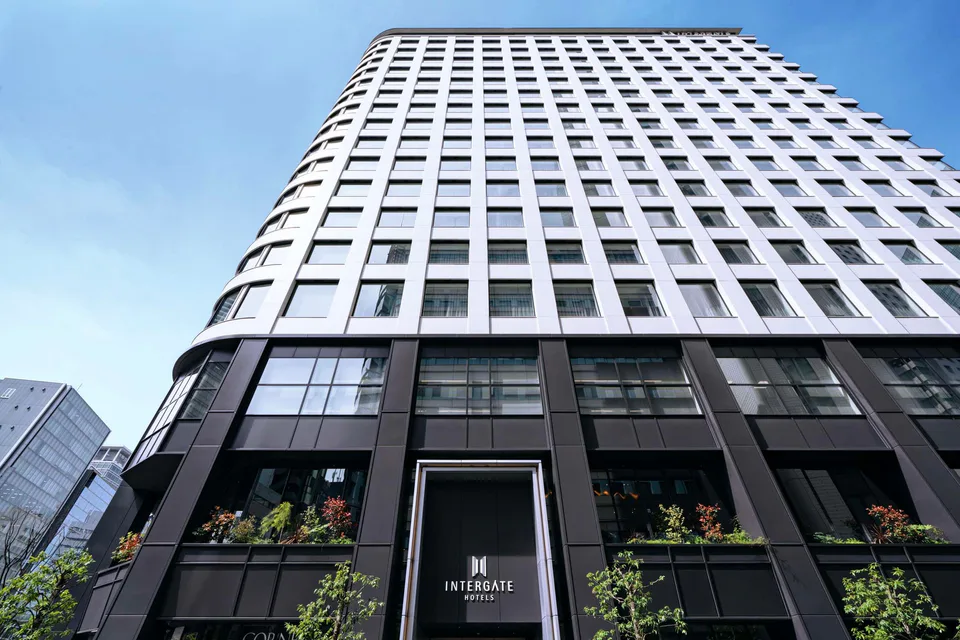
Hotel Intergate Osaka Umeda. Its value rises when you return early enough to use the hotel rather than only sleep there.
Verify Hotel Intergate Osaka Umeda rooms for your dates
If room comfort matters more than shaving the final two minutes: Hotel Vischio Osaka
Vischio is about a five-minute walk north of JR Osaka Station. On paper that sounds only slightly farther than RESPIRE, but the difference is repeated every departure and every return. The reason to accept it is room comfort. If you are staying four or five nights and want a room that feels easier with two suitcases, a larger twin can be worth more than reducing the last few minutes to the absolute minimum.
The calculation changes with mobility. Two adults who walk quickly may barely notice the difference. Parents, a stroller, older travelers or multiple large cases can turn the same five-minute route into the part of the day everyone remembers.
The Hotel Vischio Osaka room guide is useful if you are deciding whether the larger twin categories justify that repeated walk.
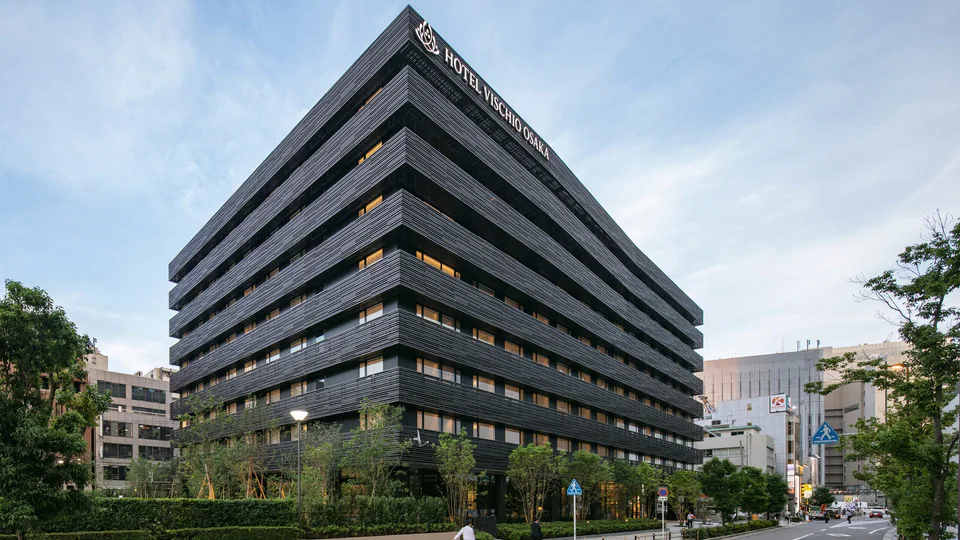
Hotel Vischio Osaka. The extra station walk can be a fair trade when the room itself is more comfortable for a multi-night base.
Verify Hotel Vischio Osaka rooms for your dates
Do not turn “I am going to Kyoto” into “I must stay in Umeda”
One Kyoto day is not a hotel strategy. If you spend five nights in Osaka, go to Kyoto once, then spend the other evenings in Dotonbori, Shinsaibashi and around Namba, moving the whole trip north just to make one morning easier can create more total movement than it removes. The Osaka Station advantage becomes convincing when the station is used repeatedly, not when Kyoto merely appears somewhere in the itinerary.
If the broader question is whether Kyoto itself deserves part of the trip, compare the logic in Kyoto vs Osaka for first-time visitors.
Count Osaka Station uses, not destination names
A simple way to avoid overthinking is to count station uses. Three external day trips can mean six meaningful station legs: three departures and three tired returns. Add an airport or Shinkansen day and the number rises again. By contrast, one Kyoto day gives you only two repeated station legs. That is why the number of destinations in a list is less useful than the number of mornings and evenings that pass through the same hub.
This method also exposes fake “centrality.” A hotel can be geographically central while being operationally inconvenient for the exact trains you keep taking. Your real centre is the node you use most.
JR vs Hankyu can change which side of Umeda feels convenient
Kyoto and Kobe are not one transport problem. JR Osaka Station is excellent when Kyoto Station, Sannomiya or Himeji sit naturally on your plan. Hankyu Osaka-Umeda can be more useful when Kyoto-Kawaramachi or Hankyu Kobe-Sannomiya fit the day better. The hotel decision therefore starts one level below “Kyoto day trip”: which station in the destination are you actually trying to reach?
This is also why a hotel near the north side of Osaka Station can feel different from one closer to the west or south side. The map distance is only the first layer; your gate, railway and evening route matter too.
Kyoto Station and Kyoto-Kawaramachi are different hotel problems
If your Kyoto day is built around Kyoto Station, Fushimi Inari connections or a route that naturally begins on JR, direct access to JR Osaka Station is valuable. If your day is mainly Gion, Shijo and central shopping streets, Hankyu to Kyoto-Kawaramachi may fit better. A traveler who says “I am going to Kyoto three times” can therefore have three different best departure patterns depending on the actual neighborhoods.
Do this planning before booking the hotel. Otherwise you can pay a premium to be close to the wrong railway for the days that matter most.
Kobe is easier, but the same station logic still applies
From Osaka, Kobe is close enough that people often stop thinking about the last mile. That is a mistake on consecutive travel days. If Sannomiya is the centre of your Kobe day, JR and Hankyu both give you practical options from the Umeda area. What matters is which terminal lines up with your hotel, your dinner plan and the route you will use again the following morning.
For an example of how Kobe fits into a longer Osaka-based itinerary, see the Osaka, Kobe and Koyasan four-day itinerary.
Early departures magnify the last five minutes
A five-minute hotel-to-station difference is not equally important at 9:30 a.m. and 6:45 a.m. If you are trying to reach Kyoto early for Higashiyama or Arashiyama before the busiest part of the day, the morning buffer matters more. You are less willing to spend ten minutes navigating an unfamiliar hotel exit when the whole point of waking early was to buy quiet time at the destination.
If your normal travel style is a slow breakfast and a 9:30 departure, do not pay an aggressive station premium for a schedule you will never follow.
Your return time decides whether hotel amenities are real value or decoration
After a Kyoto or Kobe day, some travelers come back to Osaka at seven and stop. Others arrive at seven and start a second evening in Umeda or Namba. Those are completely different hotel use cases. A lounge, public bath or larger room can be worth paying for when you actually spend the late evening in the hotel. It is wasted when the hotel is only where you collapse at midnight.
Use your third most tiring day as the test, not your energetic first day. The hotel should work when your feet hurt and nobody wants an extra decision.
Dinner after the day trip is a hidden second commute
“Back in Osaka” does not always mean “back at the hotel.” If you return from Kyoto to Osaka Station and then go to Namba for dinner, the station-to-hotel advantage may disappear because you have created another cross-city movement. If most of your dinners are around Umeda, the Osaka Station base closes the day neatly. If most nights end in Shinsaibashi or Dotonbori, south Osaka keeps pulling the centre of gravity back down.
This is the point where the first-time Osaka area guide becomes more useful than a hotel ranking.
Treat luggage days as a separate calculation
Your repeated Kyoto and Kobe days usually happen after the suitcase is already in the room. Arrival and departure days are different. Two large cases, a stroller or a tired parent magnify station navigation in ways that a light daypack does not. Do not use one awkward KIX arrival to erase the convenience of three easy day trips, but do not ignore the luggage leg either.
If the last day includes a day trip before collecting bags and continuing to the airport or Shinkansen, luggage storage and the final pickup route can matter more than the normal morning commute.
With parents or children, test the hardest evening, not the average one
Families and older travelers have less predictable energy. The right hotel is the one that still feels manageable after the longest day. Imagine returning at 9 p.m. from Kyoto in rain, with a sleeping child or a parent whose knees are finished for the day. If an extra transfer plus a ten-minute walk sounds unacceptable in that scenario, a closer Osaka Station base has real value even if the map difference looked small at home.
Three consecutive day trips create recovery cost, not just transport cost
On the first day, almost any route feels fine. By the third consecutive Kyoto, Kobe or Himeji day, the hidden costs show up: buying dinner, repacking the day bag, charging devices, drying umbrellas and deciding what time to leave again. A slightly longer hotel walk can still be worth it if the room or bath helps recovery. But if you return only to sleep, the smarter move is usually to reduce the final leg.
For a five-to-seven-night stay, room comfort cannot lose every tie to station distance
Transport is repeated every day, but the room is repeated every night. If a smaller room makes two suitcases impossible to leave open, or the bathroom layout creates a daily queue, you can give back the time saved at the station inside the room. The best base is usually not the closest hotel at any price; it is the closest hotel inside the room-comfort threshold you can live with for the whole stay.
If your Osaka trip is five to seven nights, pair this decision with the Osaka long-stay hotel guide.
When you should not stay in Umeda
Do not choose Umeda just because it sounds efficient. If only one or two days leave Osaka, while most evenings are in Namba, Shinsaibashi or around USJ, you can easily spend more total time repositioning every night than you save on those few day-trip mornings. Umeda becomes strongest when the external travel pattern is the majority or when your evenings also naturally end in the north.
A split stay only works when it removes a clear block of repeated friction
Moving hotels is not a free optimisation. You pack, check out, store bags, lose access to the room for part of the day and unpack again. A split stay can make sense when the trip has a clean block: for example, three consecutive JR-heavy day trips followed by several nights focused on Namba or USJ. It makes less sense to move after every destination just to save one train ride.
The test is simple: does the move delete several repeated trips, or does it only shift the inconvenience from the train to your suitcase?
A practical formula: multiply the last mile by the number of times you will actually walk it
Instead of asking whether a hotel is “worth” a station premium, count the real repetitions. If Hotel A removes five minutes each way and you will use that route eight times, that is forty minutes of low-value walking removed before you even consider rain, luggage or fatigue. If the route appears only twice, the same price premium is much harder to justify.
Then add the room trade-off. If the farther hotel gives you a meaningfully better bed, bathroom or recovery space every night, that benefit also repeats. The decision is repeated transport friction versus repeated room comfort—not one isolated number.
Final verdict: day trips are not the reason to stay by Osaka Station; repeated Osaka Station use is
If Kyoto, Kobe and Himeji keep sending you through Osaka Station on three or more days, the Umeda base becomes operationally strong. Granvia is the transport-first choice; Hankyu RESPIRE is the short-walk middle ground; Intergate works when you will use its recovery amenities; Vischio is for travelers willing to walk a little more for room comfort. If external trips are a minority and your nights belong to Namba or USJ, keep the base where most of the trip actually happens.
For the final hotel-level comparison around the station, continue with Granvia vs Hankyu RESPIRE vs Intergate. If Nara is one of the excursions, also check whether Nara works better from Kyoto or Osaka.
Osaka Long-Stay Hotels for 5–7 Nights: Laundry, Kitchens and When Not to Change Areas
Osaka Solo Travel Itinerary: 7 Days of USJ, Kyoto and Kobe — Without Filling Every Hour
Things to Do in Kyoto: 1-, 2- and 3-Day Itineraries for First-Time Visitors
Hotel Hankyu RESPIRE OSAKA vs CANDEO HOTELS Osaka The Tower: Osaka Station or 31F SkySpa?
Sources
Hotel Granvia Osaka — official access · Hotel Hankyu RESPIRE OSAKA — official access · Hotel Intergate Osaka Umeda — official facilities/access · Hotel Vischio Osaka — official access · Hankyu Osaka-Umeda station — official lines and timetable
Walking times and rail timings are practical planning estimates and can change with station gates, platform choice, crowds, luggage and timetable revisions. Verify the route you will actually use for your travel dates.