
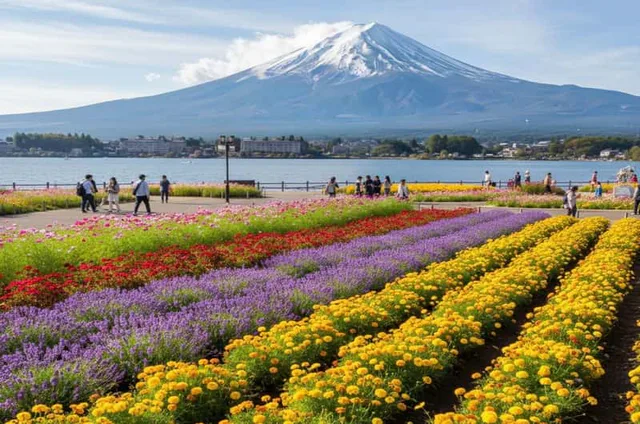
A Mount Fuji day trip from Tokyo can make a complicated day easier, but it cannot sell you clear skies. The classic guided route currently compresses Lake Kawaguchi, Arakurayama Sengen Park, Oshino Hakkai and the Fuji 5th Station into roughly ten hours, while the Fuji-and-Hakone option adds the Hakone Ropeway, Lake Ashi and a train return from Odawara. The first is the cleaner choice if you mainly want Fuji-area highlights. The second earns its higher price when Hakone is already on your wish list and you value a faster return to Tokyo. If the photograph matters more than the itinerary, an overnight stay is often the better decision.
30-second decision: buy the transport plan, not a promise of Mount Fuji
Choose the classic Fuji highlights tour when this is your one day outside Tokyo and you want several familiar viewpoints without managing buses and transfers yourself. Choose the Fuji + Hakone route when you genuinely want both regions in one day and would otherwise spend another day reaching Hakone. Skip both when your main goal is sunrise, sunset, reflections on Lake Kawaguchi or a specific cloud-free photograph. Weather decides those outcomes; the tour only decides where you stand when the weather happens.
This matters even more if you are still deciding how much time Tokyo itself needs. A first trip with only three full city days can make any long day trip expensive in opportunity cost, so compare it against how many days first-time visitors actually need in Tokyo before treating Mount Fuji as an automatic add-on.
The classic route works because it removes transfers — not because every stop is equally valuable
The current classic product is a full-day coach trip with English and Chinese guiding. Its listed itinerary includes Oishi Park at Lake Kawaguchi, Arakurayama Sengen Park and Chureito Pagoda, Oshino Hakkai and the Mount Fuji 5th Station. That is a useful bundle for a first-time visitor because these places are spread across the Fuji Five Lakes area and are awkward to combine efficiently with public transport in one day.
The hidden trade-off is stop time. A guided bus gives you transport certainty but reduces control over light, weather and how long you stay at each viewpoint. Arakurayama, for example, is not simply a coach-door photo stop; the viewpoint requires walking and the famous composition only matters if visibility cooperates. A tour is therefore strongest when your goal is coverage, not when one photograph is worth sacrificing the rest of the day for.
The biggest risk is not cancellation — it is completing the whole itinerary without the view you came for
The current product page explicitly says panoramic Mount Fuji views are not guaranteed. It also warns that flower seasons and weekends can bring heavy congestion and that the return to Tokyo may be delayed by two to three hours. If weather or road conditions close the route to the 5th Station, the stop can move to a lower station or another Fuji-area location.
That changes how you should schedule the day. Do not put a fixed-price dinner, airport transfer or hard-to-rebook evening ticket immediately after the expected return. A ten-hour advertised duration is not the same thing as a ten-hour maximum. Traffic is part of the product risk.
If your Tokyo hotel is still flexible, departure logistics also matter. Many Fuji tours start around Shinjuku or Tokyo Station, so Tokyo Station vs Shinjuku as a base can save a much more annoying early-morning cross-city transfer than any small ticket-price difference.
Check current dates for the classic Mount Fuji highlights route
Paying more for Fuji + Hakone makes sense only if Hakone is a real destination, not a bonus word in the title
The Fuji + Hakone product currently runs for about ten hours and uses several transport modes in sequence: coach to the Mount Fuji 5th Station, then Hakone Ropeway, a Lake Ashi cruise, transfer to Odawara and a train ride that finishes at Tokyo Station. That is a very different purchase from a Fuji-only sightseeing loop.
Its strongest value is geographic compression. Doing Mount Fuji and Hakone independently in one day requires coordinating separate transport systems across two tourism regions. The guided product converts that complexity into one chain and uses rail for the final return. If Hakone would otherwise occupy a second full day, the premium can buy back an entire itinerary slot.
But if you actually want a ryokan, onsen time or the classic Hakone loop at a human pace, compressing Hakone into the back half of a Fuji tour is the wrong optimization. Compare it with one night versus two nights in Hakone instead. The overnight case is especially stronger when the ryokan itself is part of the trip rather than just a bed.
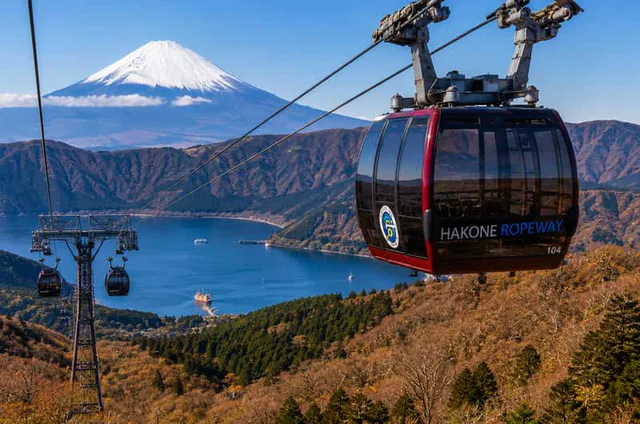
Things to do near Mount Fuji should not be treated as interchangeable photo stops
English searches for things to do near Mount Fuji often collapse very different experiences into one list. Lake Kawaguchi is useful for open lake-and-mountain compositions and seasonal flowers. Arakurayama is about the pagoda-and-Fuji composition but asks more of your legs. Oshino Hakkai is a village-and-spring stop rather than a pure mountain viewpoint. The 5th Station gets you physically closer to the mountain but can be inaccessible or less rewarding when weather closes higher roads.
That is why adding more stops is not automatically an upgrade. If your priority is to see several faces of the Fuji area, variety helps. If your priority is one clean photograph, more stops can simply mean more time moving between cloudy viewpoints.
The overnight option wins the moment weather flexibility matters more than transport efficiency
A day tour gives you one weather window. An overnight gives you at least two: arrival afternoon and next morning, sometimes with a sunset and sunrise in between. That does not guarantee clear skies, but it increases the number of chances without forcing you to return to Tokyo before the day is over.
This is why a longer first Japan trip changes the answer. In a 10-, 12- or 14-day first-Japan itinerary, the 12-day version is where an overnight in Hakone or Kawaguchiko starts to fit without stripping too much time from Tokyo and Kansai.
For photographers, couples who want a slower lake stay, or anyone visiting during a season when morning visibility matters, one night can be a better use of money than upgrading from a basic coach tour to a more elaborate day tour.
NO-GO: these travelers should not book a Mount Fuji day tour yet
Do not book yet if you have a flight or non-refundable evening event soon after the expected return, if mobility makes stairs and viewpoint walking difficult, or if your only acceptable outcome is a clear Mount Fuji photograph. Also pause if your Tokyo trip is so short that this day would replace the neighborhoods you actually came to see.
For first-time visitors who have not even chosen a Tokyo base, start with where to stay in Tokyo for first-time visitors. A Fuji excursion is easier to fit once you know whether your mornings start in Shinjuku, Tokyo Station, Ueno, Ginza or somewhere else.
When the Fuji + Hakone route is too compressed, split the problem instead of buying a bigger tour
There is a simple alternative: give Mount Fuji one day and Hakone another trip or overnight. This costs more time, but it restores control. In Hakone, you can decide whether to prioritize the ropeway, Lake Ashi, an onsen or a museum rather than taking the fixed sequence that comes with a combined tour.
If the museum matters, Hakone Open-Air Museum needs more time than its last-entry time suggests. If a ryokan is the anchor, the better planning question is whether to do the Hakone loop before check-in or after checkout. Both are better decisions than adding Hakone simply because the combined product appears more comprehensive.
Price is the wrong comparison until you decide what a successful day looks like
A cheaper Fuji highlights bus can be better value than a more expensive combined route when your success condition is simply seeing the Fuji Five Lakes area with minimal logistics. The combined route becomes better value when Hakone would otherwise consume another day and the train return matters to your schedule. Neither is good value when your success condition is weather-dependent photography and you are unwilling to accept a cloudy day.
Check the exact option before payment. Meeting points, lunch inclusions, language, cancellation rules and seasonal substitutes can differ by date or option. The classic product currently allows free cancellation up to 24 hours before departure, and the Fuji + Hakone product also currently displays a 24-hour free-cancellation condition, but the booking screen for your date is the final source of truth.
Compare the current Fuji + Hakone route and train-return options
Final verdict: choose coverage, compression or weather flexibility — you cannot maximize all three in one day
Choose the classic Mount Fuji day trip from Tokyo when you want broad Fuji-area coverage and the least transfer planning. Choose Fuji + Hakone when both destinations matter and you are deliberately paying for a more complex cross-region day with a rail return. Choose an overnight instead when the view itself is the main reason for going.
The easiest decision rule is this: if missing Mount Fuji behind clouds would still leave you happy with the lakes, village, 5th Station or Hakone experience, a day tour is a sensible purchase. If clouds would make the day feel wasted, do not buy a more expensive tour hoping price will fix the weather. Buy more time instead.
Next decision|Work out whether Tokyo still has room for a full-day trip
FAQ
Is a Mount Fuji day trip from Tokyo worth it?
Yes when you want several Fuji-area stops without managing separate buses and transfers. It is less compelling when photography is the priority and you need multiple weather windows.
Does a Mount Fuji tour guarantee a clear view?
No. Current tour information explicitly says visibility depends on weather and panoramic views are not guaranteed.
Should I choose Mount Fuji only or Mount Fuji + Hakone?
Choose Fuji only for a cleaner sightseeing day around the Fuji Five Lakes area. Choose Fuji + Hakone when Hakone is already a real priority and the combined transport chain saves you from spending another day there.