
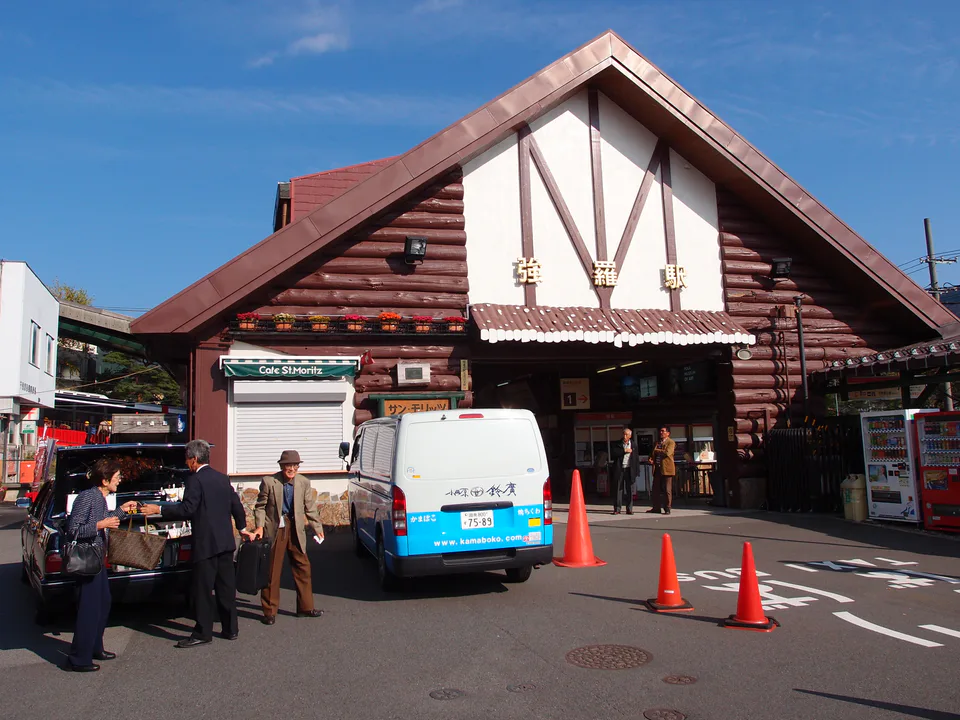
For most one-night Hakone ryokan stays with dinner included, do the main loop before check-in only when you can reach Hakone early enough to finish with a real dinner buffer. If you arrive late from Kyoto, Osaka or a long-haul travel day, protect the ryokan evening instead: check in, use the onsen, eat dinner and move the loop to the next morning.
The wrong question is “before check-in or after checkout?” in isolation. The useful question is which side of the hotel night has the safer daylight, luggage plan and onward-travel margin? A Gora ryokan, a Lake Ashi ryokan and a Hakone-Yumoto ryokan can produce three different answers even with the same train from Tokyo.
ValueNavi order matrix: which side of the night should carry the loop?
↔ Scroll table left or right
Trip shape | Default order | Why | When I would reverse it |
Tokyo → Hakone → Tokyo | Mostly before check-in | You can arrive early and keep the next morning relaxed | Late arrival, bad weather or the ryokan itself is the main priority |
Tokyo → Hakone → Kyoto / Osaka | Before check-in if arrival is early | It protects checkout day for the long westbound transfer | You cannot reach Hakone early enough to keep dinner safe |
Kyoto / Osaka → Hakone → Tokyo | Often after checkout | The inbound day already contains a long intercity transfer | You deliberately leave Kansai very early and reach Hakone before lunch |
Ryokan near Gora / central loop | Before check-in is efficient | The loop can finish close to the hotel instead of forcing a long return | Dinner is early or arrival slips into mid-afternoon |
Ryokan by Lake Ashi | Direction matters more than “before/after” | Finishing at the lake can turn sightseeing into the hotel transfer | Your onward route next day makes the opposite direction cleaner |
Hakone-Yumoto ryokan | Before check-in only with a strong time margin | A full loop still has to return down to Yumoto before dinner | Late start, road congestion or weather reduces the margin |
The real hard stop is the ropeway-and-dinner combination
Hakone is not an all-night urban transport network. Hakone Ropeway currently lists operating hours of 09:00–17:00 from February through November and 09:00–16:15 from December through January. Service can also be suspended for bad weather or maintenance. That makes a mid-afternoon start fragile even when the final official closing time looks comfortable.
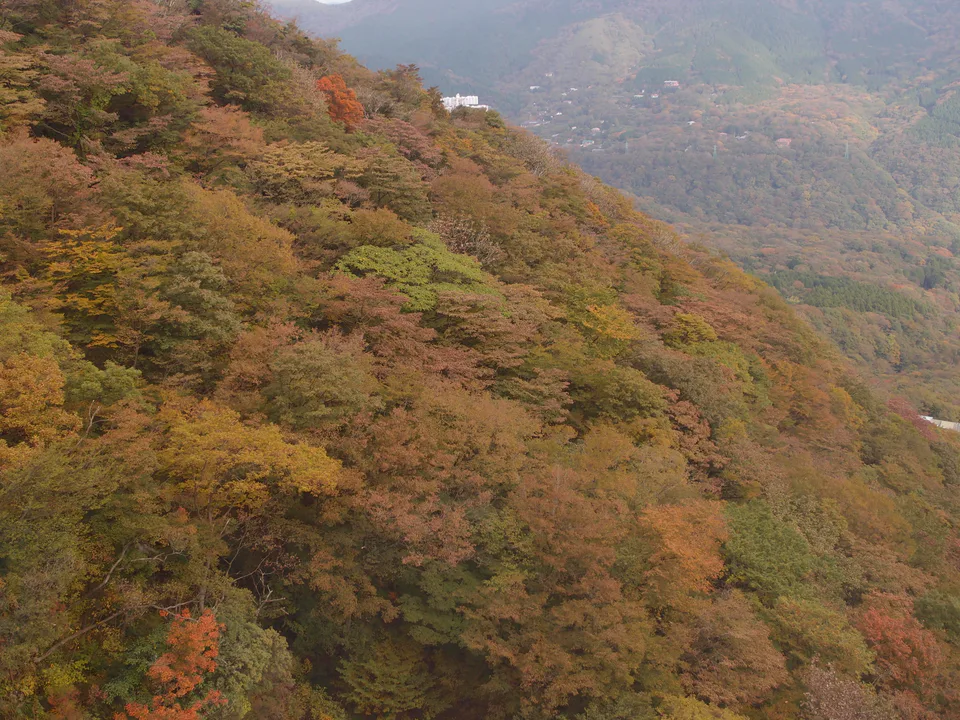
Hakone Ropeway between Sounzan and Owakudani. Photo: Guilhem Vellut / Wikimedia Commons, CC BY 2.0.
The key is that “ropeway still operating” is not the same as “you can still finish the loop and reach dinner.” After Owakudani you may still have the ropeway to Togendai, the Lake Ashi cruise, walking, a bus and the final hotel transfer. A ryokan dinner is usually a much less flexible deadline than a city restaurant reservation.
ValueNavi dinner-buffer rule: work backwards, not forwards
This is an editorial planning rule, not an official hotel policy: start from the time you must be at the ryokan and work backwards. If dinner is fixed, I would normally want to be at the property roughly 60–90 minutes beforehand when check-in, room orientation, bathing or luggage retrieval still has to happen. The exact buffer depends on the hotel and dinner arrangement, so confirm your property’s latest acceptable arrival time.
↔ Scroll table left or right
If dinner / required arrival is... | What the loop should do | Why |
Early evening and hotel is in Gora | Finish the mountain section early and let Gora be the final zone | You avoid paying for the whole loop with a late cross-Hakone return |
Early evening and hotel is in Yumoto | Cut the lake/shrine section sooner than you think | The final bus or rail descent is still part of the sightseeing day |
Lake Ashi hotel | Build the route to finish at the lake | The sightseeing endpoint becomes the hotel-transfer endpoint |
Arrival day already delayed | Stop trying to “complete” the loop | Protecting dinner and the ryokan is worth more than one extra attraction |
The official sample day shows how quickly the afternoon disappears
Hakone Navi’s current first-trip model route is useful as a reality check. It reaches Owakudani around 12:55, the Lake Ashi sightseeing cruise around 14:20 and Hakone Shrine around 15:40. It then notes that the bus from Moto-Hakone toward Hakone-Yumoto takes about 40 minutes and can be delayed by evening road congestion.
That is why “I will do Owakudani, the cruise and the shrine before a 18:00 dinner” can be a bad plan even though each attraction sounds close on a map. The hidden time cost is everything after the last attraction. You still need to move from sightseeing endpoint to hotel, check in and be ready for the meal.
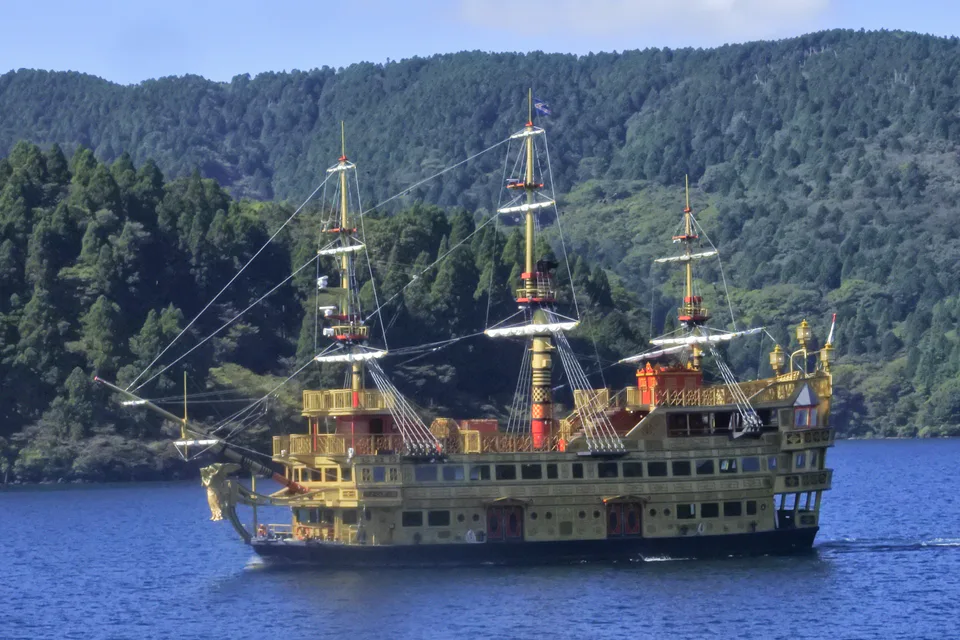
Lake Ashi sightseeing cruise. Photo: T. Hanami / Wikimedia Commons, CC0.
Luggage can decide whether “before check-in” is elegant or miserable
The before-check-in strategy works much better without a full-size suitcase. Hakone-Yumoto’s official luggage transport service accepts bags for participating accommodation from 08:30 to 12:00 and delivers them after 15:00. That is a clean fit for an early arrival: hand over the case, sightsee with a day bag, then reunite with the luggage at the ryokan.
If you arrive after noon, that same plan changes. Carrying a large suitcase through the Tozan Railway, cable car, ropeway, cruise and buses can turn a technically possible loop into a poor travel day. At that point I would use storage, go to the hotel first, or move the loop to the next day rather than treat hands-free sightseeing as something you can improvise later.
For a Tokyo–Kawaguchiko–Hakone route, the larger luggage strategy matters even more. Use Luggage Forwarding for Kawaguchiko and Hakone before deciding to bring the main suitcase through every transfer.
When after-checkout is the better order
Moving the loop to checkout day is strongest when arrival day is already expensive in time: Kyoto or Osaka to Hakone, an airport arrival, a delayed train, or a trip where the ryokan itself is the main purchase. In those cases, forcing sightseeing onto day one risks sacrificing the part of Hakone you cannot recreate later—the dinner, onsen and quiet evening.
The trade-off moves to the other end. A checkout-day loop must still leave enough time for your next city. If the next hotel is in Tokyo, this is usually manageable. If you still need to reach Kyoto or Osaka, every extra hour at Lake Ashi becomes part of an intercity transfer day.
This is why the “best” order changes by direction. A long-haul visitor doing Tokyo → Hakone → Kyoto often benefits from using the arrival day for the loop and preserving the next day for the Shinkansen. The reverse Kyoto → Hakone → Tokyo itinerary can rationally protect the ryokan first and sightsee after checkout.
Reverse the loop when the hotel location tells you to
There is no rule that the classic loop must always run Yumoto → Gora → Owakudani → Togendai → Lake Ashi. Hakone Navi itself publishes reverse-direction itineraries. The practical purpose of reversing is to make the final sightseeing zone line up with the hotel or onward journey.
If the ryokan is by Lake Ashi, finishing at the lake before dinner can be far more resilient than completing the full circuit and then travelling back across Hakone. If the hotel is in Gora, a route that finishes on the Gora side may protect more ryokan time. The loop is a transport pattern, not a checklist.
Weather is allowed to cancel the loop
The ropeway can suspend in adverse weather, and other modes can also be affected by operating conditions or road congestion. On a one-night stay, that should not turn into a failed trip. The ryokan, onsen and one smaller area can still justify Hakone even when the complete circuit is not available.
ValueNavi failure rule: if one broken transport link forces you to risk dinner, a long onward transfer or carrying luggage through the mountains, stop trying to preserve the original loop. Rebuild the day around the operating network that still exists.
Four common one-night failure modes
1. Starting the loop at 15:00 because the ropeway closes at 17:00. The last ropeway movement is not the same thing as finishing the whole itinerary.
2. Treating hotel check-in as the deadline instead of dinner. A fixed meal can be the real non-negotiable time.
3. Carrying the main suitcase because the hotel is “on the way.” Repeated transfers make the bag cost much more time than the map suggests.
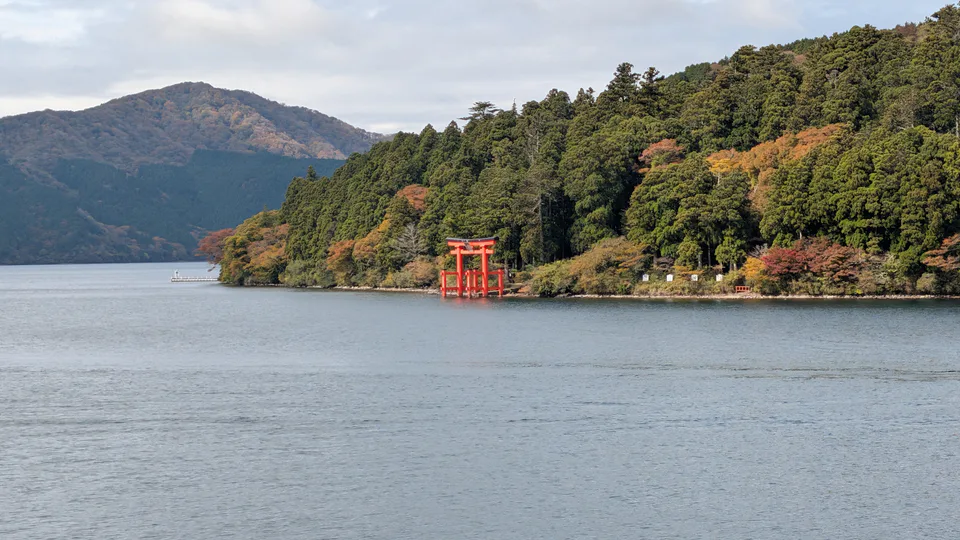
4. Completing every attraction after the time margin has gone. Skipping one stop is cheaper than ruining a premium ryokan evening or missing the onward train.
Final verdict: protect the least replaceable part of the trip
Do the main loop before check-in when you can reach Hakone by late morning or around lunch, remove the luggage and finish near the ryokan with a genuine dinner buffer. This is especially strong for Tokyo → Hakone → Kyoto/Osaka because it protects checkout day for the long transfer.
Do the loop after checkout when arrival is late, the ryokan is the main reason for visiting, or your inbound journey is already tiring. This is often the cleaner logic for Kyoto/Osaka → Hakone → Tokyo.
The red-team condition is simple: if your “efficient” before-check-in plan only works when every connection is perfect, the weather cooperates and you skip all buffer, it is not efficient. It is fragile. In Hakone, the better order is the one that keeps the ryokan, luggage and onward journey resilient even when one part of the loop slips.
Related planning
Hakone 1 Night or 2 Nights · Tokyo to Hakone · Where to Stay in Hakone
Sources
Hakone Ropeway official operating hours
Hakone Navi first-trip one-day model route
Hakone Luggage Transport Service
Hakone Navi reverse-direction model route
Operating hours, weather disruptions, road congestion and ryokan meal times can change. Recheck the official transport status and your accommodation’s latest arrival requirements for the travel date.