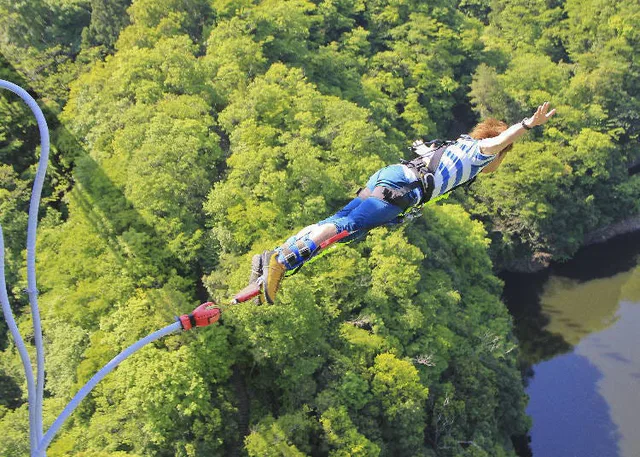
Ryujin Bungy is worth a full Tokyo day only when the 100 m jump itself is a trip priority. The current first-jump price is JPY 19,000 and Bungy Japan now explicitly includes GoPro rental and the data with the jump. A Tokyo day tour normally solves a different problem: long-distance transport, meeting logistics and an Ibaraki sightseeing route. Do not pay a tour premium believing it makes the jump cheaper or more complete unless the exact product explicitly includes the Bungy Japan fee.
The biggest hidden cost is not the JPY 19,000 ticket. It is committing most of a day to Ibaraki, then accepting that weather or river conditions can still cancel the jump without reimbursing your travel, hotel or rental-car costs. Build the day so that the trip still has value if the jump is called off.
↔ Scroll table left or right
Your situation | Start with | Why |
Ryujin 100 m jump is the whole reason for the day | Book Bungy Japan first, then solve transport | The activity is the hard constraint |
You drive and only care about the jump | DIY | You avoid paying for sightseeing stops and tour logistics you do not need |
No car and rural transport planning is a burden | Compare a Tokyo full-day tour | The premium buys transport resilience, not a higher jump |
You only want “a bungee jump in Japan” | Compare other Bungy Japan sites | Ryujin is no longer the operator’s tallest site; Gifu is 215 m |
Your Tokyo trip has only 3–4 full days | Use a strict opportunity-cost test | Ryujin consumes a scarce city day rather than a spare half-day |
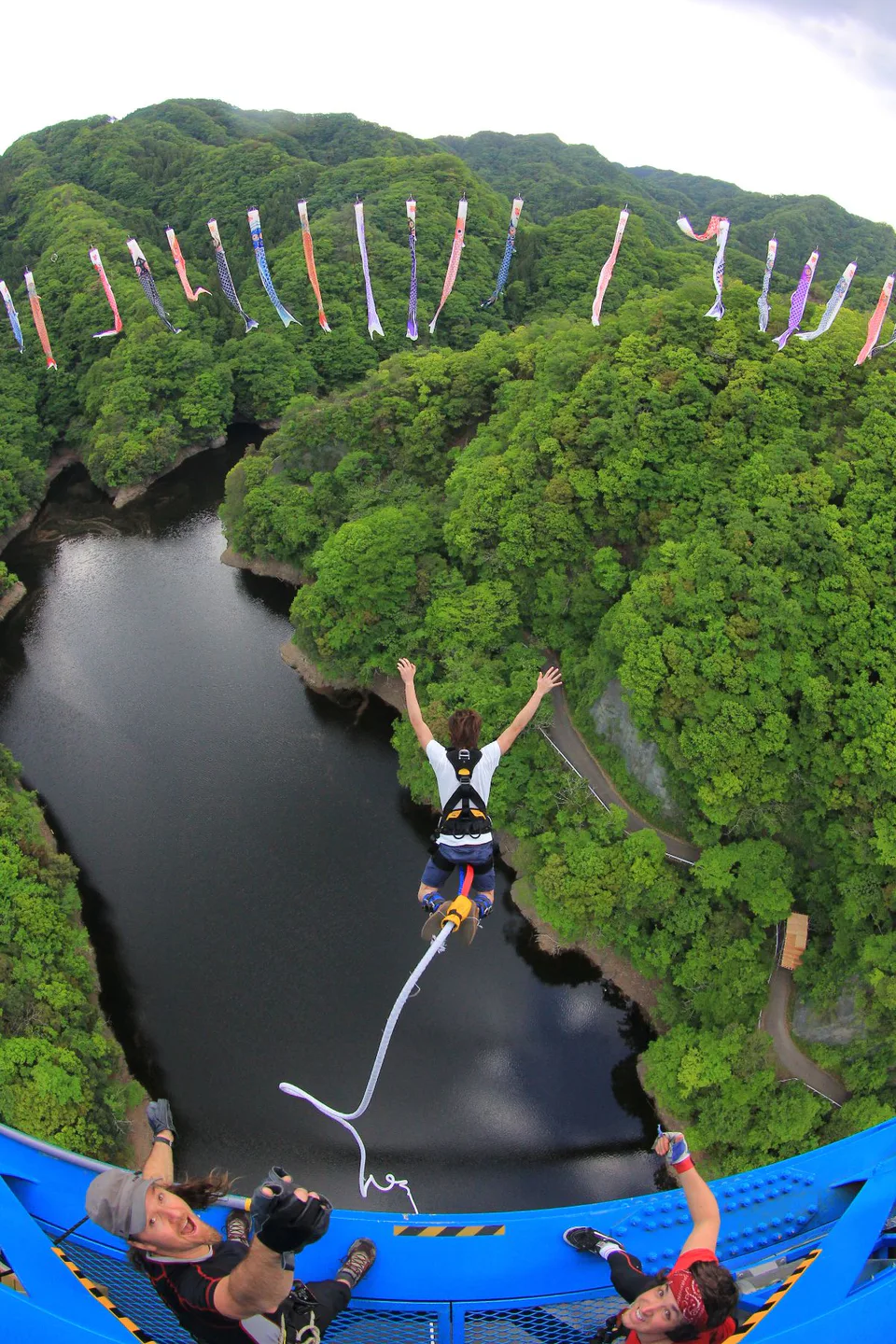
What JPY 19,000 actually buys in 2026
Bungy Japan currently lists Ryujin at JPY 19,000 for a first jump, JPY 8,000 for a second jump on the same day and JPY 11,000 for a repeat jump on a future visit when the required certificate and identification conditions are met. The current Ryujin page also states that GoPro rental and the data are included.
That matters when comparing total value. Do not add a fictional photography package to the cost unless the operator changes its terms. Conversely, do not assume a Tokyo tour includes the JPY 19,000 simply because the itinerary stops at Ryujin Suspension Bridge. Treat the tour and the jump as two separate line items until the booking page proves otherwise.
The same-day second jump is a different marginal decision. Once you have already paid the transport cost and reached the bridge, another jump at JPY 8,000 may be more rational for a committed jumper than paying for a completely separate return trip later.
Cash is still a hard operational requirement
The current Ryujin page and booking system state that on-site payment is cash only and credit cards are not accepted. That is not a small payment-method footnote. Two first-time jumpers need JPY 38,000 for the jumps alone; four need JPY 76,000.
If a Tokyo tour has already been prepaid online, it is easy to arrive thinking the expensive part of the day has been settled. It may not have been. Carry enough yen for every jumper plus the day’s transport/food contingency. Do not make an ATM search beside a timed jump part of the itinerary.
The eligibility veto comes before transport
Current Ryujin rules require jumpers to be at least 15 years old and between 40 and 105 kg. Anyone under 18 must be accompanied by a parent or guardian or bring the operator’s required pre-signed waiver. Pregnant guests cannot jump, and Bungy Japan asks people with specified medical conditions or relevant medication to contact the operator in advance.
The operator also has a strict same-day alcohol rule: anyone who has consumed alcohol on the day cannot jump. If the bungee is the reason for the trip, do not put a drinking lunch before it.
This article cannot assess medical fitness. When a health condition is relevant, get the operator’s answer before you pay for the rural transport layer.
DIY public transport is possible; the fragility is the rural connection
Ryujin is not a Tokyo-subway attraction. The rail-and-bus route depends on reaching Hitachiota and then using a much sparser local connection toward Ryujin Suspension Bridge. Missing a central-Tokyo train is normally a few-minute problem. Missing a rural connection can re-shape the day.
That is the real value of a Tokyo-departure tour for a non-driver. You are paying to convert a chain of intercity rail + local rail/bus + meeting-time risk into one controlled group movement. If you already know how to drive in Japan or are staying in Ibaraki, that premium loses much of its purpose.
If the only reason you are considering a tour is fear of Japanese rail, compare that fear with the actual alternative. A full-day tour can be the better product, but it should win because it removes a problem you genuinely have.
Driving removes transfers, not time risk
A rental car gives you the cleanest control over the final approach, but road traffic, foliage-season congestion, parking and a navigation mistake can still consume your booking buffer. Bungy Japan asks guests to arrive around 15 minutes before the reserved time; “the car entered the parking area at the booking time” is already too late a plan.
For a self-drive day, work backward from the check-in target rather than from the jump time. Add fuel/tolls, parking movement and a proper rest after the jump before driving back toward Tokyo.
Operator cancellation and traveller cancellation are two different financial risks
This is the most important cancellation distinction.
If you cancel: Bungy Japan’s current policy charges 50% for cancellation the day before and 100% on the day. Partial cancellations are also subject to the policy.
If the operator cancels for safety: ordinary rain does not automatically stop operations, but heavy rain, storms, river rise, other disasters, maintenance or inspection can cause suspension. In that case the operator says it does not levy the jump cancellation fee — but it also explicitly says it does not reimburse travel, accommodation or rental-car expenses, even when cancellation happens after you reach the site.
This creates a ValueNavi rule: the farther you travel for a weather-sensitive activity, the more independent value the rest of the day needs. Fukuroda Falls or another Ibaraki stop can be useful insurance only if you genuinely wanted it anyway. Adding random attractions to make a cancelled jump “feel worth it” is not the same thing.
Rain is not the cancellation trigger travellers think it is
Bungy Japan says it operates in rain. The bigger triggers are conditions that make the jump or river recovery unsafe, including severe weather and sudden river-level changes. Therefore a wet forecast should not automatically make you self-cancel and trigger a fee.
Wait for the operator’s safety decision when appropriate, while keeping the rest of the day flexible. Do not schedule a non-refundable dinner, airport transfer or important show immediately after the projected Tokyo return.
Why the Tokyo tour premium can be rational
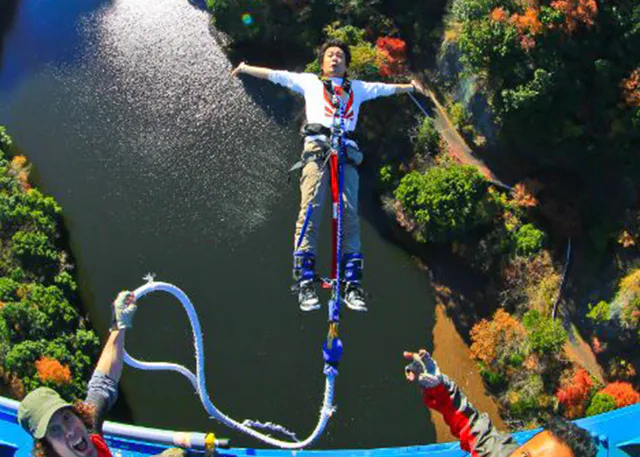
A full-day tour can make sense when three things are true at once: you do not drive, you dislike rural transport risk, and you are happy for Ryujin to consume the whole day. In that scenario, transport coordination is not filler — it is the service you are paying for.
The premium is weaker when you only want the jump and resent every fixed sightseeing stop. It is also weaker when your hotel is far from the tour’s Tokyo meeting point, because the “convenient pickup” now starts with an early cross-city commute.
If your accommodation is undecided, use Tokyo Station vs Shinjuku and Where to Stay in Tokyo for the whole trip. Do not move hotels solely to make one day-tour meeting point easier.
Do not buy Ryujin because an old article called it Japan’s highest
Ryujin is a 100 m jump and remains a major bridge-bungee experience. It is not currently Bungy Japan’s tallest site: the operator lists Gifu Bungy at 215 m. That does not reduce Ryujin’s value for a Tokyo-based traveller; it simply removes a bad reason to choose it.
If your decision is “which bungee in Japan?” compare height, route, price and where the rest of your itinerary already goes. If your decision is “should I spend one Tokyo day on Ryujin?” the 215 m site in Gifu is mostly irrelevant. The Tokyo-day opportunity cost is the correct comparison.
Who should skip Ryujin even if the jump looks amazing
You only have three full Tokyo sightseeing days and Ryujin is not a top-three Japan priority.
Your weight, age, medical situation or alcohol plan does not meet the operator’s rules.
You cannot accept losing travel costs if weather shuts the activity after you have travelled.
You hate a full rural day and only want a short adrenaline add-on.
You are choosing it solely because you believe 100 m is Japan’s current height record.
Final verdict
Book Ryujin when the 100 m jump itself deserves one of your scarce Tokyo days. Book directly and go DIY when you can handle the Ibaraki transport layer efficiently. Pay for a Tokyo tour when transport and rural timing are the problem you actually want outsourced.
Count the current JPY 19,000 jump as a defined product: GoPro rental/data are included, on-site payment remains cash only, eligibility is strict and weather cancellation does not protect your travel costs. Once those facts are separated from the tour price, the decision becomes much cleaner.
Official sources and verification
Bungy Japan — Ryujin Bungy current price, GoPro inclusion, age/weight, payment and weather rules · Bungy Japan — current conditions, cancellation and health policy · Bungy Japan — booking/check-in process and late-arrival policy.
Checked August 25, 2026. Prices, booking availability, operating times and road/public-transport conditions can change; verify the actual travel date.
Tokyo Itinerary 2026: 4, 5 or 7 Days — What Changes When You Add Disney or a Day Trip?
Tokyo Luggage Storage: Don’t Pick the Biggest Station — Pick Where You’ll Need the Bag Next
Warner Bros. Studio Tour Tokyo Tickets 2026: Buy the Time Slot Before the Upgrades
Kishiwada Danjiri October 2026: Districts, Transport and How to Plan the Day
Tokyo Attractions Map: Which Areas Actually Belong on the Same Day?