
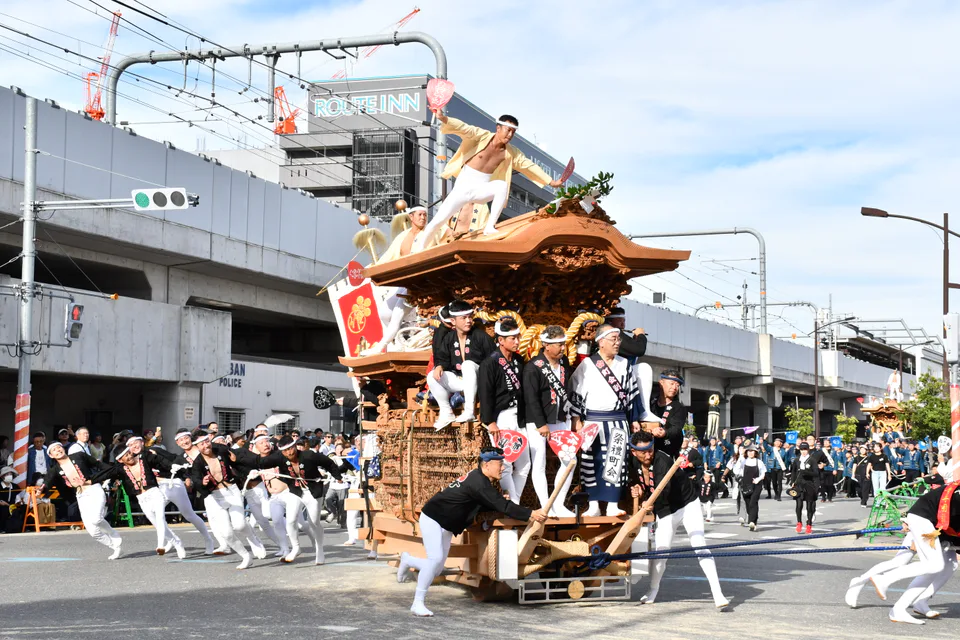
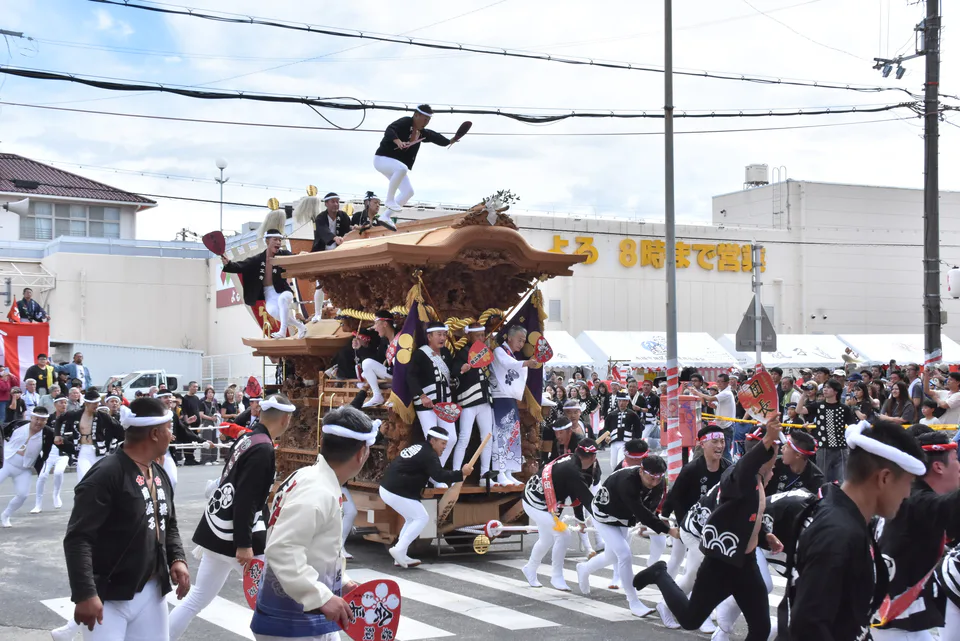
Search for Kishiwada Danjiri Festival and most English-language planning advice points you to September. That becomes a problem if your trip falls on October 10–11, 2026. The October festival is not a simple repeat of the old-town route: the action shifts to several mountain-side districts, including Higashi-Kishiwada, Minami Somori, Yagi, Yamanao, Yamanao Minami and Yamataki. Your viewing area, station and return route need to be rebuilt around the district you choose.
Osaka tourism information confirms the October 2026 festival dates. For a first visit, the key decision is not “Which corner is most famous?” but “Which district am I actually going to?” If your goal is the September Kankan-ba, Nankai Kishiwada Station and old-town experience, use the September viewing and exit guide instead. Mixing the two plans is the easiest way to arrive at the wrong transport hub.
30-second answer: for Kishiwada Danjiri October 2026, choose a district before a station
If Otsu Matsuri is also on your October 10–11 shortlist, do not treat the two festivals as a same-day double-header. Otsu is the cleaner choice for a compact Kyoto/Shiga-side day centred on hikiyama craftsmanship and karakuri; Kishiwada October is stronger when fast danjiri movement, turning action and a south-Osaka base are the reason you are travelling. Use Otsu Matsuri 2026: Lantern Night or the Main Float Parade? to choose the weekend around the experience you actually want.
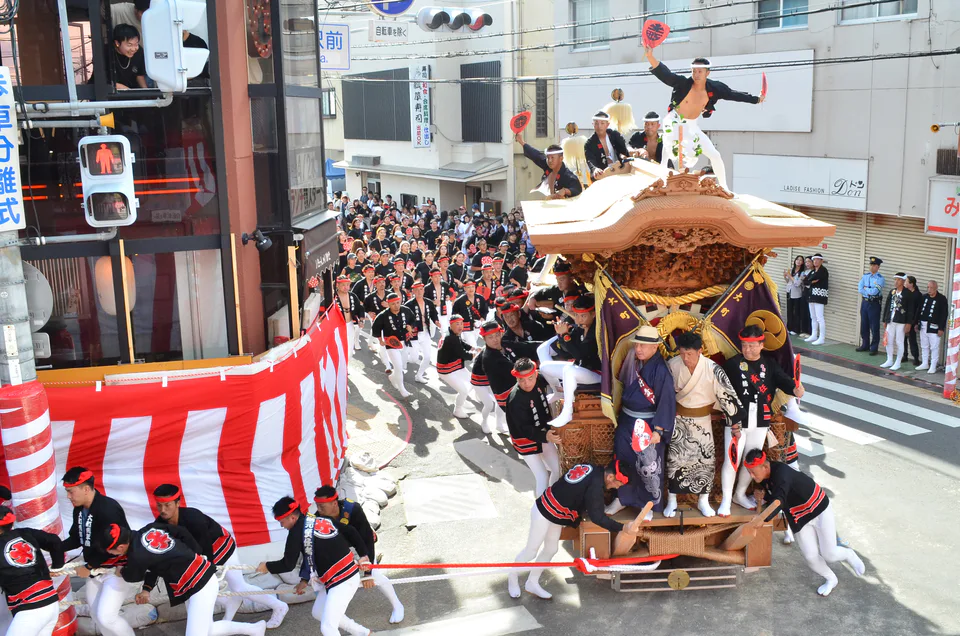
October works best for travellers already in Kansai in mid-October, visitors who do not need the iconic September old-town scene, and anyone willing to build a half-day or full-day plan around one mountain-side district. It works badly for people who only remember “Kishiwada Danjiri = Nankai Kishiwada Station” and leave the district decision until the morning of the festival.
If your priority is the classic September yarimawashi experience, paid viewing around the better-known central area and the old-town streets, October does not need to replace September. But if your dates line up with October, the October festival deserves to be treated as its own trip rather than as a consolation prize.
2026 framework: trial pull on October 4, Yoimiya on October 10, Honmiya on October 11
The confirmed 2026 framework lists the trial pull on October 4 from 13:00 to 17:00, Yoimiya on October 10 from 06:00 to 22:00 and Honmiya on October 11 from 07:00 to 22:00. Those hours are only a planning frame. Because the October festival is spread across multiple districts, local pulling times, routes and traffic controls can differ, so each district needs a final 2026 check before travel.
October 4 makes more sense for travellers who want to see danjiri movement in a shorter afternoon window without committing to the full festival day. October 10–11 are the main festival days. Do not treat a 15- or 16-hour operating window as an instruction to stay from start to finish; decide what you want to see in your chosen district first.
September vs October: the real difference is logistics, not “which one is bigger”
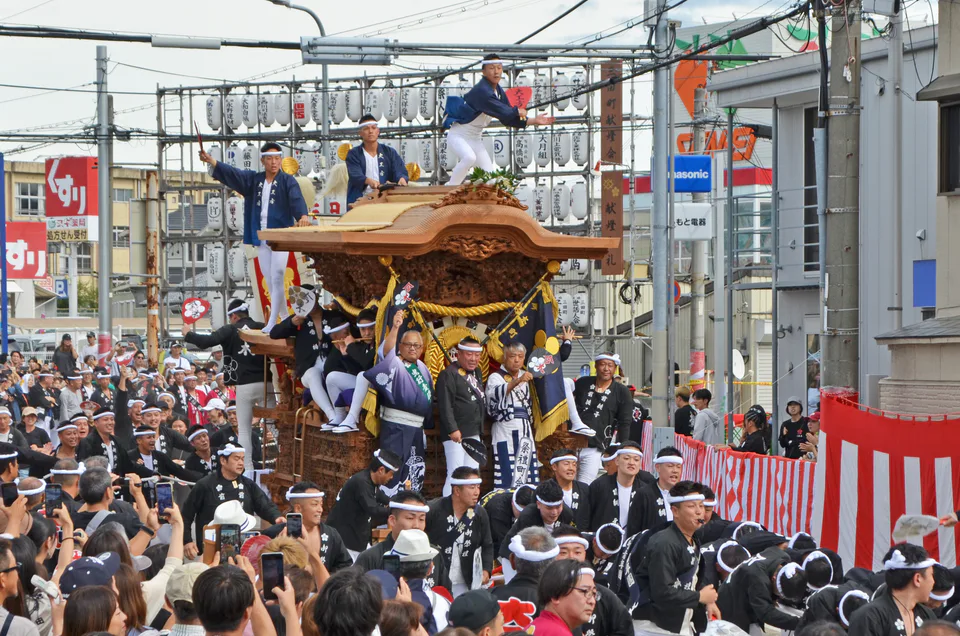
A weak comparison asks whether September or October is “more lively.” There is not enough evidence to promise that a given October district will be quieter, so this guide does not sell October as a low-crowd alternative. The useful difference is structural: September planning can revolve around Kishiwada, Haruki, Kankan-ba and a relatively familiar old-town exit problem, while October adds a district-selection problem before you even begin to plan transport.
If you are still deciding between September 19 and 20, go straight to Yoimiya vs Honmiya. If your dates are fixed in October, stop comparing September days and spend that time confirming district, access and exit.
Pick one district before chasing a “best viewing spot”
For a first October visit, one district and one viewing objective is the most robust plan. Decide whether you mainly want daytime speed, neighbourhood pulling and team coordination, or simply two to four hours of danjiri atmosphere. Then check that district’s current route, legal standing areas, toilets and exit direction.
Trying to chase floats across several districts on a first visit usually creates more transfer time, road-closure detours and repeated searches for a usable viewing position. More districts do not automatically mean more festival. If you only have half a day, keep the same principle used in the September planning guides—one main scene and one exit route—but rebuild the transport around the October district.
Transport: the dangerous assumption is “just take Nankai to Kishiwada”
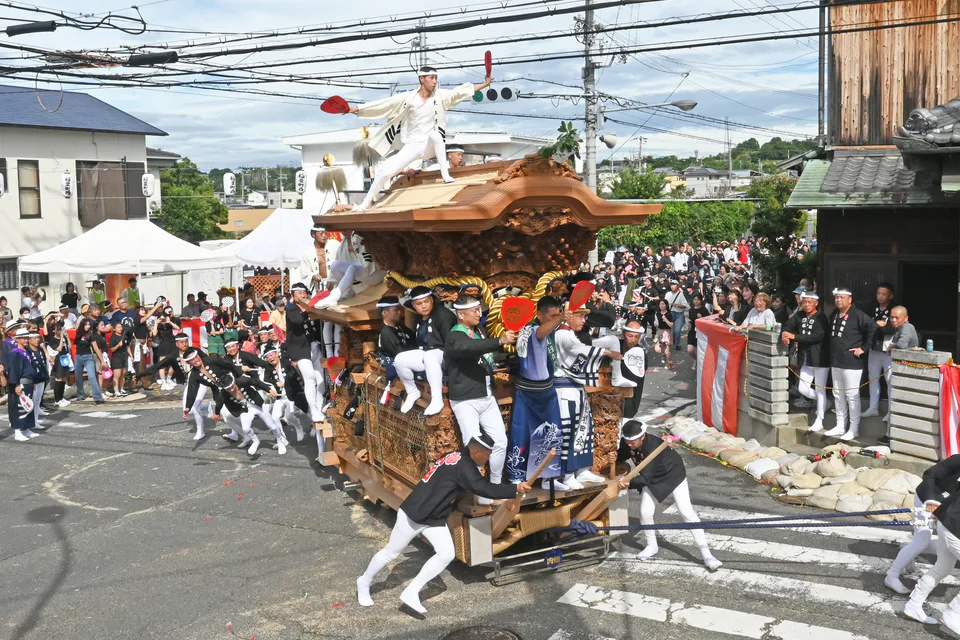
Nankai Kishiwada, Takojizo and Haruki are relevant to September because the September event is concentrated in those areas. October is different. Once Higashi-Kishiwada, Yagi, Yamanao and other mountain-side districts enter the plan, Nankai Kishiwada Station cannot be treated as the universal gateway. Depending on the district, the practical route may involve a different railway, bus or walking combination, and the final choice should follow the 2026 district notice rather than an old September map.
Use this order: choose district → find that district’s official 2026 route → confirm usable public transport → then choose your Osaka base. If accommodation is still open, start with the Osaka first-time stay guide and Namba vs Umeda comparison. Do not assume Namba is automatically the best October base just because it works well for the September Nankai route.
Yoimiya or Honmiya? The one-hour start-time difference is not the decision
The October framework starts at 06:00 on October 10 and 07:00 on October 11, but that single hour is not enough to make one day better. If you will not arrive early, the difference has almost no value. If photography or the first morning pull is the reason for the trip, then the first usable train, bus and previous night’s hotel start to matter.
The same rule applies as in the Kishiwada arrival-time guide: choose the scene you refuse to miss, then work backward to your arrival time. October simply adds one more variable—the district—so district comes before time of day.
Families and older travellers: exit difficulty matters more than proximity
With children, older parents or anyone who cannot stand for long periods, the best viewing area is not automatically the closest one. Prioritise a district where you can understand the return route, reach toilets and a real rest stop, and leave without a long walk against the crowd. If those details are not yet confirmed in the 2026 district information, do not fill the gaps with an older map.
A half-day can be a stronger family plan than an all-day commitment. Leaving after one good daytime segment is not “missing the festival” if the alternative is dragging an exhausted group through road closures while trying to find the correct station.
Where to stay: the September Kishiwada–Rinku–Namba comparison is only a starting point
The existing Kishiwada, Rinku or Namba hotel guide is still useful if your trip also involves the September festival, Kansai Airport or the Nankai corridor. For an October-only trip, however, confirm the chosen mountain-side district and its transport node before deciding whether a hotel move is worth it.
The worst sequence is to book central Kishiwada simply because the event name says Kishiwada, then discover that the October district you actually want requires a different approach. Flexible hotel rates are valuable while transport is unresolved, but the final booking should come after the district decision.
NO-GO: fix these four problems before you leave
Do not set off if any of these are still true: you have not chosen an October district; the only traffic-control map on your phone is for September; you are bringing large luggage and assuming station lockers will be free; or you have a long-distance connection after the festival with no crowd and road-closure buffer. Any one of those can turn a simple festival visit into a logistics problem.
If you are comparing festival types rather than building the final Kishiwada plan, use the Japan summer festival comparison for the bigger picture. Once you commit to October Kishiwada, the selected district’s current official notice becomes the source that matters most.
A realistic one-day plan: stay in one district and schedule the break
For a full day, keep morning and afternoon in the same district. Build in a real seated lunch, water refill and toilet break, then decide whether the group still wants an evening segment. The point is not merely to walk less. It gives the day recovery options: if a popular junction is blocked by a wall of spectators, move to a wider section; if the group is tired, shorten the second segment instead of following floats all day.
Only consider crossing between districts when the 2026 routes are confirmed, the transfer under festival traffic restrictions is genuinely clear, and your purpose is specifically to photograph or compare different district styles. First-time visitors do not need to count districts as a measure of success.
Verdict: October is worth a separate trip only if you accept that it is not September 2.0
If you are in Osaka on October 10–11, 2026 and are willing to choose one mountain-side district and rebuild the transport around it, the October Kishiwada Danjiri Festival is worth planning on its own terms. If what you actually want is Kankan-ba, Nankai Kishiwada Station and the September old-town scene, do not treat October as a like-for-like substitute.
The cleanest decision order is simple: confirm date → choose one district → check that district’s 2026 pulling route and transport → only then lock in hotel and arrival time. That sequence turns “another Kishiwada festival date” into a trip you can actually execute.
References and final recheck
The October 10–11, 2026 dates follow current Osaka tourism information, while the October timetable framework and district distribution follow confirmed Kishiwada City planning information. Exact pulling times, traffic controls, viewing restrictions and temporary changes must be rechecked against the latest 2026 district notices before travel. This article deliberately does not reuse the September route map as October guidance.