
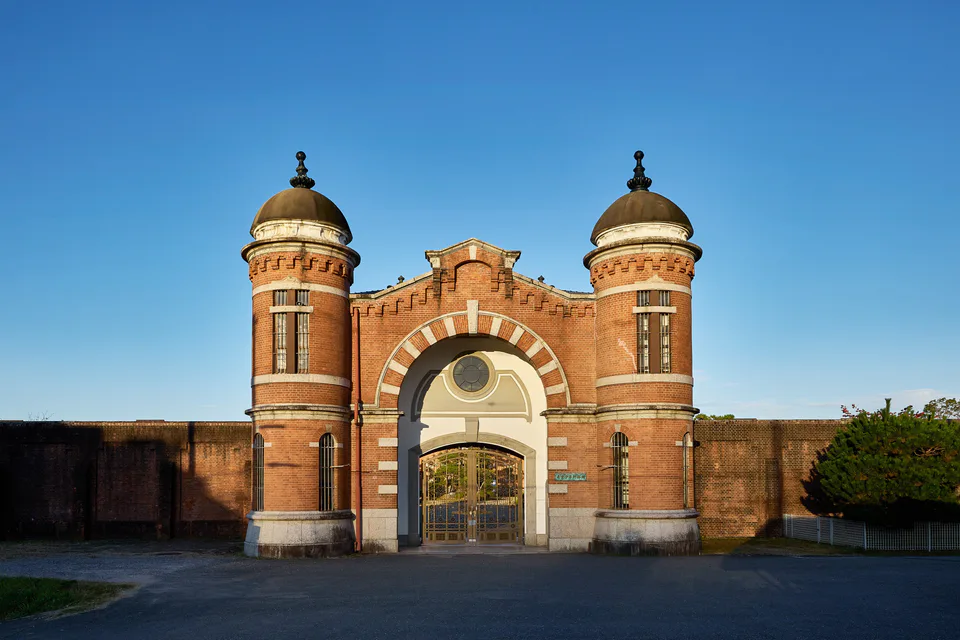
Nara Prison Museum is worth a half day when the Former Nara Prison itself is one of the reasons you want to visit Nara: Meiji architecture, the history of Japan’s correctional system, prison life, or the museum’s contemporary art programme genuinely interest you. For a first Nara visit with only one day, I would not add it automatically after the deer and Todaiji. The classic Nara Park route is already substantial, and the museum asks for both money and scarce sightseeing hours: current overseas-adult admission is JPY 3,500, versus JPY 800 for Todaiji’s Great Buddha Hall.
The useful planning rule is to treat the museum as one of the day’s two main anchors, not as a spare-hour attraction. A realistic visit becomes even more structured if you want the Central Guard Station: it requires a separate reservation, the meeting point is about a 30-minute walk inside the site from the entrance, and late arrivals cannot simply be moved to another slot. For most international visitors, the strongest one-day combination is therefore Todaiji + Nara Prison Museum or Nara Park core + museum, not “all of Nara Park plus the museum plus Naramachi because everything is nearby.”
↔ Scroll table left or right
Your trip | ValueNavi verdict | Why |
First Nara visit, only 1 day, Todaiji + Kasuga Taisha + deer are priorities | Usually skip the museum | The museum consumes a meaningful half-day and displaces part of the classic park route |
Architecture / prison history is a top-two Nara interest | Book it | The preserved 1908 prison and Haviland-style radial plan are the attraction, not just the exhibitions |
Central Guard Station reservation available | Build the day around that slot | It is separate from admission, limited-capacity and about 30 minutes inside the site from the entrance |
Second Nara day or overnight stay | Strong fit | You no longer have to make Todaiji, Kasuga Taisha, Naramachi and the prison compete for one day |
English-only visitor considering the paid weekend guided tour | Check before paying | The current “Prison and Freedom” guided tour is hosted in Japanese |
Large suitcase / stroller / tight transfer day | Solve luggage first | The museum asks visitors to refrain from bringing large items such as suitcases or strollers |
Mobility limitations | Conditional | Alternative step-free routes exist, but parts of the historic site remain inaccessible |
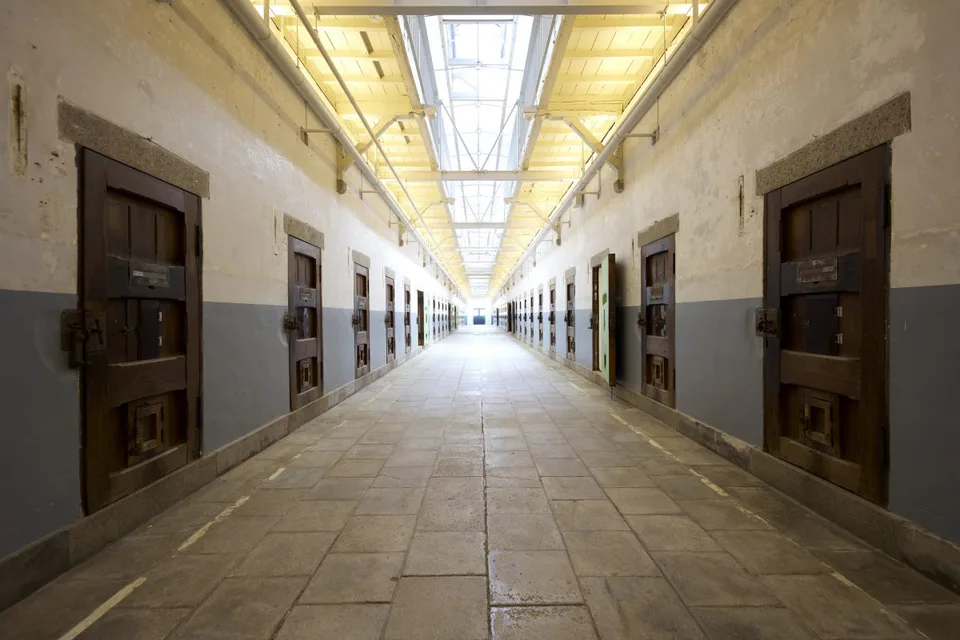
Preserved cell wing inside the Former Nara Prison. Image: Hoshino Resorts official material.
First decide whether the museum deserves one of your two main Nara slots
The opportunity cost is easy to underestimate because the museum sits only about a 13-minute walk from Todaiji according to the museum’s current access page. Geographic proximity does not mean the attraction is small. Nara Park itself covers a broad sightseeing area containing Todaiji, Kasuga Taisha, Kohfukuji, museums, gardens and the deer routes between them. Todaiji alone opens early enough to anchor a full morning: the Great Buddha Hall currently opens at 07:30 from April to October and 08:00 from November to March.
That makes the first-trip decision sharper than “Do I like museums?” Ask instead:
Would I remove Kasuga Taisha, Naramachi or another major Nara stop to protect 3–4 hours for the prison?
Would I still pay JPY 3,500 if the red-brick architecture and correctional-history interpretation were the main experience?
Am I visiting Nara for the first time, or is this a second visit where the classic park route no longer needs to dominate?
If the answer to the first two is no, keep the museum for another trip. Current adult overseas admission is more than four times Todaiji’s JPY 800 Great Buddha Hall entry. That does not make the museum bad value; it means it should compete as a headline cultural attraction rather than hide inside the day as a casual add-on.
Why the museum can justify the time for the right traveller
The Former Nara Prison opened in 1908 and is the only fully intact survivor of the five major Meiji-era prisons built as Japan modernised its judicial system. The site is designated an Important Cultural Property. Its most distinctive architectural idea is the Haviland System: cell wings radiate from a central observation point so the prison could be monitored efficiently.
The museum uses that building rather than treating it as a shell for unrelated displays. Building A covers architecture, the history of the prison and the development of Japan’s correctional system. Building B moves into discipline, meals, hygiene, labour, rehabilitation, money and the question of freedom. Building C, in the former infirmary, uses contemporary art to approach prisons and society from different perspectives.
That mix is exactly why the museum is a strong specialist stop but not an automatic first-timer stop. Travellers who care about Meiji architecture, institutional history, criminal-justice history, adaptive reuse or contemporary art have several overlapping reasons to stay. A family whose main Nara priorities are deer, the Great Buddha and an atmospheric shrine may simply be giving away the most valuable hours of its only Nara day.
The Central Guard Station creates a second clock
General museum admission and the Central Guard Station are not one ticket. The current Central Guard Station viewing is free, but it requires its own reservation because capacity and time slots are limited. You must also hold a museum admission ticket that fits the reserved viewing time.
The operational catch is unusually important: the official meeting point is at the information desk inside the museum, and the museum says it takes about 30 minutes on foot from the entrance to reach it. The activity leaves on time; if you are late, the museum says it cannot reschedule you or offer an alternative arrangement.
That creates a simple sequence:
Find a Central Guard Station slot you actually want.
Buy museum admission that gives you a generous entry margin before that slot.
Count ticket checks and the internal walk as part of the reservation buffer.
Only then place Todaiji, lunch and other Nara stops around it.
Do not book a 14:00 viewing and plan to leave Todaiji at 13:45 because “the prison is only 13 minutes away.” The 13-minute figure gets you to the museum area; it does not get you to the internal meeting point.
Use a 3–4 hour planning block if the Central Guard Station matters
The museum does not publish one universal “you need exactly X hours” rule, so the following is a ValueNavi planning allowance rather than an official duration. For a visitor who wants the principal exhibitions, architecture and a Central Guard Station reservation, I would protect roughly 3–4 hours from arrival at the museum area to departure. That includes entry, walking across the large historic site, the reserved viewing, exhibits and some buffer.
A faster visitor who skips the guard station can compress the stay. A visitor who reads extensively, uses the audio guide, adds the cafe/shop or books another activity can easily use more. The useful point is not the exact number: the museum should occupy a deliberate half-day block in your itinerary rather than whatever time remains after Nara Park.
Todaiji + museum is the cleanest first-trip compromise
If this is your first Nara visit and you still want the prison, the strongest compromise is normally to keep one classic anchor rather than trying to retain the entire standard route. Todaiji is particularly easy to pair because the museum currently lists it at about a 13-minute walk away.
Option A — Todaiji first: use the early temple opening, see the Great Buddha Hall and surrounding grounds, have an early lunch, then walk north to the museum for an early-afternoon reservation. This works best when your guard-station slot is late enough that the temple morning has real buffer.
Option B — museum first: use the museum as the only timed commitment of the day, then walk south and let Todaiji, deer time and Nara Park expand or contract afterwards. This is the more resilient option when the Central Guard Station slot is difficult to replace.
The weaker version is Todaiji + Kasuga Taisha + long deer stop + Naramachi + museum + fixed guard-station slot. It may fit on a map, but every delay becomes another reason to rush the one attraction that required a reservation.
The direct bus is most valuable when it deletes one long station leg
The museum currently runs a direct bus from JR Nara Station West Exit stop 11 and Kintetsu Nara Station stop 2. Published travel time is about 18 minutes from Kintetsu Nara and 25 minutes from JR Nara, with a current fare of JPY 250 for adults and JPY 130 for children. The museum entrance is about one minute from the stop.
For a full Nara day, I would usually use the bus on only one side of the visit:
Bus in, walk out: museum first → walk about 13 minutes to Todaiji → continue through Nara Park.
Walk in, bus out: Nara Park/Todaiji first → walk north to the museum → direct bus back to Kintetsu or JR Nara.
This avoids turning the day into two station detours. It also gives the museum a clear position in the route instead of treating it as a satellite attraction you must repeatedly travel to and from.
Ticket scarcity is now a planning risk, not a theoretical one
The museum currently operates 09:00–17:00 with last admission at 16:00 and recommends advance booking. In a June 20, 2026 notice, the museum said many dates were selling out and warned that when online admission is sold out there may be no same-day tickets at the door.
Current admission is:
Overseas adult: JPY 3,500
Resident of Japan: JPY 2,500
Nara Prefecture resident: JPY 2,000
Age 15–22: JPY 1,500
Age 6–14: JPY 700
Age 5 and under: free
If the museum is a core reason for the Nara day, reserve before building the rest of the itinerary. If it is only a “maybe,” do not book an awkward late slot just because it is the last one available; a 16:00 last admission still runs into a 17:00 closing, so the usable visit becomes much shorter than the headline opening hours suggest.
Check Nara Prison Museum admission and available time slots
English-speaking visitors should separate the audio guide from the paid guided tour
The core museum is relatively friendly to international visitors. The current audio guide is available in Japanese, English, Simplified Chinese, Traditional Chinese, Korean and French. You need your own smartphone and earphones; the museum does not lend audio-guide devices.
Do not confuse that with the separate “A Tour Exploring Prison and Freedom”. The current tour runs on Saturdays and Sundays from 13:30–14:30, requires a separate reservation, costs JPY 2,000 for adults and is listed as being hosted in Japanese. Museum admission is also required separately.
For an English-only visitor, that makes the free Central Guard Station viewing and the multilingual self-guided museum a very different proposition from paying for the Japanese-language curator tour. Verify the language before booking any optional activity rather than assuming the English museum website means every tour is multilingual.
Large luggage and strollers can turn a smart transfer day into a bad museum day
The official visitor guidelines ask guests to refrain from bringing large items such as suitcases or strollers because space is limited. That matters for the tempting Kyoto → Nara → Osaka itinerary. The railway geometry can be efficient, but dragging all of your luggage into a large museum complex and then through Nara Park is not.
If the museum falls on a hotel-transfer day, forward the main cases when both hotels and the carrier can support it, or use confirmed station storage and carry a day bag. The Japan luggage-forwarding guide covers the broader decision.
Parents should also notice the stroller wording. This is not the same as saying families cannot visit, but it means a stroller-heavy day needs more planning than a normal park walk. Confirm the current policy with the museum if a stroller is essential.
Accessibility is possible, but not every historic space is step-free
The museum occupies a protected historic building. Its current accessibility guidance says staff provide alternative barrier-free routes where possible, but some areas remain inaccessible. Two wheelchairs are available at the entrance or information desk without reservations, and there are multipurpose restrooms.
That should change the decision for travellers with limited mobility. The direct bus can reduce the station-side walk, but it does not eliminate movement inside the site. A museum visit built around a fixed Central Guard Station time should include extra internal buffer, and the museum should be contacted in advance if a particular preserved area is essential.
Rain makes the museum stronger, but not fully weatherproof
The prison is a stronger bad-weather anchor than an all-outdoor Nara Park day because much of the interpretation is inside preserved buildings. It is not a sealed indoor complex: the site is large and movement between areas still matters. Severe weather can also affect transport and optional activities.
For ordinary rain, the museum can be a useful way to move scarce daylight away from exposed walking. For a typhoon or major transport disruption, the correct decision is not “museum instead of deer”; it is to follow same-day operator and transport information.
When I would skip Nara Prison Museum
It is your first and only Nara day and Todaiji, Kasuga Taisha and the deer are all non-negotiable. Protect the classic route instead of turning every stop into a timed sprint.
You are only mildly interested in the prison theme. JPY 3,500 and a half day are too large an opportunity cost for “the building looks interesting.”
The only available admission slot is 16:00. Last admission at 16:00 does not create a full museum day before the 17:00 close.
You have a large suitcase or stroller and no storage plan. Solve that before committing.
You booked a Japanese-only guided activity without understanding the language. The multilingual core museum is the better product for most English-only visitors.
When I would prioritise it
Architecture is a major travel interest. The preserved 1908 prison and radial Haviland layout are not replaceable by a generic history museum.
You are interested in modern Japanese history, corrections or prison society. The building and exhibitions reinforce the same subject rather than competing for attention.
You have already done the classic Nara Park day. On a repeat visit, the opportunity cost drops sharply.
You are staying overnight in Nara. Splitting park/temple time and museum time across two days removes the biggest compression problem.
You secured the Central Guard Station and that access is part of the reason for visiting. In that case, build the rest of Nara around the reservation rather than the other way around.
Final verdict: do not ask whether it fits — ask what it replaces
For a first-time visitor with only one Nara day, Nara Prison Museum is a selective recommendation, not a default stop. Choose it when the prison’s architecture, history or themes are strong enough that you are comfortable reducing the classic Nara Park itinerary. Skip it when you are only trying to add one more attraction to Todaiji, Kasuga Taisha, deer and Naramachi.
If you do go, give it a real half-day block. Reserve the Central Guard Station first if that is important, enter early enough to cover the roughly 30-minute internal walk, and use the direct bus at one end of the route rather than both. The museum becomes valuable when it replaces a lower-priority Nara stop; it becomes stressful when it is stacked on top of an already complete day.
Osaka Hotels for Kyoto and Kobe Day Trips: When 3–5 Minutes to the Station Matter Twice a Day
Lotte Hotel Busan vs Arban Hotel: Is the Five-Star Premium Worth It in Seomyeon?
USJ Halloween with Kids 2026: Day Plan, Safe Routes and Age Limits
National Museum of Nature and Science 2026: The ¥630 Ticket Is Cheap — Your 3–5 Hours Aren’t
References
Nara Prison Museum — admission, hours and visitor guidelines · Nara Prison Museum — access and direct bus · Central Guard Station viewing · Prison and Freedom guided tour · Todaiji — current opening hours and admission. Checked August 25, 2026. Admission, reservations, bus timetables and activities can change; verify the exact visit date.