Choose Yoimiya on Saturday, September 19, 2026 if the 06:00 hikidashi is one of the reasons you are travelling to Kishiwada. Choose Honmiya on Sunday, September 20 if you want a more sustainable first visit that starts at 09:00 and can still cover daytime danjiri action plus the lantern-lit evening. The mistake is assuming Saturday is automatically “better” because the official operating day is three hours longer.
Kishiwada City currently confirms Yoimiya from 06:00–22:00 and Honmiya from 09:00–22:00. Its own glossary defines hikidashi as the simultaneous 06:00 pull-out on the first festival morning. That makes Saturday's early block genuinely distinctive. But if you would not realistically be on the street around 06:00, those extra official hours should not decide your date.
Yoimiya vs Honmiya: the 30-second decision
↔ Scroll table left or right
Your priority | Choose | Why | Main trade-off |
See the 06:00 hikidashi | Yoimiya | The early simultaneous pull-out belongs to the first festival morning | A 05:00-class start from Osaka can damage the rest of the day |
First visit, one balanced day | Honmiya | 09:00–22:00 is still a 13-hour official window | You give up the special pre-breakfast Saturday start |
Daytime speed / yarimawashi is the main goal | Either | Both days contain daytime pulling; choose by your usable hours and current route information | Do not assume one day is quieter |
Lantern-covered danjiri at night | Either | The festival's night identity is part of both main days | You need enough stamina left after the daytime block |
Young children / older travellers / heat-sensitive group | Usually Honmiya or a shorter Yoimiya block | A normal breakfast and later start reduce the endurance cost | Saturday's 06:00 atmosphere may be the one irreplaceable experience you wanted |
Only one Kansai day is available | Choose the day that protects the rest of the trip | Hotel departure, return and next morning matter more than “Saturday vs Sunday” prestige | A late 22:00 finish can spill into the next day |
Yoimiya's real advantage is hikidashi, not “16 hours of festival”
The official Saturday window runs 06:00–22:00, but almost nobody needs to treat that as a challenge to remain outdoors for 16 consecutive hours. The unique part is the beginning.
Kishiwada City's danjiri glossary describes hikidashi as the festival's first-morning moment when each neighbourhood's danjiri pulls out simultaneously from 06:00. Historically, this opening was even earlier. For a visitor, that means the extra three hours have a specific job: seeing a city already active before a normal sightseeing day begins.
If that scene is on your must-see list, Saturday wins clearly. If your realistic arrival is 09:30 or 10:00, the headline difference between a 06:00 and 09:00 start mostly disappears. Do not reorganise an Osaka hotel, breakfast and sleep schedule to “use” hours you do not actually value.
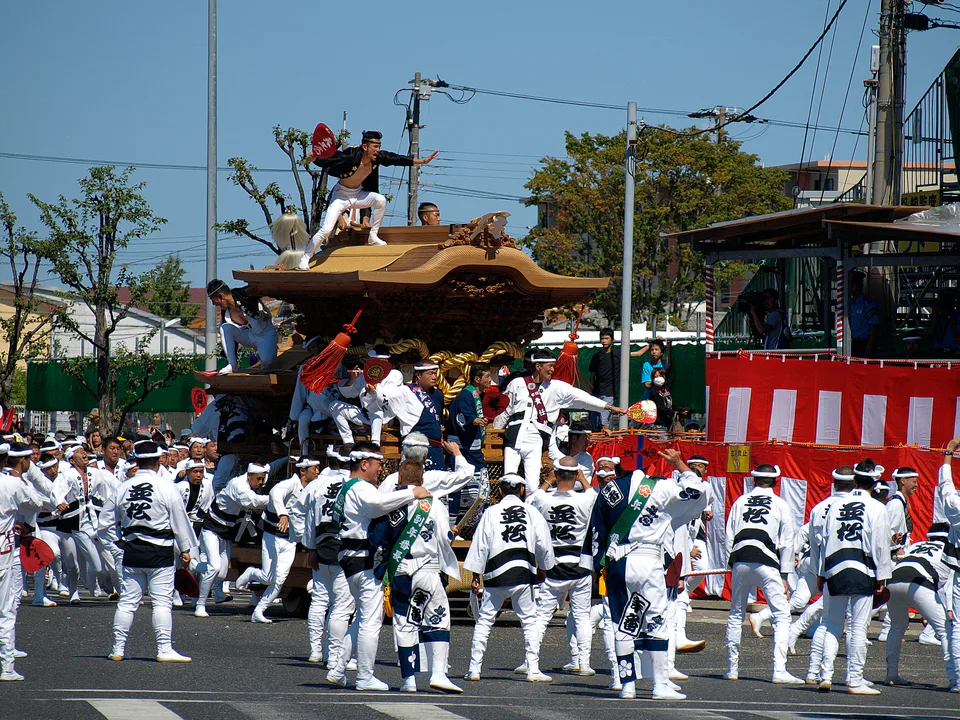
Honmiya buys a normal morning without sacrificing the night
Sunday's official 09:00–22:00 window is still long enough to see the festival change character from daytime pulling to lantern-lit danjiri. For a first-time visitor who does not specifically need hikidashi, that can be the better use of energy.
The important distinction is not “Sunday is quieter.” There is no reliable basis for promising that. Crowd pressure depends on location, route, timing and the current traffic plan. Honmiya's advantage is simply that you can begin at a normal hour without feeling you have missed three officially scheduled festival hours.
That matters for families, older travellers and anyone coming from central Osaka. A later start can preserve enough energy to stay for the night transformation instead of leaving at 16:00 because the day began before dawn.
The best first visit is usually two strong blocks, not one continuous marathon
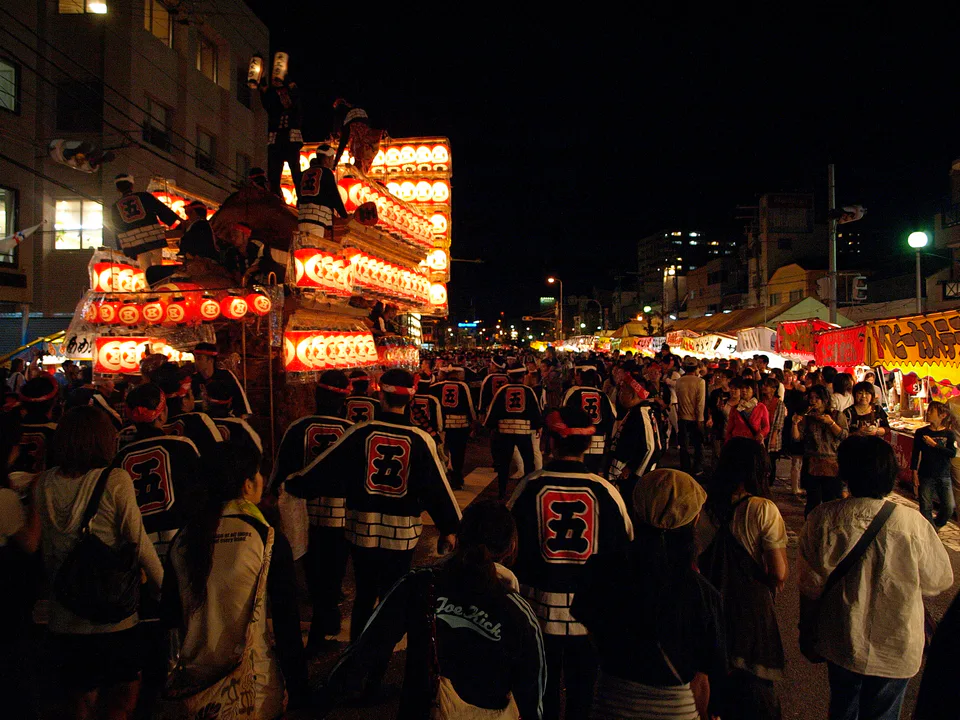
Kishiwada's official description highlights both the powerful daytime pulling and the elegant night-time danjiri covered in lanterns. The city's glossary describes the evening hi-ire eiko as a different, calmer visual character from the daytime movement.
Use that contrast deliberately. A practical first visit can have:
↔ Scroll table left or right
Block | Purpose | What not to do |
Early block, Yoimiya only | 06:00 hikidashi and first-morning atmosphere | Assume you must remain roadside until 22:00 |
Daytime block | Dynamic pulling, corners and festival streets | Spend all day holding one position because it was crowded once |
Recovery block | Meal, shade, hydration, sitting and repositioning | Treat rest as “missing the festival” |
Night block | Lantern-covered danjiri and a different pace | Arrive exhausted merely to tick off darkness |
This is the highest-value stamina strategy: protect the parts that look and feel different. The festival does not become more authentic because you refuse to sit down.
Do not reuse last year's detailed miyairi times for 2026
Kishiwada City's current main festival page confirms the 2026 dates and overall hours. As of August 26, the detailed parade and shrine-entry ranking page visible on the city site is still the 2025 version.
That matters because miyairi is not a generic attraction with a permanent minute-by-minute timetable. The city's glossary explains the shrine-entry tradition at Kishiki Shrine, Kishiwada Tenmangu and Yasaka Shrine, and identifies the Konakara slope approach to Kishiki Shrine as a particularly popular scene. But a 2025 order should not be copied into a 2026 itinerary as if it were confirmed.
ValueNavi verification rule: use the 2026 overall schedule now; recheck the city festival page for the 2026 parade/miyairi order closer to the event. If the detailed 2026 schedule is not published for your target scene, choose a robust viewing area rather than planning a connection to a stale minute.
Yarimawashi is a viewing priority, not a reason to stand in a dangerous place
The city's glossary defines yarimawashi as the high-speed right-angle turn of a danjiri, requiring coordinated front and rear steering. It is one of the festival's signature skills.
For a visitor, the right decision is to use official spectator areas and current traffic guidance, not to chase the closest possible corner. A visually dramatic position is poor value if you cannot exit, cannot see safely, or are blocking the route.
Use the Kishiwada Danjiri viewing guide for the current street-level viewing decision after you have chosen Saturday or Sunday.
Traffic restrictions are part of both days, so train access should be the default
Kishiwada City published the 2026 traffic-restriction notice on August 3 and confirms restrictions for the September trial pulls on the 6th and 18th and for the main festival on September 19 and 20. The detailed restriction map is published separately by the city.
That is enough to make one planning decision now: do not build the main festival day around driving into the restricted core. Use rail, then walk according to the current official map and on-the-ground controls.
The restriction also changes how you leave. At 22:00, the published festival end is not the same thing as “I am on my train at 22:01.” Crowd dispersal and the walk back to the station belong in the return buffer.
Where you sleep changes whether 06:00 is a real option
If Yoimiya's hikidashi is the reason for the trip, the previous night's hotel matters more than the Sunday-vs-Saturday debate. A base that requires a complicated pre-dawn chain can turn an interesting 06:00 target into a sleep-deprivation exercise.
Do not move hotels purely for one festival day unless the move solves more than the morning. If the Osaka base is still open, compare Namba vs Umeda and where to stay in Osaka by the full Kansai trip.
If you would need to wake very early, carry luggage and then stay until 22:00, the rational alternative is often Honmiya or a shorter Yoimiya visit—not a new hotel checkout.
Heat and stamina can reverse a Saturday recommendation
September in Osaka can still be hot and humid. The official schedule does not promise comfortable weather. A 06:00 start may feel excellent in the morning and still create a poor night experience if the group never recovers during the warmest hours.
For a heat-sensitive group, protect shade, drinks, food and an indoor rest rather than trying to stay roadside continuously. If rain or severe weather affects the day, use official festival notices; a published annual schedule is not a guarantee that every movement proceeds unchanged.
The decision reversal is simple: if seeing hikidashi makes you too tired to enjoy the daytime and night sections you care about more, Saturday's unique advantage is no longer an advantage.
Do not schedule a fragile overnight connection after a 22:00 festival finish
A night ferry or long-distance connection can look efficient on paper after the festival, but the 22:00 end time does not include walking out of the restricted area, station access or crowd dispersal. If the next leg is Kyushu, compare the Osaka to Beppu overnight ferry guide and its check-in deadline before combining the two.
The safer pattern is to treat the festival as the final major commitment of the day. If the next morning has an early Shinkansen or flight, that should also influence whether you choose a 06:00 Saturday start or the 09:00 Sunday.
Final verdict: choose the irreplaceable block, then protect the rest of the day
Choose Yoimiya on September 19 if you genuinely want the 06:00 hikidashi. That is the Saturday feature that Honmiya cannot recreate. Build in a real midday recovery block so the lantern-lit evening remains enjoyable.
Choose Honmiya on September 20 if a 09:00 start makes the full daytime-to-night arc more realistic. You are not choosing a lesser festival; you are giving up one distinctive early-morning block in exchange for a more sustainable day.
If you would arrive after 10:00 on either date, stop comparing official duration. Check the current 2026 parade/miyairi information when it is published, confirm the traffic plan, and choose the date that fits your Osaka stay and next morning better.
References and verification date
Checked August 26, 2026 against Kishiwada City's official 2026 festival schedule, official danjiri glossary, 2026 traffic-restriction notice and the city's 2026 September festival-map page. Detailed parade/miyairi order, restrictions and operating conditions should be rechecked before travel.
Nagashima Spa Land Tickets 2026: Do Not Buy the Same Pass for Everyone in Your Family
Sapporo Autumn Fest 2026: The One-Kilometre Food Route That Leaves Room for Dessert
Okutama Rafting 2026: Tokyo Full-Day Tour vs Local Half-Day — You're Paying for Transport
Aomori Nebuta 2026 Is Over: Free Viewing vs Reserved Seats, Reframed for Next Time
Save Sunday for Omotesando: The One Super Yosakoi 2026 Plan Saturday Can’t Match