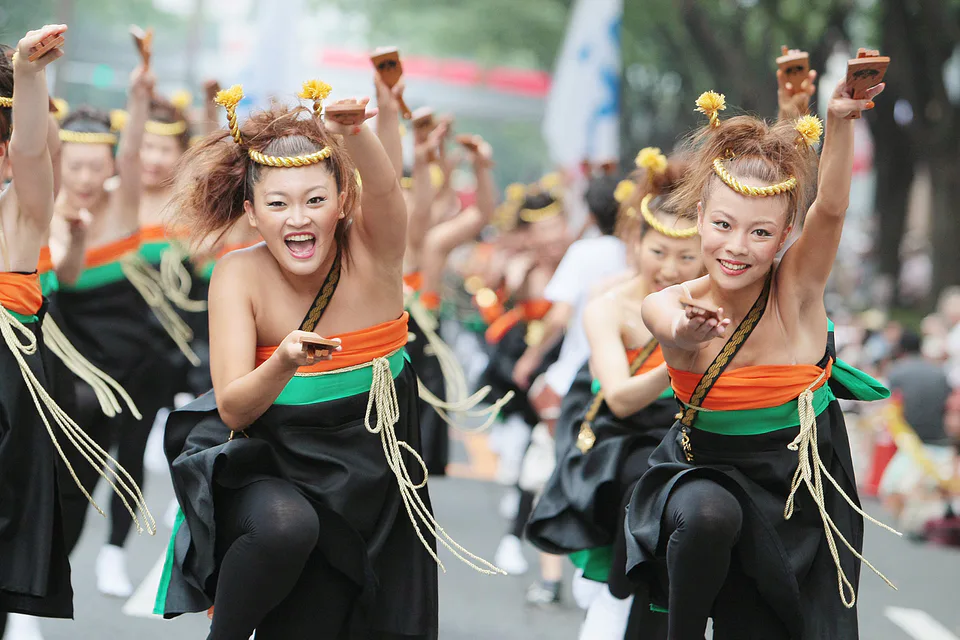
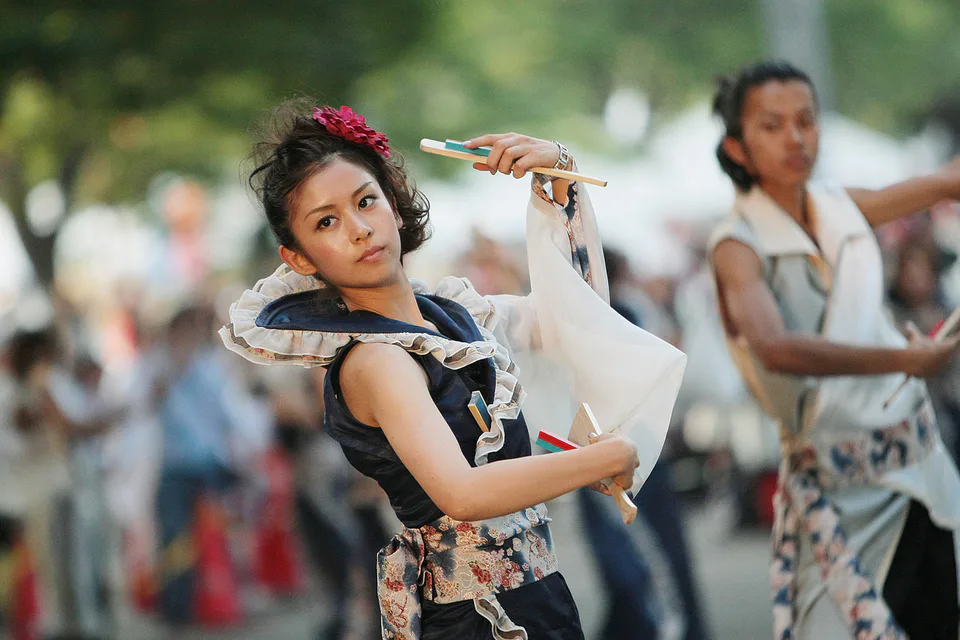
If the Super Yosakoi 2026 image you would regret missing is dancers filling Omotesando Avenue, protect Sunday, August 30. The festival runs both August 29 and 30, but the avenue performance is the Sunday-only differentiator. Saturday is the longer festival day, running 10:00–19:30; Sunday runs 10:00–17:30 and is the day to build around Omotesando.
There is one extra decision in 2026 that matters for visitors planning the whole weekend: Tokyo Koenji Awa Odori runs on the same two dates from 17:00–20:00. You can sample both festivals on Sunday, but you cannot watch the full Sunday Super Yosakoi programme through 17:30 and also be in Koenji for its 17:00 opening. If both festivals matter, split them across the weekend instead of treating the transfer as free time.
Saturday or Sunday in 30 seconds
↔ Scroll table left or right
Your priority | Best plan | Trade-off |
Omotesando street performance | Sunday, Aug 30 | Shorter overall festival day: 10:00–17:30 |
Longer, looser Harajuku–Yoyogi festival day | Saturday, Aug 29 | No Sunday-only Omotesando format |
Want full Super Yosakoi and full Koenji Awa Odori experiences | Split them across Saturday and Sunday | You give two days to festivals instead of compressing Tokyo sightseeing |
Sunday Omotesando + some Koenji | Leave Harajuku early enough to make Koenji your evening anchor | You sacrifice the end of Super Yosakoi or the first part of Koenji |
Children / low stamina | Choose one festival as the main event | Two dense crowd zones in one day can cost more energy than the train ride suggests |
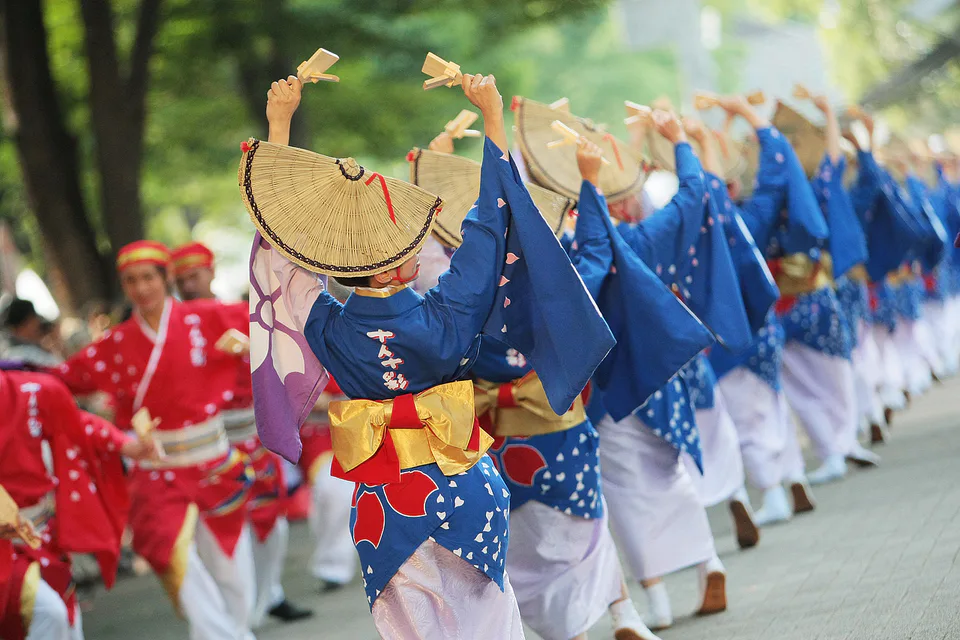
Sunday changes the viewing format, not just the timetable
Across the weekend, performances spread through Harajuku, Omotesando, Yoyogi Park, NHK Keyaki Namiki-dori and BE STAGE. Sunday changes the decision because Omotesando itself becomes part of the performance environment rather than merely another nearby shopping street.
That is why I would not choose Sunday simply because it is “Day 2.” Choose it because the avenue experience is the scarce product. If you mainly want to watch many teams with breaks for food and rest, Saturday’s extra two hours create more flexibility.
Saturday buys time; Sunday buys Omotesando
GO TOKYO currently lists overall hours of 10:00–19:30 on Saturday and 10:00–17:30 on Sunday. Performance times vary by venue, so the final official programme still matters, but those overall windows are enough to structure the weekend.
Saturday works best as an open-ended festival day. You can arrive later, take a proper lunch break, move between Harajuku and Yoyogi and still retain evening performance time. Sunday works best as an anchor-day. Build the day around the Omotesando window first, then add only nearby stops that can be dropped without damaging the festival plan.
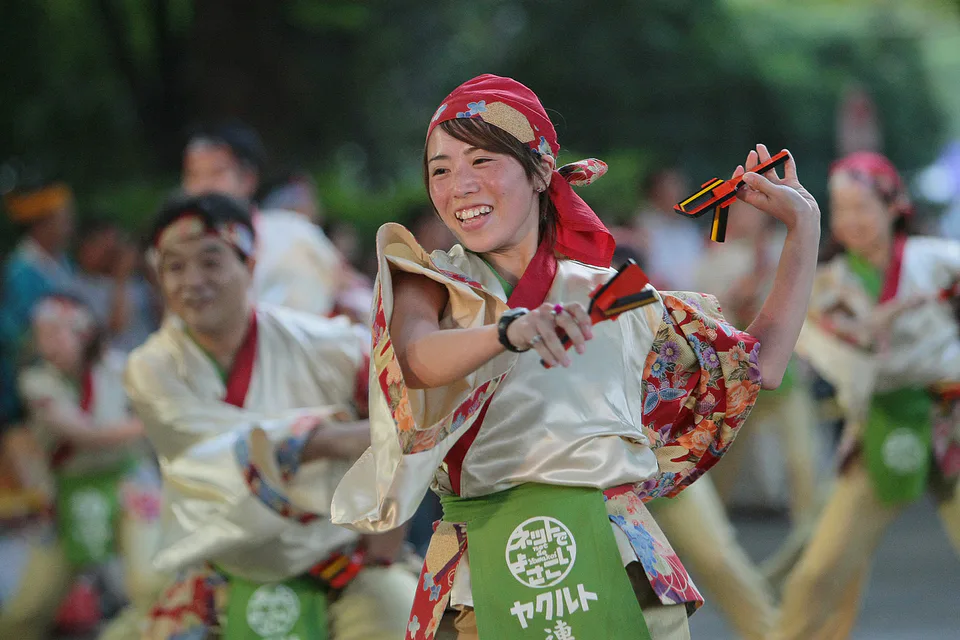
Can you combine Super Yosakoi and Koenji Awa Odori on the same day?
Yes, but only if you accept that one festival becomes partial. The official Koenji Awa Odori schedule is 17:00–20:00 on both August 29 and 30. Super Yosakoi runs until 19:30 Saturday and 17:30 Sunday.
That creates three different weekend strategies:
Full versions of both: dedicate one day to Super Yosakoi and the other evening to Koenji. This is the low-risk choice.
Sunday Omotesando + Koenji evening: leave Omotesando before the full Super Yosakoi programme ends. The train ride itself is not the only cost; you still need to exit a dense crowd, reach the station, travel west, then enter Koenji while traffic restrictions and festival crowds are already in effect.
Saturday Super Yosakoi + late Koenji sample: possible only by sacrificing the final Harajuku/Yoyogi hours. Since Saturday Super Yosakoi continues to 19:30, this is not a way to “finish one then start the other.”
The worst plan is assuming the two events join neatly at 17:00. On Sunday, Super Yosakoi itself continues until 17:30; on both days Koenji starts at 17:00. The schedules overlap before transfer time is even added.
If Omotesando is non-negotiable, Koenji should be treated as the evening you may shorten
For a first-time visitor who specifically wants the Sunday Omotesando performance, I would protect that scarce format first. If energy and timing still work, continue to Koenji later. Do not buy a rigid Koenji viewing plan that forces you to leave the avenue before the part of Super Yosakoi you came to see.
The answer reverses if Koenji is the main event—especially if you hold a reserved viewing seat. In that case, give Koenji a hard arrival time and treat Super Yosakoi as the earlier, flexible festival. The Koenji Awa Odori guide covers the viewing-zone and exit decision.
Sunday road restrictions make rail the default
Omotesando Hills has published a planned August 30 road restriction from 11:00 to 16:30 on both directions between the Jingumae intersection and Aoyama-dori, including the lanes in front of the complex. Parking there is unavailable during the restriction.
GO TOKYO lists JR Harajuku Station’s Omotesando Exit and Meiji-jingumae Exit 2 for the wider festival, and Omotesando Station A1 specifically for the Omotesando performances on the 30th. If you are continuing to Koenji later, use rail from the start; introducing a car or taxi into two festival traffic zones makes the itinerary less resilient.
Families and lower-stamina travellers should choose one anchor
The Harajuku-to-Koenji rail journey is not the part that makes a two-festival day hard. The expensive parts are repeated crowd navigation, standing, August heat and the need to re-orient inside a second closed-road festival zone.
With children, older travellers or anyone sensitive to heat, choose one festival as the main event. A partial second festival is a bonus, not a requirement. A day that reaches both locations but leaves everyone too tired to enjoy the second performance has not actually gained anything.
Rain means simplify, not automatically cancel
GO TOKYO currently lists the event as proceeding in rain, while noting that performance times vary by venue. A wet forecast is therefore a reason to reduce venue changes and recheck the official programme, not a reason to rely on an old saved schedule.
If you were planning both Super Yosakoi and Koenji on the same day, rain raises the burden of proof further. Two wet crowd zones, two sets of station movement and wet clothing between them make the split-day strategy more attractive.
Final verdict
Choose Sunday, August 30 if Omotesando Avenue is the experience you would regret missing. Choose Saturday, August 29 if a longer, more flexible Harajuku–Yoyogi festival day matters more.
If Koenji Awa Odori is also on your list, do not pretend the two schedules connect cleanly. Koenji runs 17:00–20:00 both days; Super Yosakoi continues until 19:30 Saturday and 17:30 Sunday. For full versions of both festivals, split them across the weekend. For Sunday Omotesando plus Koenji, decide in advance which ending you are willing to sacrifice.
Kishiwada Danjiri October 2026: Districts, Transport and How to Plan the Day
Nagashima Spa Land Tickets 2026: Do Not Buy the Same Pass for Everyone in Your Family
Kyoto Gozan Okuribi: What the 2026 Viewpoint and Exit Plan Teaches
Kochi Yosakoi Accessibility 2026: Wheelchair Seats and Low-Walking Plan