Do not buy the same Nagashima Spa Land ticket for everyone in your family
The easiest way to overspend at Nagashima Spa Land is also the easiest purchase: four people, four identical ¥6,000 Passports. In 2026, adult admission alone is ¥1,800 while the full Passport is ¥6,000. That ¥4,200 gap is excellent value for the adult who wants Hakugei, Steel Dragon 2000 and several more rides. It can be poor value for the parent who spends most of the day with a small child, takes photos and carries everyone’s bags.
This is the core decision for a Nagoya family day trip: price each person by what they can actually ride, not by what the park offers in total. If Nagashima is one of several things to do in Nagoya on a short trip, the bigger cost is also the full day you give it. A three- or four-day Nagoya independent travel plan can lose most of a city day once you add the bus ride, queues, meals and the temptation to add the outlet or hot spring.
↔ Scroll table left or right
Your role that day | Start with this ticket | Why |
You will ride Hakugei / Steel Dragon plus other rides | Adult Passport ¥6,000 | Two ¥2,500 headline rides already push admission + ride tickets beyond the Passport price |
You mostly enter, take photos, shop or ride only once | Admission ¥1,800 + individual ride tickets | You avoid paying ¥4,200 for unlimited rides you may not use |
Adult mainly accompanies a preschool child | Kangaroo Passport ¥4,000 | Cheaper adult option, but the adult must ride together with the preschool child on eligible rides |
You arrive after 15:00 | Check the day’s closing time first | The ¥4,200 afternoon Passport only works when enough operating hours remain |
Next decision|Is Nagashima worth one full day of your Nagoya trip?
The ¥6,000 Passport starts making sense surprisingly fast — but only for riders
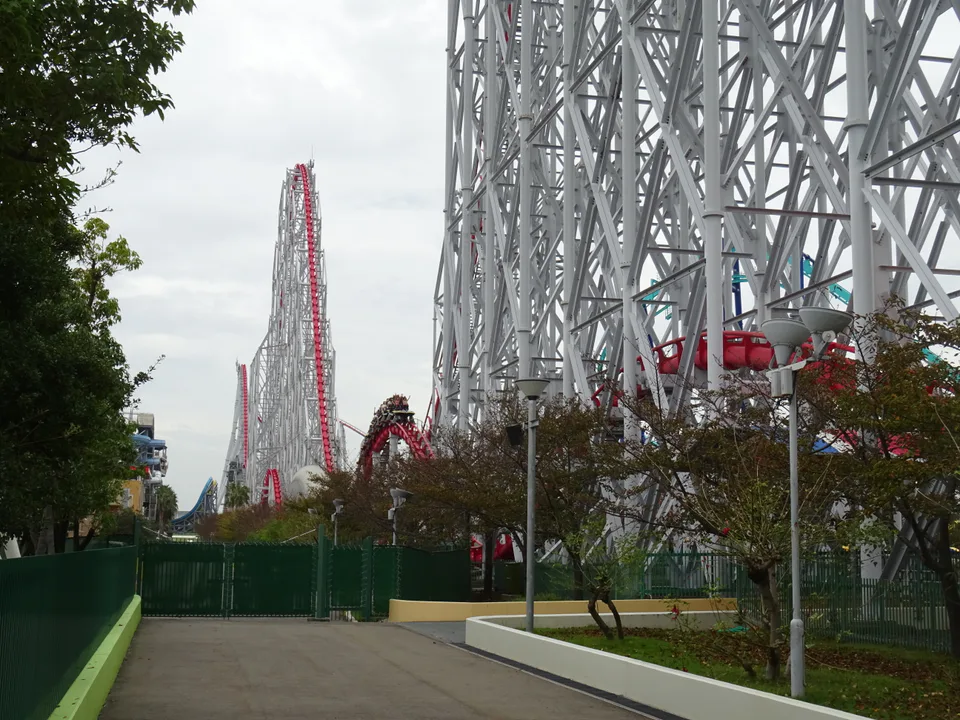
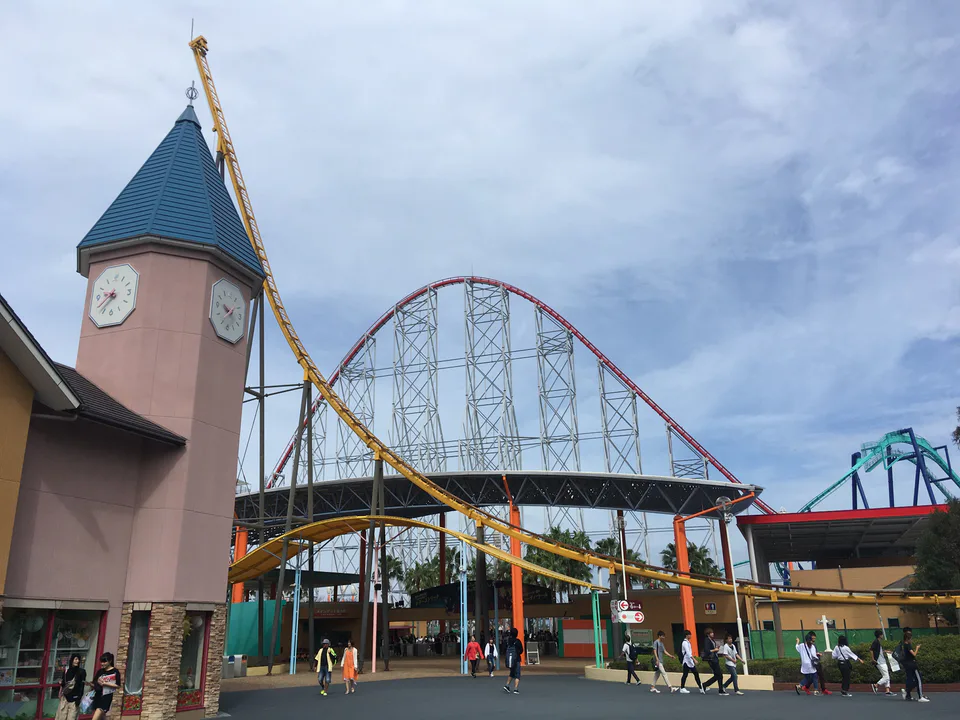
The official 2026 ride list makes the break-even point unusually clear. Hakugei costs ¥2,500 per ride and Steel Dragon 2000 also costs ¥2,500. Adult admission is ¥1,800. If you buy admission and then ride both once, the arithmetic reaches ¥6,800 before you touch another attraction. For a coaster-focused visitor, the Passport does not need a complicated spreadsheet.
But change the list and the conclusion changes. Admission ¥1,800 plus Hakugei ¥2,500 plus the Giant Ferris Wheel at around the ¥1,000 level is still below a ¥6,000 Passport. Someone who wants one signature coaster, a view and a relaxed walk through the park should not buy unlimited rides just because the word “Passport” sounds like the complete ticket.
There is also a penalty for indecision. If an adult enters with a ¥1,800 admission ticket and later upgrades inside the park, the current additional Passport price is ¥5,200. Total spend becomes ¥7,000. In other words, “I will go inside and decide later” can cost ¥1,000 more than buying the ¥6,000 Passport from the start. If you are already 80–90% sure you will ride two headline attractions, delaying the decision is not free flexibility.
A child’s height can invalidate the adult break-even logic before you reach the gate
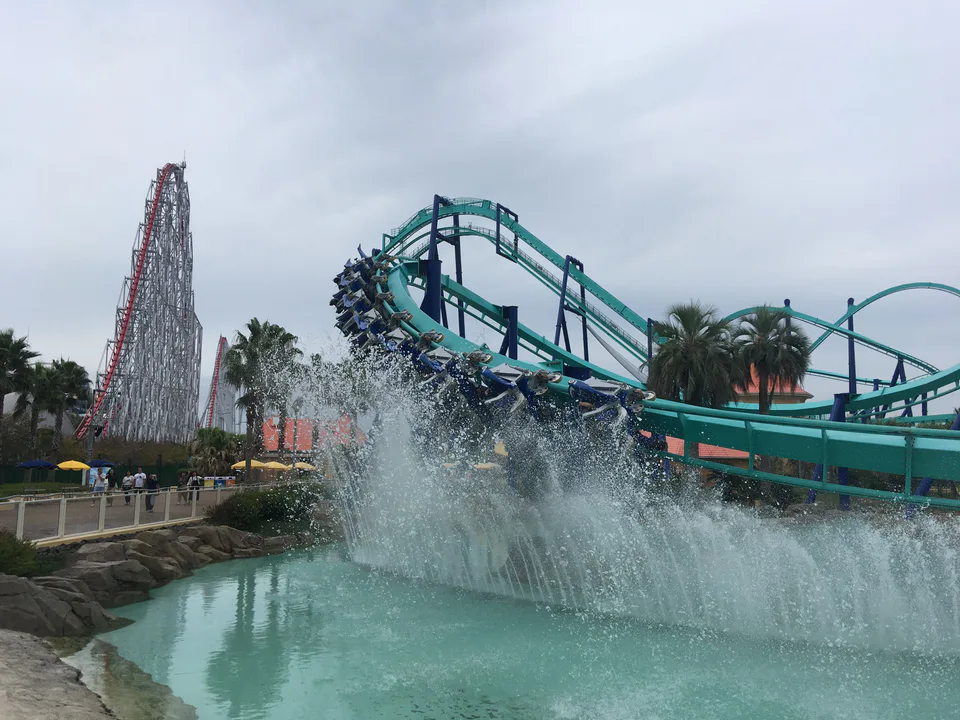
Family ticket math starts with height, not age. Hakugei requires at least 130 cm. Steel Dragon 2000 requires riders to be at least 10 years old and between 140 and 185 cm. Arashi starts at 120 cm, while Acrobat requires 135–198 cm. Those four rides are exactly the expensive attractions that make an adult Passport easy to justify, yet they may not exist on a younger child’s usable ride list.
That does not make the park a bad family choice. Kids Town and several family attractions have much lower thresholds or no minimum height. It does mean you should build a ride list for each child before multiplying the same ticket by four. A family with one 145 cm child and one 105 cm child can effectively split into two different parks: one parent and the taller child chasing coasters, while the other parent spends much more time in lower-height attractions.
The ¥4,000 Kangaroo Passport is useful only when one adult is genuinely the child’s companion
Nagashima has a ticket that international visitors can easily miss: the Kangaroo Passport. The current adult price is ¥4,000, it is sold at the ticket counter, and it is designed for an adult aged 16 or older who accompanies a preschool child on rides the child can use. The child still needs a separate ticket or Passport. This is not an adult discount Passport that can be used independently across the park.
For the parent whose job that day is almost entirely “stay with the preschooler,” the logic is strong. Compared with a standard adult Passport at ¥6,000, the saving is ¥2,000. But if both parents plan to swap childcare and each wants solo turns on Hakugei or Steel Dragon, the restriction becomes a problem. You are saving money by accepting a narrower role. If you do not want the narrower role, it is not the right ticket.
The same principle applies to grandparents. If they are entering to spend time with the family, eat, shop and watch the children rather than ride premium attractions, starting from the ¥1,800 admission ticket is often more rational than copying the younger adults’ Passports. Nagashima rewards mixed ticket baskets more than tidy-looking ones.
Child Switch saves the second queue — it does not save the second adult ticket
Nagashima’s Child Switch is useful when a child cannot meet a ride’s height or age rule. The family queues together, one adult rides while the other waits with the child near the exit or another staff-designated area, and then the adults swap without the second rider joining the full queue again. That can preserve a large amount of family time on headline rides.
The financial catch is easy to miss: every adult who actually rides still needs their own Passport or ride ticket, and any priority ticket also has to cover the actual riders. Child Switch therefore solves duplicated waiting, not duplicated ticket cost. If both parents want Hakugei and Steel Dragon, the cheaper companion-only ticket may stop fitting even though Child Switch makes the day easier.
Weather can destroy a coaster Passport without closing the whole park
The park marks some attractions as able to operate in light rain, but it also warns that heavy rain, strong wind and thunderclouds can stop rides. That distinction matters most to thrill-focused visitors. If nearly all of your Passport value is tied to four outdoor high-thrill rides, a windy or stormy forecast is a financial risk, not just a comfort issue.
A family using Kids Town, indoor attractions and medium-intensity rides has more ways to absorb weather disruption. A coaster enthusiast has fewer substitutes. This is a good example of why the same ¥6,000 ticket can be robust value for one family and fragile value for another. Check the actual operating status close to your visit rather than treating “the park is open” as proof that your personal ride list is open.
Nagoya to Nagashima is simpler by direct bus — but “no reservation” does not mean guaranteed boarding
The current Meitetsu fare from Nagoya’s Meitetsu Bus Center to Nagashima Onsen is ¥1,400 one way or ¥2,700 for a round-trip ticket valid for two days. Reservations are not required. The timetable was revised on July 11, 2026, so an old blog screenshot or saved timetable should not be treated as current even though the route itself remains straightforward.
The park also publishes an unusually specific Google Maps warning: directions may surface “Nagashima Kaigan,” but Spa Land, Yuami no Shima and Jazz Dream visitors should stay on to the terminal stop “Nagashima Onsen.” This is a small naming difference with a real family-day consequence: getting off early turns a direct-bus morning into extra walking and navigation before you have used a single minute of your park ticket.
The resort’s official access guide lists a direct highway bus from Meitetsu Bus Center in Nagoya to the terminal stop Nagashima Onsen, with a fastest journey of about 50 minutes when traffic is normal. For families, that can be easier than taking rail to Kuwana and transferring to another bus. You reduce one transfer and arrive at the resort bus terminal rather than solving another local connection.
The hidden constraint is capacity. Highway buses do not carry standing passengers, so a full bus can mean waiting for the next one. Traffic delays are also possible. That makes a hotel marketed as “near Nagoya Station” less useful than the real morning walking route to Meitetsu Bus Center. If you are still choosing a Nagoya base, the Vessel Hotel Campana Nagoya access and station-walk review is useful for thinking about luggage and station-area walking rather than map-pin distance alone.
A ¥6,000 Passport plus the Nagoya bus is already ¥8,700 before lunch
For an adult, the ¥2,700 round-trip bus plus the ¥6,000 Passport creates a ¥8,700 transport-and-ride baseline before food, lockers, shopping or priority ride tickets. That can still be excellent value for a coaster-focused day. It is much harder to defend for the companion who rides once and spends several hours at the outlet. This is why mixed tickets are not a minor optimization: the difference sits on top of a day that already has a substantial transport cost.
If your autumn Nagoya trip has several possible day trips, compare Nagashima against Korankei as an autumn day trip rather than assuming the theme park automatically deserves the suburban day. If you would rather keep the day in the city, the Osu Kannon food-tour decision guide shows a completely different use of the same travel day.
The outlet is next door, but every outlet hour makes an unlimited-ride Passport worse
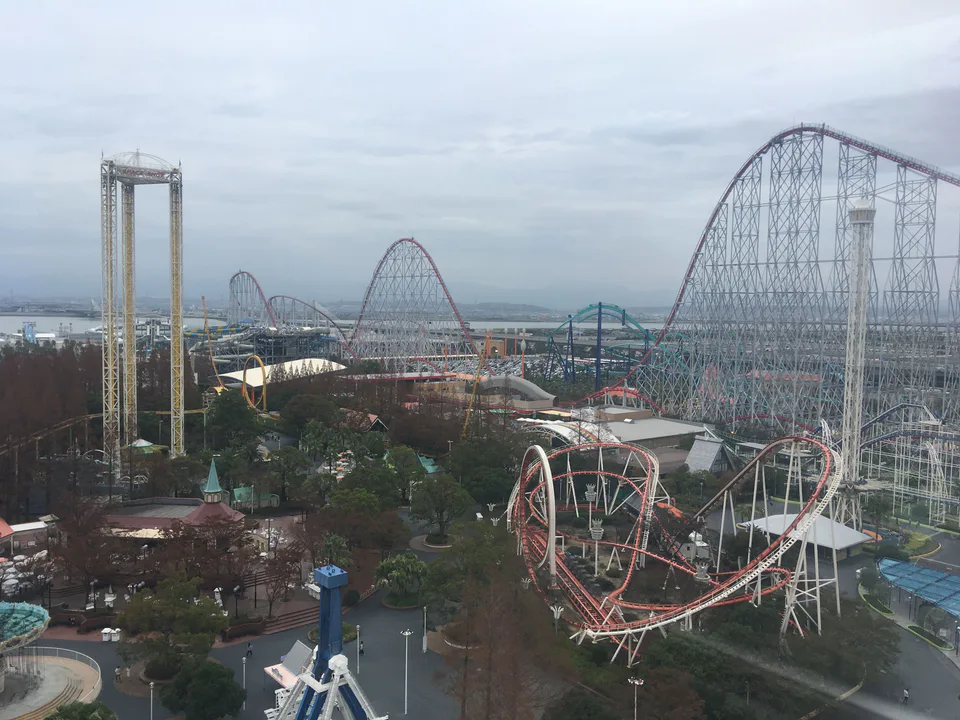
Nagashima Resort creates a very specific planning trap: Spa Land, Jazz Dream outlet shopping, Yuami no Shima hot spring, the seasonal water park and the Anpanman children’s museum all look easy to combine because they share one resort area. Geographically, that is true. Economically, it can be false.
If you paid ¥6,000 for unlimited rides and leave the park after two or three hours to shop, you are converting a high-use ride product into an expensive admission ticket. Conversely, if half your group barely rides, admission plus outlet time may be the better plan. “They are next to each other” is not a reason to use every product on the same day.
This is also why the published Nagashima Jumbo Seawater Pool ticket and outlet plan should be treated as a separate summer decision. The pool has its own ticket combinations; a regular amusement-park Passport does not automatically turn summer into an all-inclusive water-park day.
Do not treat the Jumbo Seawater Pool as a free summer add-on
In summer, the resort sells separate combinations for amusement-park admission plus the pool, and for rides plus the pool. If the child’s real priority is water slides rather than Hakugei, your ticket order should reverse: start with the pool product and only then decide whether unlimited rides are worth adding. Buying a standard ride Passport first and discovering that the family mainly wants the water park is exactly the kind of avoidable mismatch this article is designed to prevent.
For families who would rather spend the day indoors, the Port of Nagoya Public Aquarium 2026 ticket guide is a cleaner comparison. It is not a substitute for roller coasters, but it is a useful alternative when weather, younger children or a lower-energy day matter more than thrill rides.
The after-15:00 Passport is cheaper, but the closing time decides whether it is actually better
The current adult Passport falls from ¥6,000 to ¥4,200 after 15:00. Admission-only also has an afternoon price, generally sold at the park. That sounds like a straightforward bargain until you look at the operating calendar. Nagashima can have very different closing times depending on season and special dates. A late ticket on a long summer evening is a different product from a late ticket on a day with only a few hours left.
Use the afternoon option only after you know the day’s closing time and your exact ride priorities. Someone who can name two or three rides and move quickly may use three hours well. A first-time family with meals, bathroom breaks, child-height checks and several areas to explore usually benefits more from a full day. Discount percentage is not the same as usable-hours value.
Do not buy a full Passport just because you want the hot spring at the end
The current post-park add-on is ¥1,000 for adults, ¥600 for elementary-school children and ¥400 for children aged two or older. It is sold on site for people coming from the amusement park, and Yuami no Shima does not allow re-entry. That pricing makes the hot spring unusually attractive as the final step of the day, but it does not make a ¥6,000 amusement Passport necessary if you were not going to use the rides in the first place.
Yuami no Shima works best as an end-of-day decision, not as a reason to overbuy amusement-park rides. The mother plan is simple: use Spa Land while ride time still matters, then move to the hot spring when you are finished with the park. Once your family mentally shifts into bathing, eating and resting mode, trying to return to another coaster is usually poor use of both time and energy.
The important planning point is sequence. Do not put outlet shopping, a long hot-spring break and unlimited rides in competition with each other at midday. If your main goal is a calmer indoor or evening experience, Art Aquarium Nagoya 2026 or the public aquarium may fit a city day better without consuming the transport time of Nagashima.
A family of four should often split the adults into two ticket roles
Here is the family scenario that makes the biggest difference. Two young children travel with two adults. One adult is happy spending nearly the entire day with the children in Kids Town and lower-height attractions. The other adult genuinely wants the headline coasters whenever childcare can be swapped. Buying two identical adult Passports ignores the fact that these adults are purchasing different days.
The first adult should test the ¥4,000 Kangaroo Passport conditions. The second should test the ¥6,000 standard Passport against the coaster list. That single split can save ¥2,000 without reducing anything the companion adult actually planned to do. But if both adults want multiple solo thrill rides, both standard Passports may be worth the extra cost because the cheaper Kangaroo product would constrain how they use the park.
There is no prize for producing a symmetrical booking confirmation. A mixed basket is often the correct family purchase.
A useful four-person example makes the split-ticket logic concrete. Imagine two adults, a 145 cm older child and a preschooler. Adult A and the older child both want Hakugei and Steel Dragon plus several other rides. Their Passport case is strong. Adult B expects to spend most of the day accompanying the preschooler in lower-height attractions and has no serious coaster list. Adult B should test the Kangaroo Passport conditions instead of copying Adult A. The preschooler then needs the appropriate child ticket separately. This is not a niche optimization: it is exactly how the park’s ticket design acknowledges that family members can be buying different experiences on the same day.
The same family can reach a different answer on another visit. If the adults agree to alternate childcare so both can take several headline rides, two standard adult Passports may be cleaner than forcing one adult into the companion-only role. The price difference is buying freedom to separate from the preschooler and use the adult ride list independently. That is the real trade-off behind the Kangaroo Passport: lower cost in exchange for a narrower way to use the park.
NO-GO: three situations where I would not start with the ¥6,000 Passport
First: the children are below the height thresholds for most expensive thrill rides and the adults are not planning to take turns riding them. Second: the real day is outlet shopping, Yuami no Shima or Anpanman, with Spa Land as a side visit. Third: the forecast has meaningful wind or storm risk and your personal wish list is almost entirely large outdoor coasters. In all three cases, “unlimited” can be a feature you pay for but cannot realistically use.
The opposite case is easy. If you meet the height restrictions, you came specifically for Hakugei and Steel Dragon, and you will stay in the park for most of the day, the Passport is not a difficult decision. Two ¥2,500 rides plus admission already exceed the full-Passport price. Everything else you ride becomes incremental value.
Trip.com can be the final verification step — not the place where you decide what ticket you need
Trip.com currently has an exact Nagashima Spa Land attraction page under product ID 63610458. That is useful once you have already decided which family members need unlimited rides and which do not. Before payment, match your date, ticket name, included rides and usage conditions. Do not let an OTA package label replace the work of deciding who is a rider, who is a companion and who only needs admission.
Trip.com|Check your date and the exact Nagashima Spa Land ticket options
One 2026-specific exception is worth checking before you lock the day: if your dates overlap major regional events, hotel prices and transport priorities can shift. The Aichi-Nagoya Asian Games 2026 travel guide is the better place to verify whether your Nagoya base or event schedule should be fixed before you commit a full suburban day to Nagashima.
Final decision: buy by person first, then optimize the day
For most mixed families, the correct Nagashima Spa Land ticket strategy is not “Passport or no Passport?” It is three separate questions. Who will ride multiple expensive attractions? Who is mainly accompanying a preschool child? Who is mostly entering the park to stay with the group? Start those people at ¥6,000 Passport, ¥4,000 Kangaroo Passport or ¥1,800 admission respectively, then adjust only if their actual ride list proves otherwise.
Next, check the day’s weather and operating hours. Only then compare after-15:00 pricing, the pool, outlet shopping or a hot-spring finish. If your Nagoya trip is only three or four days, the largest question remains whether Nagashima deserves the entire day. The Nagoya 4-day trip decision guide helps put that full-day cost beside Takayama and city time. If you want a lower-energy family option, compare the Port of Nagoya Public Aquarium before locking in a resort day.
Itabashi Fireworks 2026 Is Over: What the Takashimadaira Change Means for Future Visits
Four Adults in Okinawa? “Sleeps 4” Is Not the Same as Four Real Beds
A Mount Fuji Day Trip from Tokyo Can Buy You Transport — Not the View
JR TOKYO Wide Pass 2026: Don’t Bundle Skyliner or Subway Tickets Until You Map These 3 Days
Sources
Nagashima Spa Land official|Opening hours and ticket prices
Nagashima Spa Land official|Kangaroo Passport
Nagashima Spa Land official|Ride restrictions and individual ride prices
Nagashima Resort official|Direct bus from Nagoya
Trip.com|Nagashima Spa Land exact attraction page
Images: Wikimedia Commons — Overview of Nagashima Spa Land 2, Acrobat Nagashima Spa Land 4, Shuttle Loop and Steel Dragon 2000, and Steel Dragon 2000 (Nagashima Spa Land). These are historical on-site reference photos, not claims about current ride operation on a specific 2026 date.