
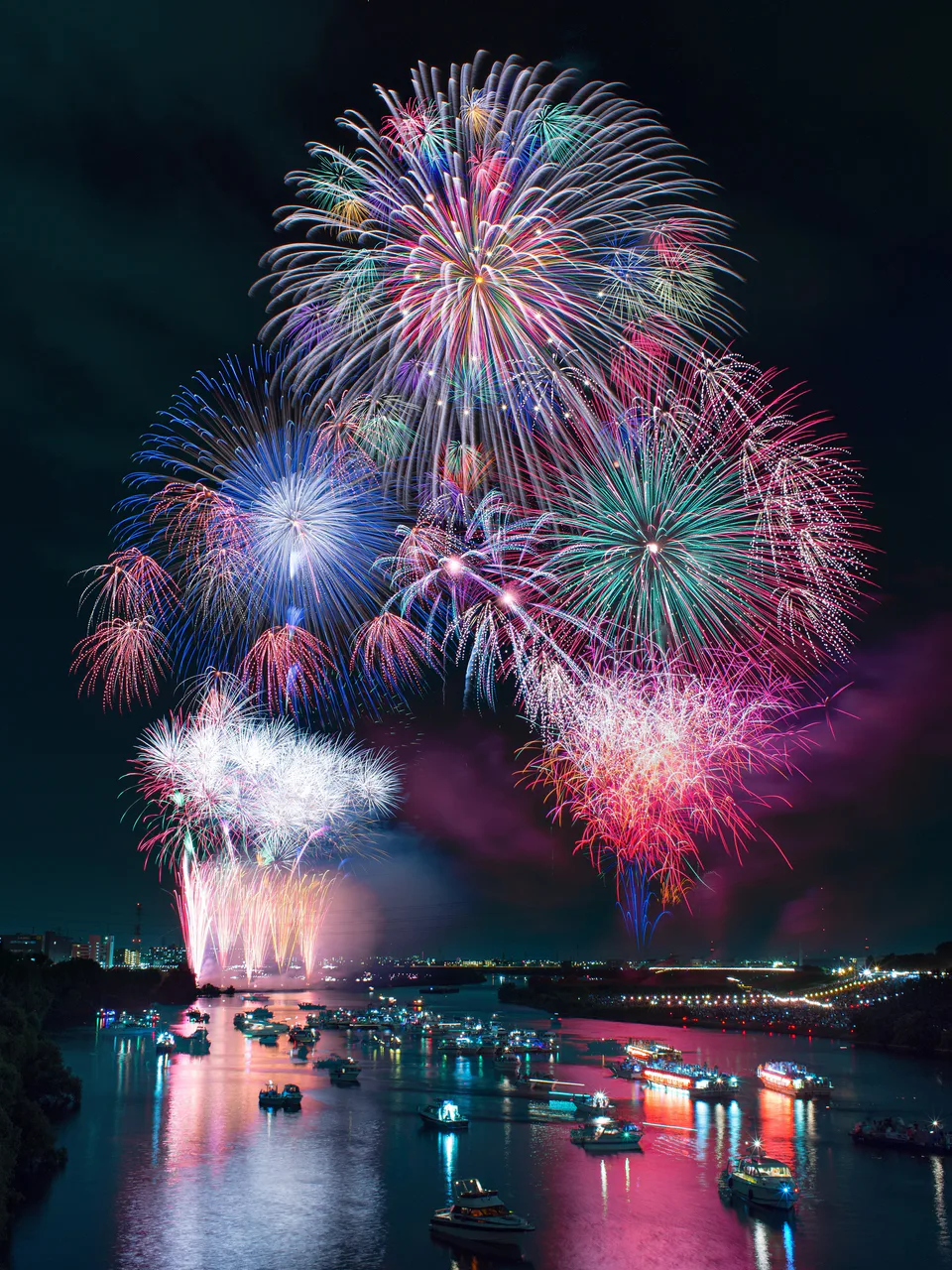
The 2026 Itabashi Fireworks is over. The 67th event was held as scheduled on Saturday, August 1, 2026 from 19:00 to 20:30. If you are planning a future Itabashi Fireworks visit, the useful part of the 2026 article is not the date, ticket sale or exact station instruction. It is the lesson from the largest layout change: the official free-viewing area moved upstream and free viewers were told to use Takashimadaira Station, while familiar downstream areas became paid seating.
Do not reuse the 2026 map as a 2027 plan until the organiser publishes the next event. As of August 25, the official site is still the 2026 event site and does not provide a confirmed 2027 date or venue layout. Treat Takashimadaira as the 2026 precedent, not a permanent rule.
↔ Scroll table left or right
What from 2026 is still useful? | Use it for future planning? | Why |
2026 event date: Aug 1 | No | The event has already happened; future dates need a new official announcement |
Takashimadaira for the 2026 free area | Historical reference only | The organiser explicitly redirected free viewers there in 2026, but future layouts can change again |
Old downstream free-viewing maps | No | In 2026 those areas became paid unreserved seating, showing why old crowd maps can become actively misleading |
Arrive with station and exit plan already chosen | Yes | Festival-day crowd control can override the shortest route shown by an ordinary map app |
Plan the exit before choosing the viewing spot | Yes | Post-show crowd flow and station routing remain a higher-cost failure mode than a slightly worse viewing angle |
What actually changed in 2026?
The organiser's 2026 FAQ says the general free-viewing area moved from the downstream side to the upstream baseball-field area. Visitors using that free zone were explicitly instructed to use Toei Mita Line Takashimadaira Station.
At the same time, the downstream hardball/softball baseball fields and Areas 14–17 changed to paid unreserved seating. This is the single most reusable lesson from 2026: an old “free viewing” blog post can become wrong even when the fireworks launch site looks similar.
The official access page made the consequence unusually clear. Free viewers without a paid-seat ticket were told not to use JR Ukimafunado Station; the organiser warned that walking from there to the new free area could take more than 90 minutes. In other words, the wrong station was not a five-minute mistake. It could destroy the evening.
The 2026 show was held, so this page should no longer read like a booking guide
The official site announced on August 1 that the event would proceed as scheduled. The 2026 planning cycle is therefore closed: ticket sales, same-day weather decisions, the 2026 traffic controls and the Takashimadaira free-area entry flow are historical facts now, not future instructions.
That changes how this article should be used. If you attended in 2026, it explains why the free area and station advice differed from older guides. If you are planning the next edition, use it as a checklist of what must be re-verified—not as a route map.
For 2027, verify these five items before booking a hotel or train
Confirmed date and operating hours. Do not infer the next date from the 2026 Saturday.
Free-viewing area. Check whether the upstream baseball-field arrangement is retained, moved or replaced.
Official station assignment. The 2026 organiser separated free viewers and paid-seat viewers by station. That can matter more than nominal walking distance.
Paid versus free boundaries. A place that was free two years ago can become ticketed.
Return flow and traffic controls. The viewing spot is only half the itinerary; the crowded walk back to rail is the second half.
Only after those five are published should you decide whether a Takashimadaira-side hotel, a Mita Line base or another Tokyo neighbourhood provides any special advantage.
Why the 2026 Takashimadaira change matters beyond Itabashi
Fireworks planning tends to overvalue “secret spots.” The 2026 Itabashi change shows the opposite priority: legal access and crowd routing should be solved before viewing angle. A spot can have an excellent theoretical sightline and still be a bad plan when event barriers, paid-seat zones or one-way pedestrian controls block the route.
For a future Tokyo fireworks trip, use this order:
official event status
→ legal viewing zone
→ assigned/recommended station
→ toilet and food access
→ post-show exit
→ viewing angle
That order is deliberately different from most photo-first guides. It minimises the failure that costs the most: reaching the river and discovering that the route or viewing zone you saved from an old article is no longer usable.
Free viewing is not automatically the best-value option
In 2026, the free upstream area was the budget choice, but paid seating bought something other than a closer fireworks image: a defined legal place to sit and a more predictable relationship between your ticket, station and viewing zone.
For a solo traveller willing to arrive early and accept a less controlled angle, free viewing can be rational. For a family with young children, older travellers, or anyone arriving later, the value of a paid seat can rise because it reduces the uncertainty you must manage on the riverbank.
The correct comparison for a future event is therefore not “free = smart, paid = expensive.” It is:
paid-seat premium
versus
extra arrival time + queue uncertainty + seating uncertainty + exit friction
Recalculate that trade-off only after the next organiser publishes the actual seat map.
Do not move hotels for one fireworks night unless the hotel solves the exit
A hotel near the event is useful only when its location removes a real late-night problem. Moving from an otherwise good Tokyo base simply to be “closer to Itabashi” can create a checkout, luggage transfer and second check-in while still leaving you in the same post-show rail crowd.
A stronger hotel move would do one of two jobs: let you walk or make one simple rail journey after the event, or protect a very early departure the next morning. If it does neither, keep the existing Tokyo hotel and treat the festival as an evening excursion.
Use Where to Stay in Tokyo for First-Time Visitors for the main base decision rather than letting one past event map dictate the whole stay.
2026 reference: the key official rules
The 67th Itabashi Fireworks was held on August 1, 2026, 19:00–20:30.
The organiser said the free-viewing area moved upstream to the baseball-field side.
Free viewers were instructed to use Takashimadaira Station.
Several downstream areas changed to paid unreserved seating.
The access page warned free viewers not to use Ukimafunado; it estimated more than 90 minutes from that station to the free area.
Vehicle access around the venue was restricted during the event period.
These facts explain the 2026 experience. They do not confirm the next event's layout.
Final verdict
Do not use this article to plan an Itabashi Fireworks date in the future until the organiser publishes the next edition. Use it to understand the 2026 structural change: the free area moved, the recommended station changed with it, and old downstream free-view advice became wrong.
When the next event is announced, recheck the official map from zero. If Takashimadaira remains the free-view station, you can reuse the 2026 transport logic. If the layout changes again, discard the old route immediately. The highest-value lesson from Itabashi 2026 is not where to stand; it is never to treat last year's crowd-control map as permanent infrastructure.
Gujo Odori All-Night Dance 2026 Is Over: What Still Runs This Year?
Katakai Festival 2026: September 11 or 12? Daytime Fireworks, Seats and the Nagaoka Exit
Akita Kanto 2026 Is Over: What S, A, B and Free Viewing Taught Us
Obon Shinkansen 2026: What the Reserved-Only Nozomi Rule Actually Changed
Where to Stay for the Saga Balloon Fiesta 2026: Saga, Tosu or Hakata
References
Itabashi Fireworks — official 2026 site and event status · 2026 event overview · 2026 free-area FAQ · 2026 official access instructions. Checked August 25, 2026. No 2027 date or layout is assumed in this article.