
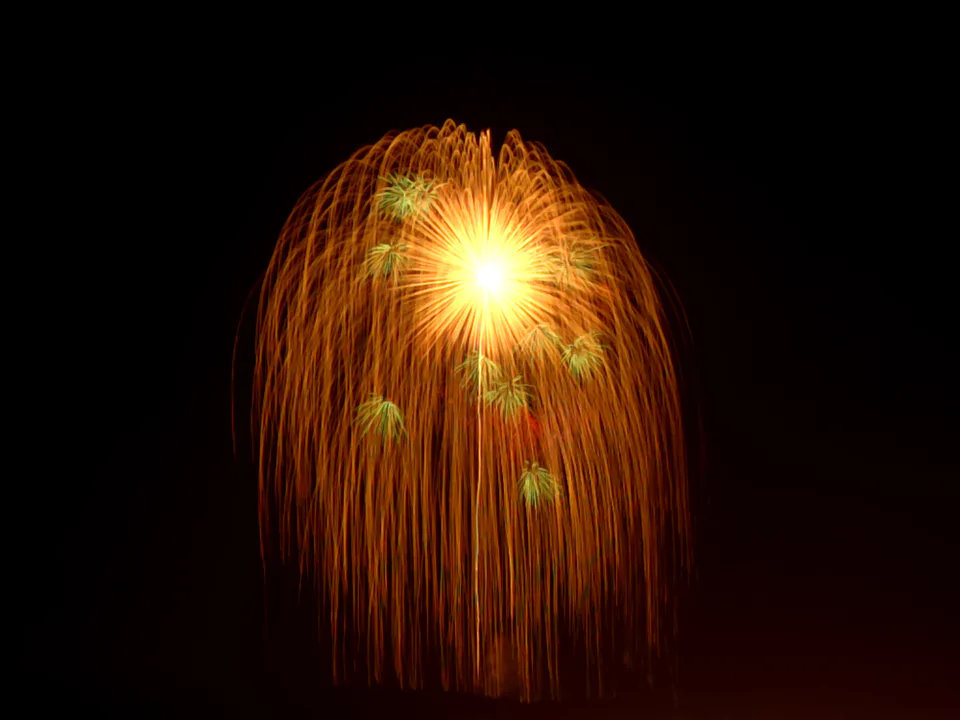
Katakai Festival 2026 runs Friday, September 11 and Saturday, September 12. Both nights have the main dedication fireworks from 19:30 to 22:20, with the four-shaku shell scheduled for 22:00. September 12 adds daytime fireworks from 13:00 to 14:00, including the rare daytime three-shaku shell at 14:00. That makes the date choice more important than simply asking which night is busier.
There is also a practical 2026 update that changes the booking decision: the official association now says the September 12 one-day box seats are sold out, while September 11 one-day boxes and two-day boxes remain the alternatives listed on the official site. The camera-seat allocation has also sold out. For overseas visitors, the association says it does not sell the box seats internationally by post, but plans to sell individual same-day admission at the venue for ¥5,500 (about US$35). Exchange rates move; USD figures here are approximate.
If this is your first major Niigata fireworks trip, compare the route burden with the Nagaoka Fireworks guide. Katakai is a smaller-town dedication festival with a very late signature shell, so the return journey matters more than the launch count.
Katakai 2026 in 30 seconds
↔ Scroll table left or right
Your priority | Best starting plan | Main trade-off |
First visit, simplest ticket choice | September 11 evening | No daytime-fireworks session, but the official site still lists one-day box-seat availability |
Daytime fireworks are part of the reason to travel | September 12 before 13:00 | Much longer festival day; one-day box seats are already sold out |
Four-shaku shell is the non-negotiable moment | Either night, stay through 22:00 | You accept the hardest part of the exit rather than leaving early |
Overseas visitor without a mailed Japanese box-seat ticket | Plan around same-day individual admission | Official same-day individual ticket is ¥5,500 (~US$35); do not assume foreign box-seat delivery is available |
Need the easiest rail-based return | Build the whole evening around the Nagaoka bus | The post-show special bus costs much more than the normal outbound route |
September 12 is not merely “the second night”
The official festival overview lists daytime fireworks on Day 2 from 13:00 to 14:00, with the daytime three-shaku shell at 14:00. The night programme then starts at 19:30 and runs until 22:20. In other words, a full September 12 plan contains a five-and-a-half-hour gap between the daytime session and the night show.
That gap is the hidden cost. If you arrive for 13:00, do not turn 14:00–19:30 into a second sightseeing itinerary. Eat, hydrate, find shade, use toilets, charge devices and reduce walking. The payoff for arriving early is the unusual daytime-fireworks experience; the penalty is carrying your body and belongings through a very long day before the signature 22:00 shell.
For an older traveller, a heat-sensitive group or anyone mainly coming for the four-shaku shell, I would choose an evening-only plan. You give up the daytime three-shaku, but you arrive with more energy for the part of the programme that cannot be recreated in daylight.
The seat decision changed: September 12 one-day boxes are sold out
The current official seat page lists a two-day box at ¥33,000 (about US$207) for up to eight people, with around six people recommended when eating and drinking. A one-day box is ¥25,300 (about US$159) for up to eight. As of the latest official update, the September 12 one-day allocation is sold out; September 11 one-day boxes and two-day boxes are the published remaining routes. The dedicated camera seats have also reached their allocation and are no longer being sold.
↔ Scroll table left or right
Product | 2026 official price/status | Who it now suits |
Sep 11 one-day box | ¥25,300 (~US$159), still listed as an option | Group that wants a fixed close viewing base without committing to both nights |
Sep 12 one-day box | ¥25,300 (~US$159), sold out | Do not build a new plan around this inventory |
Two-day box | ¥33,000 (~US$207) | Group genuinely attending both nights; poor value if the second night is only FOMO |
Camera seat | ¥5,500 (~US$35), allocation sold out | No longer a live booking option |
Individual same-day admission | ¥5,500 (~US$35) per person | Especially relevant to overseas visitors who cannot receive the association's paper box ticket abroad |
The international-ticket rule is unusually important for an English-language guide. The association explicitly says it does not sell box seats to people overseas because payment handling and international postage for paper tickets create problems. It instead directs overseas visitors toward the individual ticket sold on site on September 11 or 12. That is a booking constraint, not a minor payment preference.
Nagaoka transport is now a bookable decision, not a “check later” footnote
The old version of this guide said detailed 2026 transport still needed to be published. That is no longer true. The Katakai Fireworks Association has updated its 2026 transport information.
For rail-based visitors, the normal outbound bus from Nagaoka toward Katakai is listed at ¥470 (about US$3) for an adult. Around the end of the fireworks, special return buses operate from the temporary Katakai Gonochō stop toward Nagaoka Station East Exit. The return is a special charter arrangement with a ¥2,500 (about US$16) cooperation fare for both adults and children.
↔ Scroll table left or right
Leg | 2026 reference | Planning consequence |
Nagaoka → Katakai | Regular bus fare ¥470 adult / ¥240 child | Cheap outbound transport does not tell you the cost of getting home |
Katakai → Nagaoka after the show | Special bus cooperation fare ¥2,500 per adult or child | Budget the return as a separate event transport product |
Drive + shuttle | 2026 parking/shuttle routes are published | Choose the parking system before arrival; do not improvise inside the traffic-control zone |
The asymmetric fares are exactly why “I will just take the bus” is too vague. The outbound trip behaves like ordinary local transport; the post-fireworks return is an event operation. Save the official transport page and carry enough payment flexibility for the route you actually intend to use.
Driving only makes sense when the parking and shuttle are chosen together
The association now publishes 2026 traffic information and has added a Harashin-linked parking/shuttle option. The current notice lists outbound shuttle departures from Harashin Hanazono via Raikōji toward the temporary Gonochō stop at 30-minute intervals from 15:00 to 17:30.
The useful rule is not “car versus train.” It is which exact parking lot, shuttle and return window form one complete chain. A car parked in the wrong direction after 22:00 can be less flexible than a bus seat. If you have not chosen that chain, do not drive simply because rural Niigata looks easier by car on an ordinary map.
The 22:00 four-shaku shell creates the exit conflict
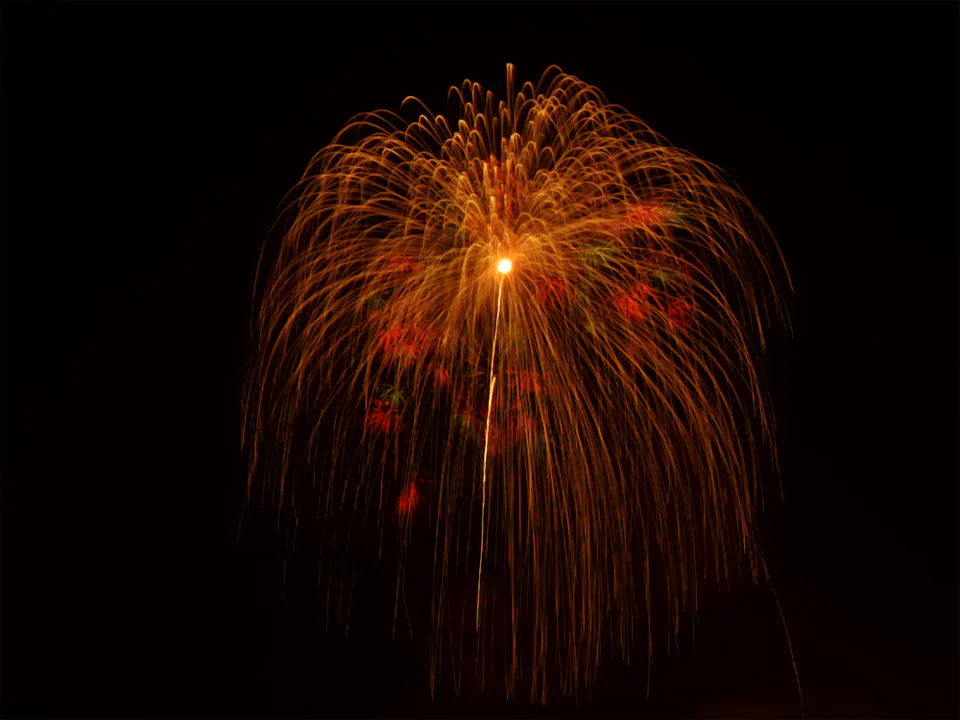
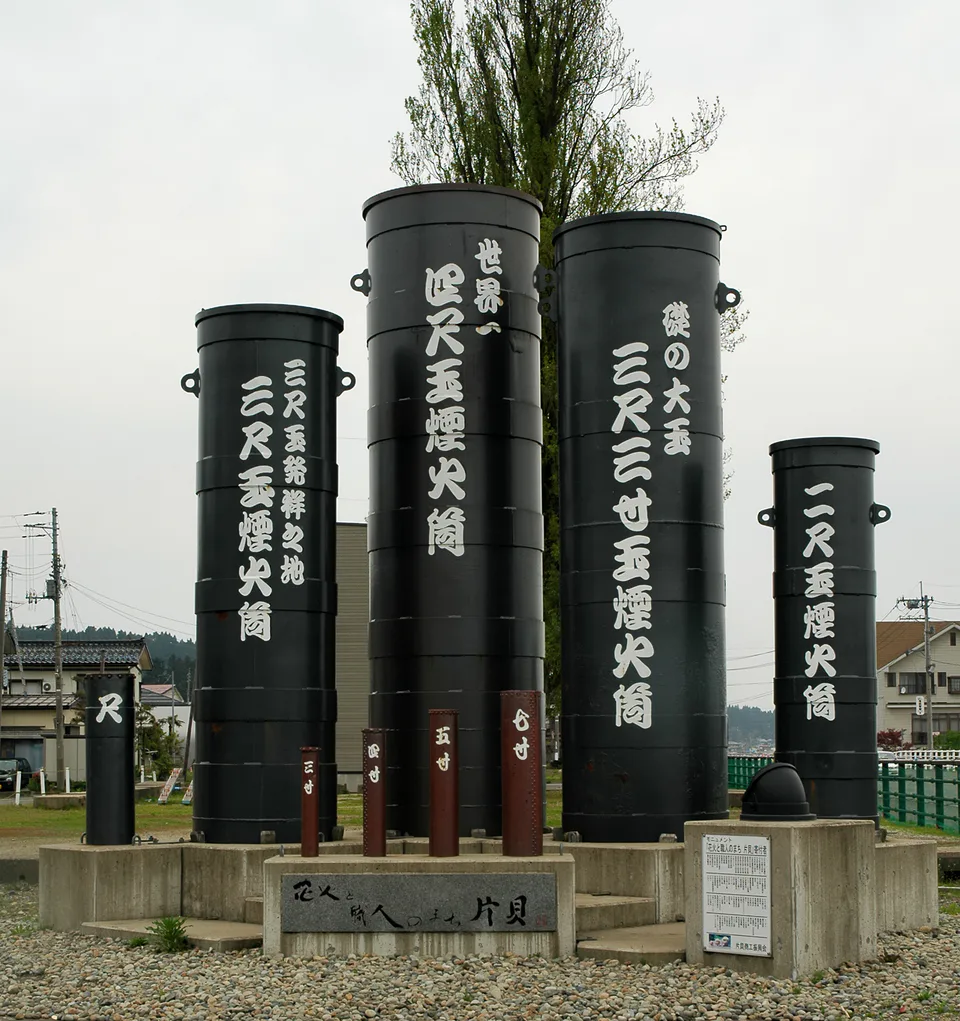
The four-shaku shell is scheduled at 22:00 on both nights, while the overall fireworks programme continues until about 22:20. Leaving at 21:40 may improve the exit, but it removes the exact moment many travellers came to Katakai to see.
This creates a clean decision boundary:
If the four-shaku shell is the trip's defining objective: stay for it and design transport around the crowded late exit.
If you mainly want a good fireworks evening: an earlier exit can be rational when a hotel check-in, child stamina or fixed connection matters more.
Do not pretend you can optimise both perfectly. A fast exit and the signature 22:00 shell are competing objectives.
Rain does not automatically cancel Katakai
The official overview says fireworks are launched in rain. A postponement becomes relevant in severe conditions such as typhoon-level weather and high-wind warnings. If postponed, the first- and second-day firing order remains in sequence and reserved-seat tickets slide with the changed firing dates.
That is different from many city fireworks where “rain” and “cancellation” are mentally bundled together. Pack for a wet outdoor night, but monitor the official firing-status announcement rather than making the decision from a generic weather app alone.
For trip-wide disruption, use the Japan rainy-day itinerary backup guide. For baggage, keep large luggage out of the festival day with the Japan luggage-forwarding guide.
One night or two?
For most international visitors, one Katakai night is enough. Choose September 12 when the daytime three-shaku and daytime fireworks are part of the attraction, or September 11 when you want a shorter festival day and a currently simpler one-day box-seat path.
Two nights make sense when you are specifically interested in the dedication culture, want to hear and see the programme twice, or are sharing a two-day box with a group that will genuinely use both evenings. The ¥33,000 two-day box is only about ¥7,700 more than a one-day box, but that price difference hides the real cost: another hotel night, another late exit and another day allocated to the same festival.
If this specialist stop is competing with the rest of Japan, use the 10-, 12- or 14-day first-trip itinerary before letting a cheap second-night seat become an expensive second day.
Final verdict
Choose September 12 only if the 13:00–14:00 daytime fireworks materially add to the trip; otherwise an evening-only plan is more resilient. As of the latest 2026 official update, September 12 one-day box seats and the camera allocation are sold out, while September 11 one-day boxes and two-day boxes remain the listed alternatives. Overseas visitors should pay special attention to the association's paper-ticket rule and the ¥5,500 same-day individual admission.
Most importantly, stop treating transport as unfinished information. The 2026 Nagaoka bus and event-return arrangements are now published. Build the return before deciding how long to stay after 22:00, because the four-shaku shell and the easiest exit are competing goals.
Hirome Market Lunch or Dinner? The Best Time to Go for Seats, Katsuo and Atmosphere
Yufuin no Mori 2026: Reservation Guide After the September Service Change
Kishiwada Danjiri Festival 2026: Free Viewing or Paid Kankan-ba Seats?
Takayama Autumn Festival 2026: Save October 9 Night for the Lantern Floats