
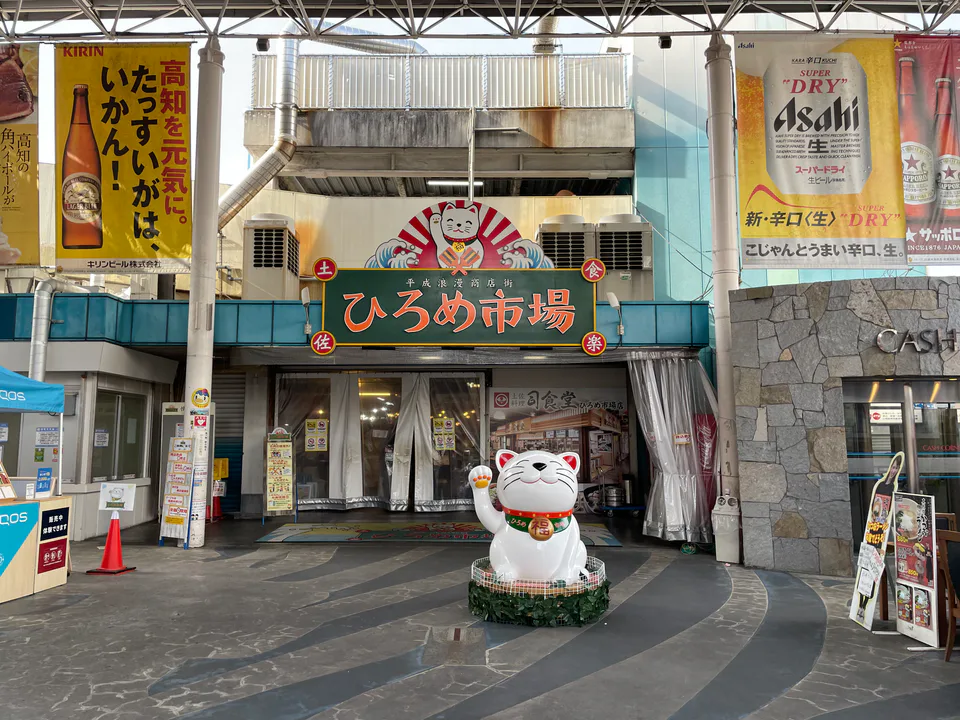
For a first visit to Hirome Market, late morning is the best default if you care most about katsuo, stall choice and getting a usable seat. Mid-afternoon works best when the market is a flexible stop between Kochi Castle and Obiyamachi. Go in the evening only when the shared-table drinking atmosphere is part of what you came for and you are willing to accept more seating uncertainty.
Checked August 26, 2026. Hirome Market currently lists general hours of 10:00–23:00 Monday–Saturday and 09:00–23:00 Sunday, while individual stalls keep their own hours. Myojinmaru Hirome currently lists 11:00–21:00 Monday–Saturday and 10:00–20:00 Sunday, and does not take seat reservations. Holiday, festival and temporary closures can override normal patterns, so recheck your date.
30-second decision: lunch, afternoon or dinner?
↔ Scroll table left or right
Time | Best for | Seat-control risk | What you are trading away |
10:30–11:30 | First visit, solo, families, katsuo-first meal | Lowest of the three windows | Less of the loud evening drinking atmosphere |
14:00–16:00 | Flexible snack/late lunch, slower browsing | Usually manageable, but stall hours vary | Some specific counters may pause or close earlier than the market |
17:00 onward | Groups, drinks, shared-table atmosphere | Highest when everyone needs to find seats together | More standing, table coordination and parking uncertainty |
Late morning is the easiest first visit because seats and food choice overlap
The useful late-morning window is not about finding an empty market; it is about arriving before the day becomes seat-first. You can understand the communal-table layout, decide which stalls matter, then start ordering as more counters open. This is especially useful for solo travellers because there is nobody to hold a table while you queue. Families and older travellers also benefit because they can solve seating before everyone gets hungry at once.
If Myojinmaru is the target, opening time matters more than market opening
The market can be open while your target stall is not. Myojinmaru’s current Hirome hours begin at 11:00 Monday–Saturday and 10:00 Sunday, and the branch does not reserve seats. That means a weekday 10:00 arrival is useful for learning the room and finding a seat, but not for immediately buying Myojinmaru katsuo. If that one counter is the purpose of the meal, time the visit around the stall rather than the building.
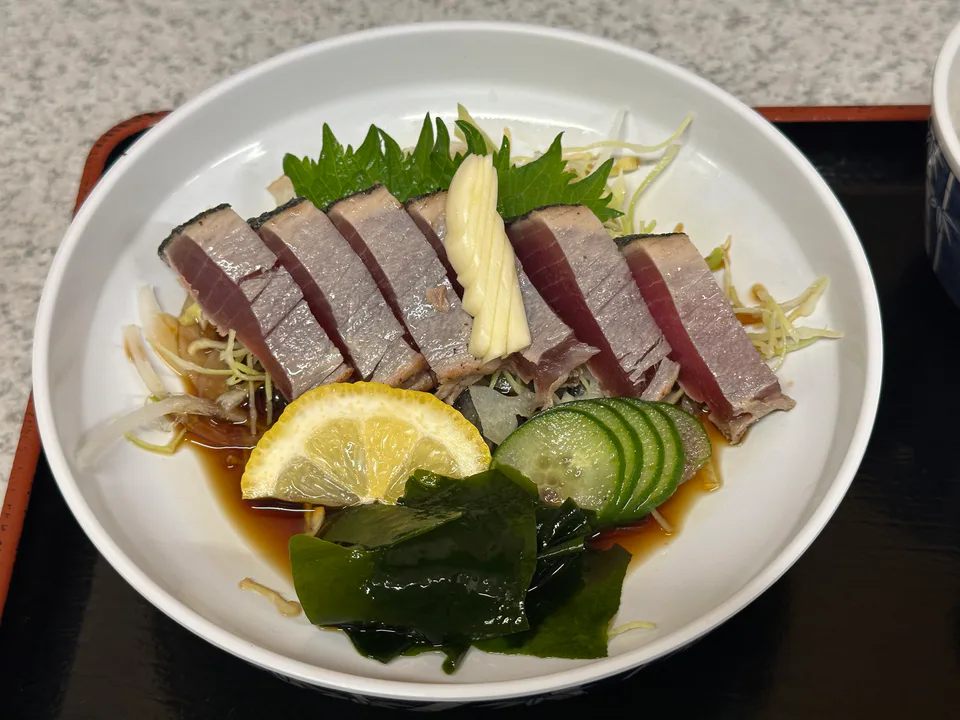
Mid-afternoon is the strongest compromise when dinner is already spoken for
A 14:00–16:00 stop is useful when Hirome is one piece of a Kochi day rather than the main evening plan. You can eat a smaller portion of katsuo, add one or two side dishes, and still leave room for a separate dinner. This timing also fits naturally after Kochi Castle or shopping in Obiyamachi. The trade-off is that individual shops may pause, close earlier, or keep different holidays, so a specific-stall mission needs same-day checking.
Dinner is not simply “better atmosphere”; it is a different product
After 17:00, Hirome works less like a sightseeing food hall and more like a communal drinking room. That is exactly why groups may prefer it: one person can look after a table while others buy food and drinks from several stalls, then the meal can stretch rather than end after one plate. For a solo traveller, a couple that wants a quick katsuo meal, or a family with tired children, the same energy can feel like extra friction rather than extra value.
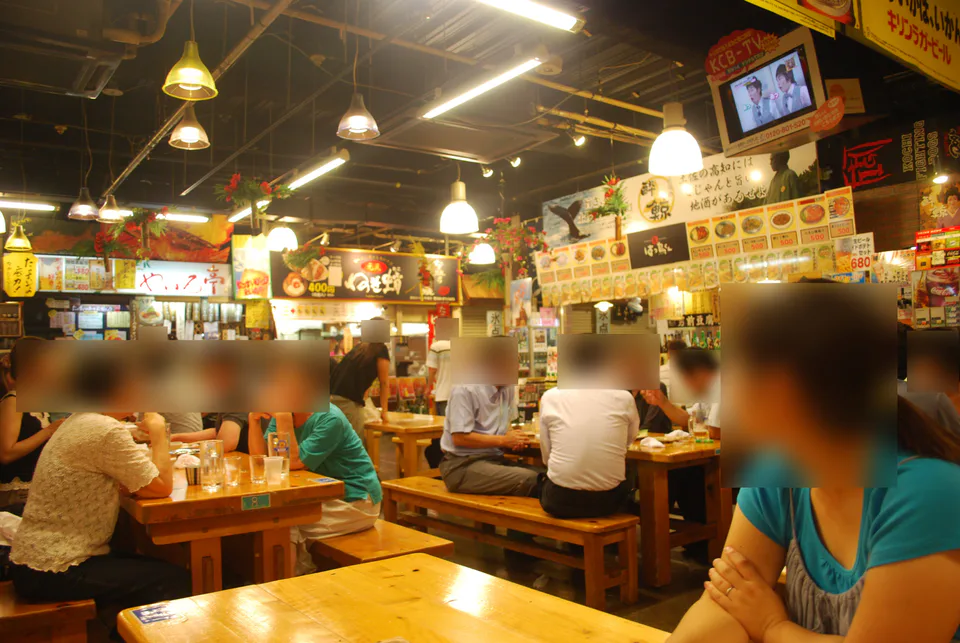
The ValueNavi seat-control matrix: group size changes the value of peak atmosphere
Hirome’s shared tables create an unusual asymmetry: a larger group creates more seats to find, but it also gives you more people who can split the work. That means “crowded dinner is harder” is not equally true for every party.
↔ Scroll table left or right
Party | Coordination load at dinner | Best operating rule |
Solo | High | Eat the must-have dish earlier; treat a later visit as optional drinks or a second snack |
Couple | Medium | One person can hold two seats while the other orders, but repeated stall runs still split the meal |
Four adults | Medium if roles are assigned; high if everyone queues together | Assign one table-holder before ordering, then split food and drink runs |
Family with young children | High | Secure seats before trays appear; use late morning unless evening atmosphere is genuinely worth the extra handling |
Older traveller / limited standing tolerance | High | Choose the quieter window rather than spending the meal’s value on hovering for a table |
This matrix is derived trip-planning analysis, not live occupancy data. It is useful because the same crowd level produces different costs depending on whether your party can divide the table-and-ordering work.
Solo travellers should optimize for seat control, not peak atmosphere
Going alone creates one special problem: you cannot reserve a communal seat with a companion while you queue. If the market is crowded, every extra order means leaving your place again. Late morning or mid-afternoon reduces this coordination problem. If you still want the evening mood, consider eating the must-have dish earlier and treating the later visit as drinks or a second snack rather than making one crowded seating attempt carry the whole meal.
Families and older travellers should treat standing time as part of the meal
For children, older travellers or anyone who cannot comfortably hover with trays, the cost of a busy dinner is not just waiting—it is uncertainty over where everyone will sit. Going earlier lets the group solve the table before ordering multiple dishes. If the day already includes Kochi Castle, shopping or a festival, saving twenty or thirty minutes of seat-hunting can matter more than getting the market at its loudest.
Yosakoi days need a different rule: protect the performance block first
During major event periods, the normal “lunch versus dinner” decision is secondary to the performance schedule and walking route. If Hirome sits between viewing blocks, an earlier or mid-afternoon meal can be more useful than chasing dinner atmosphere. If the market is the post-event social stop, accept that you are deliberately choosing the less controllable version. Event-day crowd patterns can differ sharply from ordinary weekdays, so do not treat standard timing advice as a guarantee.
Sunday is not just an earlier version of Saturday
Sunday shifts the clock because the market opens at 09:00 and Myojinmaru currently starts at 10:00. If Hirome is paired with Kochi’s Sunday Market, this can create a useful early-food window before the rest of the day fills. But do not mechanically subtract one hour from every recommendation: Sunday pedestrian and market activity around central Kochi changes the surrounding flow, and special dates can still alter individual shop hours.
Driving also changes on Sunday. Hirome Market’s current access page says that while the Sunday Market is operating, vehicles use only the parking facility’s south-side entrance until evening. That is another reason not to treat a Sunday arrival as simply “Saturday one hour earlier.”
A four-person group should decide who holds the table before entering
Hirome works best for groups when they treat the meal as a small operation. One person checks the shared table while the others split up for katsuo, drinks and side dishes, then everyone regroups. If all four people queue together first, the group can lose both the table and time. This is one reason dinner suits social groups better than solo travellers: the larger group can absorb the coordination work that communal seating creates.
If you only want one plate of katsuo, do not spend an entire dinner peak buying atmosphere you will not use
A common mismatch is choosing evening because it sounds more authentic, then eating quickly and leaving. In that case the traveller pays the seating and crowd cost without using the social benefit. If your goal is one famous dish and you have a separate dinner reservation, late morning or afternoon is usually more efficient. Evening earns its keep when you will order in rounds, drink, share plates and stay long enough for the table itself to become part of the experience.
Rain can make Hirome more useful—but also concentrate more people indoors
Hirome is a convenient indoor anchor on a wet Kochi day, but rain can push other travellers toward the same idea. If bad weather makes the market your backup plan, avoid assuming an off-peak day will behave normally. An earlier visit gives you more flexibility if the food hall feels busier than expected, while an evening visit leaves fewer easy alternatives if the group cannot find a comfortable table.
Driving adds a second queue: price parking before choosing dinner peak
Hirome Market currently has 180 parking spaces, and its official access page warns that the car park can remain full during busy periods. The current standard parking rate is JPY 200 per 30 minutes—roughly USD 1.25 / TWD 40 at late-August 2026 exchange rates. The cash cost is small; the more important cost is that a full car park can make a fixed dinner start unreliable.
The current validation rule is unusually useful for planning: spending at least JPY 3,000 at one participating market store—about USD 18.80 / TWD 600—earns one hour of parking discount at that store, and discounts from multiple stores can be combined up to two hours in total. Keep the parking ticket with you if you intend to use the validation.
This does not make driving “free” or guarantee a space. It means a group already planning a substantial meal may offset part of the parking charge, while a solo traveller buying one quick plate may not. If your meal must begin at a specific time, Ohashidori tram stop plus a short walk is still more predictable than adding a parking-space search to the seating-space search.
USD/TWD amounts are rounded scale references using approximately JPY 1 = USD 0.00628 and TWD 0.200 on August 26, 2026. Pay in yen and treat the converted figures only as planning context.
Final verdict
Choose late morning when food choice and seat control matter most, mid-afternoon when Hirome is a flexible stop, and evening when sharing drinks and food at communal tables is the experience you actually want. The best time is not the busiest hour; it is the hour that protects the part of Hirome you care about.
For drivers, add one more veto: dinner atmosphere is not worth much if the meal starts with a full parking lot and ends with everyone circling for seats. For solo travellers, the inverse is true: an earlier katsuo meal plus an optional later drink can give you both food certainty and some evening atmosphere without forcing one peak-period visit to do everything.
Best Airport for Japan Autumn Leaves: Choose by Foliage Window and Open-Jaw Route
Where to Stay in Kamakura or Fujisawa: The Best Base for Two Nights, With Enoshima as the Wild Card
Aomori Nebuta 2026 Is Over: Free Viewing vs Reserved Seats, Reframed for Next Time
Best Niseko Apartments for Families and Groups: Kitchens, Laundry and 4–8 Guests