Nagaoka Fireworks 2026 is over. The organiser confirmed that both August 2 and August 3 went ahead as planned and published a post-event thank-you notice on August 4. If you are reading this after the event, there is no longer a 2026 ticket or hotel decision to make. The useful question is what the two-night comparison teaches you for a future Nagaoka trip.
The most durable lesson is that August 2 and 3 should not be treated as “main night” and “second-best night.” Nagaoka Fireworks Foundation says the sponsors differ but the overall quantity and content are broadly similar. In 2026, the strongest date-specific reasons were Tenchijin on August 2 and the heavier sanjakudama programme on August 3. If neither signature item is personally essential, ticket certainty, hotel location, viewing side and the post-show exit are better tie-breakers than fear of choosing the wrong night.
↔ Scroll table left or right
What 2026 showed | Reusable decision lesson | Do not assume next time |
Aug 2 had Tenchijin | Pick a date for a named signature programme only when that item is genuinely important to you | That the same programme item or exact time repeats in another year |
Aug 3 had more sanjakudama shells | Specific programme differences can justify one night over the other | That one date is permanently the “bigger” night |
Phoenix appeared on both 2026 nights | A shared must-see cannot break the tie | Future exact programme times without that year’s official schedule |
Both nights were held as planned | Weather is still a live-event risk; build flexibility instead of relying on historical success | That a future date is guaranteed to operate |
Official FAQ says the two nights are broadly similar overall | When programme preference is weak, logistics should decide | 2026 ticket, traffic or seating rules for another edition |
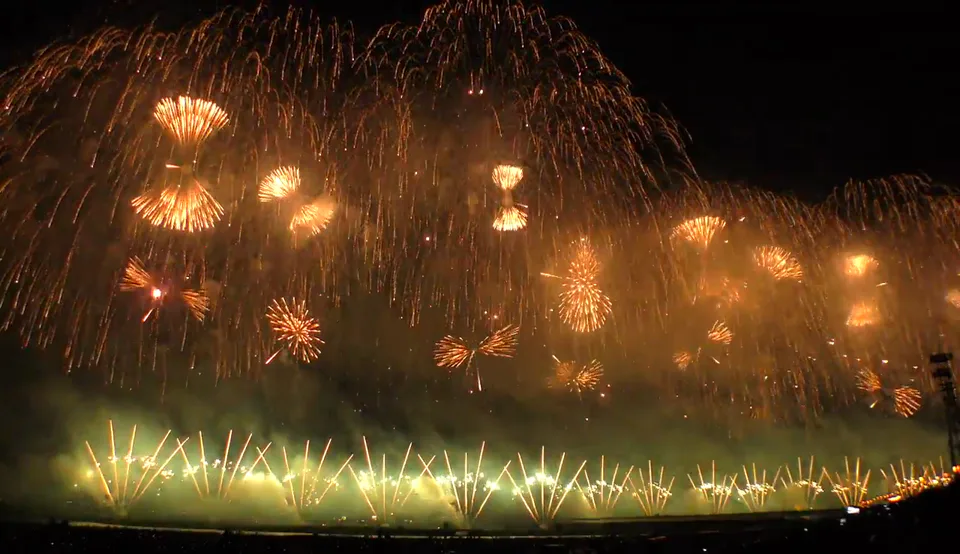
2026 event image. Future programme details must be checked against the new official schedule.
The first question next time should be “Is there a programme item I would regret missing?”
In 2026, August 2 had the Tenchijin Fireworks at 19:45. August 3 had a three-shot sanjakudama sequence at 20:30 and four sanjakudama shells across the night compared with two on August 2. Those were real differences, not marketing adjectives.
That gives you a reusable hierarchy for a future edition:
Read both official programmes when they are published.
Circle only the named items you personally care about.
If one night contains a genuine must-see, choose it.
If both nights still look equally good, stop analysing fireworks and compare logistics.
This prevents a common mistake: spending hours trying to rank two full-scale nights that the organiser itself does not present as “good versus bad.”
2026 August 2: Tenchijin was the clearest reason to choose the first night
The official August 2 programme placed Tenchijin Fireworks at 19:45. For a visitor who had seen videos of Tenchijin and considered it one of the reasons to travel to Nagaoka, that was a valid date-specific decision.
But Tenchijin did not make August 2 universally superior. The same 2026 programme also included Phoenix and other major Nagaoka sequences shared across the event. If Tenchijin meant little to your group, paying more for the harder hotel night just to say you chose August 2 would have been poor optimisation.
The future lesson is not “always choose August 2.” It is “a named signature item can outweigh a small logistics disadvantage—but only if you actually care about it.”
2026 August 3: the sanjakudama difference was real, but it was still a preference
August 3’s clearest numerical edge was the sanjakudama programme: the organiser’s 2026 explainer counted four sanjakudama shells that night versus two on August 2, including the three-shot 20:30 sequence.
If the physical scale of the 30-gō shells was your headline reason for attending, August 3 was the rational choice. If you mainly wanted Phoenix and the overall Nagaoka experience, the extra shells did not automatically justify a worse hotel, a harder viewing side or a more fragile exit.
This is the difference between a programme preference and a universal ranking. The former is useful. The latter is not supported by the 2026 structure.
Phoenix did not break the tie in 2026—and shared anchors usually should not
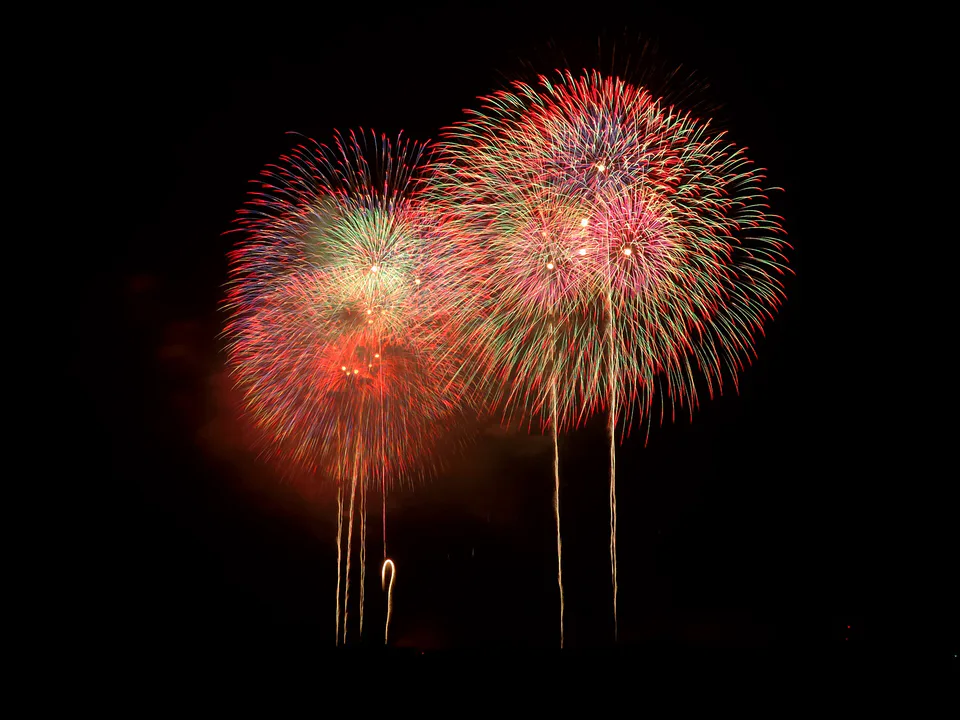
Phoenix 2026 was scheduled at 20:45 on both August 2 and August 3. The Yone Hyappyo 100-shot sequence was also part of both nights. If Phoenix was your only non-negotiable, either date could satisfy the core objective.
That is a useful way to stop overthinking. When your must-see appears on both nights, the deciding variables move outside the sky:
Which date has the ticket you can actually secure?
Which date has the workable hotel?
Which viewing side fits your transport plan?
Which night leaves the cleaner next morning?
A shared headline display is a reason to relax the date choice, not a reason to buy two nights automatically.
For most first-time visitors, one complete night is still the stronger default
Two Nagaoka nights can make sense when fireworks are the central purpose of the trip, you deliberately choose different viewing experiences, or each programme contains a specific item you want. But the second night is not free just because the event is already on the itinerary.
A second night adds another scarce hotel night, another crowd exit, another evening committed to the same venue and another recovery morning. On a 10–14 day first Japan trip, that opportunity cost can displace a completely different destination.
My default would therefore remain: one well-planned Nagaoka night beats two poorly differentiated nights. Buy both only when you can explain what the second date adds beyond FOMO.
The hotel and exit can be more important than the programme
Nagaoka is not an ordinary city evening where you can leave a venue and casually decide the next train. Fireworks crowds create a high-friction post-show movement problem. That means the “better” programme can become the worse travel choice if it forces a poor hotel or unrealistic same-night exit.
For a future edition, compare the date as a full chain:
ticket + viewing side
→ programme must-sees
→ post-show route
→ hotel / onward transport
→ next morning
If one date wins only on a small programme preference but loses badly on the other four steps, I would choose the cleaner night.
The Nagaoka Fireworks tickets, hotels and transport guide should also be treated as 2026-specific where it cites ticket sales, temporary traffic or event-day transport. Recheck the future edition before payment.
Do not reuse 2026 ticket and traffic rules for a future edition
Nagaoka Fireworks Foundation states that the fireworks are held every year on August 2 and 3. That annual date rule is different from saying every operating detail repeats.
Future ticket sale phases, seat inventory, prices, bridge restrictions, parking, temporary trains and programme order must come from that year’s official pages. A 2026 screenshot can be useful for understanding the type of planning required, but it is not a booking document for another year.
The same applies to “no free seats” guidance and venue access rules. Do not build a future unticketed backup from expired information. Wait for the current-year organiser instructions.
What if you missed 2026 and want to plan the next Nagaoka trip now?
You can safely do three things now:
keep August 2 and 3 in mind because the organiser says the fireworks are held on those dates every year;
treat Nagaoka accommodation as an early planning problem because the event concentrates demand;
decide whether you are a one-night visitor or a two-night fireworks-focused visitor before the ticket sale.
You should not assume the next programme, Phoenix time, sanjakudama count, ticket price, sale date, seat map or temporary transport until the organiser publishes the new edition.
Final verdict
The 2026 choice is closed because both nights have already happened. August 2 was the clearer choice for Tenchijin; August 3 was the clearer choice for the heavier sanjakudama programme. Phoenix and the overall scale were available on both, so for many first-time visitors the cleaner ticket, hotel and exit plan was the better tie-breaker.
That is the part worth carrying forward. For a future Nagaoka Fireworks, read the new programmes first. If neither date has a must-see that truly matters to you, stop trying to rank the fireworks and book the night whose logistics let you enjoy the finale without worrying about how you will get home.
References and status
Nagaoka Fireworks Foundation — 2026 post-event thank-you notice · Official FAQ — annual Aug 2/3 dates and two-night guidance · Official 2026 August 2 programme · Official 2026 August 3 programme. Checked August 25, 2026. The 2026 event has ended; future ticketing, programme and transport details must be reverified for the new edition.
Kyoto Gozan Okuribi: What the 2026 Viewpoint and Exit Plan Teaches
Sendai Tanabata: What the 2026 Festival Teaches About Route, Nights and Matsushima
Sendai Tanabata 2026 Is Over: What Downtown vs Aobayama Taught Us
40 Best Things to Do in Tokyo in 2026 — What’s Actually Worth Your Time by Area
Kumagaya Fireworks Seats vs Free Viewing: What 2026 Prices Actually Bought