
The 2026 Kumagaya Fireworks ended on August 8, but its seat pricing gives a much better future buying rule than “reserved seats are expensive.” At the 2026 general sale, a single chair cost ¥7,000 (~US$44), while a four-person blue-sheet space cost ¥20,000 (~US$126). That means three people sharing the blue-sheet space paid less in total than three individual chairs, and four people cut the effective price to ¥5,000 (~US$31) each.
The paid product was therefore not simply about getting a better view. It converted a hot riverbank search into a defined assigned space. Free viewing kept the ticket cost at zero but required more tolerance for arrival-time uncertainty, place-finding rules and variable sightlines. The correct choice depended on group size, heat tolerance and whether sitting certainty was worth paying for.
USD conversions are approximate at the August 26, 2026 exchange rate and are included only for scale. Future editions need a fresh JPY price check.
The 2026 decision was not paid view versus free view; it was assigned space versus the time and uncertainty of finding your own legal viewing position.
The 2026 seat math: blue-sheet space was the group-value sweet spot
The official 2026 general-sale prices were:
↔ Scroll table left or right
Seat type | 2026 general-sale price | Capacity | Effective price at full capacity | What the premium bought |
Chair | ¥7,000 (~US$44) | 1 | ¥7,000 (~US$44) | Individual assigned seat |
Blue-sheet space | ¥20,000 (~US$126) | 4 | ¥5,000 (~US$31) each | Defined 180 × 180 cm group space |
Table seat | ¥32,000 (~US$201) | 4 | ¥8,000 (~US$50) each | Table + four chairs |
Masu box | ¥40,000 (~US$251) | 4 | ¥10,000 (~US$63) each | Dedicated 180 × 180 cm boxed space |
This creates a useful occupancy threshold:
Solo: the ¥7,000 chair was the clean paid option. Buying a ¥20,000 group space made little financial sense.
Two people: two chairs cost ¥14,000, still ¥6,000 less than the blue-sheet space.
Three people: three chairs cost ¥21,000. The ¥20,000 blue-sheet space became slightly cheaper in total.
Four people: four chairs cost ¥28,000. The blue-sheet space saved ¥8,000 while keeping the group together.
ValueNavi buying rule: if future pricing follows a similar shape, compare the total for your actual party rather than assuming “chair = budget seat.” For three or four people in 2026, the group sheet was the cheaper paid product.
The table and masu seats were comfort upgrades, not value winners
For four people, a table cost ¥32,000 versus ¥28,000 for four chairs. The group therefore paid a ¥4,000 (~US$25) premium for the table format. The masu box cost ¥40,000, a ¥12,000 (~US$75) premium over four chairs.
Those premiums can still be rational. A table can make food, drinks and a family setup easier. A clearly bounded group space can reduce the friction of keeping everyone together. But neither should be described as “better value” without explaining what physical comfort the extra money buys.
For older travellers who need a conventional seat, the cheaper blue-sheet space may actually be the wrong product even when its per-person price is lower. Price-per-head is only the first filter; floor-level comfort and mobility can reverse the answer.
Do not confuse the supporter presale with an early-bird discount
The 2026 festival had an earlier supporter presale before the general sale. Its prices were higher: ¥8,000 for a chair, ¥24,000 for a four-person blue-sheet space, ¥36,000 for a table and ¥44,000 for a masu box.
That means buying earlier through that specific presale did not mean buying cheaper. Compared with the later general sale, the supporter product cost ¥1,000 more for the chair and ¥4,000 more for each four-person product.
↔ Scroll table left or right
2026 product | Supporter presale | General sale | Difference |
Chair | ¥8,000 | ¥7,000 | Presale +¥1,000 |
Blue sheet (4) | ¥24,000 | ¥20,000 | Presale +¥4,000 |
Table (4) | ¥36,000 | ¥32,000 | Presale +¥4,000 |
Masu (4) | ¥44,000 | ¥40,000 | Presale +¥4,000 |
The right interpretation is supporter access, not a failed discount. A future traveller should therefore identify the type of early sale before assuming that earlier always means cheaper.
Free viewing cost ¥0, but the 16:00 rule mattered
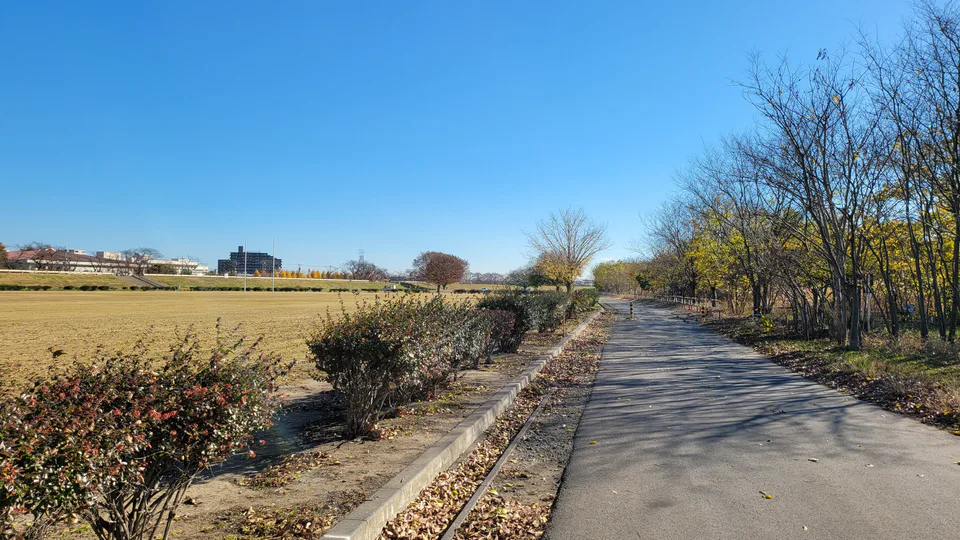
The official 2026 event went ahead on August 8 from 19:00 to 21:00. Kumagaya City specifically prohibited entry and place-holding on the riverbank rugby field before 16:00 to protect the grass. It also prohibited place-holding in walkways and emergency routes and warned visitors not to use stones to hold sheets down.
That turns “arrive early for free viewing” into a more precise strategy. Arriving at noon did not give a legitimate four-hour head start on the rugby field. The free-viewing advantage was flexibility and zero ticket cost—not unlimited permission to occupy any patch of riverbank from the morning.
For a future edition, recheck the exact field-opening and place-holding rules. If the same 16:00 boundary returns, a traveller should treat late afternoon as the real free-space competition window.
Reserved seats let you arrive later, but they did not remove the station-to-river crowd
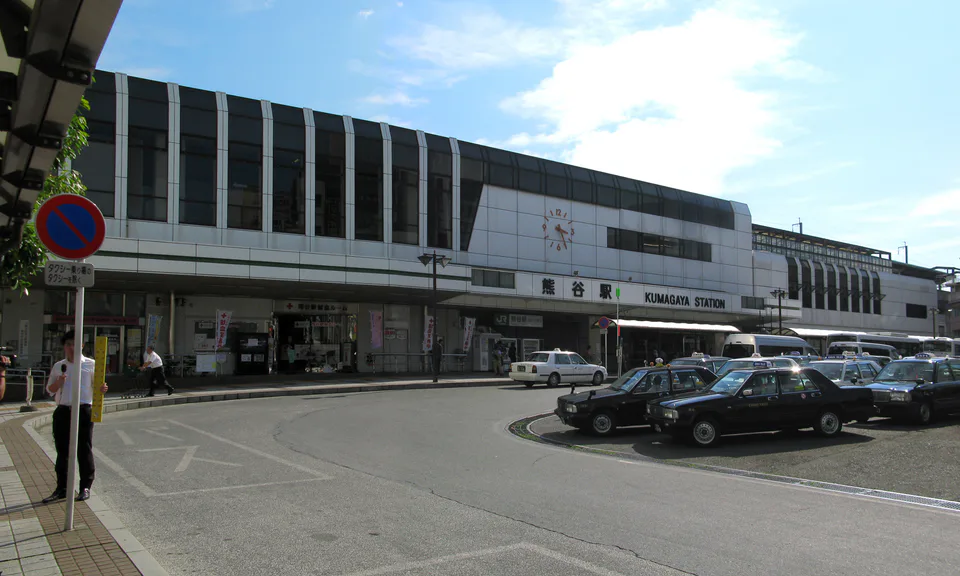
The paid-seat reception opened at 17:00 in 2026. That gave reserved-seat holders a different arrival problem from free viewers: they did not need to win a legal patch of ground, but they still had to move through Kumagaya's event-day crowd and heat before the 19:00 start.
A paid ticket therefore bought place certainty, not a two-hour exemption from festival logistics. I would still avoid treating 18:50 as a sensible arrival target, especially for families, older travellers or anyone unfamiliar with the riverbank.
The practical time-cost comparison is:
↔ Scroll table left or right
Free viewing | Paid seating |
More time allocated to finding an acceptable legal space | More money allocated to a defined assigned space |
Greater sightline uncertainty | Seat location assigned; exact location could not be chosen |
Can leave if the crowd/heat no longer feels worthwhile | Sunk ticket cost makes leaving emotionally harder |
Same broad post-show transport problem | Same broad post-show transport problem |
Reserved seating changed the viewing product, not the fact that a large crowd still had to leave Kumagaya after 21:00.
The refund rule depended on how the seat was obtained
The 2026 general paid-seat FAQ said a refund would be available through the seller only if the event could not be held by the August 9 backup date and was cancelled. That is a reasonably clear weather boundary.
But seats obtained as furusato-nozei hometown-tax donation rewards had different terms: the tourism bureau explicitly said that if the event were cancelled, there would be no refund and no substitute item. If postponed, the seat remained valid for the rescheduled event.
This is a useful warning for future event tickets: two products can point to the same physical seat while carrying different cancellation economics. Do not infer the refund rule from the seat category alone; read the purchase channel's own terms.
The exit cost was shared by everyone
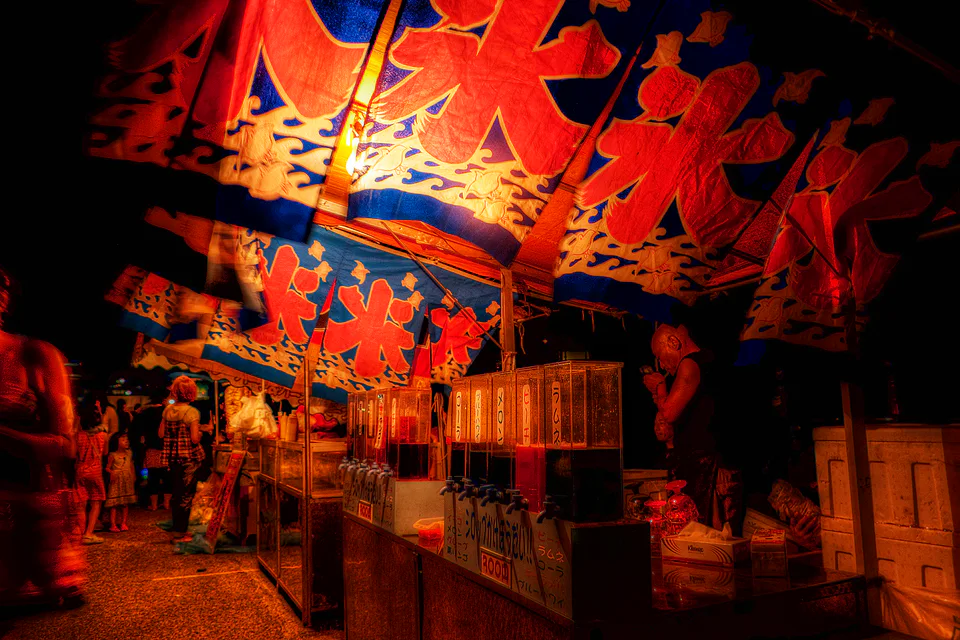
The 2026 fireworks finished at 21:00. Whether a visitor had paid ¥40,000 for a four-person box or watched for free, the riverbank did not come with a private post-show railway.
That means the final decision is independent of seat price: do you stay for the final minutes and accept the largest simultaneous exit, or leave a little earlier to reduce crowd pressure? Families with tired children and travellers with a fixed onward connection may rationally give up the final sequence. A solo traveller with no timetable pressure may prefer to stay.
If this distinction matters more than the seat itself, compare the Sumida River Fireworks exit model or the Nagaoka Fireworks transport guide. At major fireworks events, the viewing product and the exit product are separate decisions.
Who should pay next time?
↔ Scroll table left or right
Traveller | Best starting point if pricing is similar | Why |
Solo | Chair or free viewing | Group spaces have poor occupancy economics |
Couple | Two chairs vs free | 2026 blue-sheet cost was still much higher for only two users |
3–4 mobile adults | Blue-sheet space | 2026 total beat three/four individual chairs |
Older traveller / someone who needs chair-height seating | Chair or table | Lower sheet price may not compensate for floor-level sitting |
Family prioritising meals and defined space | Compare table against chairs | Premium buys a physical setup, not just admission |
Budget traveller comfortable with uncertainty | Free viewing | Zero seat cost remains meaningful if arrival time and sightline risk are acceptable |
Final verdict
In 2026, the best paid-value product was not automatically the cheapest-looking single chair. Three people could spend ¥20,000 on one blue-sheet space instead of ¥21,000 on three chairs; four people reduced the blue-sheet cost to ¥5,000 per person. Table and masu seats then became explicit comfort premiums rather than obvious upgrades.
Free viewing still won for travellers willing to exchange time and uncertainty for a zero ticket price. The red-team test is simple: if your group would hate arriving in heat without knowing exactly where it will sit, the paid premium is solving a real problem. If a flexible patch of riverbank is part of the fun and the group can adapt, paying for certainty may add less than it costs.
For future editions, recheck four things before reusing the 2026 model: seat prices, group capacity, place-holding/opening rules and the refund terms of the exact purchase channel.
Official 2026 sources
Kumagaya City — 2026 event decision, 19:00–21:00 timing, heat and 16:00 rugby-field rule.
Kumagaya Tourism Bureau — 2026 general-sale seat prices and assigned-seat conditions.
Kumagaya Tourism Bureau — paid-seat FAQ, 17:00 reception and cancellation refund rule.
Kumagaya Tourism Bureau — hometown-tax reward seats and no-refund cancellation condition.