
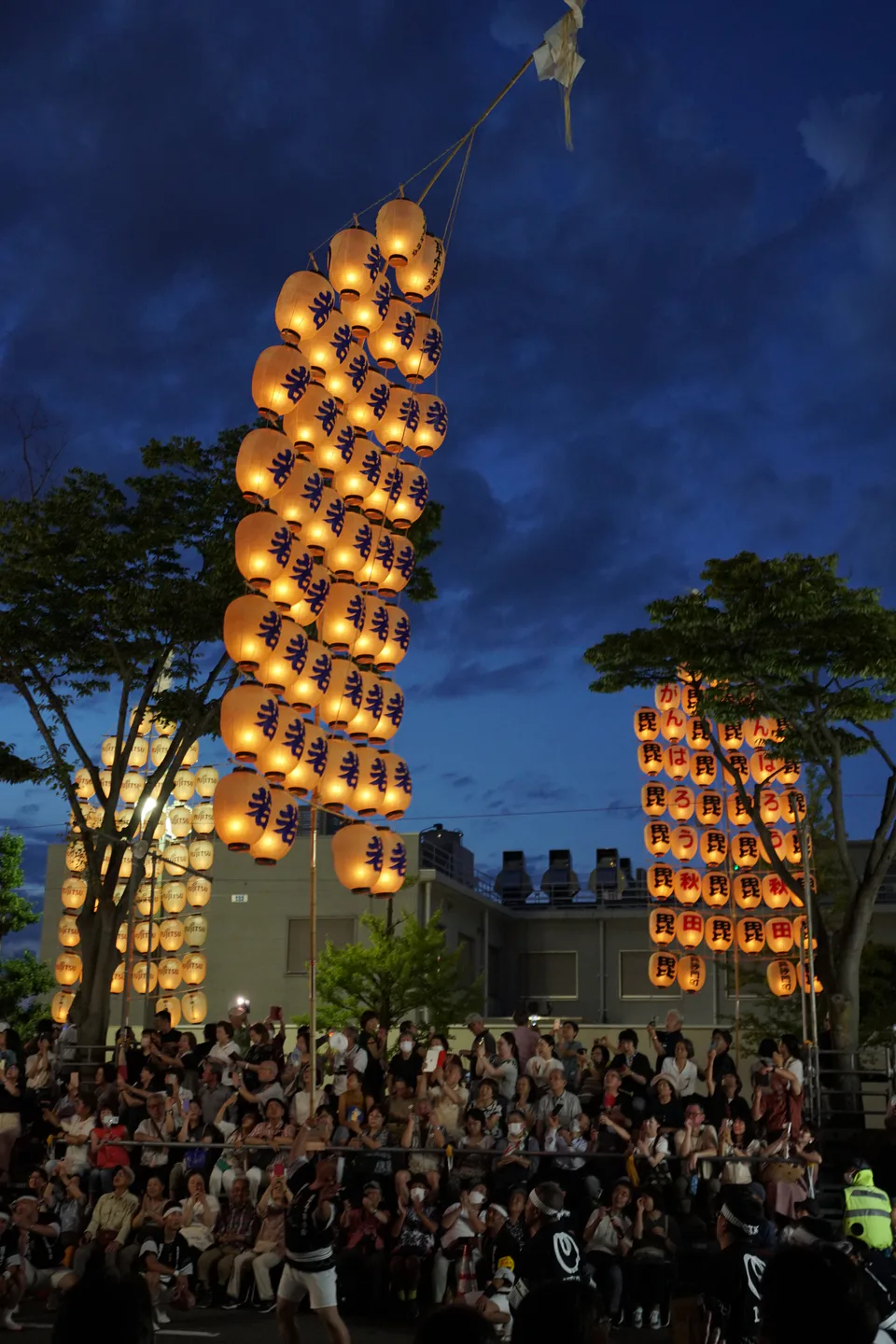
Akita Kanto 2026 is over. The festival ran August 3–6, and the 2026 reserved-seat structure is now most useful as a case study: S cost JPY 4,500, A JPY 4,000, B JPY 3,500 and a six-person box cost JPY 28,000. The durable lesson is not “always buy S.” It is buy the cheapest future category that solves the physical problem your group actually has—sitting, elevation, wheelchair access or staying together.
There is also a source-quality warning for international visitors. The current Japanese 2026 reservation page shows the 2026 prices above, while the English reservation page still displays older lower prices. For the next edition, use the live current-year Japanese reservation page or the actual checkout as the pricing authority rather than assuming the English page has been updated at the same time.
↔ Scroll table left or right
2026 product | What it solved | Future decision rule |
S seat — JPY 4,500 | Central tiered seating / elevation | Pay the premium only when elevation itself is useful |
A seat — JPY 4,000 | Other tiered seats or pipe chairs | Use as the compromise when sitting quality matters but the top tier does not |
B seat — JPY 3,500 | Guaranteed long-bench seating; 2026 wheelchair requests were assigned to B only | Choose when the main problem is standing; wheelchair users must check the current accessible-seat rule before comparing tiers |
Box — JPY 28,000 / up to 6 | One defined group space | Buy for group cohesion, not because you assume it is a discount |
Free roadside viewing | Mobility, no ticket sunk cost, easier early exit | Choose when everyone can stand comfortably and flexibility matters |
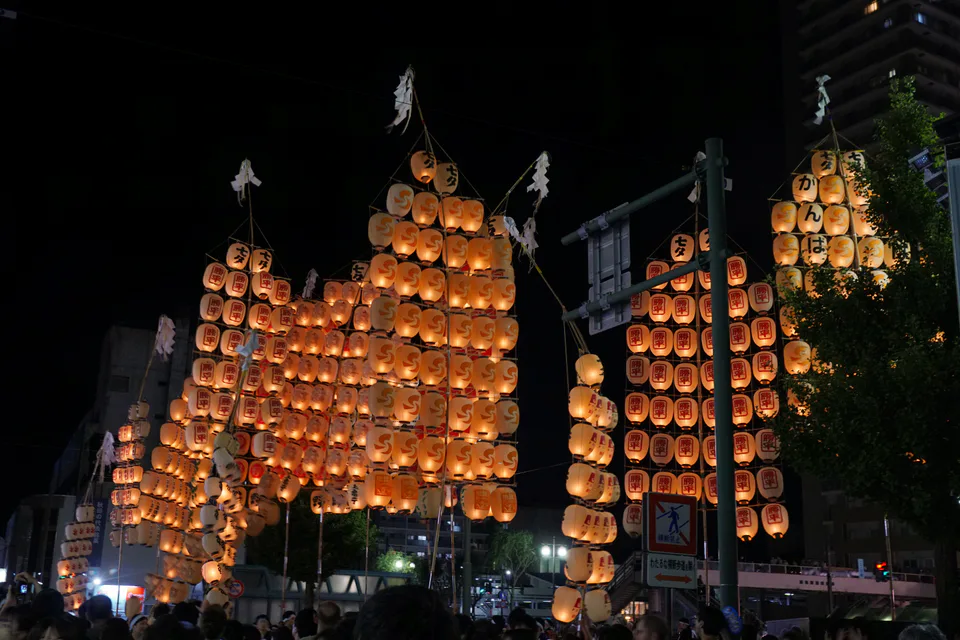
Akita Kanto festival scene. Future seating maps and prices must be checked for the new edition.
The JPY 500 steps only made sense when they solved a real physical need
The 2026 official seat definitions were concrete: S was the central-road-wall tiered category, A covered other tiered seating and pipe chairs, and B used long benches. That makes the JPY 500 jumps easier to interpret than a generic premium/standard/economy label.
If a traveller mainly needed somewhere to sit, B already solved the core failure mode. If a chair or tiered position materially improved comfort, A could justify the extra JPY 500. S was most rational when elevation was the reason the group was paying in the first place.
Carry the logic forward, not the letters. The next edition could change prices, inventory or category names. Start by writing the physical requirement, then map that requirement to the current-year ticket categories.
Wheelchair users did not have the same S/A/B choice in 2026
The 2026 official individual reservation form contained a hard accessibility rule that the normal price table did not make obvious: applicants using wheelchairs were assigned to B seats only. The form asked buyers to state the number of wheelchair users and explicitly noted that wheelchair viewing was limited to B.
That changes the decision order. For a wheelchair user, the first question was not whether S elevation justified another JPY 1,000. It was whether the accessible B-seat inventory and companion arrangement worked at all. Only after that could price, date and exit strategy be considered.
Future rule: never carry the 2026 B-only rule forward as a permanent promise, but do carry the planning lesson forward. Check the current-year accessibility allocation before comparing seat tiers, because an accessibility rule can remove categories from the decision entirely. If the organiser changes the accessible area next year, the new map and application form should override this 2026 case study.
The six-person box was not a 2026 group discount
At JPY 28,000 for up to six people, a full box worked out to roughly JPY 4,667 per person. Six S seats cost JPY 27,000, six A seats JPY 24,000 and six B seats JPY 21,000.
So the box's value was not price efficiency. It was one defined group footprint. That could be valuable for six friends or a multi-generation family that cared more about staying together than shaving the per-person total.
This is a useful future check: divide every group package by the real number of people using it. “Family,” “box” or “group” does not automatically mean cheaper.
Free viewing was a flexibility product, not merely the zero-yen option
A fit solo traveller could use roadside viewing to reposition, leave before the final crowd wave or abandon the night if weather and fatigue no longer justified staying. That flexibility has real value on a multi-festival Tohoku trip.
The trade-off is physical. Free viewing is much weaker when one person cannot stand comfortably or when a child needs reliable sitting. A free ticket that forces the whole group to leave early can be worse value than the cheapest paid seat.
The red-team question is simple: if the best legal free position is second row and standing, would the group still be happy? If not, budget for seating.
Rain risk made the paid ticket a sunk-cost decision
The 2026 individual-seat rules said there would be no refund even if the event were cancelled because of rain. The official FAQ separately says the festival generally tries to perform during clear intervals and may shorten the programme depending on weather.
That means a reserved seat bought comfort certainty but reduced weather flexibility. A future traveller doing several outdoor festival nights should price that sunk-cost risk alongside the physical need to sit.
The recommendation reverses for a mobility-limited traveller. If standing is the larger risk, paying for a non-refundable seat can still be the rational choice even with uncertain weather.
Choose the date for programme content before choosing the seat tier
In 2026 the official schedule added a drone show around 20:35 on August 3 and 6. August 4 and 5 did not have that extra programme. That was a date decision, not a seat-class benefit.
This gives a reusable order:
date-specific programme
→ accessibility / need to sit / need elevation / group format
→ current seat category
→ exit direction
Do not pay for the top seat category on the assumption that it automatically gives the best view of a separate aerial programme unless the current organiser explicitly says so.
Exit flexibility belongs in the seat decision
The 2026 main programme ended at 21:00 and traffic restrictions continued until 21:30. A paid seat made the start predictable but fixed where the group began its exit. Free viewers had more control over whether to stay near a useful onward direction or leave before the final wave.
If you have a hard train, young child or hotel far from the festival corridor, that exit flexibility can matter more than moving from A to S. If the hotel is central and the next morning is relaxed, the exit issue is much smaller.
Do not trust the English price page without checking the current-year Japanese page
As of August 25, the official Japanese 2026 reservation page lists S at JPY 4,500, A at JPY 4,000, B at JPY 3,500 and the six-person box at JPY 28,000. The official English reservation page still displays an older price set.
This is exactly the kind of first-party mismatch an international traveller should not silently reconcile. For the next edition, treat the current-year Japanese ticket page, current seat map and live booking flow as the operational source. Use the English page for orientation, not as automatic proof that the price is current.
Future first-time decision
Wheelchair user: check the current accessible-seat allocation before comparing S/A/B; in 2026 wheelchair requests were B-only.
Need a guaranteed place to sit: start with the cheapest current category that genuinely provides it.
Need better elevation: compare the higher tier only after confirming that elevation is what the premium buys that year.
Six people want one defined space: compare the box total against six individual seats; buy the group format for cohesion, not assumed savings.
Fit solo/couple who values movement: free viewing can remain the better product.
Weather flexibility matters strongly: remember that the 2026 individual tickets were non-refundable for rain cancellation; check the new rule.
Final verdict
Akita Kanto 2026 showed that the best paid seat was the cheapest one that solved the traveller's actual physical constraint—but accessibility can sit above the normal tier comparison. B solved standing and was also the only stated wheelchair category on the 2026 individual form; A could improve seating form; S bought the central tiered category; the box bought group cohesion. Free viewing bought flexibility.
For the next edition, do not begin with S/A/B labels or a cached English price. Begin with the people travelling and what they physically need. If accessibility applies, check that first. Then read the live current-year Japanese ticket page and map those needs to the new categories.
Sendai Tanabata: What the 2026 Festival Teaches About Route, Nights and Matsushima
Sumida River Fireworks 2026: Viewing Without a Seat, Two Venues and Exit Strategy
Yamagata Hanagasa Festival Reserved Seats 2026: Is the ¥4,000 Seat Worth It? Paid vs Free Viewing
Nagaoka Fireworks Packing Guide: What 2026 Taught About the Exit Queue
35 Best Things to Do in Osaka 2026: What’s Worth Your Time by Area, Budget and Trip Style
References
Akita Kanto Festival — official 2026 Japanese seat prices and programme · 2026 individual reservation form — wheelchair B-seat rule · 2026 individual-seat rules · Official FAQ · Official English reservation page. Checked August 25, 2026. Recheck the next edition's current Japanese page, prices, accessible-seat allocation and seat map before booking.