
For a first Osaka trip, do not try to “do the best 35 things.” Choose two to four anchor experiences, then let four to six nearby places fill the gaps. Universal Studios Japan is a full-day anchor. Kaiyukan is usually a bay-area half-day anchor. Osaka Castle can be either a free exterior-and-park stop or a history-focused half day depending on whether you enter the museum. Dotonbori, Hozenji Yokocho, Namba Yasaka Shrine and shopping streets are supporting stops whose value comes from being on the route.
The most useful Osaka planning rule is one expensive or time-heavy anchor per half day. When a second attraction performs the same function—another observation deck, another large indoor family venue, another shopping street—it should earn its place by geography or personal interest. If it cannot, cut it. This page keeps 35 candidates because the search intent is broad, but the editorial goal is to help you delete most of them.
↔ Scroll table left or right
Your available Osaka time | How many true anchors? | Good default structure | What to cut first |
1 full day | 1–2 | One city cluster + one evening zone | North Osaka, duplicate observatories, remote “free” stops |
2 full days | 2–3 | South Osaka + Castle/Umeda, or one city day + USJ | A second paid skyline view and extra museums without a strong interest |
3 full days | 3–4 | South/central city + bay or USJ + one flexible day | Stops that require a district change for under an hour of value |
4+ full days | 4–6 | Add north Osaka, specialist museums or slower shopping/food days | Nothing merely because it is famous; keep interests selective |
The first decision is not “what is best?” It is “what deserves anchor status?”
An anchor is something you would be disappointed to miss and that controls a meaningful part of the day. It normally has at least one of these characteristics: a high ticket price, a timed entry, a long queue, a two-to-six-hour visit, weather sensitivity or enough transport overhead that it cannot be treated casually.
Supporting stops are different. Dotonbori, Namba Yasaka Shrine, Hozenji Yokocho, Tenshiba, Nakanoshima Park and shopping streets become efficient because you can add or remove them without breaking the day. The mistake is giving every supporting stop an anchor-sized calendar block.
Use this deletion test before keeping any attraction:
Would I still choose this if it were not on a “best Osaka” list?
Does it perform a function I already bought elsewhere?
How much door-to-door time does the stop add?
If weather, queue or fatigue makes it weaker, can I delete it without losing the day?
If you already have ten Osaka pins, use the Osaka attractions route guide for the next stage: grouping them without cross-city backtracking.
Three first-trip templates that are more useful than a universal top 10
Two Osaka days, no USJ
Day 1: Osaka Castle or one Nakanoshima museum → Umeda → one skyline view if you genuinely want it. Day 2: Kuromon/Namba → Shinsaibashi or Den Den Town according to interest → Shinsekai or Tennoji → Dotonbori at night. Kaiyukan can replace the first half of either day, but then remove another major attraction rather than compressing everything.
Three Osaka days with USJ
Day 1: central/south Osaka. Day 2: USJ as the full day. Day 3: Osaka Castle/Umeda or Kaiyukan/Tempozan depending whether history/city views or a family/bay day matters more. This is where many first trips become overloaded: one USJ day leaves only two city days, not three.
Four or more Osaka days
This is when north-Osaka choices such as Expo ’70 Commemorative Park, NIFREL, Minoh Falls, Katsuo-ji or CUPNOODLES MUSEUM Osaka Ikeda become easier to justify. The extra day is buying geographical freedom. Do not spend it simply repeating central Osaka functions you already covered.
Namba, Shinsaibashi and Shinsekai: eight places, but not eight separate stops
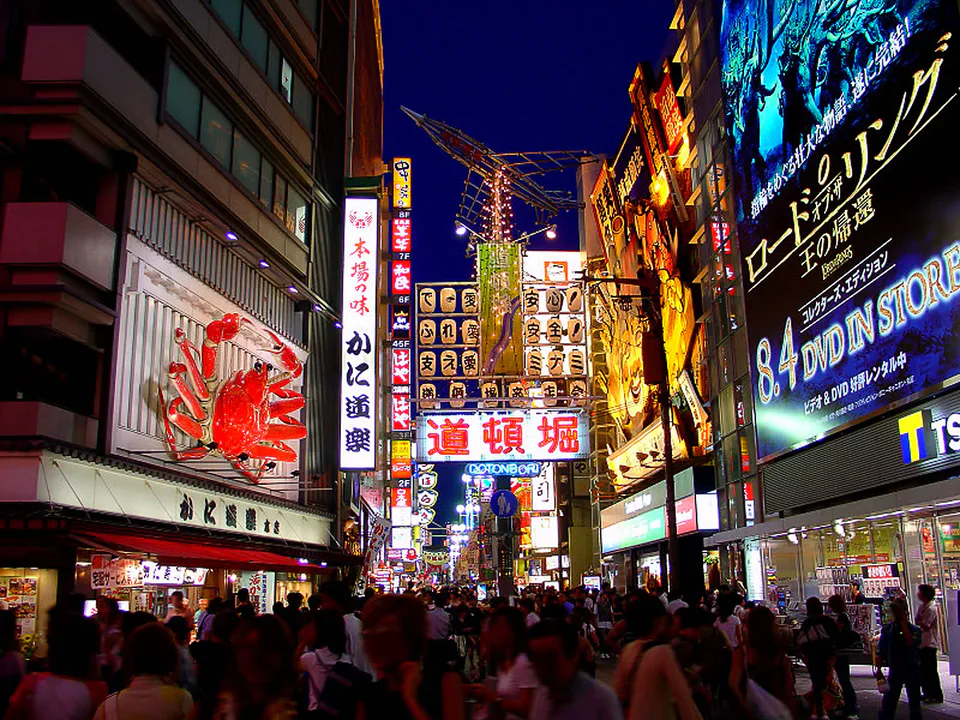
1 | Dotonbori — Keep it on most first trips, but use it as an evening district rather than a standalone daytime attraction. Dinner, the river, signs and the surrounding streets are one block. A noon trip just to photograph Glico usually extracts less value than ending a south-Osaka day here.
2 | Shinsaibashi-suji — Keep it if shopping is a real objective. If cosmetics, fashion, department stores or tax-free purchases matter, two or three hours can be entirely rational. If not, treat the arcade as the route between other places rather than a compulsory attraction.
3 | Kuromon Ichiba Market — Keep it when you actually want a market meal or snack sequence. If lunch is already reserved elsewhere, Kuromon should not become a second meal simply because it is famous. Compare the Kuromon Market food-tour decision guide if you are deciding whether a guided experience adds enough context to justify the premium.
4 | Hozenji Yokocho — High route value, low time requirement. It works because it is close to Namba and Dotonbori. Give it 15–30 minutes or fold it into dinner; do not let it create another transport decision.
5 | Namba Yasaka Shrine — Keep it when you are already south of Namba and the lion-head stage genuinely interests you. It is a useful free stop precisely because it is short. Crossing Osaka only for the photo destroys that advantage.
6 | Nipponbashi Den Den Town — Keep it for anime, figures, games or electronics. If your shopping list is mainstream fashion, cosmetics and department stores, Shinsaibashi/Umeda is a cleaner use of time.
7 | Shinsekai — Keep it for retro street atmosphere, food and the Tsutenkaku setting. Evening normally gives the district a stronger identity than a quick daytime photo. If the food itself is the product, compare the Shinsekai food-tour guide rather than assuming guided always beats independent.
8 | Tsutenkaku — Go up only if it wins your observation-deck comparison. If HARUKAS 300 or Umeda Sky Building is already the skyline event, seeing Tsutenkaku from Shinsekai may be enough. Three paid views do not create three times the night-view value.
Tennoji and Abeno: use this cluster when the south side already owns the evening
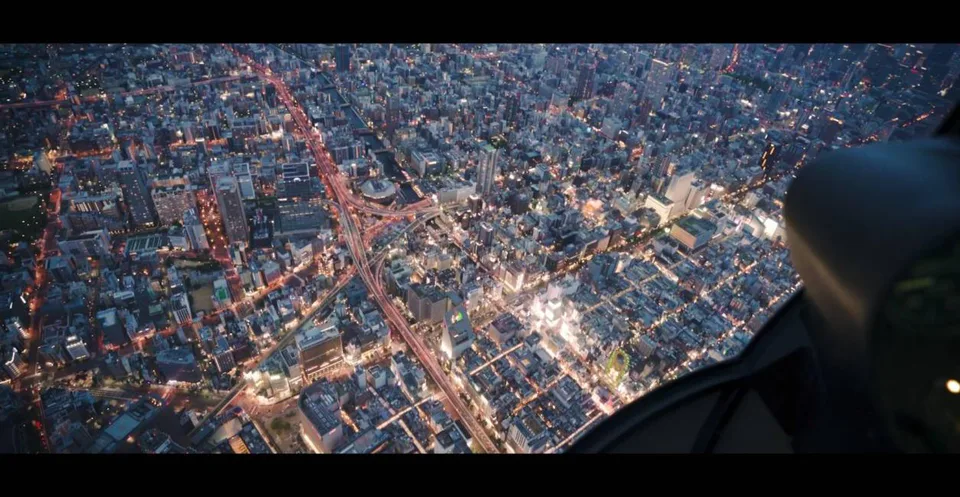
9 | HARUKAS 300 — The geographic case is stronger than the “tall building” case. Choose it when Tennoji/Abeno is already your sunset or dinner zone. If you are in Umeda at 17:00, travelling south only to collect another skyline view may be a worse trade than using Umeda Sky Building or keeping the evening at street level. Compare the options in the Osaka observatory comparison.
10 | Tennoji Park / Tenshiba — Best as recovery space: family pause, coffee, lawn time, an unstructured hour between a museum and dinner. It is not “minor” if it prevents the rest of the group from burning out.
11 | Shitennoji — Keep it when you want temple history inside Osaka rather than moving all religious/cultural sightseeing to Kyoto. If your Kansai trip already has several Kyoto temple days, this is a rational cut.
12 | Osaka City Museum of Fine Arts — The museum reopened after renovation in 2025. Keep it only when the current exhibition matters. Exhibition calendars should decide art-museum visits; the building being nearby is not enough reason to spend two hours inside.
Osaka Castle and Nakanoshima: decide whether this is a history day, museum day or park day
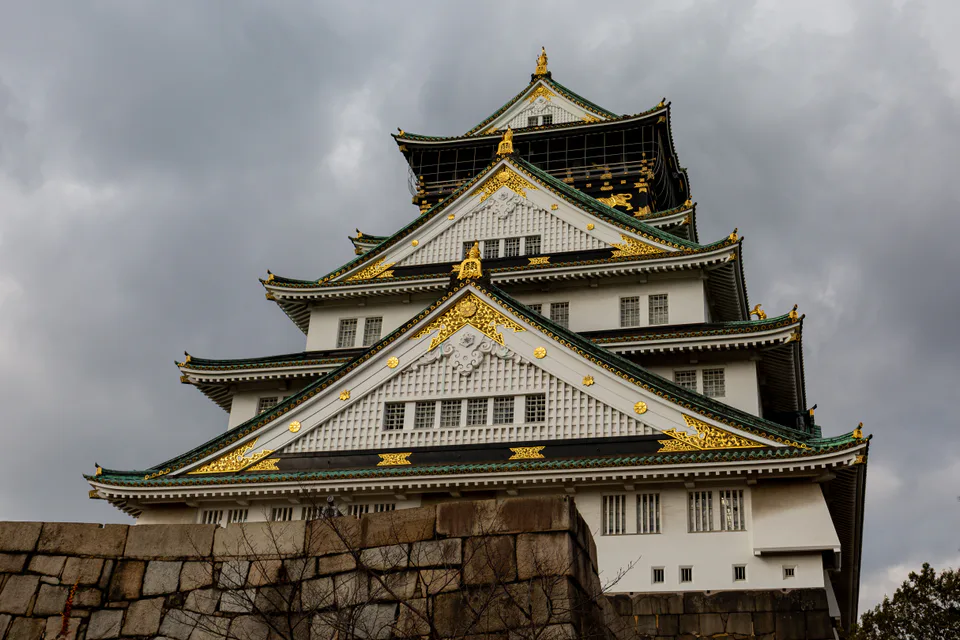
13 | Osaka Castle Museum — The key choice is whether you are entering. A park-and-exterior visit can be relatively flexible and low cost. Going inside turns the stop into a museum visit with queueing, exhibits and vertical movement. Do not schedule both versions as if they were the same 30-minute photo stop.
14 | Nishinomaru Garden — Keep it when the seasonal scenery or open castle view is the point, especially during strong blossom periods. Outside a seasonal reason, it is optional rather than an automatic extension of Osaka Castle.
15 | Osaka Museum of History — Stronger for travellers who want the development of the city rather than only the castle tower. If one museum is enough, choose between this and the Castle Museum by interest, not by assuming both are required because they are geographically close.
16 | Nakanoshima Museum of Art, Osaka — Exhibition-led choice. Modern/contemporary art and design can be a major draw, but the live programme should decide whether the museum becomes an anchor on your date.
17 | The National Museum of Art, Osaka — Same principle: specialist interest first, generic “best things to do” status second. It becomes efficient when paired with Nakanoshima rather than reached as a one-off from Namba.
18 | Osaka Science Museum — One of the better rainy-day and family choices because the exhibits and planetarium can create a defined indoor block. The planetarium runs as separate timed sessions, so decide before arrival whether it is part of the visit rather than assuming you can add it at any moment.
19 | Nakanoshima Park / Osaka City Central Public Hall area — Use this as connective tissue. It is free, photogenic and flexible enough to absorb a weather change or museum gap. That is often more valuable than turning it into another “must-see.”
Umeda and north-central Osaka: choose one purpose for the block
20 | Umeda Sky Building / Kuchu Teien Observatory — Keep it when the open-air rooftop experience is important and Umeda is already on the day. Do not compare only height. Weather matters more for an open-air experience than for an indoor deck, so keep a street-level evening backup.
21 | Grand Front Osaka / Grand Green Osaka — Strong when the trip needs shopping, food, coffee or a weather buffer without another ticket. A city trip does not need every hour monetised into an attraction.
22 | Kids Plaza Osaka — This is a genuine family anchor, not a 45-minute filler. The current official 2026 leaflet lists opening hours of 09:30–17:00, with children aged 0–2 admitted free. Choose it when hands-on play solves the family day better than another adult-famous landmark.
23 | Osaka Museum of Housing and Living — Best paired with Tenjinbashisuji. It earns its time when you want everyday urban history and recreated streets rather than another monument.
24 | Tenjinbashisuji Shopping Street — Keep it if local shopping/eating and the museum cluster already bring you north. If Shinsaibashi is already a major shopping block, you do not need a second covered arcade unless the different neighbourhood experience matters.
Osaka Bay and USJ: the biggest planning mistake is pretending these are city-centre add-ons
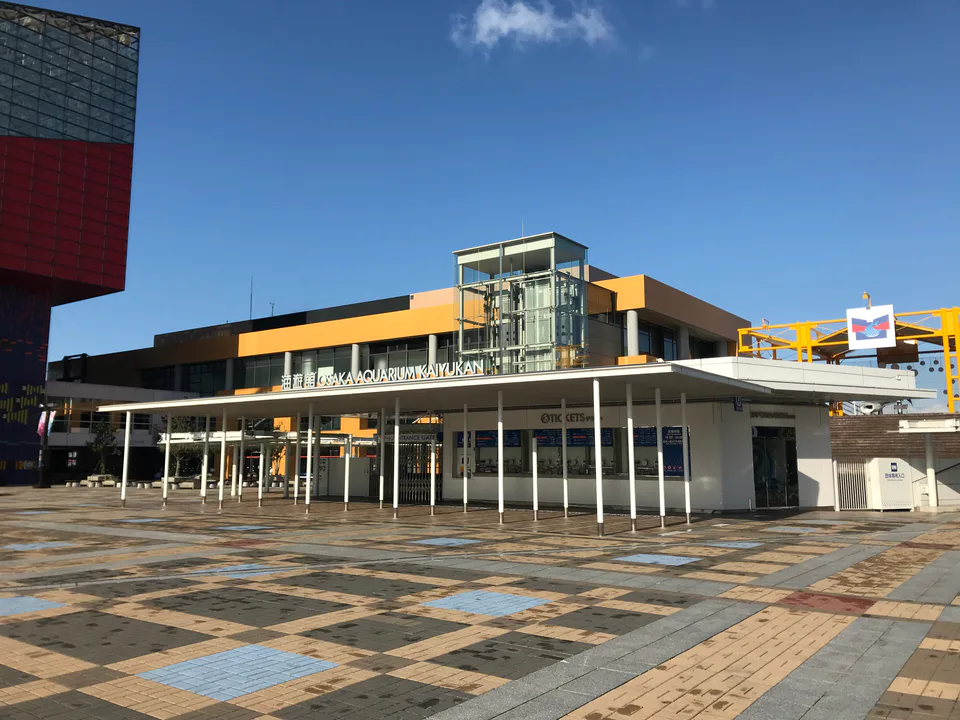
25 | Osaka Aquarium Kaiyukan — Treat it as a two-to-four-hour anchor plus bay-area transport, not a quick aquarium stop. Kaiyukan ended re-entry from June 15, 2026 and now uses date-and-time-specific ticketing to manage entry. It also tightened large-baggage rules in 2026. The practical consequence is simple: store large luggage first, enter once and finish the aquarium before moving on. Use the Kaiyukan planning guide for the current operating details.
26 | Tempozan Giant Ferris Wheel — Useful as a short addition when Kaiyukan already brought you to Tempozan. Weak as a standalone city crossing. The transport overhead can easily exceed the ride.
27 | Santa Maria Osaka Bay Cruise — Keep it when a harbour cruise adds a genuinely different outdoor block after Kaiyukan. Seasonal and evening schedules change, so do not build a fixed itinerary around an old timetable.
28 | LEGOLAND Discovery Center Osaka — Family-only product in the practical sense: adults cannot visit without children. Compare it with Kids Plaza and NIFREL according to age, energy and weather rather than treating it as a miniature USJ.
29 | Sakishima Cosmo Tower Observatory — Strongest when you are already in the bay area and want a port-oriented view. A lower ticket price does not compensate for a long detour if nothing else is nearby in your plan.
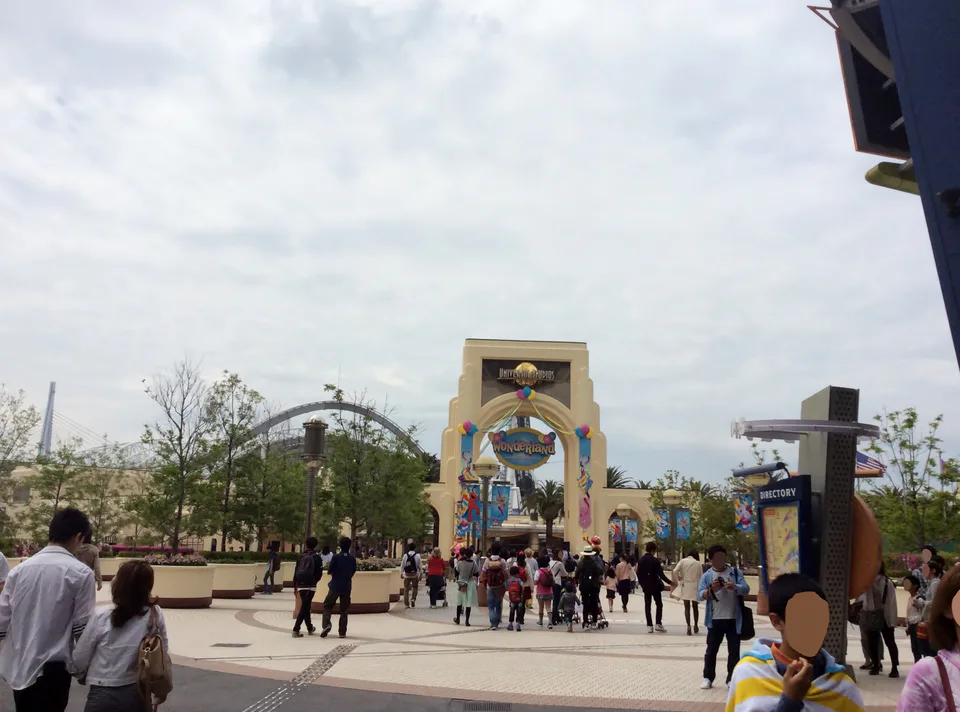
30 | Universal Studios Japan — Give it a full day unless you are an experienced repeat visitor with a deliberately short target list. As of 2026, the USJ official app is required to obtain day-of SUPER NINTENDO WORLD Area Timed Entry Tickets / Standby Entry Tickets, and distribution can end when capacity is reached. If Nintendo World and major rides are non-negotiable, compare the USJ Express Pass before the trip rather than hoping a half-day arrival will behave like a normal city attraction.
North Osaka: five attractions that need a half-day permission slip
31 | Expo ’70 Commemorative Park and Tower of the Sun — This is the former Expo ’70 site, not the 2025 Expo venue. Keep it for architecture, design, Expo history, gardens or a family half day. The distance from central Osaka means it should not be inserted casually into an Umeda shopping block.
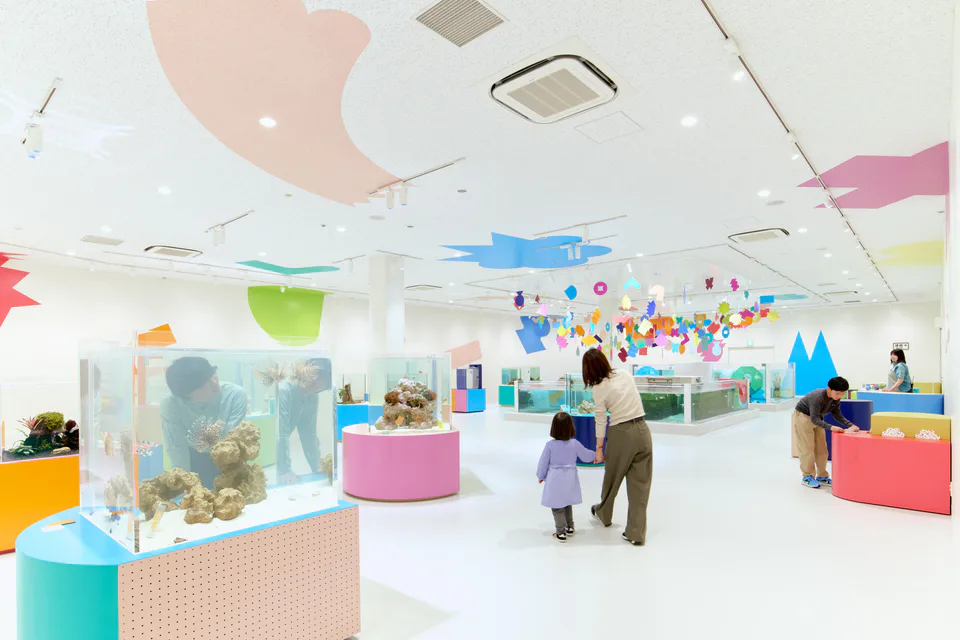
32 | NIFREL — Strong for families who want living creatures, art and spatial design in a more compact product than Kaiyukan, especially when EXPOCITY is also useful. It should not be chosen merely as “another aquarium.” Use the NIFREL decision guide to price the travel time as part of the visit.
33 | CUPNOODLES MUSEUM Osaka Ikeda — General museum admission remains free, while My CUPNOODLES Factory currently costs JPY 500 per cup and requires a same-day numbered ticket. The official site says advance online or phone reservations are not accepted for My CUPNOODLES Factory and distribution ends when tickets run out. Chicken Ramen Factory is a separate, reservation-required workshop. The museum is worth the detour when making the product is the point, not because “free museum” sounds cheap.
34 | Minoh Park / Minoh Falls — Keep it when nature or autumn colour is one of the actual goals. The waterfall has no admission fee, but the trip still costs transport and walking time. This is the clearest example of why free does not mean low-opportunity-cost. Use the Osaka autumn guide if foliage is the reason for going.
35 | Katsuo-ji — Keep it when the daruma-filled temple and forest setting justify a north-Osaka excursion. Do not pull it into a Dotonbori or Osaka Castle day because one social-media image looked good. Confirm the current bus schedule before treating it as a simple add-on to Minoh.
Budget: spend on one thing that changes the day
A low-cost Osaka itinerary does not need to be an all-free itinerary. Dotonbori, Shinsaibashi, Namba Yasaka Shrine, Shinsekai streets, Osaka Castle Park and Nakanoshima can create a strong city experience without multiple tickets. The money is better used on one paid attraction with a distinct job than on four medium-cost attractions that duplicate each other.
This is the order I would use:
Choose the city areas you actually want.
Choose the one or two paid anchors worth protecting.
Fill the route with free/supporting stops.
Only then compare passes.
If your final list contains several paid city attractions you already wanted, compare the Osaka sightseeing passes and then test the Osaka Amazing Pass. The pass should discount your itinerary; it should not invent one.
Families: one child-interest anchor per half day is usually enough
USJ, Kaiyukan, Kids Plaza, NIFREL and LEGOLAND can all be excellent family choices. Doing all of them in one short stay can make the trip feel like a chain of large indoor venues. Start with the child’s age, stamina, nap needs, sensory tolerance and whether adults also care about the attraction.
For younger children, Kids Plaza or LEGOLAND may deliver more active play than another long sightseeing route. For marine-life interest, Kaiyukan is the stronger destination experience. For a whole family that actively wants theme-park rides, USJ earns the full day. The Osaka with kids attraction guide handles the age-specific comparison.
Couples and solo travellers: protect one evening identity
A couple does not need three observatories and two cruises to prove Osaka has a night view. Pick one evening identity: Umeda skyline, Tennoji skyline, Dotonbori/Shinsekai street energy or a bay-area sunset. Then keep dinner within the same zone.
Solo travellers have more flexibility because there is no group consensus cost, but the same geography still applies. Den Den Town, specialist museums or a north-Osaka half day can move up the list when the interest is personal. What does not improve is spending 45 minutes on the train for a 20-minute stop simply because nobody else objects.
Rain and extreme heat: change the product, not only the order
In poor weather, do not preserve an outdoor-heavy itinerary by moving the same stops two hours later. Replace the product. Kaiyukan, Kids Plaza, Osaka Science Museum, the Museum of Housing and Living, Nakanoshima museums, shopping complexes and selected indoor attractions can take over a half day.
Conversely, do not waste a clear, comfortable day inside three museums because they were booked first. The Osaka rainy-day guide should be treated as a backup library, not a second mandatory itinerary.
Five deletion rules that turn 35 places into a useful 8–12
Delete duplicate functions. One major observatory, one large aquarium-style anchor, one market-focused meal unless you have a specific reason for more.
Delete low-value detours. A 30-minute stop that adds 45–60 minutes of one-way travel is rarely still “quick.”
Protect hard commitments first. USJ, timed exhibitions and other scarce reservations should shape the day before flexible streets and parks.
Let minority-interest attractions fail the group test. If only one person wants a high-cost three-hour attraction, either split temporarily or choose something the group values more.
Delete one Osaka cluster for every full Kansai day trip you add. Kyoto, Nara, Kobe or Himeji consume real days; they cannot be added by compressing Osaka indefinitely.
If you are combining Osaka and Kyoto in a short trip, the four-day Osaka/Kyoto itinerary with USJ shows why adding another city should force an explicit cut.
Final verdict: the best Osaka list is mostly a list of things you chose not to do
For a first trip, aim for two to four anchors and four to six supporting stops. USJ, Kaiyukan, a full Osaka Castle/history block, one major museum, one paid skyline view or a north-Osaka half day can be anchors. Dotonbori, Hozenji, Namba Yasaka Shrine, shopping streets, Tenshiba, Nakanoshima and similar stops work best when they sit naturally around those anchors.
The conclusion should reverse when your interests are unusually specific. An anime collector may give Den Den Town anchor status. An architecture traveller may spend half a day at Expo ’70 Park. A family may replace Osaka Castle entirely with Kids Plaza. That is not a failure to see “the best of Osaka.” It is the point of making the shortlist personal.
Choose the area first, the anchor second and the ticket or pass third. Once a famous attraction begins forcing two extra transfers, a rushed meal and the deletion of something you care about more, it has stopped being one of the best things to do for your trip.
Official sources and verification date
Osaka Convention & Tourism Bureau / OSAKA-INFO · Universal Studios Japan · Osaka Aquarium Kaiyukan · CUPNOODLES MUSEUM Osaka Ikeda · Kids Plaza Osaka · Katsuo-ji. Time-sensitive operating details checked August 25, 2026. Recheck the exact visit date for closures, timed-entry inventory, seasonal schedules and transport changes.