
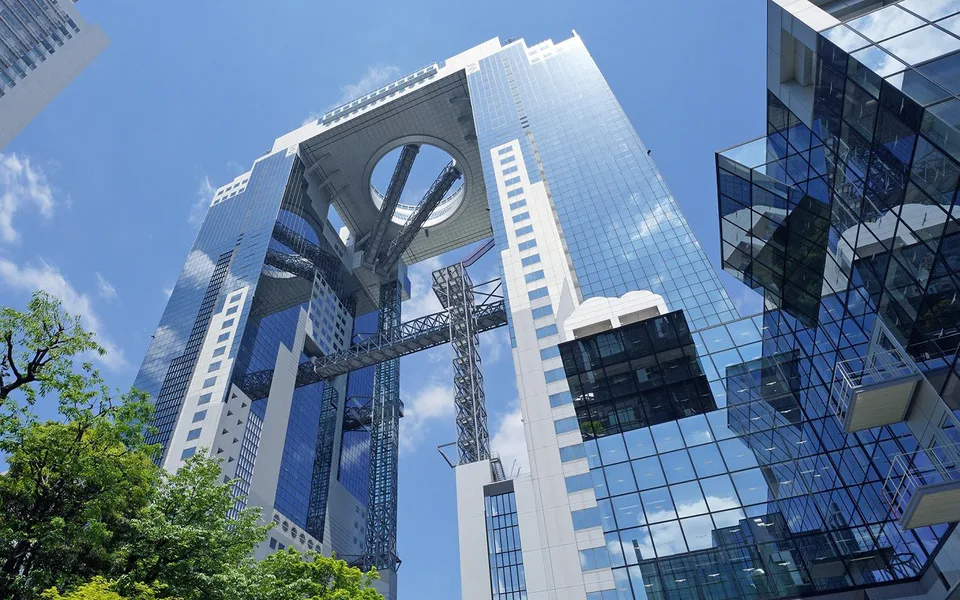
If you only pay for one Osaka viewpoint, choose HARUKAS 300 for the clearest all-weather city overview, Umeda Sky Building for sunset atmosphere, and Tsutenkaku only when Shinsekai is already part of the evening. The mistake is treating all three as interchangeable “night views.” Their real costs are different: HARUKAS asks for the highest ticket spend, Umeda asks you to accept rooftop weather risk, and Tsutenkaku asks whether the neighbourhood is already on your route.
On a three- or four-night Osaka trip, I would normally buy one of these tickets, not three. A second deck only earns scarce evening time when it gives you a genuinely different job — for example, daylight geography at HARUKAS and an outdoor sunset at Umeda. A third viewpoint usually loses to dinner, Dotonbori, Shinsekai or simply a less rushed night.
ValueNavi Osaka Observatory Decision Score
This comparison uses the same ValueNavi attraction framework used across other paid-viewpoint guides: uniqueness 20%, route fit 20%, time efficiency 15%, weather resilience 15%, booking flexibility 10%, crowd resilience 10%, and money value 10%. Scores below are scenario scores, not permanent ratings of the attractions.
Scenario | ValueNavi score | Why |
|---|---|---|
HARUKAS 300: first Osaka trip, one paid viewpoint | Highest city scale here, strong indoor resilience and easy Tennoji pairing. | |
Umeda Sky: clear-weather sunset from an Umeda base | The rooftop, architecture and changing sky make the experience more distinct than another glass-box night view. | |
Tsutenkaku: Shinsekai dinner already planned | Very high route fit; the tower completes the district instead of creating a separate mission. | |
Tsutenkaku: special trip from Umeda only for the view | Lower skyline payoff plus cross-city detour weakens the cheap-ticket advantage. | |
Umeda Sky: heavy rain when rooftop atmosphere is the reason to go | Indoor areas remain, but the product you specifically wanted is degraded. |
I treat 8.5+ as a strong scenario fit, 7.5–8.4 as conditional, and below 7.5 as a sign that route or weather friction is eating too much of the attraction’s value.
The real cost is not the ticket — it is the whole evening block
Use this simple planning formula:
True Observatory Cost = admission + transport detour + queue/entry time + viewing time + exit-to-dinner/hotel time
That is why a ¥1,500 ticket can be worse value than a ¥2,200 ticket. If Tsutenkaku requires a dedicated cross-city round trip but HARUKAS sits beside dinner and your hotel route, the cheaper ticket may consume more of the evening.
↔ Scroll table left or right
Viewpoint | Current reference price | Approx. USD | Main hidden cost |
HARUKAS 300 | Official English ticket page currently shows ¥2,200 adult | ~US$13.85 | South-Osaka detour if your night is otherwise in Umeda. |
Umeda Sky Building | ¥2,000 adult | ~US$12.60 | Weather and the walk from the main station complex. |
Tsutenkaku | ¥1,500 adult general observatory | ~US$9.45 | Timed entry plus low route value if Shinsekai was not already planned. |
USD conversions use the 26 August 2026 exchange rate and are approximate; JPY is the booking reference.
Important 2026 price note: HARUKAS official pages currently disagree
HARUKAS 300’s current English ticket page lists same-day adult admission at ¥2,200 for ages 15+, while another official operation-information page still displays a different ¥2,000 adult table with different age bands. Because the attraction’s own pages are not fully synchronized, I would use the English ticket page shown at purchase as the booking reference and recheck immediately before paying rather than freezing one number into a long-range budget.
This is exactly the kind of detail a comparison table can hide: “official price” is only useful when the official pages themselves agree.
HARUKAS 300: best when the job is understanding Osaka
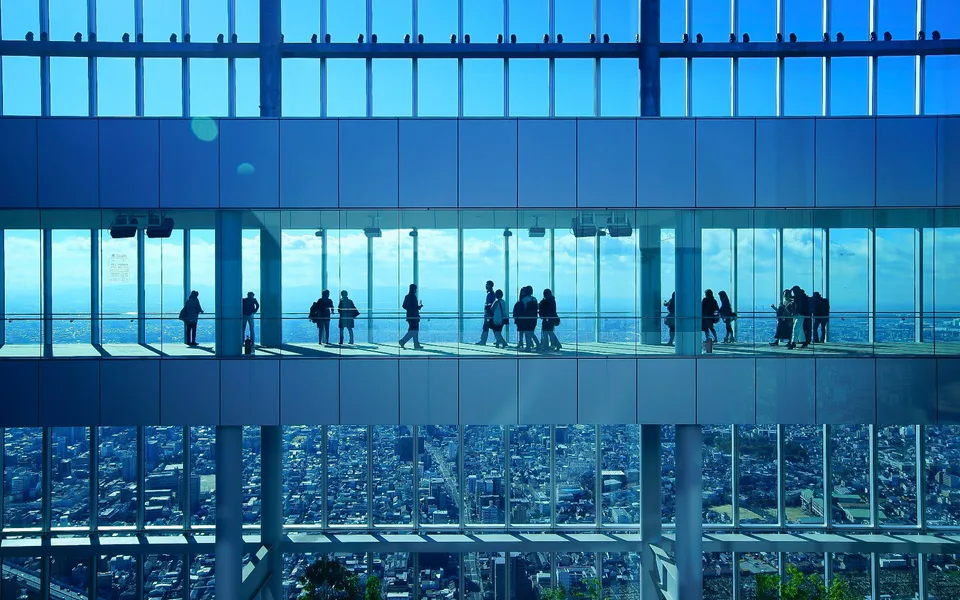
HARUKAS 300 occupies floors 58–60 of Abeno Harukas and reaches roughly the 300-metre level. Its strongest planning advantage is not just height: the main 60F observation space is enclosed, while the 58F Sky Garden gives you an open-air element. That makes it the most resilient one-ticket choice when wind, cold or rain would make an outdoor-only experience fragile.
Normal hours remain 09:00–22:00 with last admission 30 minutes before closing. Re-entry is not included on a standard ticket. If this is your only viewpoint, daylight into blue hour is the strongest “learn the city” window because Osaka Castle, Tsutenkaku, the bay and surrounding mountains are easier to read before the lights flatten the geography.
Choose HARUKAS when: this is your first Osaka trip, Tennoji or south Osaka is already in the route, or someone in the group wants an indoor main observation level. Skip or downgrade it when: your entire evening is Umeda-based and crossing the city is only for another skyline.
Umeda Sky Building: spend your prime sunset slot here only in suitable weather
Umeda Sky Building currently operates 09:30–22:30 with last admission at 22:00 and lists regular admission at ¥2,000 for adults and ¥500 for children aged 4 through elementary school. The open rooftop is the point. Wind, temperature and sky colour are part of what you are buying.
That creates a clean decision reversal: on a clear evening, I prefer Umeda for sunset atmosphere; in sustained rain or strong wind, HARUKAS becomes the safer paid-view choice. Do not let a non-refundable or tightly timed sunset plan turn a weather-sensitive attraction into an obligation.
Osaka Amazing Pass: 15:00 is the decision boundary
The current Osaka Amazing Pass rule is specific: Umeda Sky Building admission with the pass applies until 15:00. From 15:00 onward, showing the pass gives a 10% discount rather than free admission.
If your purpose is to maximise included monetary value, use Umeda before 15:00. If the whole reason you chose it is the rooftop at sunset, I would not downgrade the experience just to make the pass look more profitable. A pass should follow the itinerary, not control it.
Tsutenkaku: route fit matters more than height
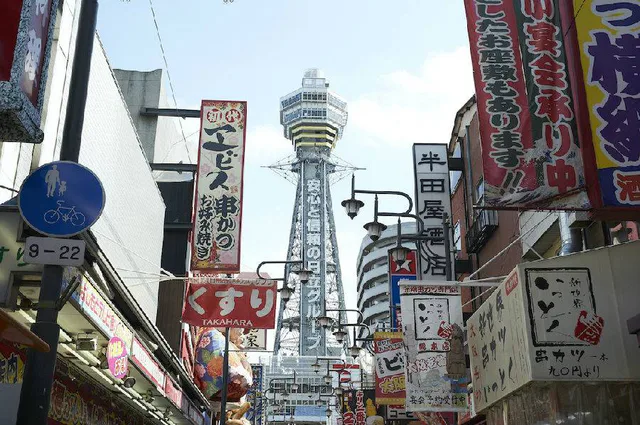
Tsutenkaku’s current general-observatory price is ¥1,500 for ages 15+ and ¥800 for ages 5–14. General-observatory hours are 09:00–21:45 with final admission at 21:15. The important 2026 operational change is timed entry: tickets require an entry time, and pass/voucher users must arrange an available time at the on-site counter.
I would not choose Tsutenkaku for the broadest skyline. I would choose it because Shinsekai is already a high-value evening: neon, kushikatsu, retro streets and the tower become one compact district. In that scenario the attraction has almost no detour tax. From an Umeda hotel with no Shinsekai plans, its lower admission price is not enough by itself.
Already going to Shinsekai? Put dinner and Tsutenkaku in the same district
ValueNavi Sunset-Slot Opportunity Cost
Osaka gives you only so many evenings. A sunset slot has a higher opportunity cost than a random afternoon hour because it competes with dinner reservations, hotel lounges, Dotonbori, river walks and other night views.
↔ Scroll table left or right
Attraction | Best use of sunset? | Why |
HARUKAS 300 | Good, but not mandatory | Daylight geography is already a strong reason to visit. |
Umeda Sky Building | Yes, when weather is good | Open rooftop and changing sky are central to the product. |
Tsutenkaku | No need to chase exact sunset | Shinsekai itself becomes more atmospheric after dark. |
One viewpoint, two viewpoints or all three?
One viewpoint: the default for a short Osaka trip. Pick by route and experience. Two viewpoints: defensible only when they do different jobs — for example HARUKAS in daylight and Umeda at sunset. All three: usually poor use of three evenings unless observation decks are themselves a major trip interest.
My deletion rule is simple: if removing one deck from the itinerary gives back a relaxed dinner or eliminates a cross-city return without losing a genuinely different experience, remove it.
Final verdict
First Osaka trip and only one paid viewpoint: HARUKAS 300.Best atmospheric sunset in clear weather: Umeda Sky Building.Best route-integrated choice: Tsutenkaku when Shinsekai is already planned. The cheapest ticket is not automatically best value, and the tallest deck is not automatically the best evening.
If your hotel area is still undecided, settle Namba vs Umeda or Where to Stay in Osaka before buying a viewpoint ticket. Route fit can change the answer more than a ¥500–¥700 admission difference.
Sapporo Station vs Susukino: Which Base Fits Your Hokkaido Trip?
Miyakojima Diving: One Dive, Two Dives or Three? Your Flight Home Matters More Than the Upgrade
Nokogiriyama Ropeway: Round Trip or One Way? The Route Choice That Changes Your Day
Miyako Hotel Hakata vs Solaria Nishitetsu Hotel Fukuoka: Which Base Fits Your Trip?
Sources
HARUKAS 300 official ticket page | HARUKAS 300 operation information | Umeda Sky Building official observatory page | Osaka Amazing Pass official attraction rules | Tsutenkaku official operating guide
Opening hours, special operating periods, rooftop access, admission prices and timed-entry availability can change. Facts and price references rechecked 26 August 2026. USD conversions are approximate; JPY is the reference currency.