
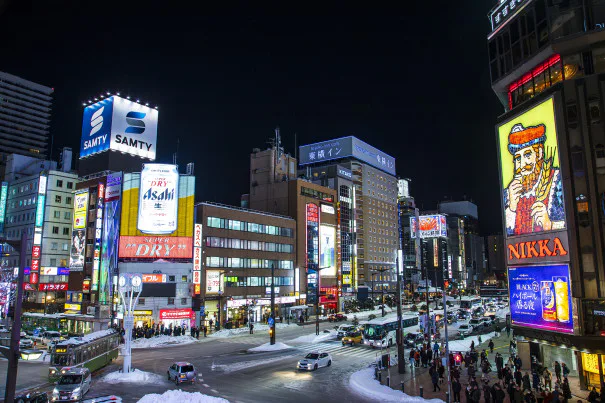
Choose Sapporo Station when fixed JR departures are the hardest part of the trip. Choose Susukino when late evenings repeat often enough to matter. But do not give Sapporo Station an automatic win just because you are flying through New Chitose Airport: the current airport bus also runs directly through central Sapporo to Susukino, so a Susukino hotel near the right bus stop can trade a slower airport journey for fewer luggage hand-offs.
If neither JR mornings nor Susukino nights clearly dominates, Odori is often the better geometry. Sapporo City currently puts Subway Sapporo Station to Susukino at about three minutes on the Namboku Line and 1.2 km, with a base subway fare of JPY 210. These districts are close enough that the hotel decision should be driven by repeated friction, airport mode and the final route to the lobby, not by a generic “which area is more central?” ranking.
↔ Scroll table left or right
Your real trip pattern | Start with | Why | What would reverse it |
1–2 nights, airport in/out, large luggage | Compare Sapporo Station rail vs direct Susukino airport bus | JR is much faster to Sapporo Station; the bus can remove the subway/taxi hand-off to Susukino | Your hotel is far from the airport-bus stop or road-delay risk matters more than luggage handling |
Otaru / Asahikawa / other JR-led days on 2–3 mornings | Sapporo Station | Removes the same positioning leg before and after every rail day | You actually move the overnight base to one of those destinations |
Late dinner / bars / nightlife on 3+ nights | Susukino | The most tiring part of the day ends near the hotel | You keep returning early and repeatedly start mornings at JR Sapporo |
Mixed four-night city stay, one JR day trip, normal dinner hours | Odori | It sits between the two demand centres and reduces over-optimisation | A specific hotel has materially better indoor access or price elsewhere |
Winter trip with stroller / older traveller / several cases | Choose the cleanest platform-or-bus-stop-to-lobby route | One sheltered direct bus or underground link can beat a nominally closer district with a poor final 300 metres | Repeated hard JR departures outweigh the easier hotel arrival |
Use three ledgers, not two: JR mornings, Susukino nights and airport hand-offs
The original Sapporo Station-versus-Susukino shortcut is usually “station for transport, Susukino for nightlife.” That is too crude because airport travel is not the same transport problem as an Otaru or Asahikawa day trip.
Before booking, count three things:
JR-bound mornings/evenings: Otaru, Asahikawa, Hakodate-direction limited express, Obihiro/Tomamu direction or any day with a fixed departure at JR Sapporo Station.
Susukino late endpoints: evenings when dinner, bars, events or a second stop keep you south of Odori late enough that another local journey feels like friction.
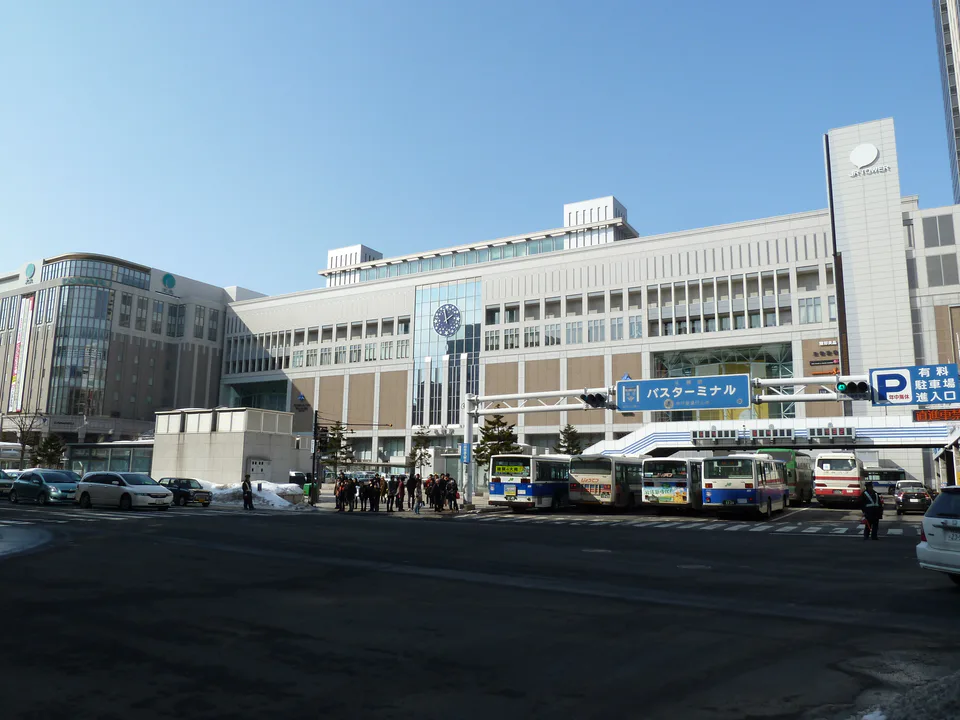
Airport hand-offs: not simply “airport arrival and departure,” but whether you will use JR Airport to Sapporo Station or a direct airport bus that already stops near the hotel area.
This distinction matters because a JR day trip always pulls you toward Sapporo Station, while an airport day does not. If your Susukino hotel sits near a direct airport-bus stop, New Chitose can be a reason to keep the Susukino hotel rather than a reason to move north.
New Chitose Airport: JR is faster, but Susukino has a direct-bus escape hatch
JR Hokkaido currently lists the Airport train from New Chitose Airport to Sapporo at a fastest 33 minutes. During the 09:00–16:00 daytime period, JR currently operates six Airport services per hour, and the standard non-reserved adult fare is JPY 1,230. For a hotel genuinely beside JR Sapporo Station, this is an unusually strong airport transfer.
The missing comparison is the direct airport bus. Hokkaido Chuo Bus and Hokuto Kotsu currently publish central-Sapporo airport services that continue beyond Sapporo Station through Odori and Susukino. One current timetable example leaves New Chitose Airport International Terminal at 14:16, reaches Sapporo Station at 15:13 and Susukino at 15:18. The current adult central-Sapporo fare is JPY 1,500.
That bus is slower than the fastest JR headline. Its value is different: your large suitcase can stay in the luggage hold while the vehicle carries you through to Susukino, instead of rail → Sapporo Station concourse → subway/taxi → hotel. A JPY 270 fare difference is small enough that the decision can rationally be about hand-offs rather than ticket price.
The reverse also exists. The current central-Sapporo timetable includes services such as Susukino 07:18 → Sapporo Station 07:30 → New Chitose Airport 08:35. That makes a Susukino final night operationally possible for some flights without first positioning to JR Sapporo.
But a direct bus is not “JR without the transfer.” Road traffic is less predictable than rail, and the useful stop may still be several snowy blocks from the hotel. For an early flight or a hard check-in deadline, I would only use the bus after checking the exact service, hotel-side stop and a conservative traffic buffer.
How the airport bus changes the short-stay verdict
A one- or two-night stay used to look almost automatic: airport arrival + airport departure are a large share of the hotel experience, so stay by Sapporo Station. That remains a good default, but it now needs one additional test.
Sapporo Station still wins strongly when:
you will use JR Airport in both directions;
the hotel is truly close to the JR gates rather than merely using “Sapporo Station area” in its marketing;
you also have an Otaru or another JR day inside the short stay;
road-delay risk on departure is unacceptable;
or your Susukino hotel is not convenient to an airport-bus stop.
Susukino can now beat that default when:
your only full evening ends late in Susukino;
the hotel is very close to a current airport-bus stop;
you have several large bags and want to avoid a Sapporo Station transfer;
and the bus timetable gives the flight a generous enough buffer.
This is the important derived insight: airport convenience is a mode-and-stop decision, not a district label.
Sapporo Station wins when the timetable is the hard constraint
Airport buses narrow one advantage; they do not change the rail geography of Hokkaido. A JR day trip has a scheduled departure at a fixed station. Dinner usually has more flexibility. That asymmetry is why even two or three early rail mornings can justify the station area.
Staying in Susukino does not make Otaru or Asahikawa difficult—the subway ride north is short—but it adds another timed step before the train and another step after the return. In winter, that can mean another elevator, platform and luggage or ski-gear transition.
I would give Sapporo Station the edge when:
two or more mornings have fixed JR departures;
you are changing hotels by rail with full-size luggage;
you need a reserved limited express and want maximum margin before boarding;
or the final airport morning is built around JR Airport rather than a bus.
Do not overbuy this advantage for one Otaru excursion inside a five-night city stay. One JR day gives the station two useful legs. Four late Susukino evenings give Susukino four.
Susukino wins when the expensive movement happens after 21:00
Susukino’s value is not that it has restaurants. It is that a late evening can end without another transport decision. For travellers who repeatedly eat late, move between bars, attend a winter event or prefer an open-ended dinner, this matters more than a three-minute subway headline suggests.
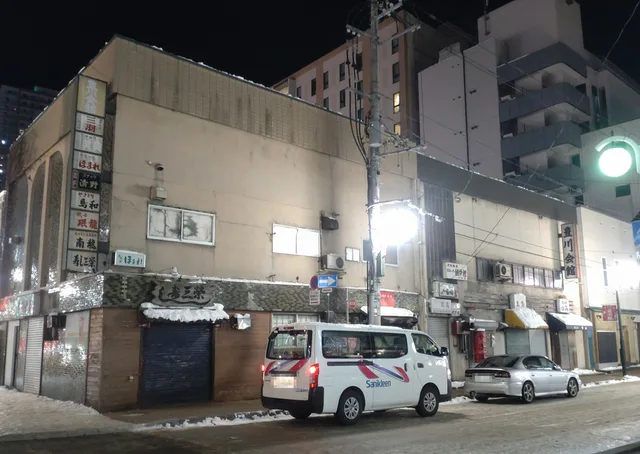
In winter, the local journey can include finding the entrance, descending to the platform, waiting, riding north and then making another final walk in snow or slush. None of those steps is difficult alone. The question is whether you want to repeat them on the nights when everyone is most tired.
Susukino is the wrong choice when the nightlife benefit is imaginary. If you normally eat by 19:00, return by 21:00 and wake early for trains, you are paying for an advantage you rarely use.
Winter changes the comparison from district distance to the final 300 metres
Visit Sapporo currently puts JR Sapporo Station to Susukino at roughly 1.5 km / 20 minutes on foot and notes the central underground connection. The Sapporo–Odori Chi-Ka-Ho section itself is about 520 metres, roughly ten minutes on foot, and currently opens from 05:45 to 00:30.
That underground network makes all three central areas workable in poor weather. It does not make every hotel equally weatherproof.
For winter, inspect four final routes:
JR platform → Sapporo Station hotel lobby
Airport-bus stop → Susukino hotel lobby
Subway exit → hotel lobby
late-night restaurant/event → hotel lobby
A Susukino hotel 50 metres from an airport-bus stop and underground exit can be easier with two suitcases than a “Sapporo Station hotel” several exposed blocks from the station. The reverse is equally true for a station-connected property.
Do not buy the district name. Buy the final route from the transport door to the hotel door.
Odori is often the correct geometry, not an indecisive compromise
Odori sits between Sapporo Station and Susukino on the Namboku Line. The official travel-time table gives about two minutes from Sapporo to Odori and about one minute from Odori to Susukino. It also sits inside the central underground network.
Odori is strongest when:
you have one or two JR days, but not enough to let Sapporo Station dominate the stay;
you want Susukino dinners without sleeping in the nightlife core;
Odori Park, shopping or a seasonal event is part of the trip;
or the best-value hotel has a much cleaner underground / airport-bus route.
Stop splitting the difference when the itinerary already has a clear extreme. Three early JR departures should pull you north. Four genuinely late Susukino nights should pull you south.
One, two and four nights have different break-even points
One night: arrival and departure dominate. Sapporo Station is still the safest default if you use JR Airport, but a Susukino hotel beside a direct airport-bus stop can be a better luggage solution when the evening also belongs to Susukino.
Two nights: add the one full-day anchor. Airport + Otaru usually gives Sapporo Station the repetition win. Airport + one late Susukino evening with no JR excursion is much closer than the usual advice suggests.
Four nights: airport arrival and departure are only two movements among many. Repeated JR mornings or repeated Susukino evenings should now dominate the calculation. Do not let the first airport transfer decide every subsequent hotel night.
Do not split a central-Sapporo stay to get both advantages
Sapporo Station, Odori and Susukino are too close to justify a routine hotel move between them. A checkout, luggage hand-off and second check-in costs more than the three-minute subway ride you are trying to eliminate.
Move hotels when the destination really changes: Niseko, Jozankei, Noboribetsu, Otaru for a deliberate overnight, Furano, Asahikawa or another Hokkaido base. If skiing is driving the change, use Ski from Sapporo or Stay at a Ski Resort?. If an onsen night is competing with Sapporo, compare Noboribetsu vs Jozankei.
Three example stays
Two nights, New Chitose in and out, one Otaru day
Choose Sapporo Station. Even if the airport bus can reach Susukino directly, Otaru creates another departure and return through JR Sapporo. The station wins the repetition ledger.
Two nights, large luggage, no JR day trip, one late Susukino evening
Compare the direct airport bus to Susukino before choosing Sapporo Station. If the hotel is close to the stop and the bus timing fits both flights with healthy buffers, one slower airport ride can eliminate two subway/taxi hand-offs while also protecting the only useful evening.
Four nights, one Otaru day, three late Susukino dinners
Choose Susukino. One JR day creates two northbound station legs; three late evenings create three tired-end-of-day returns. The airport bus can further reduce the penalty if its stops fit the hotel.
Four nights, one Otaru day, normal dinner hours, city sightseeing around Odori
Choose Odori. Neither extreme earns the full hotel decision. Compare exact underground access, airport-bus stop, room value and the final winter walk.
Final verdict
Sapporo Station remains the best default for repeated JR travel, hard rail departure times and short stays built around JR Airport. Susukino is the better base when late evenings repeat—and the current direct New Chitose Airport bus means airport luggage no longer automatically cancels that advantage. Odori is the rational third answer when neither side repeats enough to dominate.
The most useful correction is to stop counting “airport” as a Sapporo Station point before choosing the transport mode. Count JR mornings, Susukino nights and airport hand-offs separately. The winner is the area that removes the highest-cost repeated movement for your actual trip.
Sapporo Teine vs Sapporo Kokusai: Which Is Better for a Ski Day Trip?
Hakone vs Kawaguchiko: Which Is Better for Your First Japan Trip?
Fukuoka Concert Hotels: Pick Your Base by the Trip Home After PayPay Dome or Marine Messe
Hotel WBF Grande Asahikawa: Is a 2-Minute Station Walk Worth It for a Northern Hokkaido Base?
References
JR Hokkaido — New Chitose Airport / Sapporo Airport trains · JR Hokkaido — current fares · Hokkaido Chuo Bus — New Chitose Airport / central Sapporo bus · Sapporo City Transportation Bureau — subway travel times and distances · Sapporo City Transportation Bureau — subway fares · Visit Sapporo — central walking distances and underground connection · Visit Sapporo — Chi-Ka-Ho. Checked August 25, 2026. Airport-bus and rail timetables can change; verify the exact travel date, hotel-side stop and departure buffer.