
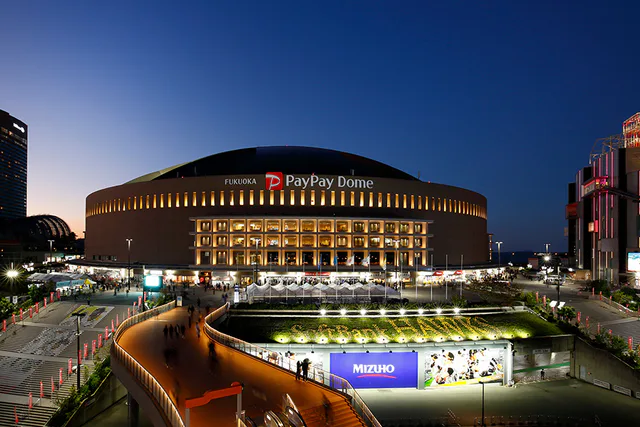
For one Fukuoka concert, I would usually keep the hotel base that fits the rest of the trip and optimise the route home after the show. For two shows at the same venue, the concert route starts repeating often enough to influence the hotel. That is the threshold most “best concert hotel” lists miss. Venue distance is paid once on a one-show trip; a poor city base can be paid every morning and evening for the other three or four days.
For MIZUHO PayPay Dome, the current official tourism guide places Tojinmachi Station about a 15-minute walk from the venue. For Marine Messe Fukuoka, the official venue site lists Gofukumachi at about 15 minutes on foot and Nakasu-Kawabata at about 18 minutes, while buses serve both Hakata and Tenjin. So the real decision is not “which hotel is closest?” It is which hub do you want to reach after the crowd clears, and what must happen the next morning?
↔ Scroll table left or right
Your pattern | Start with | Why | Main reversal |
One PayPay Dome show + Tenjin dinner/nightlife | Tenjin | Once the subway ride is finished, the rest of the night is already near the hotel | Very early JR/Shinkansen departure next morning |
Two PayPay Dome shows | Tenjin or Akasaka gets stronger | The same Tojinmachi-side route repeats twice, so Airport Line convenience compounds | The rest of the trip is heavily Hakata/JR based |
One Marine Messe show + early JR next morning | Hakata | Make Hakata the finish line after the event and avoid a luggage move before the train | You want a late Tenjin night after the show and the next departure is not time-sensitive |
Concert is the only event inside a 4–5 night city trip | Keep the normal city base | One late journey should not create several days of worse hotel geography | The event has a very late finish or the same venue is used on multiple nights |
Driving to Marine Messe | Do not choose the hotel from parking availability alone | The current official parking rules include a normal 22:00–08:00 no-exit window at Parking Lot 1 unless event operations change | Your exact event publishes different parking hours and you have confirmed them |
One show should optimise the return route; two shows can justify changing the base
A single concert creates one difficult transport window. Moving hotel for that one window often replaces one crowded return journey with checkout, luggage handling, another check-in and a worse base for the non-concert days.
Two shows are different. You pay the same venue-side walk, crowd dispersal and late return twice. At that point, an Akasaka or Tenjin base for PayPay Dome can stop being a convenience and become the trip's repeated operating advantage.
Use this hotel-move threshold:
One show: move only when the concert night and the following morning both clearly improve.
Two shows: let the venue route influence the base, especially if both evenings end late.
One show + early flight/JR departure: the morning after the show can outweigh the venue side entirely.
This is the same logic as any short-stay hotel move: the second hotel should solve at least two meaningful problems, not just shorten one map distance.
PayPay Dome: the 15-minute Tojinmachi walk is a fixed cost
Fukuoka City’s current official guide lists MIZUHO PayPay Dome about a 15-minute walk from Exit 3 of Tojinmachi Station. That walk does not disappear because you choose a Tenjin hotel, an Akasaka hotel or a Hakata hotel.
So the useful comparison begins after Tojinmachi. Tenjin is strong when the night should continue with food, shopping or a short final walk. Akasaka is strong for repeat show nights when you want to stay on the Airport Line but do not need the absolute centre of Tenjin. Hakata is stronger when the following morning belongs to JR or Shinkansen.
Do not move a four-night stay toward Momochi purely to erase part of one concert commute unless the event itself is the dominant reason for the whole trip.
Tenjin works best when the concert is not the end of the night
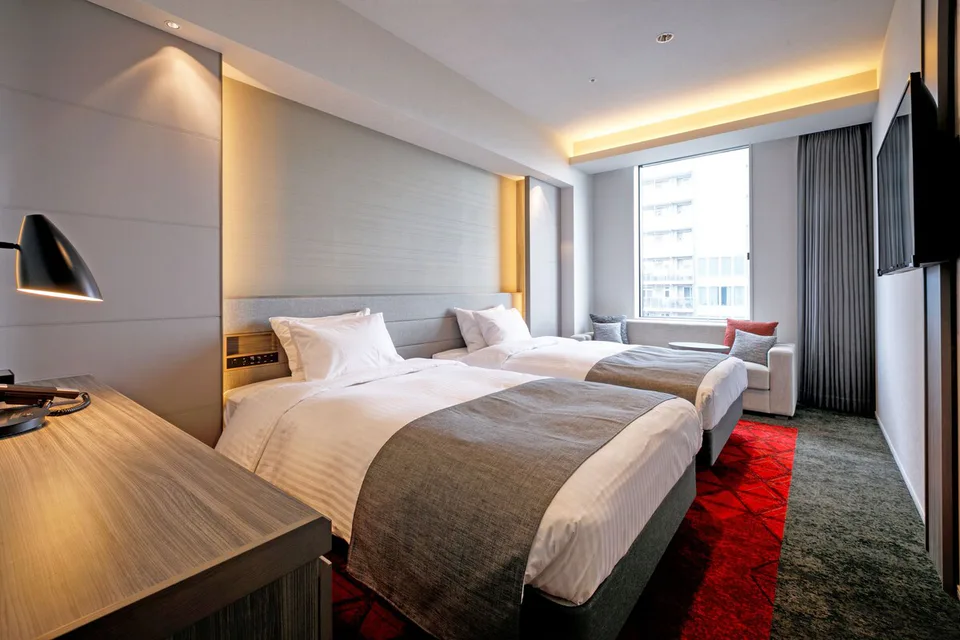
Solaria Nishitetsu Hotel Fukuoka is directly connected to Nishitetsu Fukuoka (Tenjin) Station and sits inside the Tenjin commercial core. That matters when reaching Tenjin after the show is only the first step of the final hour: dinner, convenience-store stop, dropping merchandise in the room or meeting friends.
The trade-off is the next morning. If you have to move several concert purchases plus a large suitcase to Hakata for an early reserved train, you may have optimised the fun part of the night and made the least-forgiving part of the itinerary worse.
If Tenjin is also winning the non-concert days, keep it. If the event is the only reason Tenjin wins, reopen the hotel choice.
Akasaka is the repeat-Dome compromise
For two PayPay Dome nights, Akasaka can be more rational than either “closest venue hotel” or central Tenjin. It keeps you on the same Airport Line corridor as Tojinmachi while avoiding the need to centre the entire stay on the Dome itself.
Hotel JAL City Fukuoka Tenjin is the obvious example of the pattern: it is positioned at Akasaka rather than directly inside Tenjin Station. The value is not a marketing label; it is the repeatable chain of Dome walk → Tojinmachi → Akasaka → hotel.
If the desired post-show experience is actually late Tenjin dining, central Tenjin still wins. If the goal is shower, sort merchandise and sleep, Akasaka often has the cleaner logic.
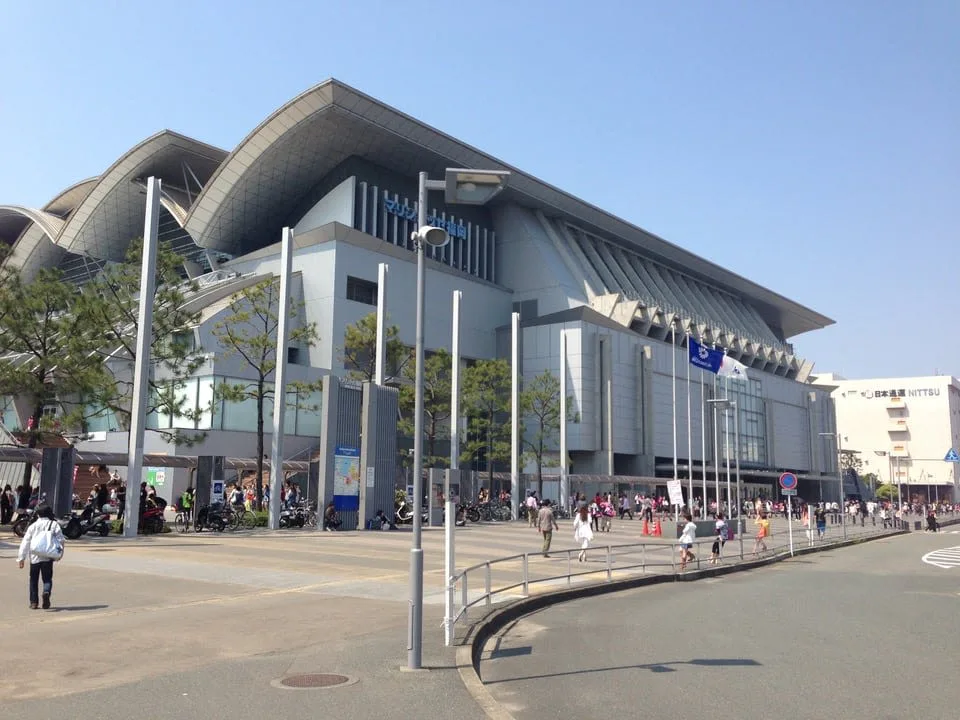
Marine Messe: bus convenience and rail predictability solve different problems
Marine Messe currently publishes direct bus routes from both Hakata Station and Tenjin. It also lists Gofukumachi Station about 15 minutes on foot and Nakasu-Kawabata about 18 minutes. After a concert, those options behave differently from the inbound trip because everyone leaves at once.
A bus can remove walking, but a crowded event bus is still a queue-dependent product. Walking to the subway spends more physical energy but can reduce dependence on one venue-stop queue. There is no universal winner.
I would choose the return mode from the hotel and the group:
Children, older travellers, heavy merchandise: bus may be worth waiting for if the event operation is confirmed.
Fit adults who value predictability: the walk to rail can be the more controllable exit.
Early JR next morning: bias the whole night toward finishing in Hakata.
Driving to Marine Messe has a parking failure mode hotel lists rarely mention
Marine Messe’s current official parking information gives Parking Lot 1 normal hours of 08:00–22:00 and states that vehicles cannot exit from 22:00 until 08:00 the following morning. The venue also says hours can change for surrounding events.
This matters because “the venue has parking” is not enough information for a late concert. A show, encore, merchandise queue and controlled exit can push the real departure close to or beyond 22:00. If you are using a rental car, confirm the event-specific parking hours rather than assuming you can simply drive back to the hotel after the show.
The derived hotel decision is important: a parking space is only useful if its exit window matches the event. If it does not, public transport plus a well-positioned hotel can be the more resilient plan even for travellers who have a rental car for the rest of Kyushu.
Hakata is strongest when the concert night and next morning can share one finish line
For Marine Messe or Fukuoka Sunpalace, a Hakata hotel becomes more valuable when the next morning also starts from Hakata. The concert return and the following departure are then solved by one base rather than two separate optimisations.
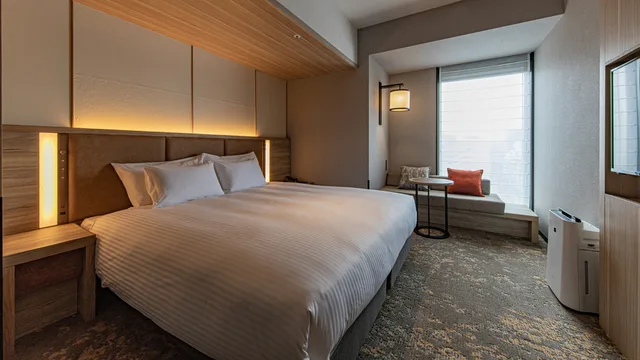
JR KYUSHU HOTEL Blossom Hakata Chuo is the practical version of that strategy. Miyako Hotel Hakata is the premium version when direct station integration, a later checkout or hotel facilities will actually be used. Do not pay the premium purely because the concert ends late if you will return, sleep for six hours and leave before using anything else.
Merchandise changes the final-mile calculation
The outbound trip may involve only a phone and a light bag. The return can include a tote, posters, clothing, light sticks and purchases you did not plan for. That changes the value of a 15-minute walk, a crowded bus and the final hotel transfer.
If you expect to buy heavily, rate the post-show chain using the return load, not the bag you carried to the venue. For a multi-show trip, room floor space and luggage storage also rise in value because the hotel becomes a sorting and repacking base.
Do not trust the printed show end time as your hotel-arrival time
A scheduled finish is not the moment you reach the street. Encore, controlled crowd release, bathrooms, merchandise and meeting friends all sit between the stage and the hotel.
So I would not build the final public-transport connection around a perfect exit. If the hotel route only works when you clear the venue immediately at the printed end time, the route is fragile. Check same-day event transport and live service information instead of relying on a months-old screenshot.
Final verdict: let the concert influence the base in proportion to how often the route repeats
One PayPay Dome show: keep the area that fits the rest of the Fukuoka stay; Tenjin is especially good if the night continues after the concert. Two Dome shows: Tenjin or Akasaka gets materially stronger because the same Airport Line route repeats. Marine Messe/Sunpalace + early JR next morning: Hakata is usually the cleaner finish line.
Do not change hotels only to save part of one venue commute. And if you are driving to Marine Messe, do not treat “parking available” as the end of the analysis—the current normal Parking Lot 1 rules include a 22:00–08:00 no-exit window unless event operations change.
If the concert is only one night in a longer trip, go back to Hakata vs Tenjin and let the other days vote too.
Tokyo Disney Split Stay: Move the Night Before or After Your First Park Day?
Sapporo Station vs Susukino: Which Base Fits Your Hokkaido Trip?
Kushimoto Marine Park Is Worth the Detour — Just Don’t Let Stella Maris Decide Your Whole Day
Fukuoka Guys’ Trip Hotels: Four Adults, Real Beds, Late Nights and Whether a Sauna Is Worth It
Sources
Fukuoka City Official Tourist Guide — MIZUHO PayPay Dome access · Fukuoka Convention Center — Marine Messe access · Marine Messe Fukuoka — current parking and event access rules · Solaria Nishitetsu Hotel Fukuoka — current access information. Checked August 25, 2026. Event buses, parking hours, train service and crowd-control arrangements can change by event; verify the exact show date.