
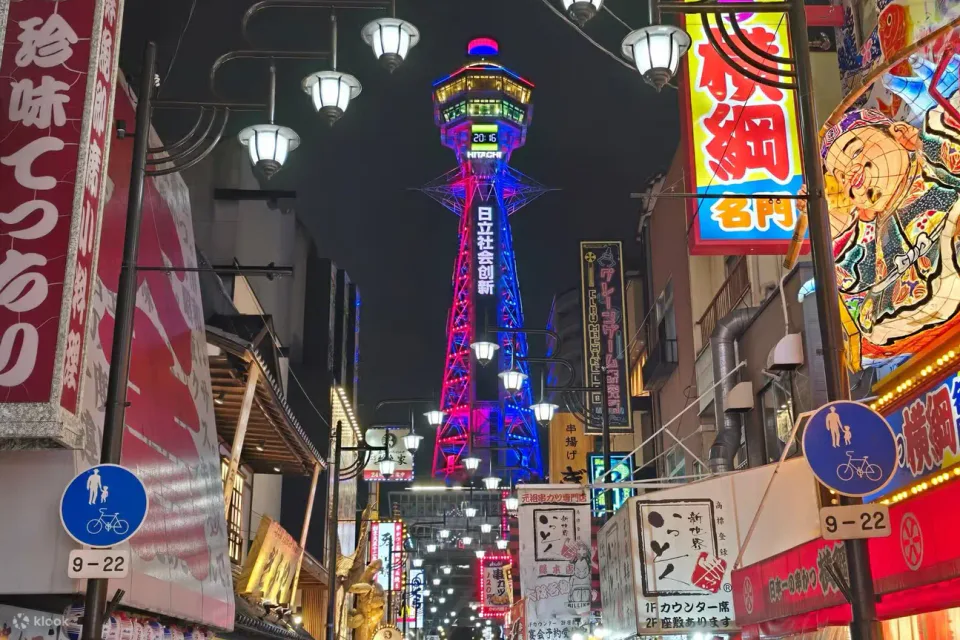
Do not choose a Shinsekai food tour because “15 dishes” sounds like a bargain. Klook currently lists more than one English-guided Osaka food experience with dinner included, and at least two products now compete directly in Shinsekai. The right question is whether a specific tour’s route, food mix, group size, cancellation terms and guide-led decision removal are worth more to you than either the competing tour or a self-guided dinner.
For Klook product 167042, the current package is a three-hour join-in tour meeting at Ebisucho Station, visiting five eateries and including up to 15 dishes plus two drinks. That is a coherent product. But it is no longer enough to compare it only with a cheap guide-only market walk. Klook product 89990 is also a three-hour English-guided Shinsekai food tour across five restaurants, with a current small-group format and a package that can include 15 dishes and three drinks. Compare like with like before deciding which “15-dish” headline is better value.
↔ Scroll table left or right
Your priority | Start with | Why |
You specifically want the Ebisucho / five-eatery route and its named Osaka dishes | Klook 167042 | Current listing includes up to 15 dishes, two drinks and a guide through Shinsekai history |
You want a directly comparable Shinsekai dinner before paying | Compare Klook 89990 side by side | Also three hours, five Shinsekai restaurants, English guidance and a small-group format; current package details can include 15 dishes and three drinks |
You care more about cancellation flexibility than a specific product | Read the exact selected package terms | 89990 currently publishes free cancellation with 24 hours’ notice; do not assume every Klook food-tour SKU has identical terms |
You are happy to choose restaurants yourself | DIY Shinsekai | You keep control of appetite, timing, queue tolerance and restaurant choice instead of paying for curation |
You only have one free Osaka evening and hate restaurant research | A guided dinner gets stronger | The guide removes several venue, ordering and pacing decisions in one fixed block |
You have small appetite or restrictive dietary needs | Do not value the tour by dish count | Included volume has little value if much of the menu does not fit the group |
The real product is decision removal, not 15 separate meals
Klook’s current 167042 listing describes a three-hour route through five selected eateries, from traditional restaurants to a standing bar. The named food examples include kushikatsu, doteyaki, karaage, takoyaki, oden and Osaka-style udon, with up to 15 dishes and two drinks included.
“Up to 15 dishes” should not be read as 15 restaurant-sized mains per person. It is a sequence of dishes and tastings spread across several stops. The useful value is variety without having to research five venues, understand what each place is known for, decide how much to order and move the group through the neighbourhood on your own.
That service is worth more for some travellers than others. A first-time visitor who opens 20 restaurant tabs and still worries about choosing badly may get genuine relief from the guide. A couple who enjoys wandering, reads menus comfortably and has several Osaka evenings may be paying to remove decisions they would rather keep.
ValueNavi test: if someone handed you the five restaurant names and menu suggestions for free, would you still pay for the guide, pacing and local context? If yes, a guided tour is solving a real problem. If no, DIY dinner deserves the first comparison.
Compare 167042 with another Shinsekai dinner before comparing it with a guide-only walk
The old version of this article used a much cheaper Kuromon guide-only product to explain why the Shinsekai tour cost more. That comparison is incomplete because the inclusions are fundamentally different. A more useful current control is Klook product 89990, Shinsekai Night Food Adventure with 15 Dishes.
Its current listing runs about three hours, starts around Dobutsuen-mae Station, uses five restaurants in the Shinsekai area and is English guided. Klook currently labels it a small group of roughly 2–9 participants and publishes free cancellation with at least 24 hours’ notice. One current package description lists 15 dishes and three drinks.
That creates a much stricter question for 167042. If both products solve “guided Shinsekai dinner across five venues,” then a higher live price must be justified by the exact route, menu, drinks, guide/operator, group format, availability or cancellation terms on your date. “Food is included” is no longer enough because the direct competitor includes food too.
Do not carry one listing’s package details to the other. Klook products can change inclusions by option and date. Record the exact product name and selected package before comparing checkout totals.
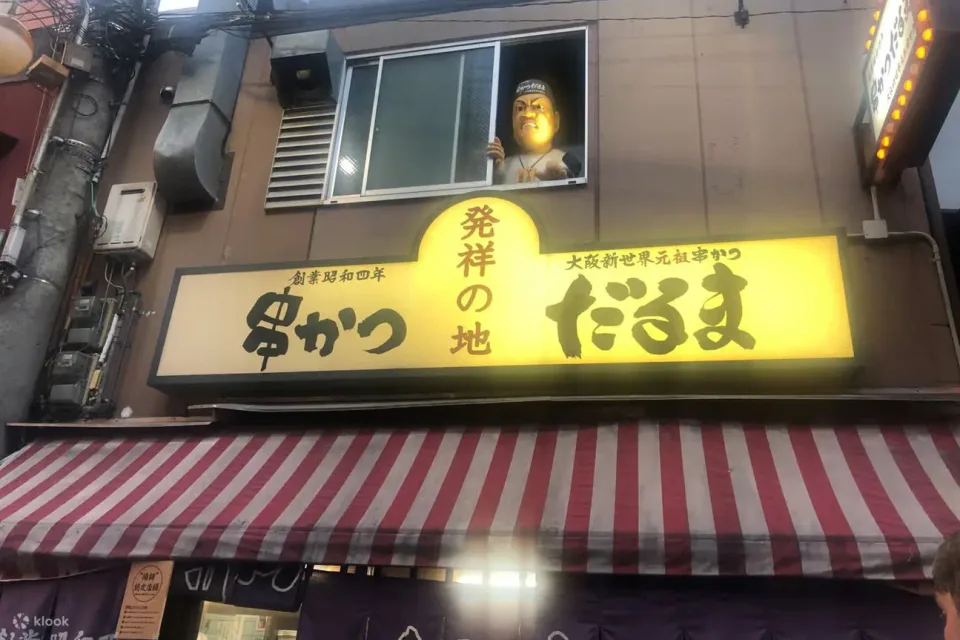
If the district is flexible, the comparison gets wider again
Klook also currently sells a separate Guided Food Tour with 12 Dishes and 2 Drinks product based around Dotonbori. It is not the same route, so it should not be used as a direct Shinsekai price match. But it is a valid alternative for a traveller whose real search intent is “one guided Osaka food evening,” not “I specifically want Shinsekai.”
The current listing runs about 2.5 hours, offers English guidance, uses a small-group format up to 15 people and includes dinner and drinks. It also currently publishes free cancellation with 24 hours’ notice.
This gives the decision a useful hierarchy:
Do you specifically want Shinsekai? Compare 167042 with 89990.
Do you simply want one guided Osaka food night? Compare Shinsekai products with Dotonbori / other district products.
Do you mainly want Osaka food, not a guide? Compare all of them with DIY.
Skipping that hierarchy is how travellers end up comparing unrelated tours by dish count and star rating.
Review count is evidence strength, not a quality ranking
As checked on August 25, 2026, Klook’s current 167042 page shows a 5.0 rating from 10 reviews and 100+ bookings. Product 89990 shows 4.9 from 125 reviews and 1K+ bookings. The 12-dish Osaka product currently shows around 4.8 from more than 100 reviews and 2K+ bookings.
This does not prove that 167042 is worse. A 5.0 score can be genuine. It means the sample is much smaller, so the rating should carry less weight than product fit. Ten reviews are not enough reason to override a better cancellation rule, meeting point, menu or group size elsewhere.
Use reviews for recurring operational patterns—guide clarity, pacing, amount of food, meeting-point confusion—not as a substitute for comparing the package itself.
Three hours is the tour time; the evening is longer
A fixed three-hour tour can own four or more hours once hotel-to-meeting-point transport and the return are included. The cost is therefore different from where you sleep.
Namba / Tennoji / south-central Osaka: Shinsekai is a natural evening extension. The commute tax is relatively small.
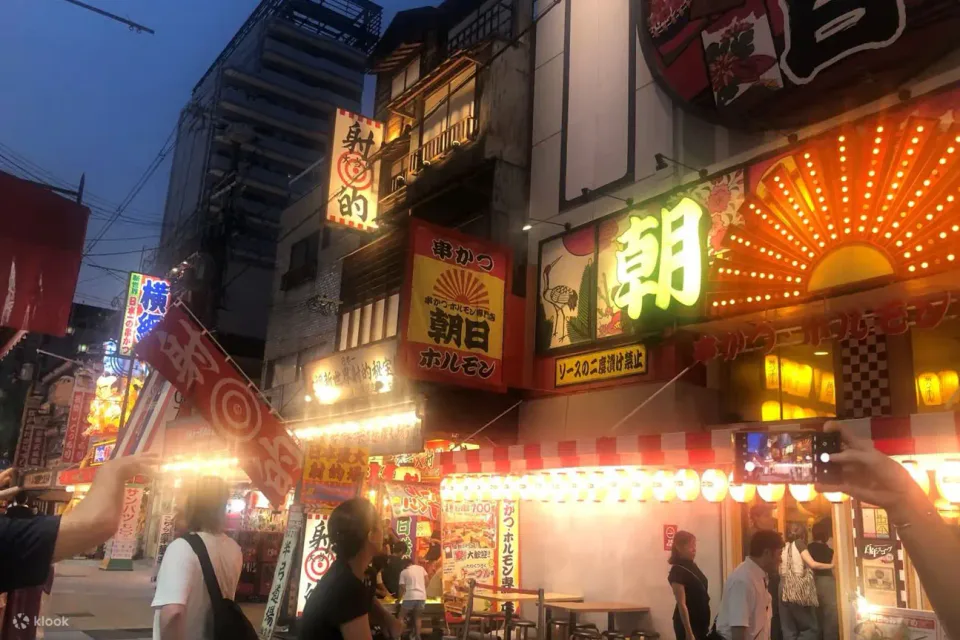
Umeda: still workable, but the tour is no longer just a three-hour dinner because you add cross-city travel on both sides.
Kyoto base: demand a much stronger reason before locking a Shinsekai food tour after a full Kyoto day. The evening includes an intercity return and a fixed group start time.
If your Osaka base is not fixed, use Namba vs Umeda before allowing one food tour to choose the hotel for the whole stay.
The tour should replace dinner, not sit on top of a full evening
USJ, Kyoto and long Osaka sightseeing days can all leave travellers hungry but physically finished. A three-hour group food tour is not “just dinner” in the sense of sitting down for 45 minutes. It includes walking, several restaurant transitions, guide attention and a fixed finish.
That makes the best use case a day with a lighter afternoon or a deliberate gap before the tour. It is a weak add-on after a park-closing USJ day or a Kyoto itinerary that has already crossed several districts.
Use one-main-job logic: if the food tour is the evening’s paid experience, do not schedule another observation deck, show or distant bar afterward just because the clock technically permits it. The itinerary should leave room for the fixed event to run long and for the group to be full.
Group size changes the value of curation
Solo traveller: a join-in food tour can add social structure to dinner and remove the awkwardness some travellers feel about entering several tiny venues alone. That can be real value even if the same dishes could be bought more cheaply independently.
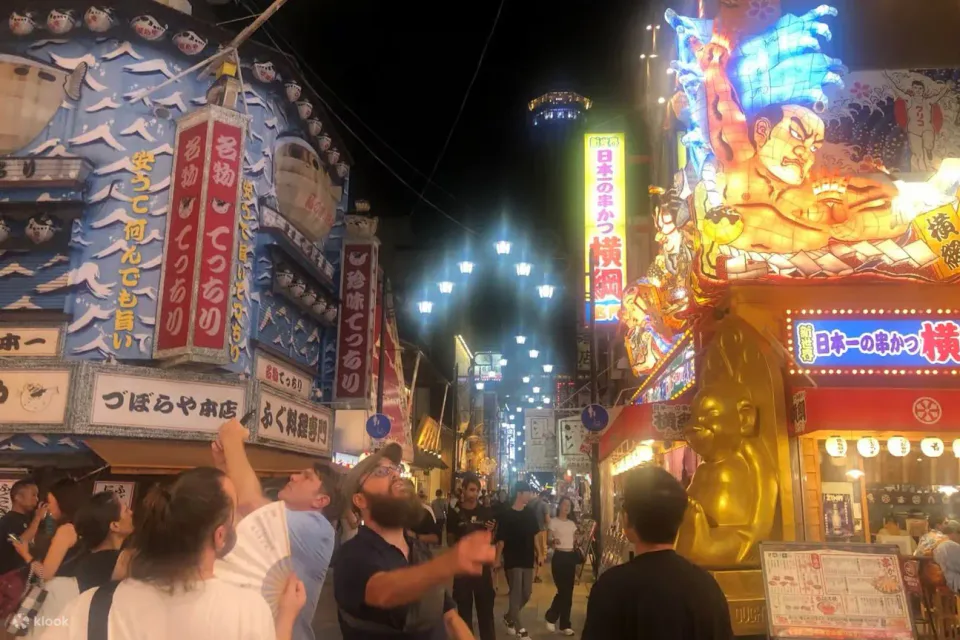
Couple: the curation premium needs a stronger reason. Two people can usually change restaurant, split food and make fast decisions without coordinating a large group. Pay when the guide/context matters, not simply because ordering is possible.
Friends / family: a guide can simplify seating and ordering across several stops, but only when the menu fits everyone. One vegetarian, allergy or small-appetite traveller can change the economics of an included-food package quickly.
For 89990, the current Klook page publishes a small-group size around 2–9. For 167042, verify the exact selected package’s current group conditions before payment rather than assuming both products use the same maximum.
Dietary fit can turn “included food” into unused value
The named 167042 menu examples include meat, fried foods, seafood-style street food and shared Japanese dishes. That may be exactly what the group wants. But dish count should be discounted when a traveller cannot or will not eat a substantial part of the menu.
Do not infer that every stop can rebuild its menu around an allergy, vegetarian diet, religious restriction or strong food aversion. Read the current package notes and contact the supplier when dietary fit determines whether the tour works.
A flexible DIY evening can outperform an all-inclusive tour for restrictive diets because you can choose one compatible restaurant and stay there. Included volume is only value when it is usable.
DIY Shinsekai is the strongest competitor for repeat visitors and flexible eaters
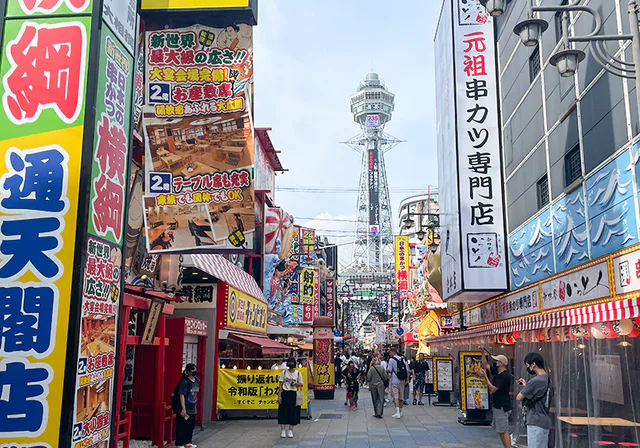
Shinsekai does not require a guide to be accessible. The area is compact, visually obvious and full of restaurants. A self-guided evening lets you stop when full, spend longer at one place, avoid dishes you do not want and react to queues in real time.
DIY gets especially strong when:
you are staying in Namba, Tennoji or another nearby area for several nights;
you already have two or three restaurants saved;
you prefer one proper meal to many tastings;
you photograph slowly or wander without a fixed pace;
you would rather spend the guide premium on another Osaka experience.
The guided tour gets stronger when the opposite is true: only one Osaka evening, no restaurant research, desire for English context, and genuine interest in trying several venue formats in one night.
Final verdict
Klook 167042 is a defensible buy when its exact five-eatery route, menu and two-drink package fit your group and you value an English guide enough to hand over the entire dinner decision. But the old argument—“it costs more because food is included”—is no longer sufficient. Klook now has another directly comparable Shinsekai product with five restaurants, a 15-dish package option, drinks and clearly published cancellation flexibility.
Compare 167042 with 89990 first. If the live difference is small, choose by exact inclusions, group format, meeting point and cancellation. If Shinsekai itself is optional, widen the comparison to Dotonbori and other Osaka food tours. And if what you really want is simply kushikatsu, takoyaki and a free evening, DIY remains the benchmark every paid tour has to beat.
Check the current 167042 package and price on Klook
References and live-check note
Klook 167042 — Guided Food Tour with 15 Dishes in Shinsekai · Klook 89990 — Shinsekai Night Food Adventure · Klook 149852 — Guided Food Tour with 12 Dishes and 2 Drinks. Checked August 25, 2026. Prices, package inclusions, group sizes, meeting points and cancellation terms are dynamic; compare the exact selected date and option at checkout.
Centara Grand Hotel Osaka: Is the 40m² Family Room Worth It for Four?
Tokyo to Kyoto or Osaka Same-Day Luggage Delivery: Is It Worth ¥13,200?
Japan Tsukimi Food 2026 Guide: Dango, Wagashi, Taro and Limited Menus
Tokyo to Kawaguchiko: Fuji Excursion, Highway Bus or Guided Tour?
Aomori Nebuta vs Hirosaki Neputa After 2026: Which Festival Should You Choose Next Time?