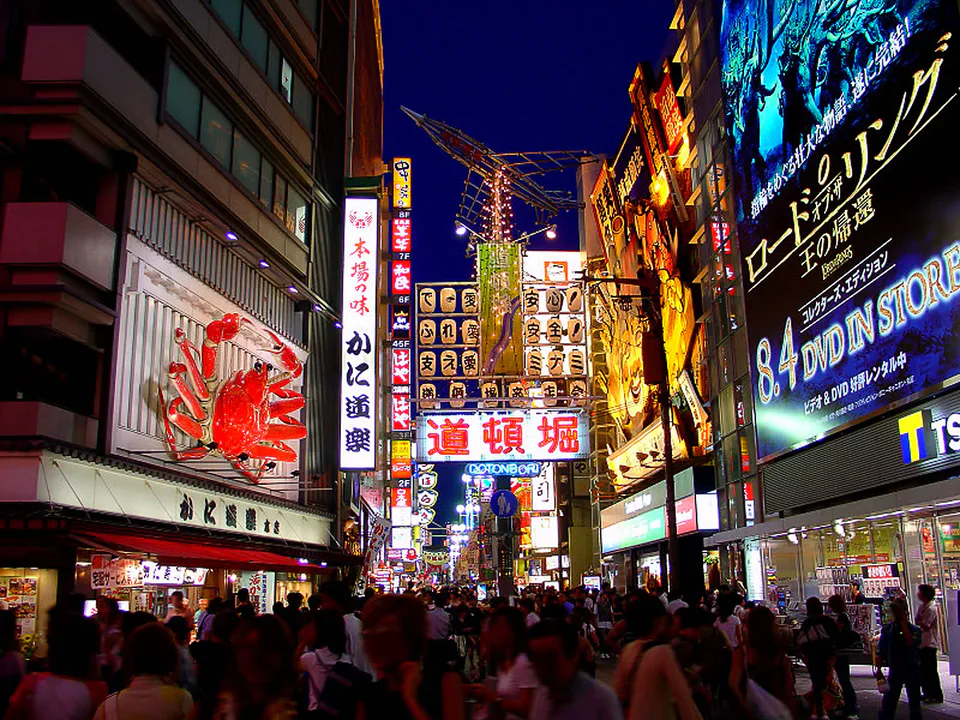
The Osaka Amazing Pass is easy to make profitable on a spreadsheet and surprisingly easy to misuse in a real Osaka day. For the 2026–27 version, the standard pass is ¥3,500 (about US$22) for one day or ¥5,000 (about US$31) for two consecutive days, with roughly 40 participating attractions plus eligible urban transport. Two or three paid sights can clear the purchase price. The harder question is whether those are sights you would have visited anyway—and whether their time restrictions still fit a sensible route.
ValueNavi’s default: test the 1-day pass first. Upgrade to 2-day only when you already have two consecutive Osaka sightseeing days and day two contains at least ¥1,500 of additional included attractions you genuinely want. The extra ¥1,500 sounds cheap, but it is wasted if day two becomes Kyoto, Nara, USJ, shopping or a food-heavy day.
If your actual Osaka plan is Kuromon Market, Dotonbori, Shinsaibashi, cafés and one paid viewpoint, skip the pass. A pass should follow your itinerary; once your itinerary starts bending to defend the pass, “savings” stop being a useful metric.
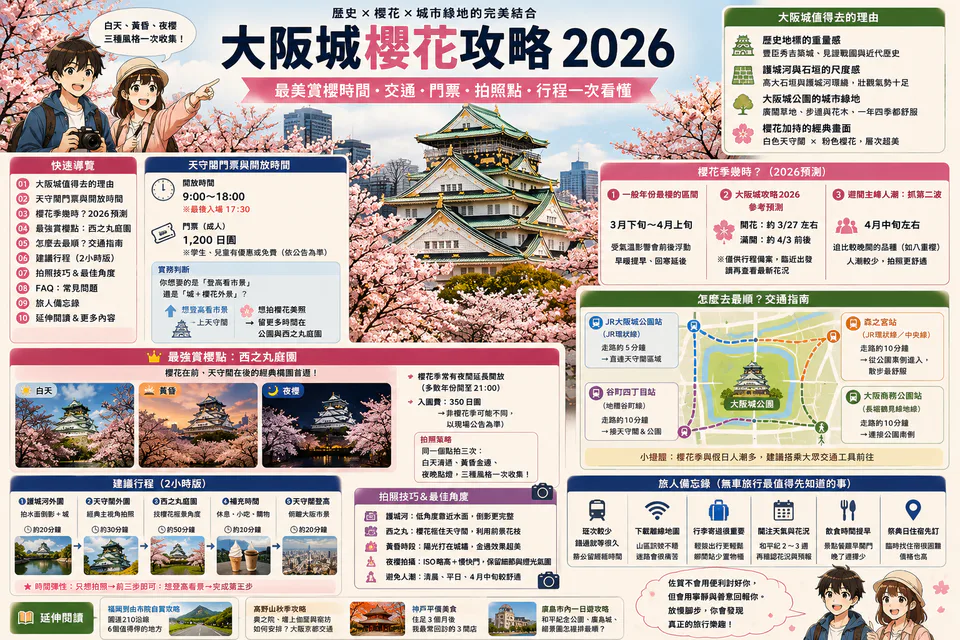
ValueNavi decision table: should you buy 1-day, 2-day or no pass?
↔ Scroll table left or right
Your itinerary | Verdict | Why | Main risk |
Osaka Castle + Tsutenkaku + Dotonbori cruise in one day | 1-day: strong yes | Reference admissions total ¥4,700 before transport. | Cruise and Tsutenkaku timing can break an overpacked route. |
Umeda Sky Building + Dotonbori cruise | 1-day: likely yes | ¥4,000 of reference admission already beats ¥3,500. | Umeda Sky Building is only included with the pass until 15:00. |
Osaka Castle + Tsutenkaku only | Borderline | ¥2,700 of admission leaves an ¥800 gap. | Do not invent extra attractions just to erase the gap; count only transport you would actually use. |
Two consecutive paid-sightseeing days in Osaka | 2-day: test it | The second day costs only ¥1,500 more than 1-day. | Each attraction is usable once across the whole 2-day period; nothing resets on day two. |
USJ + one food/shopping day | Usually no pass | The pass does not create value on a day dominated by activities outside its included-attraction set. | Pass-chasing replaces the Osaka experience you actually planned. |
Family with young children | Recalculate person by person | The Amazing Pass has no child price while many attractions do. | An adult break-even spreadsheet can badly overstate family savings. |
The break-even test: count intended attractions, not possible attractions
The standard 1-day threshold is ¥3,500. Here are four useful 2026 combinations using official reference admission prices:
↔ Scroll table left or right
Attractions you already want | Normal reference total | Difference vs 1-day pass | ValueNavi reading |
Osaka Castle ¥1,200 + Tsutenkaku ¥1,500 | ¥2,700 | −¥800 | Not enough on admission alone. Transport may close the gap, but only if those rides are real. |
Umeda Sky Building ¥2,000 + Tombori River Cruise ¥2,000 | ¥4,000 | +¥500 | Already profitable before transport, provided Umeda is before 15:00. |
Osaka Castle + Tsutenkaku + Tombori River Cruise | ¥4,700 | +¥1,200 | Strong financial case and a geographically workable southbound route. |
Umeda Sky Building + Osaka Castle + HEP FIVE Ferris Wheel | ¥4,200 | +¥700 | Financially works, but only if all three were already genuine priorities. |
The key distinction is avoided cost versus induced spending. If Tsutenkaku was not in your plan, its ¥1,500 reference price is not a saving. It is an attraction the pass persuaded you to add. That is the most common way a mathematically profitable pass creates a worse day.
ValueNavi Score: the 1-day pass is easier to use well
These are editorial scores for itinerary fit, not official ratings.
↔ Scroll table left or right
Dimension | 1-day | 2-day |
Break-even ease | 9/10 | 8.5/10 |
Itinerary flexibility | 8/10 | 5.5/10 |
Risk of pass-chasing | 7/10 | 4.5/10 |
Fit for a first Osaka trip | 9/10 | 7/10 |
Value for two dense city days | 6/10 | 9/10 |
Fit when a Kyoto/Nara/USJ day is involved | 7/10 | 3/10 |
Editorial verdict: 1-day is the safer default because it lets you concentrate the included attractions into one deliberately dense day. The 2-day pass can save more, but it demands more discipline: both days must remain in Osaka, be consecutive, and use different attractions.
The 2-day trap: the second day is cheap, but attractions do not reset
The official rule is easy to miss: with a 2-day ticket, each participating facility can be used once during the entire validity period. Osaka Castle on day one does not become free again on day two. The same applies to Tsutenkaku, Umeda Sky Building and cruises.
A better way to test the upgrade is incremental: the 2-day pass costs ¥1,500 more than 1-day. Ask, “Would day two contain more than ¥1,500 of included admission and transport that I would buy anyway?” If yes, the upgrade has a rational case. If you have to add a ferris wheel, museum or boat you were indifferent to, the cheap upgrade is creating work for itself.
A sensible two-day split might be Umeda + Osaka Castle on day one, then Shinsekai + Namba on day two. Where you sleep affects how cleanly that works. Compare Namba vs Umeda before building a pass route around the wrong base.
Umeda Sky Building has a 15:00 pass deadline—so “sunset with the pass” is the wrong default
The Kuchu-Teien Observatory has a ¥2,000 adult reference price. Osaka Amazing Pass admission is included only until 15:00; after 15:00, presenting the pass gives a 10% discount instead. If that ¥2,000 is part of your break-even calculation, schedule Umeda in the morning or early afternoon.
This is a perfect example of why “included” is not a binary attribute. The pass may technically give a benefit later in the day, but the economic value changes sharply after 15:00. If sunset is the reason you want Umeda Sky Building, pay attention to the experience you want rather than forcing an early visit purely to maximize the pass.
If Umeda is a major part of the trip, the Osaka Station hotel comparison is more important than choosing a pass first and adapting your accommodation later.
Next decision: choose Namba or Umeda before you build the pass day
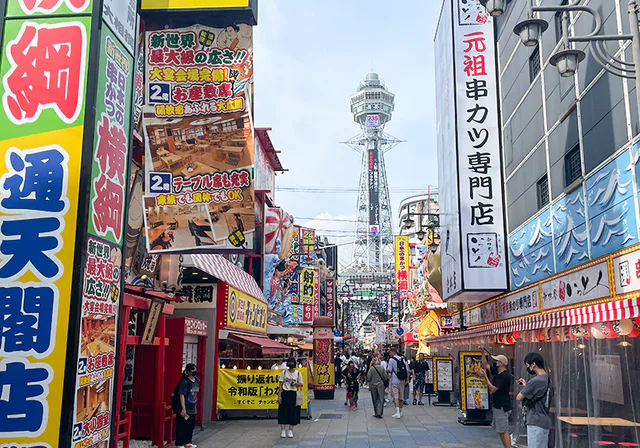
Tombori River Cruise and Tsutenkaku turn time into a hidden cost
The Tombori River Cruise has a ¥2,000 adult reference fare and generally departs every 30 minutes from 11:00 to 21:00, but pass holders must exchange for a designated departure time on the day. The official pass site specifically recommends exchanging during daytime because evening departures can sell out. If your whole break-even depends on “I’ll just do the cruise after dinner,” your spreadsheet has ignored inventory risk.
Tsutenkaku’s observation deck has a ¥1,500 reference price and requires a time-slot booking at the facility. The official page also advises allowing time for crowds. This is why a five-attraction maximization day can be worse than three attractions with a coherent route. Every reservation, ticket exchange and fixed entry time reduces the flexibility that made sightseeing enjoyable in the first place.
If Shinsekai is already your dinner area, the Shinsekai food-tour decision guide can help you treat Tsutenkaku as part of one neighborhood block rather than a separate pass-chasing detour.
Two routes that actually use the pass without turning Osaka into a checklist
Route A: Castle → Shinsekai → Namba
Osaka Castle in the morning → Tsutenkaku later → Namba, where you exchange the Tombori River Cruise ticket before dinner. Those three reference admissions total ¥4,700, and the route broadly moves south instead of bouncing across Osaka. If Kuromon and Dotonbori are also priorities, the Kuromon Market food-tour guide shows why the area works better as a neighborhood block than another stack of timed entries.
Route B: Umeda before 15:00 → Castle → Namba
Use Umeda Sky Building while full pass admission still applies, continue to Osaka Castle, then finish around Namba and Dotonbori. This carries more cross-city movement but protects the most important time restriction. If you want a slow castle visit, Nishinomaru Garden or a castle-area boat ride, remove another zone rather than making the pass dictate four separate districts.
The convenience premium: being slightly below break-even can still be rational
Suppose your intended admission total is ¥3,200, leaving you ¥300 short of the 1-day price. That does not automatically mean “do not buy.” If your route also uses several eligible trains or buses, and one digital pass removes repeated ticket decisions, a small premium may be acceptable. Convenience has value.
But define the premium before buying. Paying ¥200–¥400 extra for a cleaner sightseeing day can be rational. Paying ¥1,000 extra and then adding unwanted attractions to make yourself feel better is not convenience; it is sunk-cost behavior. The pass should reduce cognitive load, not create a scoreboard you spend all day trying to win.
Do not count Kansai Airport as part of the savings
The standard pass covers Osaka Metro, Osaka City Bus and eligible sections of several private railways mainly within Osaka City. The Osaka Itami Airport (ITM) version costs ¥3,800 (about US$24) for one day or ¥5,400 (about US$34) for two days and adds northern transport coverage including relevant Osaka Monorail sections.
The official site explicitly states that the pass is not available for use at Kansai Airport. If you land at KIX and stay in Namba, do not count the airport ride as pass value just because Nankai appears in the urban coverage. Start the pass on the sightseeing day where its attractions actually matter. If your Namba arrival logistics are the bigger concern, compare Namba hotels around the station separately.
It is not a rolling 24- or 48-hour pass
The digital ticket treats 03:00 to 02:59 the next morning as one day, while transport follows the first-to-last-train operating day. The 2-day version must be used on two consecutive days; it is not a 48-hour countdown from first activation. Tickets are valid for three months from purchase within the 2026–27 sales and validity window, and the 2026–27 sale period runs March 25, 2026 through March 31, 2027.
The pass uses SURUTTO QRtto on a mobile device. Up to four tickets can be bought in one transaction and distributed, but once use has started, this is no longer the moment to solve who holds which ticket. Sort devices and travelers before activation. The official FAQ also says there is no child-price version of the pass.
Families need a separate break-even calculation
Do not multiply an adult spreadsheet by four. The pass price is the same regardless of age, while many attractions charge children much less. Umeda Sky Building, for example, lists ¥2,000 for adults but ¥500 for children aged 4 through elementary-school age; Tombori River Cruise lists ¥2,000 adult, ¥1,000 student and ¥500 child reference fares.
That means an adult can hit break-even with two expensive attractions while a child may still be nowhere near ¥3,500. For families, calculate each traveler’s normal admission total first. “One pass for everyone” is operationally simple but can be financially poor.
Skip the pass in these situations
Skip it if USJ consumes a full day and the remaining Osaka time is mainly food and shopping; if the second day of a 2-day pass is really Kyoto, Nara or Kobe; if your must-do facilities have exclusion dates or weather risk; if the child-price math is weak; or if you are already removing free neighborhoods you care about to create room for included attractions.
For Nara specifically, decide whether the day trip is easier from Kyoto or Osaka before buying a 2-day Osaka pass. A ¥5,000 pass is not a good reason to keep yourself in Osaka when the broader itinerary works better another way.
Only compare sellers after the pass has already passed your itinerary test
Klook currently lists 1-day and 2-day Osaka Amazing Pass options. Package prices, inventory and cancellation conditions can change. The correct order is: decide your Osaka days → list attractions you would pay for anyway → check their restrictions → choose 1-day or 2-day → then compare the final seller price.
Compare current 1-day and 2-day Osaka Amazing Pass options|Klook
Final verdict: 1-day is the default winner; 2-day is an itinerary commitment
For a first Osaka trip built around two or three included paid attractions, the ¥3,500 1-day pass is unusually easy to justify. It gives you enough room to save without forcing the entire stay to orbit the pass.
The counterargument is that ¥5,000 for two days looks much better value. It can be—but only when both days are already Osaka sightseeing days. Because attractions do not reset, and because day two must be consecutive, the 2-day version turns a small price upgrade into a bigger itinerary commitment. If your plans are fluid, the cheaper-looking option can carry the higher opportunity cost.
ValueNavi rule: if the pass disappears from your planning spreadsheet and your itinerary barely changes, buy it. If removing the pass causes half the attractions to disappear too, you were probably planning for the pass rather than for Osaka.
More to read
Where to Stay in Osaka for First-Time Visitors
Namba vs Umeda: Which Osaka Area Should You Stay In?
Osaka and Kyoto 4-Day Itinerary With USJ
Sources and pre-trip checks
Facts checked August 27, 2026. The official Osaka Amazing Pass site confirms the 2026–27 ¥3,500 / ¥5,000 standard pricing, ¥3,800 / ¥5,400 ITM version, consecutive-day rule, mobile-ticket conditions and current attraction restrictions. USD figures are approximate at the August 27 exchange rate.
Osaka Amazing Pass official site|1-day / 2-day prices, validity and transport coverage
Osaka Amazing Pass official site|participating attractions, hours and restrictions
Osaka Amazing Pass official site|ticket information and usage cautions