

Do not buy an Osaka sightseeing pass because the headline discount looks large. Buy it only after the itinerary already contains enough eligible value to beat the pass price without adding detours. For one or two dense Osaka sightseeing days, the Osaka Amazing Pass is the easiest product to justify. For a small list of higher-value Kansai experiences spread across several days, Klook Pass Kansai is easier to model. Have Fun in Kansai suits travellers who are comfortable choosing three or six redemptions from a broad, changing catalog. If USJ dominates the trip and the rest is mostly free neighbourhoods, buying no pass can be the best decision.
The 2026–27 Osaka Amazing Pass costs ¥3,500 for one day and ¥5,000 for two consecutive days, roughly US$22 and US$31 at the 26 August 2026 exchange rate. JPY remains the reference currency and exchange rates move.
ValueNavi decision table: which pass actually matches your itinerary?
↔ Scroll table left or right
Your existing itinerary | Start with | Reason | Main failure mode |
1 dense Osaka city day with 3+ paid attractions | Osaka Amazing Pass | Attraction admission and city transport are bundled into the same operating day. | Adding low-priority stops only to manufacture break-even. |
Two genuinely dense Osaka days back-to-back | 2-day Osaka Amazing Pass | ¥5,000 over two consecutive days lowers the daily threshold. | Buying it when day two is actually Kyoto, USJ or mostly free sightseeing. |
3–8 higher-value Kansai experiences over a longer window | Klook Pass Kansai | Better fit when the trip already contains a small wish list rather than a dense city day. | Owning the pass before checking timed-entry availability. |
3 or 6 mixed redemptions across Osaka/Kyoto/Kobe | Have Fun in Kansai | Broad 200+ facility/restaurant list and a one-week active window after first use. | Using valuable slots on low-value coupons just because they are included. |
USJ + shopping + temples + free neighbourhoods | None yet | Your paid attraction density may simply be too low. | Rebuilding the trip around a pass you did not need. |
ValueNavi Real Pass Saving: the only break-even formula I trust
Start from attractions and transport you would buy without the pass. Do not count a stop merely because the pass makes it “free.”
Real Pass Saving = value of pre-planned eligible admissions + transport you would already buy − pass price
Then run a second test:
Adjusted Saving = Real Pass Saving − Pass-Induced Detour Tax
The detour tax is usually measured in time rather than yen: cross-city travel, queueing, a timed-entry slot that breaks dinner, or an attraction you would otherwise skip. If a pass saves ¥1,300 but causes a 70-minute detour for a low-priority attraction, I do not call that a clean saving.
My editorial buffer is conservative: I prefer the pass to beat individual buying by at least ¥1,000 or about 10% of the pass price, whichever creates the more meaningful margin. This is not an operator rule. It is protection against schedule changes, sold-out slots and the tendency to overvalue benefits you may not actually use.
ValueNavi Pass Utilisation Score
For pass decisions, ValueNavi scores the itinerary, not the brand: pre-planned eligible value 30%, route fit 20%, booking certainty 15%, transport usefulness 15%, schedule flexibility 10%, and age-price fairness 10%. Each dimension is 0–10 and weighted.
Scenario | Score | Decision |
|---|---|---|
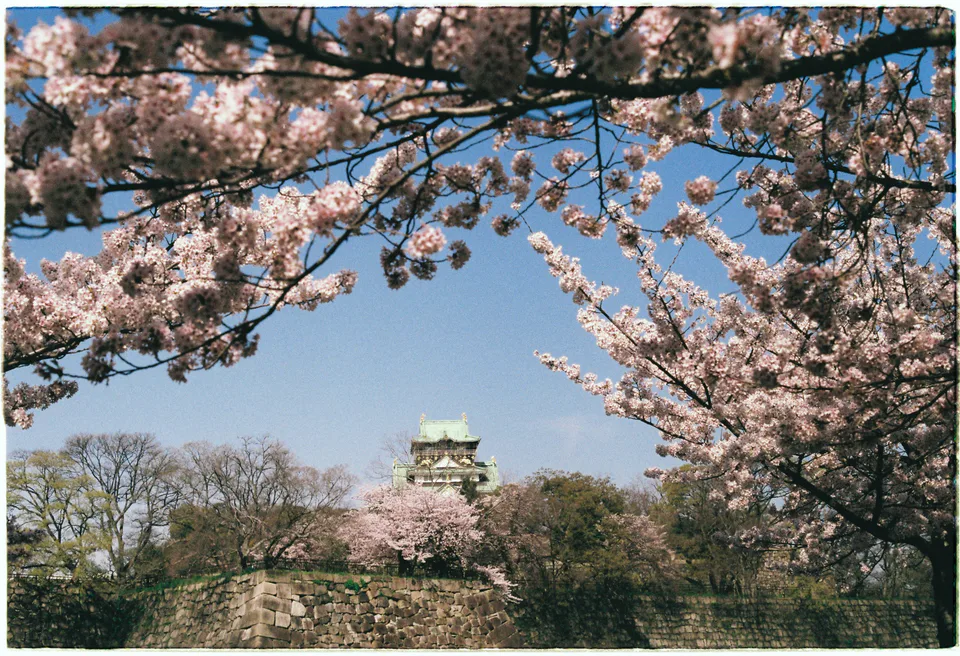
Amazing Pass: Osaka Castle + cruise + Umeda + Shinsekai already planned | Strong fit if opening hours and entry conditions line up. | |
Amazing Pass: USJ day + Dotonbori + shopping | Skip; paid sightseeing density is too low. | |
Klook Pass Kansai: three expensive experiences already chosen and reservable | Good fit if bundle price beats those exact items. | |
Have Fun: six slots but only three attractions are genuine priorities | Do not upgrade just to consume extra slots. |
Osaka Amazing Pass: break-even is attraction density, not subway mileage
The official 2026–27 pass is ¥3,500 for one day and ¥5,000 for two consecutive days. It covers roughly 40 participating sightseeing spots and unlimited travel on Osaka Metro, most Osaka City Bus services, New Tram and designated private-rail sections mainly within Osaka City. The digital operating day is 03:00 to 02:59; it is not a rolling 24- or 48-hour pass.
The official rules also state that each participating facility can be used once within the pass period. A 2-day pass does not mean the attraction resets on day two. This matters because the real value of the 2-day version is lower daily pressure, not double entry.
My boundary: if your Osaka day would still be satisfying after removing one or two paid attractions, calculate the pass again without them. A pass that only works after you add marginal stops is not saving your itinerary; it is changing it.
The family trap: adult break-even does not prove family break-even
The Osaka Amazing Pass has the same pass price for adults and children. Have Fun in Kansai also currently states that the same package price applies across ages. That makes family math different from couple math because many attractions sell cheaper child tickets individually.
Run the calculation per traveller:
family pass saving = sum of each traveller's eligible individual-ticket value − total family pass cost
If two adults save money but two children lose money, the family decision can reverse. Do not multiply the adult saving by four.
Klook Pass Kansai: only buy after the wish list exists
Klook currently markets Klook Pass Kansai around bundles of 3–8 activities. The useful order is: choose the experiences first, check that the exact products and time slots are available, then compare the bundle. The wrong order is buying a pass and later discovering that your sunset observatory, airport train or popular attraction slot is not available when you need it.
I use Klook Pass when the wish list is already short and high value. If the list contains three observation decks simply because all three are eligible, the pass is creating duplication rather than value.
Have Fun in Kansai: count slot quality, not catalog size
The classic Have Fun in Kansai product currently offers 3-facility and 6-facility versions, with the voucher valid for 270 days from confirmation and the pass active for one week after first use. The current Klook listing advertises 200+ eligible attractions, restaurants and other facilities.
That big number can be misleading. A slot used on a high-value attraction is not equivalent to a ¥1,000 restaurant or shopping coupon. My rule is to list the redemption value of the three or six items you genuinely want before looking at the headline catalog size.
Pass-Induced Detour Tax: the hidden cost most comparison tables omit
↔ Scroll table left or right
Pass behaviour | Hidden cost | ValueNavi response |
Cross Osaka for one low-priority included attraction | Extra rail + walking + queue time | Remove it from the break-even calculation. |
Take Umeda Sky before 15:00 only because of pass rules | You may sacrifice the sunset experience you actually wanted | Price the experience, not only the admission. |
Use six Have Fun slots because six were purchased | Low-value redemptions consume itinerary time | Treat unused low-value slots as sunk cost, not a reason to add stops. |
Buy a pass before route/hotel base is fixed | The pass begins dictating geography | Choose Namba/Umeda and day-trip structure first. |
Final verdict
Choose the Osaka Amazing Pass when one or two consecutive Osaka days already contain enough paid sightseeing to clear the break-even buffer. Choose Klook Pass Kansai when you can name a small set of expensive experiences and their reservation slots are workable. Choose Have Fun in Kansai when three or six mixed redemptions genuinely fit a one-week Kansai route. Choose none when the itinerary is USJ-heavy, free-sightseeing-heavy, or still unsettled.
The strongest pass is the one that follows a trip you already wanted. If buying the pass causes you to add attractions, cross the city unnecessarily or give up better time slots, the “saving” is probably artificial.
Sources
Osaka Amazing Pass official — 2026–27 prices and validity
Osaka Amazing Pass official — transport coverage and operating-day rules
Osaka Amazing Pass official — attraction usage rules
Klook — Have Fun in Kansai current package and validity
Klook — current Klook Pass Kansai package overview
Eligible attractions, reservation rules, package prices and live inventory can change. Recheck the exact pass and the exact activity list before payment.