
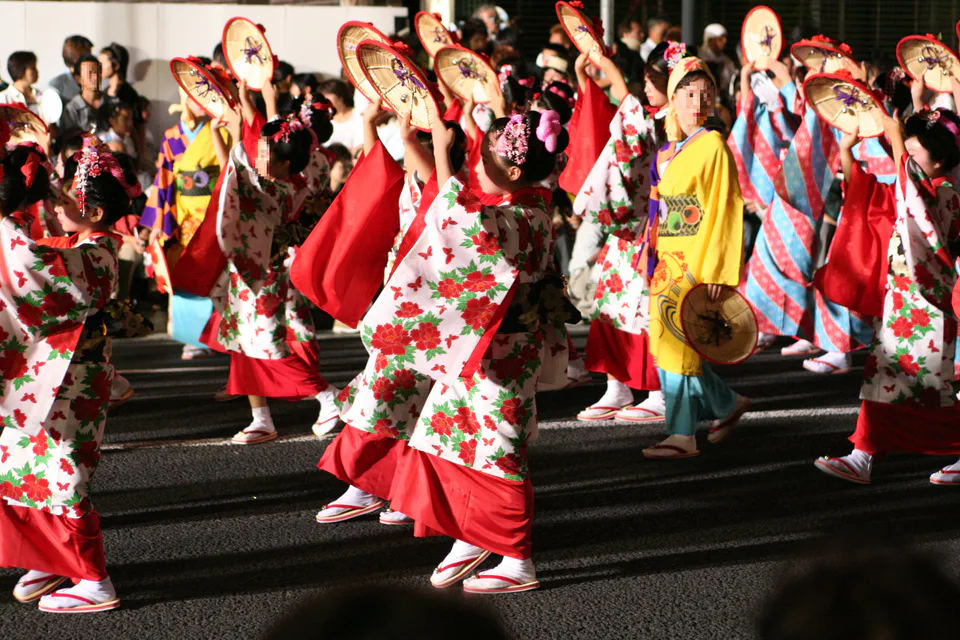
The 2026 Yamagata Hanagasa Festival is over, so treat its seat setup as a decision model rather than a promise for the next edition. My default would be simple: pay for a reserved seat only when having a guaranteed chair is itself worth ¥4,000 (about US$25 / NT$800 / HK$197) to you. If you only want 60–90 minutes of the parade, want to change viewpoints, or may leave early because of weather or fatigue, free roadside viewing is usually the better trade.
In 2026, the official reserved section in front of Yamagata City Hall had 382 assigned pipe-chair seats per night on August 5, 6 and 7. Tickets were ¥4,000 including tax, and all three nights eventually sold out. The festival itself ran on a roughly 1.2 km straight course through central Yamagata, with the parade scheduled from 18:10 to about 21:45. Those facts make the real comparison less about “better view versus worse view” and more about money versus position certainty, sitting time and flexibility.
If your main problem is getting there after the parade has already started, read the Yamagata Hanagasa late-arrival guide first. A reserved chair and a good arrival plan solve different problems.
ValueNavi decision table: who should actually pay for the seat?
↔ Scroll table left or right
| Traveller situation | My pick | Why | Main trade-off |
|---|---|---|---|
| You plan to watch most of the 18:10–21:45 parade | Reserved | The chair is used for long enough to justify paying for certainty and rest | You give up ¥4,000 and some freedom to change location |
| You only want a 60–90 minute sample | Free | A short visit makes the seat cost per viewing hour very high | You need to accept a less predictable sightline |
| Standing for a long period is uncomfortable | Reserved | The guaranteed chair is the product you are really buying | It is not weather insurance |
| You want to photograph from more than one part of the route | Free | You retain more location flexibility, subject to crowd and pedestrian controls | Moving can mean losing a workable viewing position |
| Weather or fatigue may make you leave early | Free | There is less sunk cost if the night becomes short | You trade away the certainty of an assigned chair |
| This is your only Hanagasa night and the parade is a trip priority | Reserved | Removing position-finding uncertainty can be worth more than squeezing maximum value from the ticket | You must commit before the best inventory disappears |
This is not a claim that the paid section gives a universally superior experience. It is a way to identify what the ¥4,000 premium actually solves. If sitting does not matter and you value mobility, the premium solves the wrong problem.
The hidden calculation: how much are you paying per hour of certainty?
The 2026 parade was scheduled from 18:10 to about 21:45, or roughly 3 hours 35 minutes. If you used the chair for essentially the whole parade, the ¥4,000 ticket worked out to about ¥1,120 per parade hour (roughly US$7 / NT$223 / HK$55). That is a much easier premium to defend than paying the same ¥4,000 for a one-hour visit.
↔ Scroll table left or right
| How long you actually watch | Effective seat cost | ValueNavi read |
|---|---|---|
| About 3 hr 35 min | About ¥1,120/hour | Reasonable if sitting and certainty matter |
| 2 hours | ¥2,000/hour | Borderline; depends on comfort needs |
| 90 minutes | About ¥2,670/hour | Free viewing becomes much harder to beat |
| 1 hour | ¥4,000/hour | Usually poor value unless sitting is non-negotiable |
These are ValueNavi calculations from the official 2026 ticket price and parade schedule, not official festival pricing metrics. They also show why “Is ¥4,000 expensive?” is the wrong question. The useful question is how many hours of reduced standing and position uncertainty you are buying.
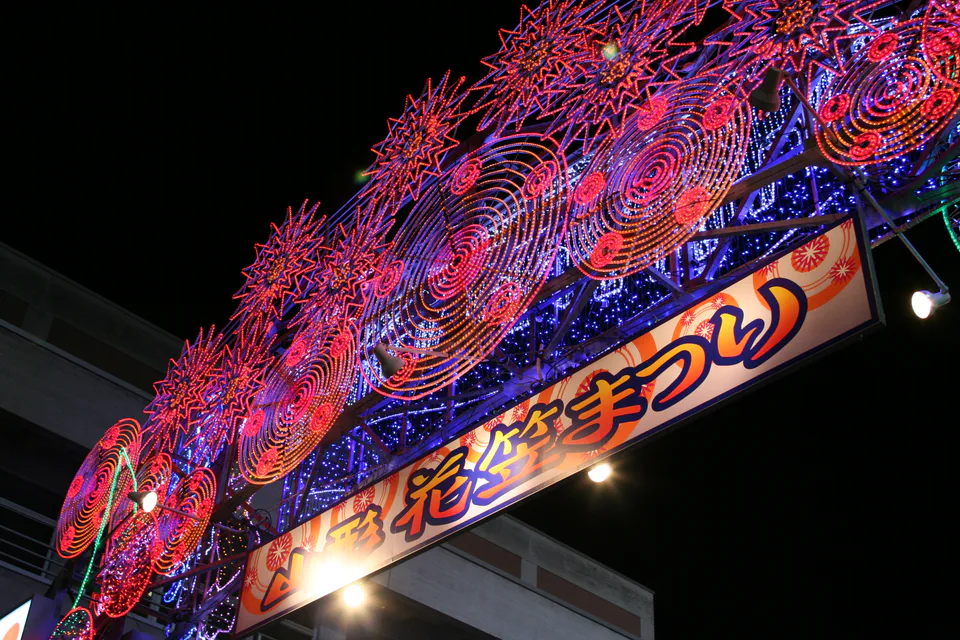
What the 2026 reserved seat bought — and what it did not
The official 2026 sale offered assigned pipe-chair seating in front of Yamagata City Hall. Sales opened on June 1 and, if inventory had remained, tickets could have been purchased until 20:00 on the day. In practice, all three nights sold out. That last detail matters: “same-day sales possible” did not mean “you can safely decide at dinner.”
At Hanagasa, a paid chair is mainly a certainty-and-comfort purchase, not a requirement for seeing the parade.
The seat also should not be confused with weather protection. The official festival policy says the parade generally proceeds in rain, although the programme may change, and severe weather can cause cancellation. The reserved-seat sales notice describes an assigned pipe chair; it does not turn an outdoor festival night into an indoor experience. If your real concern is rain rather than standing, paying more does not remove the core weather risk.
For another Tohoku parade where fixed seating changes the physical effort more than the show itself, compare the Akita Kanto reserved-seat guide.
Free viewing was not “zero planning” — it swapped money for position management
Free roadside viewing had one obvious advantage: no seat ticket. But it was not cost-free in a practical sense. The official FAQ allows place-holding in general while asking visitors not to leave unattended mats or tape and not to obstruct shops or pedestrian traffic. In other words, free viewing worked best when someone in the group was willing to manage arrival time, standing and sightline uncertainty.
Free roadside viewing protects the budget and preserves flexibility, but a usable sightline becomes your responsibility.
This creates a useful rule: free viewing is strongest when you are flexible; paid viewing is strongest when you are not. A solo traveller who can stand, move on and accept a changing view has little reason to buy certainty. A family member who cannot comfortably stand for hours may value the same chair far more.
There is also a photography trade-off. Free viewing gives you more freedom to change areas, but that does not mean you can drift along the entire 1.2 km route without friction. Crowds, traffic controls and pedestrian flows still apply, and moving away from a decent position can be irreversible. The advantage is optionality, not guaranteed mobility.
Wheelchair users had a third option in 2026
One of the easiest mistakes is treating the choice as only “¥4,000 chair or roadside.” In 2026 the festival also provided a free barrier-free viewing area on the sidewalk in front of City Hall for people using wheelchairs or with physical mobility difficulties. It required advance application, was first-come-first-served, and was organised in two time slots. The official notice also stated that companions did not receive a dedicated seat.
So for a traveller with a mobility need, my order of operations would have been: check the barrier-free allocation first, then compare the paid seat, then consider ordinary roadside viewing. Buying a paid ticket simply because standing is difficult could mean overlooking the option designed specifically for accessibility. Future editions may change the capacity or application procedure, so this is exactly the sort of detail to recheck rather than copy forward.
Late arrival changes the answer — but only if you already hold a ticket
A reserved seat is unusually valuable for someone who cannot arrive early because it decouples “when I reach the course” from “whether I still have my assigned chair.” But there is an important failure mode: that benefit only exists if you bought the ticket before it sold out. In 2026 every night sold out, so relying on the theoretical same-day purchase window would have been a fragile plan.
Free viewing has the opposite profile. You keep full spending flexibility, but late arrival increases the chance that the easiest roadside positions are already occupied. If a train connection or hotel check-in makes your evening start uncertain, use the late-arrival strategy rather than assuming a more expensive seat automatically fixes the itinerary.
Rain changes the value, not just the comfort
Because Hanagasa is an outdoor night parade, rain creates two separate decisions. First: will the event run? The official policy says rain generally does not stop it, although content may change and severe weather can cancel the event. Second: even if it runs, how long will you want to stay?
That second question is where free viewing can win. If your group is likely to leave after an hour in persistent rain, the ¥4,000 sunk cost becomes harder to justify. If someone genuinely needs a chair and you would stay through ordinary rain anyway, the reserved seat can still be rational. The recommendation reverses based on your likely duration, not on a generic “rain = bad” rule.
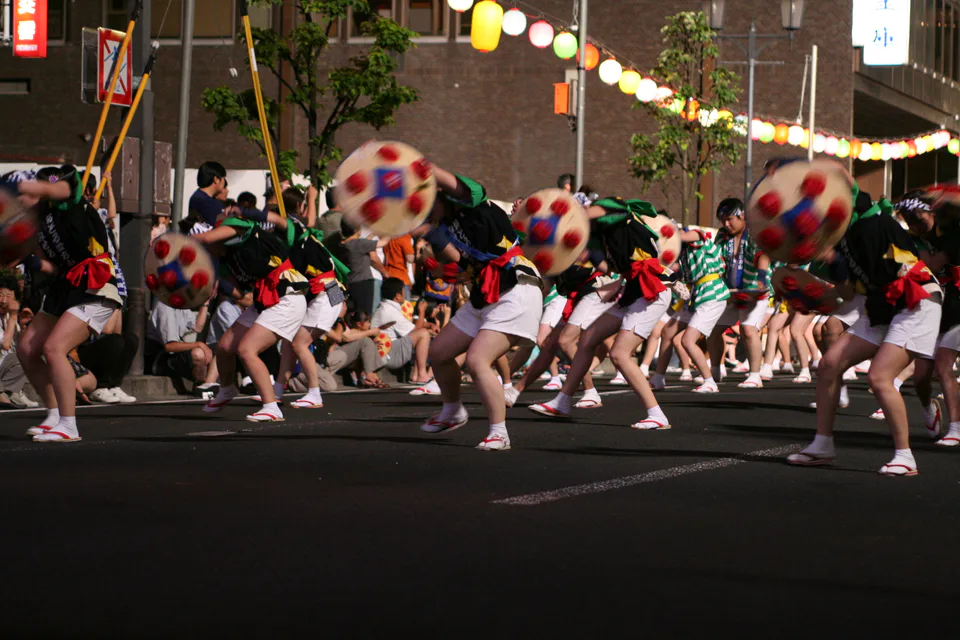
The longer you genuinely intend to stay, the easier it is to justify paying for a fixed chair.
My verdict: the ¥4,000 seat was a comfort hedge, not a better-version ticket
For 2026, I would have paid the ¥4,000 (about US$25 / NT$800 / HK$197) if I expected to watch at least two to three hours, if sitting materially changed whether someone in the group could enjoy the night, or if Hanagasa was a high-priority event and I wanted to remove position-finding uncertainty. The fact that all three nights sold out suggests that this certainty had real demand, but sell-out status alone does not make it good value for every traveller.
I would have stayed with free viewing for a one-hour sample, a photography-led visit, a weather-sensitive plan, or any itinerary where I wanted the option to leave early without feeling committed by the ticket cost. The hidden cost is that you then “pay” with standing, earlier position management and a less predictable sightline.
The red-team case against my recommendation is straightforward: why not always buy the chair if ¥4,000 is affordable? Because affordability and usefulness are different. If you only watch briefly or dislike being fixed to one location, the chair removes a problem you did not have. Conversely, why not always view free because the parade is visible from the street? Because a zero-yen ticket is not truly free when a member of your group cannot comfortably stand or when preserving a usable position becomes the evening's main task.
If Yamagata is one stop in a larger August route, use the Tohoku Summer Festival one-week itinerary before optimising a single night. A ¥4,000 seat is a small decision compared with putting hotels and intercity transfers in the wrong order.
What to recheck for the next edition
Do not assume the next festival will repeat the 2026 setup. Before buying, recheck five things on the official site: the reserved-seat price, number and location of seats, sales opening date, route and parade hours, and rain/cancellation rules. If accessibility matters, check the barrier-free application separately rather than treating the paid seating page as the only seating information.
References
Yamagata Hanagasa Festival — official 2026 reserved-seat notice
Yamagata Hanagasa Festival — official festival schedule, route and weather policy
Yamagata Hanagasa Festival — official viewing FAQ
Yamagata Hanagasa Festival — official 2026 barrier-free viewing notice