Buy the JR TOKYO Wide Pass only after your three consecutive regional days are fixed. Then add a Skyliner or Tokyo Subway Ticket only if it solves a transport job the pass does not already solve. The 2026 adult pass is ¥16,000 for three consecutive days. A round trip on the direct Fuji Excursion between Shinjuku and Kawaguchiko is currently ¥8,400, so one Mount Fuji day by itself still leaves ¥7,600 of pass value to justify. By contrast, JR East’s own GALA Yuzawa + Nikko example totals about ¥21,500 in regular-period reserved-seat fares, putting that itinerary clearly above the pass price.
This is the decision most bundle menus hide: first prove the ¥16,000 regional pass, then prove each add-on separately. A bigger bundle is not better when the extra ticket duplicates Narita Airport access or sits unused while you spend all three pass days outside central Tokyo.
JR TOKYO Wide Pass bundles: the 30-second decision
↔ Scroll table left or right
Your actual trip | Start with | Why |
Only one Kawaguchiko / Fuji Excursion day | Individual tickets first | Current Fuji Excursion round trip is ¥8,400, well below the ¥16,000 pass |
Two expensive regional journeys already fit inside 3 consecutive days | Calculate JR TOKYO Wide Pass | The second journey can push the otherwise-covered fare above ¥16,000 without inventing an extra destination |
GALA Yuzawa + Nikko-style regional block | Pass is a strong candidate | JR East’s own regular-period example is about ¥21,500 versus the ¥16,000 pass |
Narita arrival is inside the active pass window and hotel suits N’EX | Do not automatically add Skyliner | The pass already covers eligible Narita Express travel, so the add-on may duplicate the airport function |
Narita arrival is outside the 3-day pass window, or hotel is by Ueno / Nippori | Skyliner can be rational | It now solves a separate airport segment or a better hotel corridor |
Regional days are full-day trips; city sightseeing happens afterwards | Consider Subway Ticket after the pass block | Its 24/48/72-hour clock starts from first use, so you can avoid paying for subway hours while you are outside Tokyo |
Three mostly central-Tokyo days | Skip JR TOKYO Wide Pass | This is a regional rail pass, not an all-in-one Tokyo city pass |
Start with the ¥16,000 threshold, not the destination list
JR East currently charges ¥16,000 for adults and ¥8,000 for children aged 6–11. The validity is three consecutive days from the start date you choose. You cannot use it on Monday, Wednesday and Friday just because those are the three days with the most expensive trains.
The coverage is broad enough to make the pass genuinely useful: JR East lines, Fujikyu Railway, Izu Kyuko, Tokyo Monorail, Rinkai Line and several other partner lines are included, and specified JR–Tobu through limited expresses to Nikko and Kinugawa can also be used. Ordinary-car reserved seats are part of the product where the rules allow them. But the Tokaido Shinkansen is not covered, and some special seating or trains on partner railways require additional fees.
That means the pass question has two separate tests:
Coverage test: would you otherwise pay for at least ¥16,000 of transport that is actually covered?
Itinerary test: would you still take those journeys if the pass did not exist?
If the answer to the second question is no, the arithmetic is misleading. Saving ¥3,000 on rail while sacrificing a Tokyo day you wanted more is not a travel saving.
Model 1: one Kawaguchiko day does not justify the pass
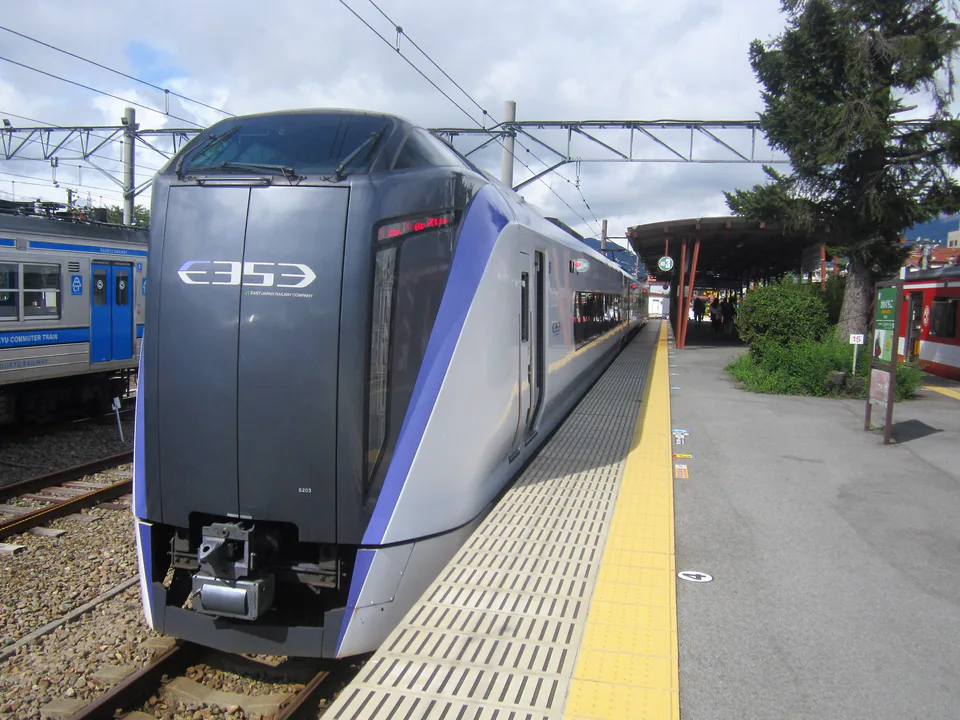
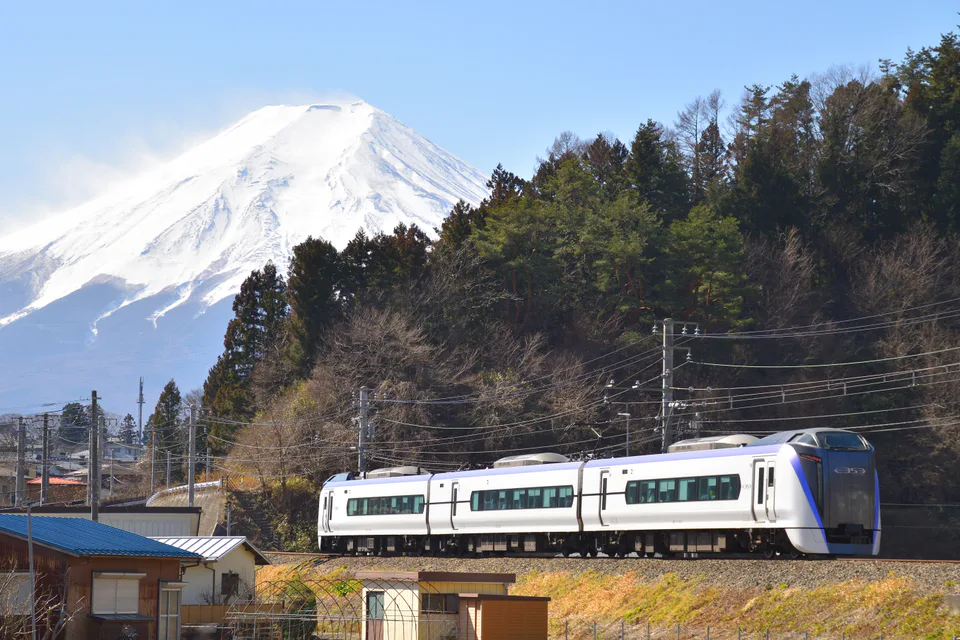
Fujikyu Railway currently publishes the direct Fuji Excursion fare from Shinjuku to Kawaguchiko at ¥4,200 one way: ¥2,580 basic fare plus ¥1,620 limited-express fare. A same-route round trip is therefore ¥8,400.
Against a ¥16,000 JR TOKYO Wide Pass, that leaves ¥7,600 still to justify. This is a more useful number than saying “add another day trip.” Your second and third days need to create at least ¥7,600 of otherwise-paid covered rail value before the pass reaches simple fare break-even.
That does not mean Lake Kawaguchi is a weak pass destination. The JR TOKYO Wide Pass covers the Fujikyu Railway lines, so it can be an excellent ingredient in a regional block. The mistake is treating one attractive ingredient as proof that the whole three-day pass is good value.
If Kawaguchiko is the only regional day you genuinely want, use the Fuji Excursion booking guide and compare individual rail and bus options. Do not add Karuizawa, Nikko or Izu merely to make a pass spreadsheet turn green.
Model 2: JR East’s GALA Yuzawa + Nikko example clearly crosses break-even
JR East gives its own comparison using a Tokyo-area trip that combines GALA Yuzawa and Nikko. During regular periods, the operator estimates the relevant Joetsu Shinkansen and Nikko express reserved-seat journeys at about ¥21,500 in total. The same covered journeys can be made with the ¥16,000 JR TOKYO Wide Pass.
That produces roughly ¥5,500 of rail-value headroom before you count any other covered rides during the three-day validity. This is what a strong pass itinerary looks like: the destinations already make sense, they sit inside one continuous block, and the fare advantage exists without inventing a third expensive excursion.
The useful lesson is not “go to GALA and Nikko.” It is the shape of the decision. If two trips you already want push the individual covered fares comfortably beyond ¥16,000, the pass can win even if Day 3 is lighter. If you need to manufacture a third full-day excursion just to cross ¥16,000, individual tickets may produce a better holiday.
Use a margin, not a one-yen break-even
A pass that beats individual tickets by ¥200 is not automatically a good purchase. Your fare estimate can move because of seat type, season, route choice or a change in the itinerary. Weather can also make a mountain or snow day less attractive.
For this reason, I would treat a small theoretical saving as a tie rather than a pass victory. The pass becomes much more persuasive when the planned covered fares exceed ¥16,000 by a meaningful margin and the three-day sequence is already desirable.
There is one non-price benefit: a pass can simplify repeated ticket purchases and include ordinary-car reserved-seat travel on eligible services. But that convenience should be a tiebreaker, not an excuse to force an itinerary that barely breaks even.
Three consecutive days create an opportunity-cost problem
The pass clock matters almost as much as the fare. Suppose a seven-night Tokyo trip has Kawaguchiko on Day 2, a city day on Day 3 and Karuizawa on Day 5. You do not have a two-trip pass block yet. To use one pass, you would need to move Karuizawa forward or Kawaguchiko back so both expensive journeys fall inside one continuous three-day period.
That schedule change may be sensible. It may also make the trip worse. A city recovery day between two long regional days can be valuable for families, older travellers or anyone arriving from a long-haul flight. The pass should not erase that recovery day merely because its validity is consecutive.
Run the itinerary test before the fare test: would these three days still be in this order if every ticket cost the same? If not, calculate the value of the better itinerary before reorganising the trip around the pass.
Skyliner bundle: ask whether it adds an airport route or duplicates one
The JR TOKYO Wide Pass can be used on eligible Narita Express services. Keisei Skyliner is a separate railway product that is particularly convenient for Nippori and Ueno. Because the operators are different, a bundle can look like it contains two different benefits. Functionally, however, both can solve the same problem: Narita Airport to Tokyo.
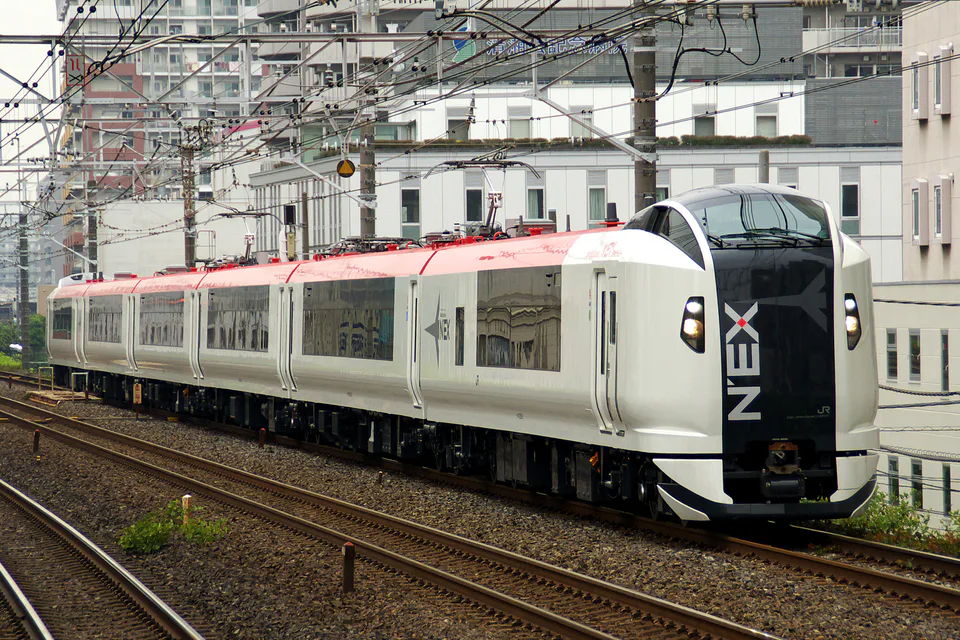
Do not automatically add Skyliner when all three conditions are true: the pass is already active on your airport day, your hotel is convenient from a Narita Express stop such as Tokyo, Shinagawa, Shibuya or Shinjuku, and using N’EX does not create an awkward final transfer. In that case the extra airport ticket may simply buy a second solution to the same journey.
Skyliner becomes more defensible in two clean cases. First, your airport day sits outside the JR TOKYO Wide Pass window because you are saving the three-day pass for later regional trips. Second, you are staying near Ueno or Nippori and the Keisei corridor is materially simpler for your hotel.
This is why airport access should follow the hotel decision. If you have not chosen the base yet, compare Ueno vs Shinjuku before buying an airport bundle.
A late Narita arrival is usually a reason not to burn Day 1 of the pass
A three-day pass activated late at night does not become a four-day pass because you only used it for one train. If the first regional journey starts the following morning or two days later, using the pass solely for the airport transfer can consume one of its most valuable calendar days.
For a late international arrival, decide where you will actually sleep first. The Narita late-arrival guide separates scheduled landing time from the time you are landside with bags. If the airport night itself is fragile, do not let a transport bundle dictate the pass start date.
A common cleaner sequence is: airport transfer on its own → one or two Tokyo city days → activate the JR TOKYO Wide Pass for three consecutive regional days. In that structure, a separate Skyliner or N’EX product is not duplication; it is outside the pass window by design.
Tokyo Subway Ticket bundle: the best timing may be after the regional block
Tokyo Metro currently prices the Tokyo Subway Ticket at ¥1,000 for 24 hours, ¥1,500 for 48 hours and ¥2,000 for 72 hours. It covers all Tokyo Metro and Toei Subway lines and runs for the stated number of hours from first use, not simply until midnight on a calendar date.
That hour-based validity creates a useful sequencing trick. If Days 2–4 are regional-pass days and Day 5 is a dense central-Tokyo day, there may be little reason to start a Subway Ticket while you are spending most of Days 2–4 in Kawaguchiko, Nikko or Karuizawa. Start it when the subway-heavy part of the trip actually begins.
For example, a 24-hour ticket first used at 17:30 can remain valid until 17:30 the next day. That can be more useful than activating it at 07:00 on a day when you immediately leave Tokyo for ten hours.
The Subway Ticket is therefore not inherently a duplicate of the JR TOKYO Wide Pass—the networks are different. The duplication risk is time: paying for 24, 48 or 72 subway hours that occur while you are outside the city.
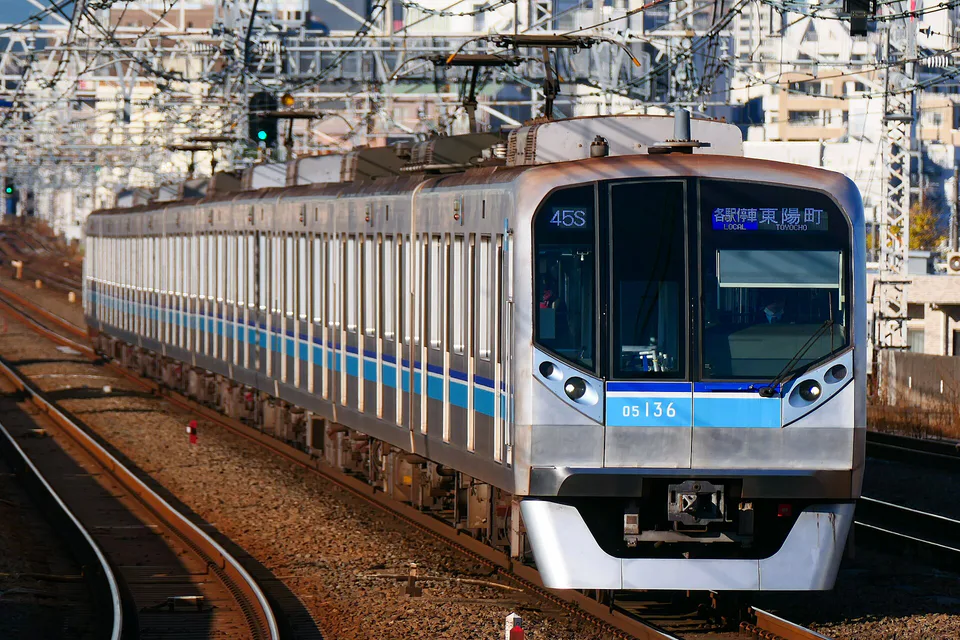
Do not count Tokyo rides twice when evaluating the subway add-on
JR TOKYO Wide Pass coverage includes JR East lines within its area, plus Tokyo Monorail and the Rinkai Line. That does not replace Tokyo Metro or Toei Subway, but it means some city movements may already have a covered JR solution while the pass is active.
If you are staying in Shinjuku and one evening only needs Shinjuku → Shibuya → hotel, do not assume a Subway Ticket is required just because you are in Tokyo. Count the Metro and Toei rides you would actually choose after considering the covered JR alternative.
The opposite can also be true. A day built around Asakusa, Ginza, Roppongi and other subway-friendly areas may produce enough non-JR movement that the Tokyo Subway Ticket is useful. The correct add-on depends on the city-day geometry, not the presence of the word “Tokyo” in both pass names.
Coverage traps that can destroy a fake break-even
Tokaido Shinkansen: not covered. Do not include Tokyo–Kyoto, Tokyo–Nagoya or Tokyo–Shin-Osaka fares in the pass calculation simply because both trains carry a JR logo.
Hakone: substantial sightseeing transport uses non-JR operators. A Tokyo Wide Pass can help with some approach legs, but it does not turn Hakone railway, cable car, ropeway and sightseeing-boat transport into one covered system. If your regional block is Fuji + Hakone, use the Tokyo to Mount Fuji and Hakone transport comparison before counting fares.
Nikko / Tobu: JR East’s coverage is specific. The pass includes designated through express trains between JR East and Tobu Railway and specified regular-train sections, but not every Tobu limited express can be used simply because it goes to Nikko.
Fujikyu special products: the Fujikyu Railway lines are covered, but JR East explicitly notes additional fees for reserved seats on Fujisan Express and Fujisan View Express, as well as Fuji Tozan Densha. Check the exact train, not only the destination.
Reserved-seat coverage is useful, but it is not a seat guarantee
The pass can include ordinary-car reserved seats on eligible trains. You still need to reserve the seat. JR East allows seat reservations up to one month in advance, and a pass does not create new inventory after a popular train is full.
This matters especially for limited direct services such as Fuji Excursion. If a particular departure is important, reserve it rather than assuming “unlimited rides” means “unlimited seats.” Keep a backup route for destinations where buses or transfers can replace a sold-out direct train.
If your entire pass calculation depends on one scarce train operating exactly as planned, the financial break-even may be correct while the itinerary remains fragile.
Child pricing changes the family calculation
JR East currently charges ¥8,000 for children aged 6–11, exactly half the adult pass price. Children under six who do not require a reserved seat do not need a pass. This means a family should calculate adults and children separately rather than multiplying the adult saving by the number of travellers.
Individual child rail fares and seat charges are also commonly lower than adult fares, so “the pass is great value for two adults” does not automatically tell you the family saving. Re-run the same itinerary with the actual child tickets before treating the pass as a family bargain.
There is also an eligibility detail that is easy to miss: JR East says the JR TOKYO Wide Pass is for foreign nationals holding a passport issued by a country other than Japan. Unlike some other JR passes, the Temporary Visitor visa requirement does not apply to this pass. The original passport is required for purchase or pickup; a copy is not sufficient.
Three bundle patterns that actually make sense
Pattern A: stand-alone JR TOKYO Wide Pass
Use this when the regional three-day block already exceeds or comfortably approaches ¥16,000 and the airport/city add-ons do not solve a separate problem. This is the cleanest purchase because every component has a job.
Pattern B: airport ticket first, JR TOKYO Wide Pass later
Use this when arrival is followed by one or more Tokyo days before the regional block. The airport transfer stays independent, while the pass starts on the first expensive regional day. This often protects more pass value than activating it immediately at Narita.
Pattern C: JR TOKYO Wide Pass regional block, Subway Ticket afterwards
Use this when the three pass days are mostly outside central Tokyo and dense Metro/Toei sightseeing happens after the regional block. Because the Subway Ticket is hour-based, start it at the first subway-heavy journey rather than at hotel checkout by habit.
When a larger bundle is worse even if the checkout price looks discounted
A bundle discount can still buy the wrong transport. Treat every added component as a separate line item and ask one question: what new trip segment does this ticket unlock?
If Skyliner merely duplicates an airport journey already covered by an active pass and N’EX suits the hotel, its value is close to zero for that itinerary.
If a 72-hour Subway Ticket spends two of its days while you are in Fuji and Nikko, much of the nominal bundle value is unused time.
If the pass itself only works because you added a destination you did not previously want, the whole bundle is solving a problem it created.
This is also why the cheapest seller is not the same thing as the cheapest trip. Cancellation rules, redemption, seat reservation workflow and the exact package contents can change. Compare the same pass and the same add-on function at checkout rather than comparing two differently structured packages by headline percentage.
Compare current JR TOKYO Wide Pass booking conditions
Five travellers who should usually skip the pass
Central-Tokyo-only traveller: three days of Shibuya, Shinjuku, Asakusa and Ginza do not justify a regional rail pass.
One regional day: the current Fuji Excursion round trip illustrates the problem—¥8,400 is still far below ¥16,000.
Expensive journeys spread too far apart: the pass is continuous for three days, not any three days across the trip.
Hakone / Tokaido-heavy itinerary: too much of the expensive transport may sit outside actual coverage.
Itinerary-builder chasing break-even: if you are adding Nikko or Karuizawa only because the pass needs another expensive day, skip the pass and keep the Tokyo time you originally wanted.
Five travellers who should calculate it seriously
Two or more expensive regional journeys already sit inside the same three-day block.
You will use covered Shinkansen or limited-express journeys whose individual fares add up quickly.
Lake Kawaguchi is paired with another genuinely desired high-value covered route rather than being the only regional day.
You value eligible reserved-seat travel and simpler ticket management, not only the absolute lowest fare.
Your itinerary has a robust backup if mountain weather, snow or a sold-out train changes one day.
The final 7-line calculation before paying
Write this down before opening any bundle checkout:
Day 1 regional route and individual covered fare.
Day 2 regional route and individual covered fare.
Day 3 regional route and individual covered fare.
Total otherwise-covered fare versus ¥16,000.
Any non-covered last-mile costs that the pass does not remove.
Whether Narita transport is inside or outside the active three-day block.
Whether the Tokyo Subway Ticket will be used during genuinely subway-heavy hours.
If the pass only wins after counting hypothetical destinations, remove those destinations and calculate again. If it still wins comfortably on the itinerary you actually want, buy the pass. Then—and only then—decide whether an airport or subway add-on has a separate job.
Final verdict
The JR TOKYO Wide Pass is a strong regional tool, not a bundle-shopping game. At ¥16,000 for three consecutive days, one ¥8,400 Fuji Excursion round trip is not enough by itself. Two genuinely expensive regional days can change the answer quickly, and JR East’s own GALA Yuzawa + Nikko example shows what a clear pass win looks like at about ¥21,500 of regular-period reserved-seat travel.
Add Skyliner when it solves an airport segment outside the pass window or gives your Ueno/Nippori hotel a materially better arrival route. Add a Tokyo Subway Ticket when a real Metro/Toei-heavy city block needs it—and start its 24/48/72-hour clock when that city block begins. If an add-on cannot name the extra journey it solves, leave it out.
Sources and verification date
JR East — JR TOKYO Wide Pass · JR East — pass purchase, eligibility, reservations and refunds · Fujikyu Railway — Fuji Excursion fares and timetable · Tokyo Metro — Tokyo Subway Ticket. Checked August 25, 2026. Fares, schedules, bundle contents and sales-channel conditions can change; verify the exact travel date and package before payment.
Okinawa Hotel Breakfast: Don’t Add It Until You Know What Time You Leave
Tokyo Disney Attraction Tickets vs Premier Access: Which Is Better in 2026?
Fukuoka Transport Pass Guide: Subway, JR or Nishitetsu — Do You Need a Pass?
Ghibli Park Tickets 2026: Before You Buy Standard, Name the Buildings You Refuse to Miss