For most first-time visitors, the safest Tokyo transport setup is not “Tokyo Subway Ticket or Suica.” It is an IC card underneath everything, with a Tokyo Subway Ticket added only for a dense 24-, 48- or 72-hour block that genuinely stays on Tokyo Metro and Toei Subway. Suica or PASMO buys route freedom across compatible operators; the Subway Ticket buys unlimited rides inside a narrower network.
There is one purchase rule that should be checked before doing any break-even maths. Tokyo Metro currently markets the Tokyo Subway Ticket to overseas visitors and domestic visitors from outside Tokyo and the surrounding prefectures. For an overseas visitor buying the physical product in Japan, the official purchase page says a Short-Term Stay immigration status must be confirmed from the original passport, including the required immigration stamp or sticker. If you cannot satisfy the sales condition, a theoretically perfect 72-hour itinerary does not make the ticket purchasable.
↔ Scroll table left or right
Your Tokyo pattern | Start with | Why | Main trap |
Slow, walk-heavy days mixing JR, private rail and subway | Suica / PASMO | You can take the most direct operator without protecting pass value | Assuming an IC card is itself a discount pass |
One dense Metro + Toei day | Price the 24-hour Subway Ticket | Unlimited travel can work once enough eligible rides cluster inside 24 hours | Counting JR or private-rail trips toward break-even |
Two consecutive central-Tokyo days | 48-hour ticket | The rolling clock can cover an arrival afternoon plus the following day | Activating too early on an airport/JR-heavy day |
Three consecutive subway-heavy days | 72-hour ticket | The published ride threshold is lowest per 24-hour period | Putting Disney, Kawaguchiko, Nikko or Hakone inside the window |
Metro-only day | Compare Tokyo Metro 24-hour Ticket | At ¥700 it can beat paying for Metro + Toei coverage you will not use | Detouring to avoid a useful Toei ride |
The first veto is eligibility, not price
Tokyo Subway Ticket is a visitor product, not a universal Tokyo commuter pass. Tokyo Metro’s current English sales information says the product is for overseas visitors and qualifying domestic visitors from outside Tokyo, Kanagawa, Saitama, Chiba, Ibaraki, Tochigi, Gunma and Yamanashi.
For a foreign visitor purchasing the physical ticket after arrival in Japan, Tokyo Metro currently states that the original passport is checked for Short-Term Stay status and the relevant immigration stamp or sticker. The same official page warns that travellers who used an automated immigration gate may not automatically have that mark; it tells eligible visitors to use a staffed gate or ask an immigration officer when a stamp/sticker is needed for purchase verification.
This changes the decision order:
Confirm that you can buy the product through the purchase channel you intend to use.
Map the operators in the itinerary.
Only then count rides and compare price.
A pass that saves ¥400 but creates a purchase problem on arrival is not the low-friction option. Keep a working IC card as the fallback.
The 2026 QR ticket removes one purchase friction — but adds a device dependency
Tokyo Metro and Toei expanded QR-ticket use on March 25, 2026. The Tokyo Subway Ticket is now available in QR form as well as the existing product. The QR version can be purchased online, activated on a mobile device and used at compatible QR gates. Tokyo Metro also says multiple purchased tickets can be distributed to other travellers’ devices.
That is useful for a group because one person no longer needs to hold every physical ticket. But it creates a different failure mode: your phone becomes part of the transport chain. Battery, screen access and successful ticket distribution matter in a way they do not with a physical pass.
If your family already depends heavily on mobile boarding passes, attraction QR codes and maps, do not automatically add another mission-critical phone product just because it is newer. A physical ticket plus IC-card backup can be the more resilient choice for a traveller who regularly runs low on battery. Conversely, a traveller who dislikes collecting paper tickets may find QR materially easier.
Coverage comes before break-even
The Tokyo Subway Ticket covers all Tokyo Metro and Toei Subway lines. It does not cover every train in Tokyo. JR East, Keisei, Odakyu, Tobu and other private railways are separate unless a different ticket explicitly includes them.
Suica and PASMO solve a different problem. They are stored-value payment tools accepted across many compatible rail, subway and bus systems. You pay the actual fare each time, but you do not need to decide in advance whether JR or the subway is the better route.
That makes the comparison asymmetric:
Subway Ticket: lower marginal cost after purchase, narrower operator coverage.
IC card: no unlimited-rides benefit, much higher route flexibility.
If the unlimited ticket makes you reject a direct JR ride and take a slower subway route purely to “use the pass,” the pass has started controlling the trip.
Use the official ride thresholds only after the route survives the coverage test
As of August 2026, the adult Tokyo Subway Ticket is ¥1,000 for 24 hours, ¥1,500 for 48 hours and ¥2,000 for 72 hours. Each version runs continuously from first use rather than expiring at midnight.
Tokyo Metro currently publishes a simple conservative guide: the 24-hour version is advantageous from about six subway rides in 24 hours, the 48-hour version from an average of five rides per 24 hours, and the 72-hour version from an average of four rides per 24 hours. Higher-fare journeys can reach break-even earlier.
Those are useful filters, not itinerary targets. Do not add extra rides simply to reach the number. A well-grouped day around Asakusa/Ueno or Shibuya/Harajuku may naturally use fewer trains because you are walking efficiently. That can be a better Tokyo day even if the unlimited ticket no longer pays.
24, 48 or 72 hours? Find the continuous subway block
24 hours: only when one day really crosses several subway zones
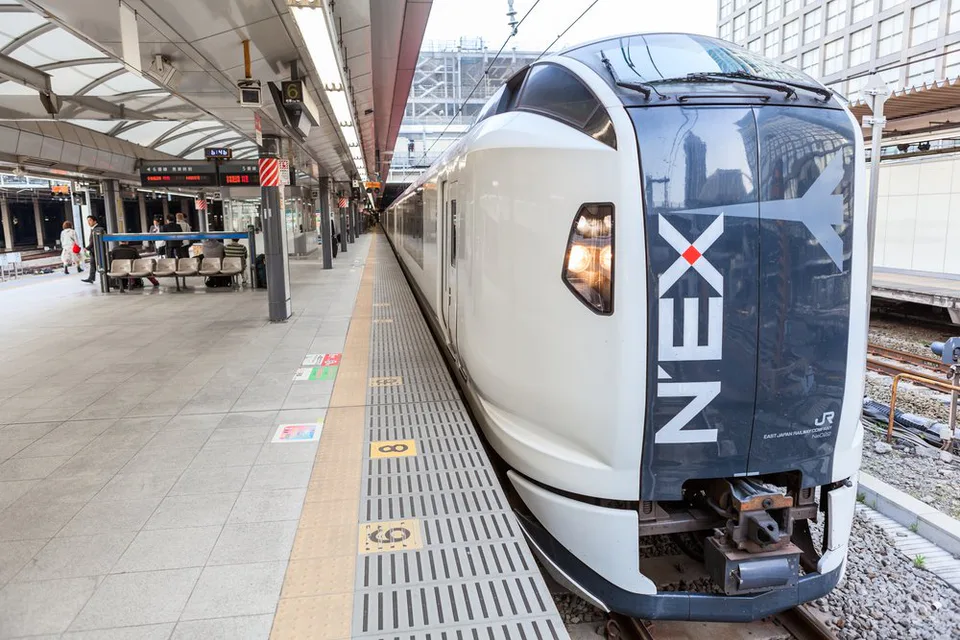
A 24-hour pass can work for a day linking several districts such as Tsukiji, Ginza, Roppongi, Omotesando and another Metro/Toei area. It is much weaker for a neighbourhood day with long walking blocks.
48 hours: often the easiest first-trip fit
The 48-hour version works well when two city-heavy days are consecutive. Because validity is rolling, activating at 15:00 can carry the ticket until 15:00 two days later. That can turn a late-arrival afternoon plus the next full day into one useful block.
72 hours: cheap per day, expensive when a day trip interrupts it
The 72-hour ticket has the lowest average ride-count threshold, but only if the three-day block actually uses the subway. Disney, Kawaguchiko, Nikko and Hakone can consume a whole day with little or no useful Subway Ticket value. Shift activation rather than forcing the day trip into the pass logic.
Build the city sequence first with the Tokyo itinerary guide and the Tokyo day-trip comparison, then fit the pass around the days that remain.
Do not miss the ¥700 Tokyo Metro 24-hour Ticket
Tokyo Metro’s own 24-hour Ticket currently costs ¥700 and covers the nine Tokyo Metro lines for 24 hours from first use. It does not cover Toei Subway.
This creates a useful middle option. If your route is genuinely Metro-only, paying ¥1,000 for Metro + Toei coverage can be unnecessary. But do not save ¥300 by introducing a bad transfer or a longer walk just to avoid Toei. Compare the actual route, not the product hierarchy.
The ¥1,100 Metro + Toei Common One-day Ticket uses a different clock
The Common One-day Ticket currently costs ¥1,100 and covers Tokyo Metro plus Toei Subway for one specified operating day. Unlike the rolling 24-hour Tokyo Subway Ticket, it is essentially a first-train-to-last-train product for that day.
If sightseeing begins at 08:00 and ends before midnight, the distinction may matter little. If you arrive at 15:00 and have a busy following morning, the rolling 24-hour ticket can contain far more useful hours. This is why “Metro day pass” is not one interchangeable product category.

Airport days and suburban days should usually sit outside the subway calculation
Narita Express, Skyliner and the main Haneda rail choices are not covered simply because they end in Tokyo. Treat airport transport as its own decision using the Narita or Haneda to Tokyo guide.
The same applies to suburban trips. Kawaguchiko, Hakone and Nikko involve JR, private railways and buses. A 72-hour Subway Ticket can still be valid while you are away, but validity is not value. Do not count an unused day as “free” because the average daily price looks low.
How I would use the products on a five-day first Tokyo trip
Imagine Day 1 is a late-afternoon arrival, Days 2 and 3 are central Tokyo, Day 4 is Kawaguchiko and Day 5 is departure.
I would keep an IC card active for the entire stay. Then I would test only Days 2–3 for a 48-hour Subway Ticket. Day 1 contains airport transport, Day 4 is outside the core subway network and Day 5 is another airport/departure day. Buying 72 hours purely because it is cheaper per day would be false economy if one of those hours is spent at Mount Fuji.
On a seven-day itinerary where Days 2–4 are all dense central-Tokyo days, the 72-hour product becomes much stronger. The difference is not trip length. It is three consecutive days of eligible transport demand.
Five failure modes to check before payment
Eligibility failure: you planned to buy the physical tourist ticket in Japan but do not have the required purchase evidence under Tokyo Metro’s current rule.
Coverage failure: your “Tokyo” rides are actually JR or private railway journeys.
Activation failure: you start the clock on an airport or low-use afternoon and waste the best part of the rolling window.
Device failure: a QR ticket becomes inconvenient because the phone with the ticket is dead, inaccessible or was not correctly distributed to the traveller who needs it.
Sunk-cost routing: you take a worse route just because the unlimited ticket is already paid for.
Final verdict: IC card first, visitor ticket second
Use Suica or PASMO as the resilient base layer. Add a Tokyo Subway Ticket only after three conditions are true: you are eligible to buy/use the product through your chosen channel, the next 24–72 hours are genuinely Metro/Toei-heavy, and the ride count makes the unlimited fare worthwhile without changing the route.
For many first-time visitors, 48 hours is easier to use well than 72 because it is simpler to keep two central-Tokyo days consecutive. Choose 72 hours only when the third day is also a real subway day. Choose the ¥700 Metro-only ticket when Toei coverage adds no useful route. And if the pass starts dictating where you stay or which train you take, go back to the IC card.
Official sources checked
Tokyo Metro — Tokyo Subway Ticket prices, visitor eligibility and QR product · Tokyo Metro — overseas visitor purchase conditions in Japan · Tokyo Metro — QR ticket expansion from March 25, 2026 · Tokyo Metro — Metro 24-hour and Common One-day tickets · Tokyo Metro — regular fares. Checked August 25, 2026. Sales channels and eligibility checks can change; verify the purchase page before relying on a specific ticket.