
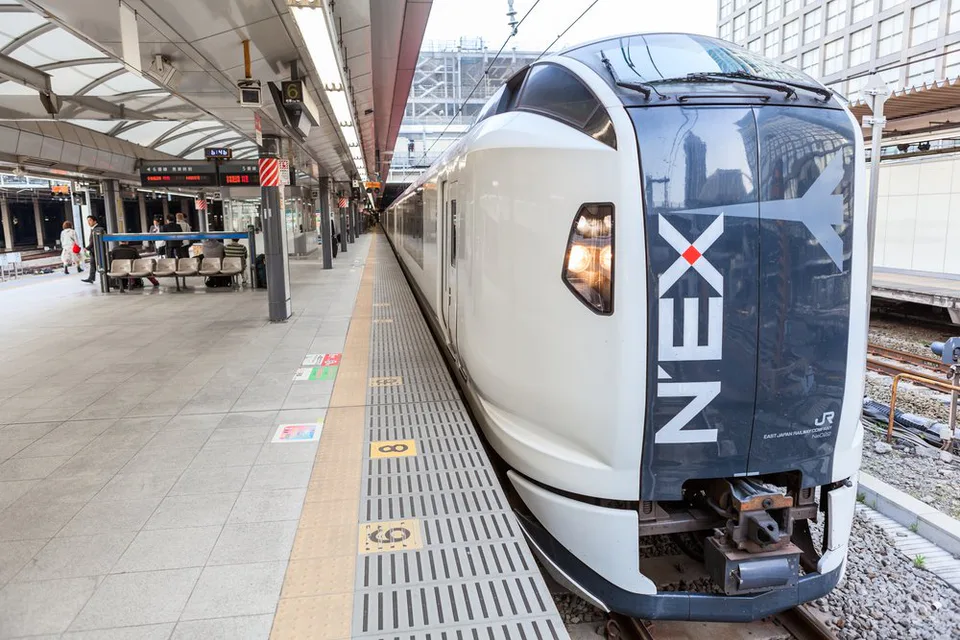
If your hotel is in Ueno or near Nippori, start with the Keisei Skyliner from Narita. If it is around Tokyo Station, Shinagawa, Shibuya or Shinjuku and you are carrying large luggage, price the Narita Express before assuming the cheaper-looking route is better. From Haneda, start with Keikyu for Shinagawa and the Asakusa Line corridor, and with the Tokyo Monorail when Hamamatsucho gives you the cleaner onward connection.
The ValueNavi rule is simple: an airport transfer is finished at the hotel entrance, not at the first famous station. A route that wins by ten minutes on a timetable can lose the decision if it adds a major-station transfer, a long suitcase walk and an uncertain final exit.
↔ Scroll table left or right
Hotel area / situation | ValueNavi first check | Why | When the answer can flip |
Narita → Ueno / Nippori | Skyliner | Fast reserved-seat airport train lands in the area you actually need | Your hotel is materially closer to another direct airport-bus stop |
Narita → Tokyo / Shinagawa / Shibuya / Shinjuku | N’EX | Direct rail can delete a luggage transfer; the round-trip ticket can narrow the fare gap | You travel light, value the lowest fare more, or your dates are affected by N’EX service changes |
Narita → Asakusa / Nihombashi | Check Keisei through / regular services as well as express trains | The branded airport expresses are not automatically the best fit for the east-side corridor | You strongly value reserved seating and dedicated luggage space |
Haneda → Shinagawa / Asakusa Line corridor | Keikyu | The route direction matches the hotel side well and through services can remove a change | Hamamatsucho is clearly closer to your hotel or onward railway |
Haneda → Hamamatsucho / easy Yamanote connection | Tokyo Monorail | Frequent airport service and a simple interchange pattern | Keikyu gives your exact hotel a cleaner one-change or through route |
Older travellers, children, several large bags | Direct train or hotel-serving bus | Removing one luggage move can matter more than a small fare or timetable advantage | Road-time uncertainty conflicts with a fixed reservation or flight deadline |
Use a transfer-friction ledger, not just a journey-time comparison
For airport transfers, I count four types of friction separately: vehicle changes, major-station navigation, luggage handling, and the final station-to-hotel walk. This is not a fake minute-by-minute formula; it is a way to stop a headline train time from hiding the difficult parts of the journey.
A direct airport train to a station beside your hotel may have only one meaningful friction point: the final walk. A “faster” route that requires Nippori or another major interchange, an elevator hunt and then a long exit walk can have three. For a solo traveller with one backpack that difference may be trivial. For two 29-inch suitcases, a stroller or an older parent, it can be the main reason to pay more.
My threshold is practical rather than numerical: if the timetable saving is small but the faster option adds two extra friction events, I normally stop chasing the faster train. If the saving is large, or you are travelling light and know the railway well, the balance can reverse.
Narita to Ueno or Nippori: this is where the Skyliner advantage is most complete
Keisei currently lists the Skyliner at as little as 36 minutes between Narita Airport Terminal 2·3 and Nippori. All seats are reserved and the train has dedicated luggage space. The current standard adult one-way price is ¥2,580, while Keisei’s online discount is ¥2,310.
For a hotel in Ueno or around Nippori, the headline speed and the door-to-door logic point in the same direction. That is why Skyliner is close to a default here. The mistake is extending that conclusion to all of Tokyo. A 36-minute airport train is no longer a 36-minute airport transfer once you still need to change to JR, move across Shinjuku and find the correct hotel-side exit.
If your accommodation choice is still open, use Ueno vs Shinjuku first. I would not choose four nights in Ueno purely to make the two airport journeys easier if most of the trip is concentrated in Shinjuku, Shibuya, Harajuku and west Tokyo. Saving friction twice is useful; creating extra cross-city travel every day is not.
Check current official Skyliner times and fares
N’EX is not a one-way fare decision: calculate the whole Narita round trip
JR East currently sells the N’EX TOKYO Round Trip Ticket for ¥5,200, valid for a round trip within 14 days. The same official comparison lists ordinary reserved-seat round trips at ¥6,280 to Tokyo and ¥6,660 to Shinagawa, Shibuya or Shinjuku. That changes the decision for travellers using Narita on both arrival and departure.
The useful comparison is therefore not “Skyliner one-way vs N’EX one-way.” It is total airport cost plus the number of luggage transfers over both airport days. If N’EX takes you directly to the station you actually need twice, its convenience premium can shrink sharply or disappear once the round-trip product is included.
There is an important boundary condition in 2026: JR East has announced Yokosuka/Sobu Rapid Line tunnel work affecting some N’EX operations around September 4–6, with the Tokyo–Shinjuku/Ofuna sections of affected services suspended; another construction window is announced for November. If your trip falls on an affected date, the normal “direct N’EX to Shinjuku” logic can temporarily stop being true. Check the official service notice rather than relying on a saved route from this article.
Using Narita both ways? Recalculate with the current N’EX round-trip ticket
Narita to Asakusa or Nihombashi: do not compare only the two famous airport expresses
For the east side of Tokyo, the useful shortlist is wider. Keisei publishes Access Express and other through-routing options that can reach the Asakusa Line corridor without turning the trip into “airport express first, hotel route second.” They do not offer the same reserved-seat experience as the Skyliner, so the choice depends heavily on luggage and arrival time.
For a solo traveller with one carry-on in daylight, giving up reserved airport-express seating can be a rational way to reduce both fare and route complexity. For a family with several large suitcases during a busy period, I would value a reserved seat and controlled luggage space more highly. The cheap route is only cheaper if it does not create a transfer you would willingly pay to avoid.
Haneda is closer, so route fit matters more than chasing a few minutes
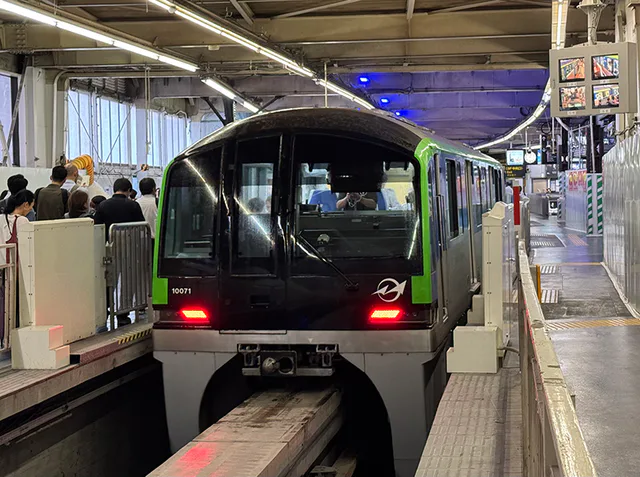
From Haneda, I would make the first split at the city side of the journey. Keikyu is the natural first check for Shinagawa and can continue through toward parts of the Toei Asakusa Line corridor. The Tokyo Monorail reaches Hamamatsucho from Terminal 3 in as little as 13 minutes and runs at roughly five-minute intervals during much of the day, making it easy to pair with a straightforward Yamanote connection.
Because Haneda is already close to central Tokyo, forcing a tiny paper-time advantage matters less than choosing the better interchange. If Keikyu puts you on the right side of the city, use it. If Hamamatsucho gives you the cleaner onward move, use the Monorail. There is no prize for using the airport train with the better reputation if it creates a worse final transfer.
The ¥590 Monorail + Yamanote ticket is useful only when your date qualifies
Tokyo Monorail’s Monorail & Yamanote Line Discount Ticket is currently ¥590 for an adult and covers a one-way journey from a Haneda Airport monorail station via Hamamatsucho to eligible stations in the Yamanote Line area. It is not a permanent everyday fare: it is sold on Saturdays, Sundays, public holidays and additional specified periods.
For 2026, the official schedule includes the July 18–August 31 period, with later specified periods also listed. The ordinary-fare examples on the same official page are ¥720 to Tokyo, ¥730 to Ueno, ¥780 to Shinjuku or Shibuya and ¥870 to Ikebukuro via Hamamatsucho. So the ¥590 ticket can genuinely change the fare comparison—but only on a valid date. I would never choose a hotel or a worse transfer just to capture this discount.
When does the airport bus beat rail? When it removes the last luggage move
A bus becomes a serious option when the stop is at your hotel or within a genuinely short suitcase walk. Its value is not that buses are universally more comfortable; it is that your bags can go into the hold once and stay there until the useful city-side stop.
The trade-off is schedule certainty. Road traffic can vary, so rail is easier to time when you have a hard reservation or are travelling back to the airport with little margin. My rule is: use a bus to buy fewer luggage moves, not because it happens to look premium. If its stop still leaves you with a long cross-district walk, much of the advantage disappears.
Late arrival planning starts with “station-ready time,” not landing time
A scheduled landing at 22:00 does not tell you when you will reach the railway or bus stop. Taxiing, immigration, baggage reclaim, customs and the walk through the terminal all sit between those two moments. There is no honest fixed number to add for every flight, so I would not build a late-night plan around a single optimistic buffer.
Instead, identify the last two services you would realistically be willing to rely on. If missing the first leaves you with one workable backup, the plan has resilience. If missing one service turns the night into a very expensive taxi or an improvised airport stay, the route is fragile even if it looks efficient on paper.

For the detailed choice, use Haneda Late Arrival: Stay at the Airport or Go Into Tokyo? or Narita Late Arrival: Stay Near the Airport or Go Into Tokyo?.
Do not let the airport ticket choose the hotel
Airport access happens twice; your hotel location affects every day. Ueno is excellent for Narita access, but that does not make it the best base for an itinerary dominated by west Tokyo. Tokyo Station is strong when intercity rail matters. Shinjuku or Shibuya can be more logical when your evenings and day trips point west.
If the base is still undecided, make that decision first with Where to Stay in Tokyo for First-Time Visitors, Tokyo Station vs Shinjuku, or Shinjuku vs Shibuya. An already-purchased airport ticket should not quietly dictate four or five nights of daily travel.
For the airport return, reverse the decision order
Arrival can absorb some inefficiency. Departure should be planned backwards from the terminal deadline. Start with the time you want to be at the airport, then subtract the airport ride, service interval, transfer margin and hotel-to-station walk. Only then pick the train or bus.
This is also where a “one-transfer is fine” route can become a poor choice. A missed connection on arrival costs time; a missed connection on departure consumes flight margin. For a very early Haneda flight, the Haneda airport-hotel comparison may solve more risk than finding a marginally cheaper first train.
ValueNavi verdict: choose the last easy transfer
Narita → Ueno/Nippori: start with Skyliner. Narita → Tokyo/Shinagawa/Shibuya/Shinjuku: start by pricing N’EX over the entire round trip, especially with large luggage. Narita → Asakusa/Nihombashi: include Keisei through/regular services in the shortlist instead of comparing only branded expresses. Haneda → Shinagawa/Asakusa Line: start with Keikyu. Haneda → Hamamatsucho/Yamanote-friendly hotels: start with the Monorail and check whether your date qualifies for the ¥590 ticket.
If the supposedly faster option adds two major pieces of friction—another railway change, a large-station navigation problem or a long luggage walk—I would usually give up the small timetable advantage. The best airport transfer is the route that stays easy until the hotel door.
Sources and what to recheck before travel
JR East: N’EX TOKYO Round Trip Ticket, validity and current fare comparison
JR East: 2026 N’EX service changes during Yokosuka/Sobu tunnel construction
Keisei: current Skyliner travel time and discount fares
Tokyo Monorail: ¥590 Monorail & Yamanote Line Discount Ticket and eligible dates
Tokyo Monorail: current Haneda–Hamamatsucho access information
Verified August 26, 2026. Fares, sale periods, through services, disruptions and last departures can change; recheck the exact date before travel.
Fukuoka Late-Arrival Hotels: Make the First Night Easy Before You Chase Tenjin
THE RAIL KITCHEN CHIKUGO 2026: ¥13,000 Isn’t a Train Fare — It’s a Moving Lunch
Ryujin Bungy from Tokyo: The 100m Jump Is ¥19,000 — Day Tours Mostly Buy You Transport
Things to Do in Tokyo When It Rains: The Best Plan Depends on How Hard It’s Raining
Warner Bros. Studio Tour Tokyo Tickets 2026: Buy the Time Slot Before the Upgrades