For a late international arrival at Haneda Terminal 3, I would usually continue into Tokyo only when you reach the public arrivals hall early enough that the final city transfer still has slack and your hotel is close to the station or bus stop you will actually use. Once the plan depends on catching transport near midnight, staying at Haneda becomes the safer default. The decision should be built from your arrivals-hall exit time, not the scheduled landing time.
There are still real late-night city options. Keikyu currently publishes a final Terminal 3 departure for Shinagawa at 00:08. Haneda also lists late-night buses from Terminal 3 toward Shinjuku and Ikebukuro at 00:20, 01:00, 01:40 and 02:20. But those facts do not mean every midnight arrival should continue into Tokyo. The important question is what happens after the train or bus: another rail connection, a taxi, a long walk with luggage, hotel check-in, and how much sleep is left before the next morning.
Checked August 25, 2026. Keikyu currently lists its last Terminal 3 train toward Shinagawa at 00:08 and first at 05:26. Haneda Airport currently lists late-night Terminal 3 buses to Shinjuku/Ikebukuro at 00:20, 01:00, 01:40 and 02:20. Terminal 3 is open 24 hours, although overnight stays in the terminal are restricted under airport rules to travelers who have used or will use international flights. Transport schedules can change with flight schedules and operating conditions, so recheck the exact arrival date.
Haneda late arrival: the 30-second decision
↔ Scroll table left or right
When you reach the public arrivals hall | Default decision | Why |
Comfortably before about 23:30 | Tokyo can make sense | You still have meaningful margin before the published 00:08 Keikyu departure, assuming the hotel is simple from the final station |
Roughly 23:30–00:00 | Recheck the exact route | Rail is becoming fragile; one delay at baggage reclaim or customs can remove the plan |
After midnight, but a late bus directly serves your hotel area | Tokyo only if the final mile is easy | The bus keeps the city option alive, but a second taxi or long walk can erase the benefit |
After the 02:20 Shinjuku/Ikebukuro bus | Usually Haneda hotel | The next published Keikyu train toward Shinagawa is 05:26; taxi becomes the main city alternative |
Children, stroller, several large bags, or a fixed early morning | Bias toward Haneda | Every extra transfer has a larger physical and sleep cost |
The 23:30 line above is a ValueNavi planning rule, not an official airport cutoff. It is deliberately conservative because a 00:08 train is only useful if you can reach the station and board it without relying on every arrival step going perfectly.
ValueNavi Arrival Resilience Score: compare the whole first-night chain
This is a ValueNavi editorial model, not an airport or railway rating. We score late-arrival options on the same five dimensions across our airport guides: last-service slack (30%), hotel-door fit (25%), luggage/hand-off burden (20%), next-morning positioning (15%), and fallback depth (10%). A high score means the plan still works when immigration is slower than expected, bags arrive late or the group is tired; it does not mean the transport itself is more luxurious.
Haneda scenario | Arrival Resilience Score | Why | What breaks it |
|---|---|---|---|
Airport hotel after midnight | Minimal hand-offs, no last-service dependency, strong sleep protection | Tomorrow starts deep in Tokyo and the extra hotel move costs a valuable morning | |
Keikyu to Shinagawa with 30+ minutes of usable landside slack | Direct rail, simple endpoint and enough margin to absorb one slow arrival stage | The hotel is not actually close to Shinagawa or needs another late connection | |
Direct late-night bus to a hotel-adjacent Shinjuku/Ikebukuro stop | One vehicle can preserve the city option after normal rail becomes fragile | The bus stop leaves a long walk, taxi queue or second transfer | |
Late bus plus taxi / long luggage walk | Tokyo is still reachable, but the route now has multiple late-night failure points | Children, heavy luggage or an early fixed morning magnify every hand-off | |
00:08 Keikyu with under 15 minutes of usable slack | The line-haul is good but the plan depends on nearly perfect arrival timing | One slow baggage belt or navigation delay removes the rail option entirely |
ValueNavi Arrival Slack formula: usable slack = final useful departure time − time you are landside with all bags − terminal-to-platform/stop allowance. For Haneda Terminal 3, use the station’s direct terminal connection but still keep a boarding/navigation allowance. Our cross-airport rule is green above 30 minutes, amber at 15–30 minutes, red below 15 minutes. This is deliberately conservative and is not an operator minimum-connection rule.
The score makes one point visible: a transport option can be fast and still be fragile. A 00:08 train with thirteen minutes left scores much worse than the same train with forty minutes left because the risk profile—not the railway product—has changed.
A 23:00 landing is not a 23:00 transport decision
Scheduled touchdown is the wrong timestamp for this problem. After an international arrival you still have taxiing, deplaning, immigration, baggage reclaim and customs. If the flight is delayed by 20 minutes and baggage takes another 20, a plan that looked comfortable from the timetable can disappear before you reach the public arrivals hall.
This is why I would not build the night around “the flight lands before midnight.” Build it around the latest time you are still willing to leave arrivals and start another transfer. A resilient plan survives one slow stage. A fragile plan works only if immigration is fast, the bags arrive immediately and you know the station route without hesitation.
The 00:08 Keikyu departure creates a real rail cliff
Keikyu currently publishes a 00:08 departure from Haneda Airport Terminal 3 to Shinagawa, arriving at 00:20. That is useful because Shinagawa is a strong interchange and a common hotel area. It is also a hard reminder that “just before midnight” is not much margin after an international arrival.
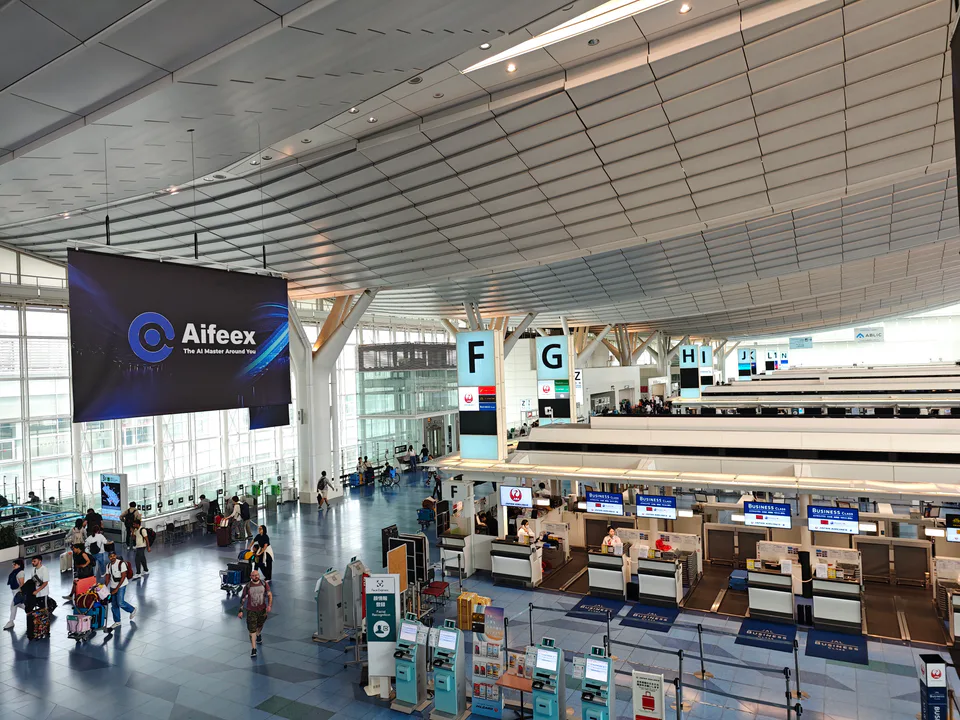
If you reach the arrivals hall at 23:55 with two checked bags, I would not treat the 00:08 train as a dependable plan. The station is conveniently connected to the Terminal 3 arrival level, but you still need to move from customs, orient yourself and board. Missing that train changes the transport product completely: you are no longer choosing normal rail versus airport hotel; you are choosing late-night bus, taxi or waiting.
Late-night buses keep Tokyo viable, but only for the right hotel geography
Haneda currently lists late-night Terminal 3 buses toward Shinjuku and Ikebukuro at 00:20, 01:00, 01:40 and 02:20. That is a much better fallback than pretending the city becomes unreachable at midnight. But the bus is only valuable when its destination matches your hotel.
“Bus to Shinjuku” is not the same as “door to my Shinjuku hotel.” If the hotel is beside the bus stop, continuing into Tokyo may still be efficient. If the bus leaves you with a taxi queue, a fifteen-minute luggage walk or another cross-city move, you have turned one airport transfer into a chain of hand-offs at the worst time of day.
This is especially important in a city where one district name can cover a large area. Do not decide from the hotel’s marketing label. Put the actual late-night bus stop and the actual hotel entrance on the same map and inspect the final segment.
After 02:20, the decision changes sharply
For the Shinjuku/Ikebukuro option in this comparison, the final published late-night bus currently leaves Terminal 3 at 02:20. Keikyu’s next published train toward Shinagawa is 05:26. That is a gap of 3 hours 6 minutes between those two published departures. This is ValueNavi’s derived comparison from the current official schedules, not an airport-defined “no transport” period; taxis and some other bus routes can still exist.
But for a traveler whose realistic choices are “wait for normal rail” or “sleep at the airport,” this is the point where waiting becomes a poor substitute for a room. A three-hour terminal wait followed by a dawn train can consume most of the sleep an airport hotel would have protected.
The next morning is half of the decision
An airport hotel solves arrival-night friction but creates one extra hotel move the next day. A city hotel does the opposite: it makes arrival night harder but can eliminate the morning move. The correct comparison is therefore not one night. It is the combined block from clearing immigration until the first meaningful task the next morning.
If you stay at Haneda, write down the morning sequence: wake up, breakfast, check out, move luggage, travel into Tokyo, leave luggage or wait for room access, then begin sightseeing. If that chain destroys a short first morning, continuing into the city may be worth a tired arrival night.
If continuing into Tokyo would get you to bed at 02:00 but staying at Haneda lets everyone sleep much earlier and the next morning has no fixed reservation, the airport hotel usually wins. More sleep is not an abstract comfort benefit if the next day is Tokyo Disney, a Shinkansen departure, a long day trip or the first full day of a long-haul holiday.
A simple two-night cost test
Think of the choice as two different bundles of friction:
Airport-hotel bundle: short indoor transfer tonight + better sleep + one hotel move tomorrow.
Tokyo-hotel bundle: longer late-night transfer tonight + less sleep + no hotel move tomorrow.
The airport hotel is better when the night-time transfer cost is greater than the morning hotel-move cost. The city hotel is better when one clean transfer tonight prevents a much more disruptive morning. This framing is more useful than comparing room prices alone because the “cheaper” option can still consume more scarce trip hours.
Families should count hand-offs, not just travel minutes
A solo traveler with one carry-on can tolerate a late bus very differently from two adults carrying a sleeping child, stroller and three large cases. Count how many times people and luggage have to change state after customs: trolley to bus, bus to curb, curb to taxi, taxi to hotel, bags out again, check-in, elevator, room.
Each hand-off has a small probability of delay, confusion or simply physical effort. For a tired family those costs multiply. This is why the exact same 00:30 arrivals-hall exit can rationally lead a solo traveler into Shinjuku and a family into an airport hotel.
Terminal 3 being open 24 hours is a disruption fallback, not a hotel strategy
Haneda currently states that Terminal 3 is open 24 hours. Under the terminal usage rules, travelers who have used or plan to use international flights may stay in the terminal overnight. That is valuable if a flight is heavily delayed, every hotel is sold out or transport fails.
It should not automatically be valued as “free accommodation.” Terminal seating, public lighting and an interrupted airport environment do not deliver the same recovery as a hotel room. If the next morning matters, the correct comparison is not ¥0 versus hotel price; it is terminal waiting versus the sleep and functioning you are buying back.
If you stay at Haneda, the two directly connected Terminal 3 options solve different sub-problems
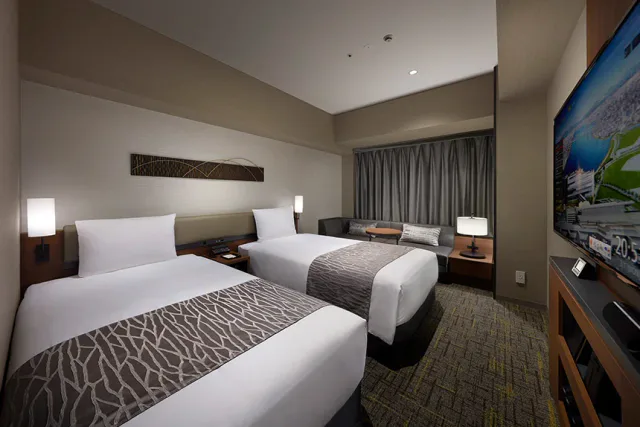
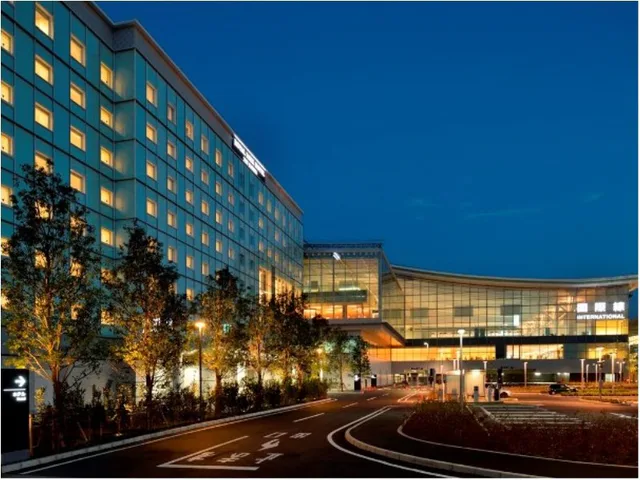
The Royal Park Hotel Tokyo Haneda is directly connected to Terminal 3, with its entrance in the third-floor departure lobby. It is the cleaner choice when the objective is simply to minimize the post-arrival walk and get to a room quickly.
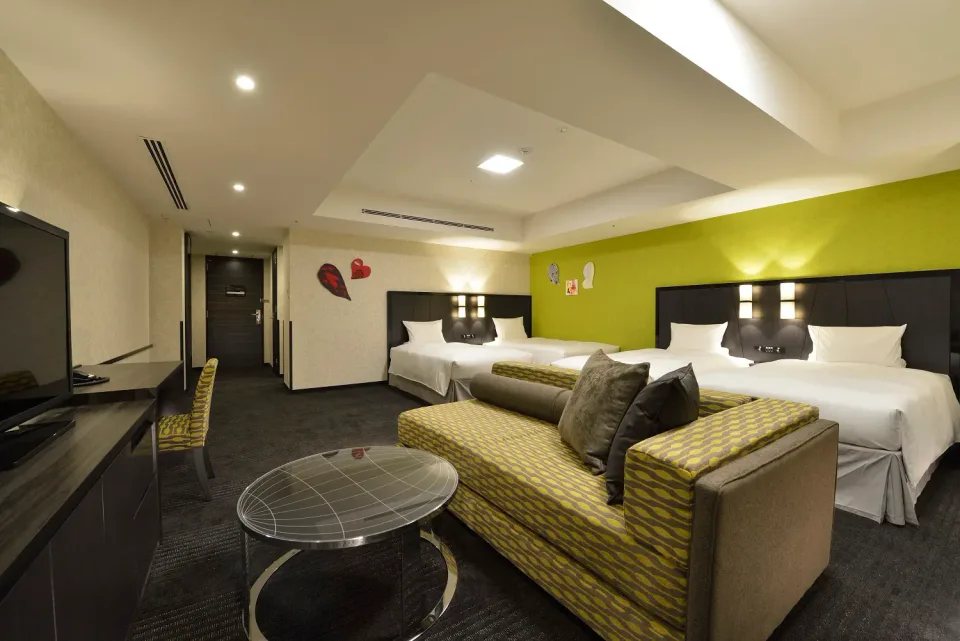
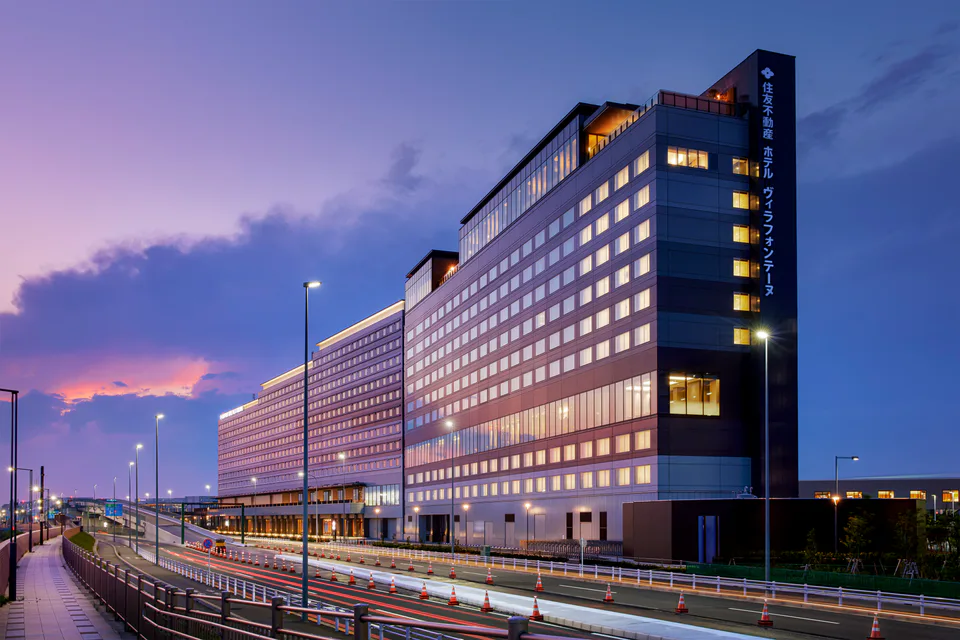
Villa Fontaine Grand Haneda Airport is also directly connected to Terminal 3 and is integrated with Haneda Airport Garden, including shopping, restaurants and hot-spring facilities. It becomes more attractive when the airport night is not just a sleep stop and the family values a wider hotel/facility ecosystem.
For the full comparison, use Villa Fontaine Grand vs The Royal Park Hotel Tokyo Haneda. Do not let the hotel comparison distract from the first decision: whether staying at Haneda is the correct move at all.
When I would stay at Haneda
I would choose the airport hotel when at least two of these are true:
I expect to reach the public arrivals hall around midnight or later.
The city hotel requires another transfer after the late-night bus or train.
The group has children, a stroller or several large bags.
The next morning has a fixed early start and sleep has high value.
The Tokyo hotel is only a short stay, so avoiding one extra hotel move is not especially valuable.
The recommendation can reverse if a taxi has already been budgeted and the destination hotel is the long-term base. In that case, a single door-to-door taxi can remove most of the hand-off problem even after rail hours.
When I would continue into Tokyo
I would continue when the arrivals-hall exit is early enough that the route has a real buffer, the final station or bus stop is close to the hotel, and that hotel will be the base for several nights. The benefit is not merely “sleep in Tokyo.” It is waking up already positioned, with no second checkout or luggage move before the first day begins.
This is strongest for hotels around a direct transport endpoint. It is weaker when the city hotel still requires a late taxi or long walk after the airport transfer. If you need two different transport decisions after customs, the airport hotel starts winning again.
Do not let a Tokyo Disney package or first-day itinerary force a fragile arrival night
If the next day is a major Tokyo Disney morning, do not treat a late international arrival as usable sightseeing time. Protect the first morning rather than trying to extract another hotel night in the resort area. The Tokyo Disney 3-Day Vacation Package sequence guide explains why arrival-day uncertainty is often better isolated from expensive park days.
For a wider Japan trip, also check 10, 12 or 14 days in Japan. A single late-night hotel move should not distort the entire route.
Final verdict
Use the public arrivals hall—not scheduled touchdown—as the decision point. If you are out early enough to reach a simple city route with comfortable slack, continuing into Tokyo can be the cleaner two-day choice because it avoids moving hotels the next morning. Once rail becomes fragile and the late-night bus does not deliver you close to the hotel, stay at Haneda and buy back sleep. After the 02:20 Shinjuku/Ikebukuro bus, the airport-hotel case becomes particularly strong unless you are deliberately taking a taxi.
Hiroshima Miyajima 2-Day Autumn Itinerary: Stay in Hiroshima or on the Island?
The Orion Hotel Motobu vs Ala Mahaina: Which Churaumi Stay Fits?
teamLab Planets Tokyo Review: Is the Barefoot Water Experience Worth It?
100% Doraemon & FRIENDS Tokyo 2026: The Shop Needs a Ticket, the Themed Cafe Does Not