
For three to six friends in Osaka, I would not choose a hotel by “price per head” first. Choose the bottleneck you most want to remove: one room with real hangout space, two bathrooms for a fast morning, no cross-city ride after USJ, or a Umeda base that still works after a late night. A room that sleeps four is not automatically a good four-person room.
My default for a mixed Osaka itinerary is two rooms or connecting rooms near the route you use most, not the largest room you can find. I would break that rule for OMO7 Osaka when staying together is part of the trip itself, or for THE SINGULARI when a late USJ finish is the hardest day. The real comparison is beds × bathroom throughput × night-return friction × social space.
ValueNavi decision table: which problem are you actually paying to solve?
↔ Scroll table left or right
Trip problem | Start with | Why | Do not choose it if… |
4–6 friends want to stay in one room and hang out after returning | OMO7 Osaka | The 59m² IDOBATA Suite has four fixed beds, two sofa beds and a real shared table/living zone. | Guests 5–6 insist on fixed beds, or most nights finish in north Osaka. |
USJ is the hardest and latest day | THE SINGULARI HOTEL | Universal City location removes the “one more train ride” problem after the park. | Only one day is at USJ and every other night is in Namba/Umeda. |
4–6 people need parallel showers and an early Shinkansen | karaksa hotel grande Shin-Osaka Tower | Official connecting-room layouts give two separate rooms and two bathrooms. | Your trip is nightlife-first and you will resent returning to Shin-Osaka every night. |
Umeda is already the nightly meeting point | Hotel Intergate Osaka Umeda | The base fits north-Osaka nights, and the bath/lounge can add value when your timing matches. | You usually return after the lounge windows and only chose it for “free drinks.” |
If you have not chosen the area yet, read where to stay in Osaka or Namba vs Umeda first. This article assumes the group question—not the city-area question—is now the decision.
The hidden cost of a cheap group room is bathroom throughput
“Sleeps four” is an occupancy fact. It does not tell you whether four adults can get out of the room by 07:00 without taking turns at one sink, whether suitcases block the walking path, or whether the fourth person is sleeping on furniture that has to be converted every night.
A simple ValueNavi rule is to count morning-ready slots, not just beds. One bathroom, one sink and one mirror force a queue. Two connecting rooms can let two people shower while two others shave, brush teeth or pack. That advantage is almost invisible at 15:00 check-in and painfully obvious before a Shinkansen.
↔ Scroll table left or right
Room structure | Night social value | Morning throughput | Best for |
One large room | High | Usually limited by one bathroom zone | Friends who genuinely want one shared space |
Two normal rooms | Medium to low | High | Sleep quality, privacy, different wake-up times |
Two connecting rooms | High | High | Groups that want access between rooms without sharing one bathroom |
That is why I would willingly pay a modest premium for connecting rooms before paying the same premium for a prettier lobby. The exception is a group that wakes at different times and rarely gets ready together; then bathroom throughput is solving a problem you do not have.
ValueNavi group-stay score: four hotels, four different strengths
These are editorial scores for this specific use case, not hotel star ratings. Higher is better. “Late-night fit” means how well the location and facilities tolerate the way a friends trip actually ends; it is not a claim about nightlife quality around the hotel.
↔ Scroll table left or right
Hotel | Group-room fit | Bathroom throughput | Late-night fit | Route fit | Shared-space value |
OMO7 Osaka | 9/10 | 6/10 | 8/10 | 8/10 south/airport | 10/10 |
THE SINGULARI | 6/10 | 5/10 | 10/10 on USJ night | 10/10 USJ, 5/10 city nights | 5/10 |
karaksa Shin-Osaka | 9/10 connecting | 10/10 connecting | 6/10 | 10/10 Shinkansen | 8/10 connecting |
Intergate Osaka Umeda | 7/10 | 6/10 | 9/10 Umeda nights | 9/10 north Osaka | 8/10 when lounge is open |
The important part is the conditional score: THE SINGULARI is a 10/10 route fit on the USJ night and a much weaker base if the rest of the trip keeps pulling you east into central Osaka. A single static “hotel score” would hide that.
OMO7 Osaka: pay for one-room social space, not merely six-person occupancy
OMO7 Osaka makes the most sense when part of the trip happens at the hotel, not just when everybody needs somewhere to sleep.
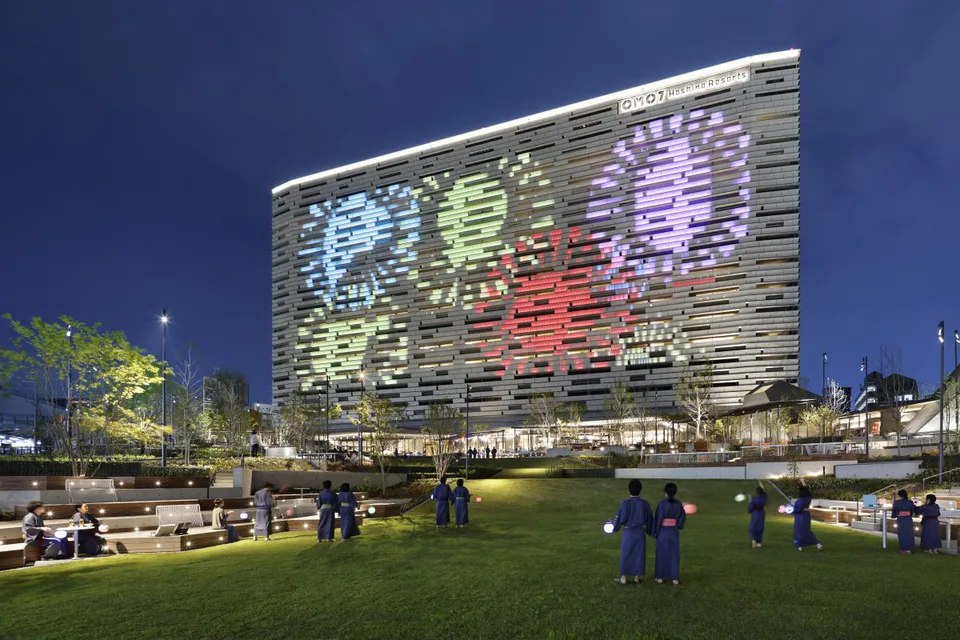
OMO7’s official IDOBATA Suite is 59m² for up to six guests. It has four 120×200cm fixed beds plus two 90×260cm sofa beds; the room is built around a large table and sofa area. That is unusually relevant to friends because the social space remains usable after bags are unpacked.
For four people, this is one of the clearest “stay together” choices. For six, the answer becomes conditional: guests five and six use sofa beds. If all six care about equal beds or different sleep schedules, two rooms can be the more adult solution even if the one-room price per head looks attractive.
The hidden location trade-off is repetition. Shin-Imamiya works well for south Osaka and airport movement, but if every evening ends in Umeda, you buy the return journey again and again. Read the OMO7 Osaka decision guide before treating “big room” as the whole answer.
Check OMO7 Osaka group-room availability
THE SINGULARI: its best feature is deleting the post-USJ commute
THE SINGULARI is strongest when the USJ night itself is the reason for the hotel location.
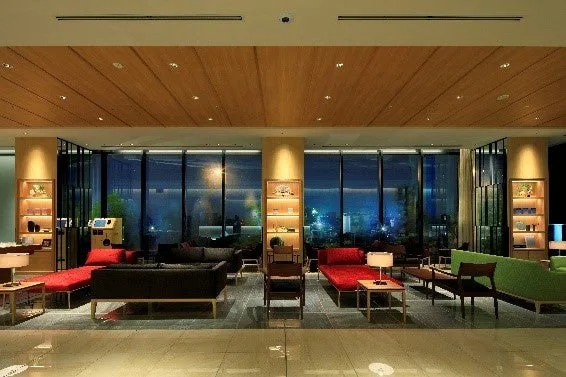
THE SINGULARI is connected to Universal City Station and is a Universal Studios Japan official hotel. For a group that stays until the park closes, that location converts directly into lower end-of-day friction: no debate about whether everyone still wants dinner in Namba, no long cross-city ride before bathing, and less risk that one tired person controls the whole group’s return.
But I would not automatically keep it for a four-night Osaka stay with only one USJ day. A split stay can be rational here because the location premium is highly concentrated on one night. The trade-off is moving luggage once. If the group travels light, one hotel move may be cheaper—in time as well as money—than making three unnecessary returns to Universal City.
The full THE SINGULARI HOTEL review covers the hotel in more detail. For this comparison, the rule is simple: use it when the USJ night is the bottleneck, not because “USJ hotel” sounds fun for the whole trip.
Check THE SINGULARI HOTEL for your USJ night
karaksa Shin-Osaka: two bathrooms can be worth more than another 15m²
A public bath helps a group only when the operating hours match the actual return and departure times.
karaksa officially promotes connecting rooms for groups and specifically notes the advantage of two bathrooms. That makes the hotel unusually easy to justify before an early Shinkansen: the premium is buying parallel preparation, not vague “comfort.”
The guest-only large baths and saunas currently operate 15:00–25:00 and 05:00–10:00. Those hours can help a group spread shower demand, but do not count the bath as free value unless the timetable matches your behaviour. Returning from central Osaka at 00:30 leaves almost no evening buffer; waking at 05:00 for a soak before a 07:00 train may also be the opposite of what the group needs.
My decision rule: if two connecting rooms cost a little more than one large room but remove a one-bathroom morning queue before a fixed train, I would usually pay the difference. If everyone is sleeping in and the Shinkansen is after lunch, save the money.
See the karaksa Shin-Osaka early-Shinkansen guide for the station-specific decision.
Check karaksa connecting-room availability
Intergate Osaka Umeda: do the lounge-hour audit before valuing the freebies
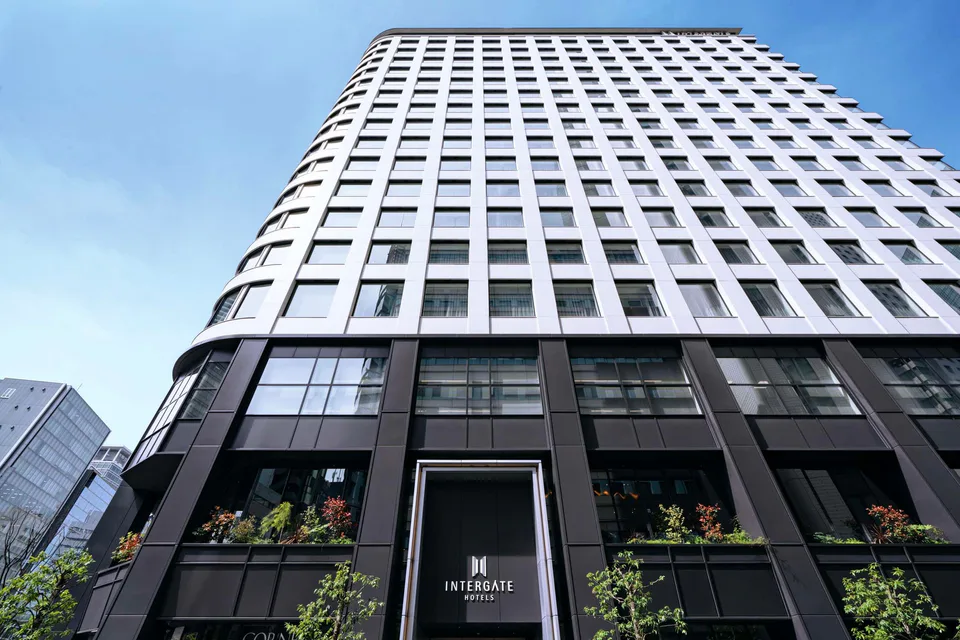
Intergate works best when Umeda is already the group’s nightly meeting point and the hotel timetable fits the way you travel.
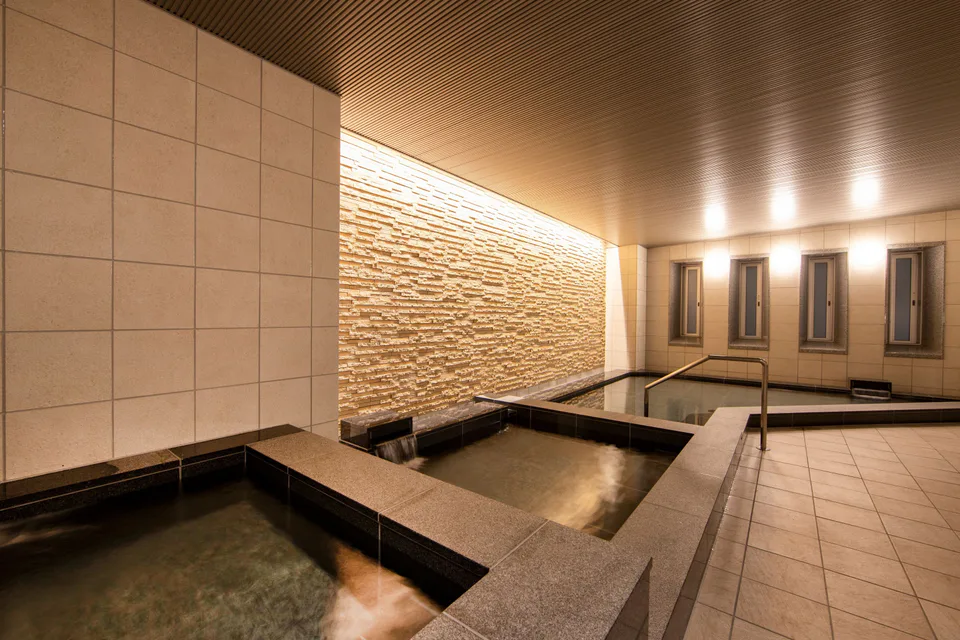
Intergate’s official lounge schedule currently includes Happy Hour from 17:00–19:00 and ochazuke from 20:00–22:00. Its guest bath runs 06:00–10:00 and 15:00–01:00, with a dry sauna and cold bath on the men’s side. Those are useful features only if your group is physically at the hotel at the right times.
If everyone first returns at 22:30, do not assign a dollar value to drinks and food you never consume. Judge the hotel on Umeda location and the bath. Also note two rules that change the imagined “guys-trip” flow: the lounge does not allow nightwear or hotel slippers, and the bath does not permit entry while drunk. In other words, “happy hour → heavy drinking → sauna” is not a valid reason to book it.
Read the Intergate Osaka Umeda lounge and bath guide if these facilities are central to the decision.
Check Hotel Intergate Osaka Umeda rooms
One room vs two rooms: the price-per-head calculation is incomplete
When comparing live rates, calculate both options using the same cancellation and breakfast conditions, then add one non-cash question: what is the likely group delay? If four people sharing one bathroom add 30 minutes to two mornings, you have spent an hour of trip time to save the room-price difference.
I would choose one room when the shared time is part of the trip, the fixed-bed setup is acceptable and nobody needs a radically different sleep schedule. I would choose two rooms when snoring, early departures, bathroom queues or privacy are already predictable. Connecting rooms are the premium middle ground because they preserve access without forcing every routine into one space.
Late-night failure modes that matter more than hotel stars
Everybody assumes somebody else checked the return: save the actual route back to the hotel before the first drink, especially if the night ends away from your usual base.
The public bath is treated as a 24-hour shower: bath closing times do not move because the group returned late.
One key card controls the room: confirm how many keys/cards the hotel provides or can issue if friends split up at night.
“Sleeps six” becomes six equal beds: verify fixed beds versus sofa beds before anyone pays.
The cheapest nightly average hides the USJ night: compare the difficult night separately; a split stay can outperform one base.
Final verdict: optimize the slowest person, not the cheapest person
For most groups, the best Osaka hotel is the one that stops one repeated friction point from controlling everyone else. OMO7 wins when the room is part of the social experience. THE SINGULARI wins when the late USJ finish is the hard edge. karaksa Shin-Osaka wins when two bathrooms and an early train matter. Intergate wins when Umeda is already your night base and you can actually use the facility schedule.
The answer flips if the group travels differently: four light sleepers should value two rooms more; a one-night USJ trip should value Universal City more; a group that returns after midnight should value bath and lounge promises less. That is why “best hotel for a guys trip” is the wrong search question. The useful question is which shared bottleneck would cost your group the most time or sleep if you leave it unsolved?