
Warner Bros. Studio Tour Tokyo tickets in 30 seconds: buy the time slot before you buy the upgrades
Warner Bros. Studio Tour Tokyo tickets look like a simple ladder: Standard from ¥6,600, Package from ¥10,080, themed dining and guided options above that, then extra experiences such as the Broom Experience. The expensive mistake is assuming the higher tier automatically gives you a better day. It does not. The first thing you are really buying is a fixed entry time, and the quality of the day depends more on whether that slot fits your Tokyo itinerary than on whether you added a guidebook or a green-screen video.
For admissions from July 1, 2026, the official adult Standard range is ¥6,600–¥7,300 and the Package range is ¥10,080–¥10,780, depending on the date. The Studio Tour recommends allowing three to four hours once you are inside, with no fixed time limit on the visit. Add travel from central Tokyo, the lobby, food, photos and the shop, and this is much closer to a half-day commitment than a two-hour museum stop.
That makes the attraction a real scheduling decision in a Tokyo independent travel itinerary. If you have only three or four full days in the city, you should decide whether Harry Potter deserves one of your major indoor blocks before you start comparing ticket upgrades. Among the many things to do in Tokyo, this one is unusually sensitive to timing because the ticket is non-refundable and changing the booked date or time costs ¥1,500 each time.
↔ Scroll table left or right
Option | 2026 adult price / add-on | Best fit |
Standard Ticket | ¥6,600–¥7,300 from July 1 | Most visitors; you mainly want the sets, props and core tour |
Package Ticket | ¥10,080–¥10,780 | You already want both the Digital Guide and Official Guidebook |
Guided Tour Basic | ¥10,800 | You understand Japanese and want a guided layer, not just self-paced viewing |
Afternoon Tea Package | ¥14,000–¥14,700 | The themed meal is part of the occasion, not an afterthought |
Broom Experience Gold | ¥5,500 per group, added to admission | A group that genuinely wants the green-screen photos and videos |
Trip.com | Check the exact Studio Tour Tokyo slots available for your date
Standard is the default choice — and that is not the “budget” version of the experience
The Standard Ticket already gives access to the core Studio Tour: major film sets, props, costumes, creature effects, special-effects displays and interactive elements. You are not paying an entry fee and then discovering that the Great Hall, Platform 9¾ or the Ministry of Magic requires another admission tier. The higher packages mainly change how much explanation, dining or take-home material you add around the same core tour.
That is why Standard should be your default rather than the option you “settle for.” If you are the type who prefers to read signs, move at your own pace, take photographs and spend more time on the sets you actually care about, Standard keeps the day flexible inside the attraction. It is also the cleanest choice when one person in the group is a serious fan and another is simply coming along.
The price varies by visit date, so compare the exact same date and entry time rather than quoting one “normal” ticket price from an old article. The official pricing update applies the new ¥6,600–¥7,300 adult range from July 1, 2026 onward. That date-sensitive structure is another reason to lock the visit date before debating extras.
The Package only makes sense if you already wanted both the Digital Guide and the Official Guidebook
This is the easiest upgrade to calculate. The official price list currently puts the Digital Guide at ¥1,480 per device and the Official Guide at ¥2,500. Bought separately, that is ¥3,980. The Package Ticket is roughly ¥3,480 above the comparable Standard price band, so someone who genuinely wants both items saves about ¥500 by taking the Package rather than adding the two listed items separately.
The logic breaks if you only wanted one of them. A couple does not necessarily need two digital-guide devices. A visitor who enjoys the sets visually may not want to carry a guidebook around all afternoon. A family may prefer one guidebook for the household. “Package” is a useful bundle only when its contents match what your group was already going to buy.
In other words, do not compare ¥6,600 versus ¥10,080 as if one ticket gives a stripped-down tour and the other unlocks the real attraction. Compare your actual add-on plan. If you would have skipped both the guide and the book, Standard remains the better-value ticket even for a committed Harry Potter fan.
Guided Tour sounds premium, but English-speaking visitors need to notice the language first
The current official price list shows Guided Tour Basic at ¥10,800 for adults, with a higher Guided Tour Advance option also listed. But the purchase terms say the Guided Tour is conducted in Japanese and is not a private tour. That single sentence matters more than the price difference for many international visitors.
If you do not understand Japanese comfortably, paying more for a guided format can give you less value than using the self-paced Standard Ticket with an English Digital Guide. If you do understand Japanese and actively want production commentary delivered by a guide, the guided option becomes a different product rather than merely a luxury upgrade.
The current terms also require Guided Tour participants to purchase in advance and place extra restrictions on changes close to the visit. So I would not use it as a spontaneous “maybe we should upgrade” choice. Treat it as a separate tour format that needs deliberate planning.
Broom Experience is expensive for one person and much easier to justify for a group
The 2026 Gold Broom Experience is ¥5,500 per group in addition to admission, and up to eight people can participate together. That pricing structure changes the decision completely. One solo visitor effectively absorbs the full ¥5,500. Four people split the mental cost to ¥1,375 each. Eight people bring it down to under ¥700 per person before you start arguing over who gets the best pose.
The Gold package includes digital broom photos and video, wanted-poster content and group-photo files. The official 2026 page also notes seasonal background and anniversary-logo variations during parts of the year. The point is not that everyone should buy it. The point is that this is one of the few upgrades where group size matters more than ticket tier.
If only one person in the group wants the broom video, discuss it before arrival rather than discovering the extra ¥5,500 at the experience counter. If several people want a shared souvenir and you were already planning a full photo-heavy visit, the group economics become much easier to defend.
Afternoon Tea and High Tea are not “better tickets” — they turn the attraction into an occasion
The 2026 adult Afternoon Tea Package sits around ¥14,000–¥14,700 depending on the visit date, while the official price list also shows a higher Evening High Tea package. These make sense when themed dining is part of the reason you are going: a birthday, a Potter-focused day, a couple experience or a trip where you deliberately want to stay inside the Wizarding World longer.
They make much less sense if your priority is simply the sets. A themed meal adds both money and schedule structure to a visit that is otherwise largely self-paced. The terms for Afternoon Tea require advance booking and impose timing conditions around the Backlot Café, so this is not the upgrade I would add “just in case.”
For a first Tokyo trip with only a few days, ask a harsher question: does this meal replace another Tokyo meal you were excited about, or is it the meal you were excited about? If it replaces something else you care about more, the package is not free convenience — it is competing itinerary space.
The biggest risk is the allocated entry time, not the ¥700 price swing between dates
Studio Tour Tokyo requires a booked time slot. The official terms say you may enter the lobby one hour before your allocated entry time, except for the first slot of the day when lobby access begins 30 minutes before. You are asked to enter the actual Studio Tour within 30 minutes after the allocated time. Arrive later and same-day entry is no longer guaranteed.
That turns a “cheap date” into a bad purchase if the time slot does not fit the rest of your day. A ¥6,600 ticket at 13:00 can be worse than a ¥7,300 ticket at 10:00 if the later slot forces you to abandon another fixed booking, rush lunch or finish too late for the evening you actually wanted.
Changes are possible before the original booking time, but the official fee is ¥1,500 every time the date or time is changed. Tickets are non-refundable and non-transferable. So the low-commitment move is not “book any slot now and clean it up later.” It is to choose a day you are genuinely willing to protect.
Morning or afternoon? Choose based on how much of Tokyo you are willing to give up
Morning slots are better if the Studio Tour is one of the top reasons for the trip. You arrive with full energy, have room to spend five or six hours if the sets, photos and shop keep pulling you in, and you are less exposed to delays from earlier sightseeing. The trade-off is that the attraction consumes the brightest and most flexible part of your Tokyo day.
Afternoon works well when you want a compact first half elsewhere, but do not pack the morning with a cross-city checklist. A relaxed neighbourhood morning followed by Toshimaen is much safer than trying to squeeze Asakusa, Shibuya and lunch into the same pre-tour window. If your hotel base is still undecided, the wider Where to Stay in Tokyo for First-Time Visitors guide matters more than shaving ten minutes from one attraction day.
Late slots can be attractive because they preserve the day, but they reduce your ability to let the tour run long. The official site says there is no imposed time limit once inside, yet the final tour and closing time vary by date. A late slot therefore creates a real ceiling even if the attraction itself does not rush you.
Three to four hours is the recommendation, not a stopwatch
The official FAQ recommends three to four hours, with no time limit imposed on your visit. That range is a planning baseline, not a guarantee that every person finishes in four hours. A casual visitor who keeps moving can be done around that window. A fan who reads production notes, takes repeated photos, stops for food and shops carefully can turn the visit into a much longer block.
That is why I would reserve roughly five to six hours door-to-door from a central Tokyo base once you include the train, the walk, lobby time and some margin. From Seibu Ikebukuro, the official access page says Toshimaen is about 17 minutes direct; from Shinjuku on the Toei Oedo Line it is about 20 minutes direct, followed by roughly a two-minute walk from Toshimaen Station.
If you are choosing between west-side hotel bases, Shinjuku vs Shibuya and Tokyo Station vs Shinjuku help answer a bigger question than “which hotel is closest to Harry Potter?” One attraction should fit the trip base unless Harry Potter is the trip theme.
The sets are the value: Great Hall, Platform 9¾, Diagon Alley, Ministry of Magic and the filmmaking details between them
The Studio Tour is not a ride park. The core payoff is walking through large recreated or production-linked sets and seeing how the films were made. That distinction matters for expectations. If you arrive looking for roller coasters or a Universal-style land, the ¥6,600–¥7,300 admission can feel expensive. If you care about production design, props, costumes, creature effects, forced perspective and how familiar scenes were constructed, the same price is much easier to justify.
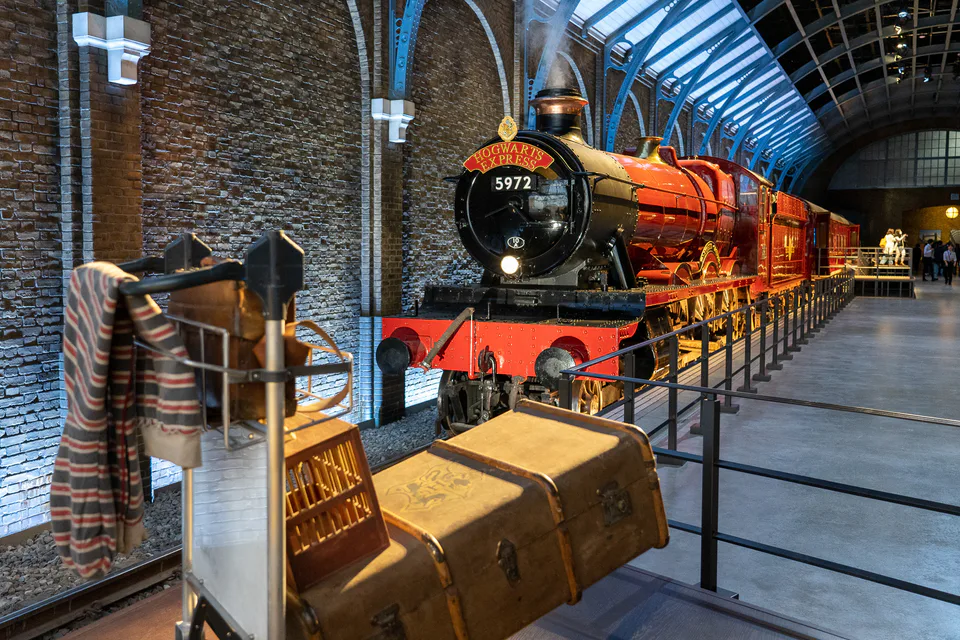
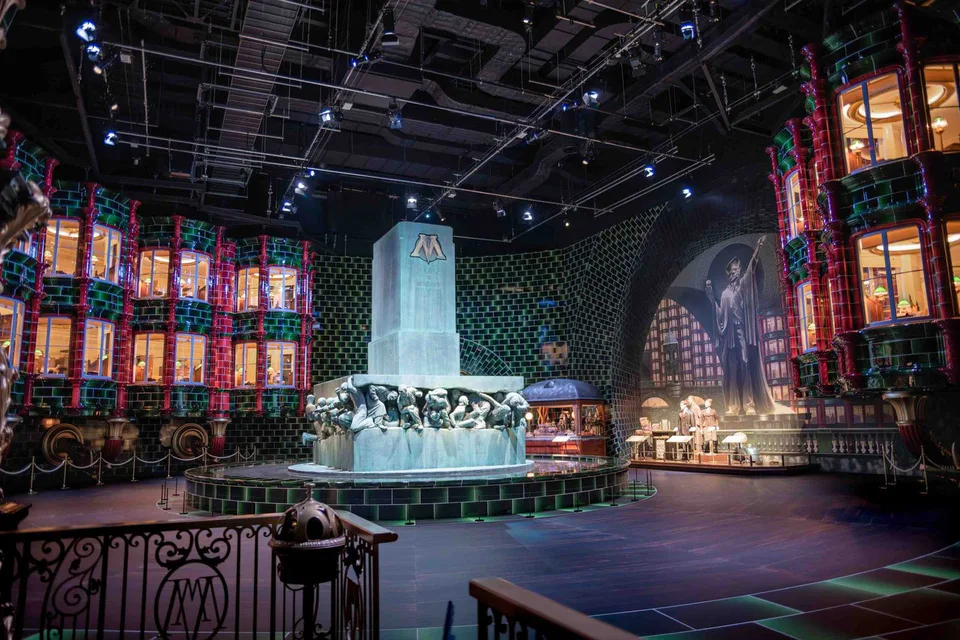
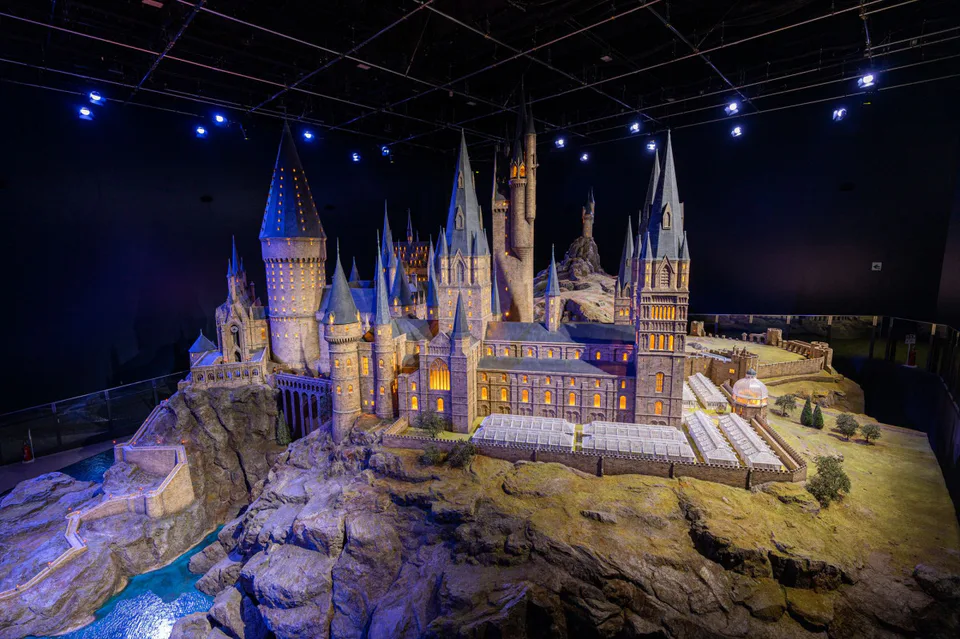
The obvious photo points are the Great Hall, Platform 9¾ and the Hogwarts Express, Diagon Alley and the Ministry of Magic. But the reason fans stay longer is usually the material between those headline rooms: costume details, models, effects work and smaller production objects that reward stopping instead of sprinting from backdrop to backdrop.
This is also why a “top 10 photo spots in 90 minutes” plan undersells the attraction. The official recommended duration alone is three to four hours. If you only have 90 minutes available, I would question the day choice before trying to optimise the route.
Platform 9¾ is not the finish line — do not burn all your photo energy in the first famous set
The Hogwarts Express and Platform 9¾ are among the most recognisable images in the tour, and they are exactly the kind of set where a group can lose a surprising amount of time repeating trolley photos. That is not wrong if the photo is important to you. It is only a problem when everyone assumes the tour is almost done because one of the most famous visual icons has appeared.
Keep some patience for the later production displays and larger set pieces. If you know your group loves photos, build that into your ticket time rather than trying to “make up” time by rushing the second half. The attraction works better when you accept that your personal pace may be slower than the official three-to-four-hour baseline.
Only one Potterhead in the group? Standard usually protects the group better
A mixed-interest group is where upgrades can quietly create resentment. If one person has read every book and another knows only the films, buying the most elaborate package for everyone may not create a better shared day. The serious fan may want every guide, photo and shop stop; the casual visitor may simply want the iconic sets and a good lunch afterward.
Standard gives the group the most room to split attention without committing everyone to the same extras. The fan can buy a guidebook or paid photo experience selectively. The rest of the group still gets the full core tour. If several people want the Broom Experience, that specific add-on can then make more sense because its Gold pricing is per group rather than per admission ticket.
The same principle applies to other timed attractions. Chiikawa Park Tokyo 2026 is another case where the time slot and what each person actually wants from the experience matter more than simply choosing the most expensive available option.
Rainy-day gold? Yes for comfort, no for spontaneity
As an indoor attraction, Studio Tour Tokyo is a strong bad-weather day physically. You can spend hours inside without caring much about heat, rain or winter wind once you arrive. But it is not an ideal last-minute rainy-day backup because desirable entry times can sell out and tickets are tied to a booked slot.
That is a different role from a flexible Tokyo rainy-day indoor itinerary built around places you can rearrange on the fly. If the Studio Tour is important, book it because you want it, not because you hope the weather will justify it later.
Do not put it on your arrival day unless the flight risk is acceptable
A non-refundable timed ticket and an international flight are not natural partners. A delayed arrival can turn the ¥1,500 change fee into the best-case outcome; if you miss the relevant window or same-day capacity is gone, you may have to rebook. This is especially unnecessary when the attraction can easily occupy half a day by itself.
If you are arriving late through Narita, use the Narita late-arrival hotel decision guide to stabilise the first night rather than attaching a fixed Studio Tour slot to the same day. The same idea applies to departure day: do not put a long self-paced attraction in front of an airport deadline unless you are deliberately accepting a shorter visit.
Toshimaen is easy from west Tokyo — but do not move hotels just for this attraction
Official access is straightforward: roughly 17 minutes direct from Seibu Ikebukuro to Toshimaen, roughly 20 minutes direct from Shinjuku on the Toei Oedo Line, then about a two-minute walk. That is convenient enough that a normal Tokyo hotel base can handle the trip without a special overnight strategy.
If your whole Tokyo plan is still floating, it is smarter to solve the city first. 3, 4 or 5 Days in Tokyo? helps decide how much room you even have for a half-day attraction. If you are staying in west Tokyo anyway, Shinjuku works naturally. If most of your trip is east-side, there is still no reason to move bags merely to shorten one morning.
Next decision | Choose your Tokyo hotel base around the whole trip, not one attraction
Who should pay for the Studio Tour — and who should skip it?
It is an easy recommendation for Harry Potter fans who care about sets, costumes, props and filmmaking detail; families or couples who want a substantial indoor attraction; and travellers who are happy to dedicate a half-day to one theme. It is also unusually good for groups that enjoy photography because the pace is self-directed and there are many recognisable environments rather than one central exhibit.
I would be more cautious for travellers who want rides, people with only two or three full Tokyo days and no strong Potter interest, or groups where everyone is already compromising heavily to fit the attraction in. The Standard adult price is not small, and the true cost is not only the ticket. It is the half-day block you remove from the rest of Tokyo.
If your trip already has multiple fixed-time attractions, protect some unbooked city time. Tokyo becomes tiring when every morning, lunch and evening has a reservation attached to it. One major timed attraction can anchor a day; three can turn the same day into a train timetable.
Final verdict: Standard first, Package only with a reason, paid experiences only with a specific person in mind
For most visitors, I would buy the best-fitting Standard time slot first. If you already want both the Digital Guide and Official Guidebook, the Package has clear arithmetic behind it. If you understand Japanese and want guided interpretation, then the Guided Tour becomes relevant. If the group wants a shared green-screen souvenir, the Broom Experience becomes easier to justify as group size rises. Themed dining belongs to people who want the meal to be part of the Harry Potter day, not people who are merely worried that Standard sounds too basic.
The one decision I would not compromise on is the time slot. A convenient 10:00 or 13:00 entry can be worth more than a small price difference on another date because it protects the rest of your itinerary. The Studio Tour is already large enough to reward extra time; do not make it stressful by buying the wrong hour and then trying to race Tokyo around it.
So the order is simple: choose the day, choose the entry time, reserve three to four hours minimum inside, then decide whether the add-ons solve a real need. That sequence keeps a ¥6,600 ticket from quietly turning into a ¥15,000–¥20,000 day full of extras you never actually wanted.
Sanrio Puroland Tickets 2026: Save on the 2 PM Pass Only If You Know What You’ll Skip
Tokyo Yosakoi 2026: October 10 or 11? Use the Published Schedule Without Overplanning
MAPPA EXPO 2026: Overseas Tickets Are Live — Choose the Right Exhibition Period
Ryujin Bungy from Tokyo: The 100m Jump Is ¥19,000 — Day Tours Mostly Buy You Transport
Okutama Rafting 2026: Tokyo Full-Day Tour vs Local Half-Day — You're Paying for Transport
Sources
Warner Bros. Studio Tour Tokyo official 2026 price list
Official ticket page: Standard, Package and current sales information
Official ticket terms: allocated entry time, lobby access, change fee and Guided Tour conditions
Official facilities FAQ: recommended three-to-four-hour visit and late-entry policy
Official access page: Toshimaen from Ikebukuro and Shinjuku
Official Broom Experience 2026 package details
Trip.com exact Warner Bros. Studio Tour Tokyo attraction page
Image references are real Studio Tour Tokyo photographs sourced from Travel Watch, Muse.World, ORICON NEWS and Walkerplus; this English version uses a fresh Wix media set and does not reuse the Chinese article image IDs.