
Do not buy a Tokyo attraction pass because it advertises a large percentage saving. Buy one only when the attractions you already planned to visit make the pass cheaper without changing your route. In 2026, Klook Pass Greater Tokyo is the better calculation for travellers who already have two to seven paid attractions on a real shortlist. Tokyo City Pass is more relevant when paid attractions and repeated Tokyo Metro/Toei Subway travel are both part of the same compact sightseeing days. If your trip is mostly neighbourhoods, shopping, shrines, cafés, JR rides and one or two paid sights, individual tickets often win because they preserve flexibility.
The most important distinction is between headline value and realised value. An attraction you add only to use the pass is not a saving. A ¥2,000 subway ticket is not worth ¥2,000 to you if your actual route would have used only ¥900 of eligible rides. And an expensive attraction does not help the calculation if your preferred date or time is unavailable after you buy the pass.
ValueNavi decision table: Klook Pass, Tokyo City Pass or individual tickets?
↔ Scroll table left or right
Your actual Tokyo plan | Start with | Why | What can reverse it |
2–4 higher-priced attractions already fixed | Klook Pass Greater Tokyo | The bundle can reduce ticket cost without inventing extra stops | Your preferred premium/date inventory is unavailable |
1–3 dense sightseeing days, repeated Metro/Toei use, included attractions already wanted | Tokyo City Pass | Both attraction and subway components can create real value | You actually use JR/private rail more than the subway |
One headline paid attraction + free neighbourhoods | Individual tickets | Low pass utilisation and maximum day-to-day flexibility | A second or third expensive must-do enters the same compact route |
Disney owns one full day | Usually individual tickets for the rest | A park day does not leave useful capacity for pass-chasing | Your chosen Klook package genuinely includes the Disney product you need and still saves on other pre-planned days |
Mostly JR, shopping, food, free shrines and walks | Individual tickets | Neither attraction inventory nor subway face value matches your actual trip | Your final itinerary changes materially |
Five-day private-rail-heavy Kanto trip | Check Greater Tokyo Pass separately | It is a transport product, not the Klook attraction bundle | Your routes rely heavily on JR or chargeable limited-express/reserved-seat supplements |
ValueNavi Real Pass Saving: calculate only spending that already existed
Use this before looking at a marketing percentage:
Real Pass Saving = standalone cost of included must-do attractions + realistic covered transport − pass checkout price
The words must-do and realistic do most of the work. If an attraction was not on your itinerary before you saw the pass, give it ¥0 in the saving calculation. If a subway component is included, count the fares you would actually have paid on eligible Tokyo Metro and Toei Subway rides—not the face value of an unlimited ticket you would never have bought separately.
Example: suppose your pre-pass itinerary already contains three included attractions whose exact standalone tickets total ¥10,500. If the relevant pass costs ¥8,800 at checkout, the visible saving is ¥1,700. If buying the pass then causes you to cross Tokyo for a fourth attraction you did not want, the fourth attraction does not increase the saving. It is pass-induced consumption.
ValueNavi savings buffer: if the realistic saving is under roughly ¥1,000 (about US$6.30) per adult or under about 10%, I would normally prefer individual tickets unless the pass also simplifies booking. This is an editorial threshold, not an operator rule. A tiny saving is easy to erase with one unnecessary subway detour, a worse timeslot or a reservation restriction.
ValueNavi Pass Utilization Score: score the itinerary, not the brand
This is a ValueNavi editorial model for deciding whether a specific pass fits a specific trip. We score five dimensions: pre-existing attraction fit (30%), route coherence (20%), reservation certainty (20%), transport-value realism (15%) and flexibility retained (15%). Higher is better. It is deliberately impossible for a pass to score well merely because its catalogue is long.
Scenario | Utilization score | Why | Main weakness |
|---|---|---|---|
Klook Pass: three expensive must-dos, all dates checked, two coherent Tokyo zones | High pre-existing fit and little route distortion | Some popular reservations remain capacity-sensitive | |
Tokyo City Pass: central/east Tokyo, strong subway use, included spots already wanted | Attraction and transport value reinforce the same itinerary | Value falls quickly if JR becomes the more natural line | |
Individual tickets: one observation deck + museums/free neighbourhoods | No forced consumption and very high flexibility | You give up bundle discounts if more expensive attractions are later added | |
Klook Pass bought first, then attractions chosen to fill slots | Nominal ticket value may be high | Low pre-existing fit; itinerary is serving the pass | |
Tokyo City Pass on a JR-heavy Shinjuku/Harajuku itinerary | Attractions may still have value | Subway component is being overvalued |
A high score does not guarantee the cheapest checkout. It means the product lowers cost without damaging the trip. That distinction is why individual tickets can score higher than a pass in a low-density itinerary.
Klook Pass Greater Tokyo: strong when the expensive shortlist already exists
As checked on August 26, 2026, Klook Pass Greater Tokyo lets you select 2 to 7 attractions from a catalogue of more than 30 activities. Current standard examples include Tokyo Skytree, Tokyo Tower, Aqua Park Shinagawa and Sanrio Puroland. Premium choices can include teamLab Borderless or Planets, Warner Bros. Studio Tour Tokyo, Tokyo Disneyland, Tokyo DisneySea and a Mt Fuji/Hakone/Gotemba day trip. The exact included list can change by package, so the package detail—not an old screenshot—is the source of truth.
The pass does not guarantee the popular slot you want. Klook currently warns that some activities can sell out, some only open reservations up to around 30 days ahead, and tickets are first-come, first-served. The pass must be activated by making the first reservation within 60 days of booking; after activation, the current FAQ gives another 90 days to reserve the remaining activities. Once an activity reservation date or time is made, the current FAQ says it cannot simply be amended.
This creates a rule that matters more than the advertised maximum saving: check scarce inventory before you count scarce inventory as value. A package containing teamLab or Disney is not worth the standalone ticket price to you if the only available date destroys your itinerary.
Tokyo City Pass: its value has two engines, and both need to work
Tokyo City Pass is a different product. The official site currently lists the standard pass from ¥4,100 (about US$25.80), including one selectable attraction, admission to up to five Free-to-Go spots over one, two or three days, and a 24-, 48- or 72-hour Tokyo Subway Ticket depending on the package. Tokyo City Pass Premium starts from ¥7,500 (about US$47.20) and includes two selectable spots, up to five Free-to-Go spots over three days and a 72-hour subway ticket. Tokyo City Pass Special starts from ¥4,700 (about US$29.60) and is built around specified facilities plus the subway component.
Those USD figures are approximate at the August 26, 2026 exchange rate; yen is the booking reference.
The pass works best when two things are true at the same time:
the included attractions are places you already intended to visit; and
your natural route already uses Tokyo Metro and Toei Subway often enough to give the unlimited component real value.
If one half fails, the bundle becomes much easier to overvalue.
The subway face value is not automatically your subway saving
The current Tokyo Subway Ticket costs ¥1,000 (about US$6.30) for 24 hours, ¥1,500 (about US$9.40) for 48 hours and ¥2,000 (about US$12.60) for 72 hours. It covers all Tokyo Metro and Toei Subway lines. Tokyo Metro's own guidance says the 24-hour version definitely pays off at roughly six or more rides, the 48-hour version at about five rides per 24 hours, and the 72-hour version at about four rides per 24 hours.
That is unusually useful because it gives you a sanity check. If your day is hotel → Asakusa → Ueno → hotel with long walking blocks and perhaps one JR ride, do not automatically assign ¥1,000 of value to the subway component. If your route naturally produces six eligible rides, the value is much more credible.
Never choose a worse line purely because the pass covers it. The moment you add a transfer or longer walk to “save” a fare, the transport component is starting to consume itinerary value.
ValueNavi Pass-Induced Detour Tax
A pass can be cash-positive and still be itinerary-negative. Use:
Pass-Induced Detour Tax = extra travel minutes + extra station/exit walking + queue/redemption time + opportunity cost of leaving a stronger district early
ValueNavi red line: if an included attraction adds roughly 45 minutes or more of travel that the original day did not need, stop treating its ticket price as pure saving. This is an editorial threshold. The attraction can still be worth visiting—but now it needs to justify the detour on its own merits.
For example, Tokyo Skytree plus Sumida Aquarium can form a coherent Oshiage block. Adding an included Odaiba attraction to that day purely to improve pass arithmetic creates a very different product: more trains, more exits and less time in the areas you deliberately chose.
If your route is still messy, fix it first with Tokyo Attractions Map: Which Areas Actually Belong on the Same Day?.
Greater Tokyo Pass is not Klook Pass Greater Tokyo
The names are close enough to create real booking mistakes. Greater Tokyo Pass is a transport pass. Its official current price is ¥6,500 (about US$40.90) for adults and ¥3,250 for children, valid for five consecutive days from first use. It covers 13 private railway/tram operators plus Toei Bus in the Kanto area.
It does not turn into a universal Tokyo transport pass. JR lines and the Tokyo Monorail are outside the product, and paid limited-express or reserved-seat services can require separate tickets. It is also currently limited to foreign visitors to Japan. The digital pass is shown to staff; the official instructions state that automatic train ticket gates do not accept it.
So if your search result says “Greater Tokyo Pass ¥6,500,” you are looking at a regional private-rail/bus product, not the 2–7-attraction Klook bundle.
Cheap museums are a warning against pass inflation
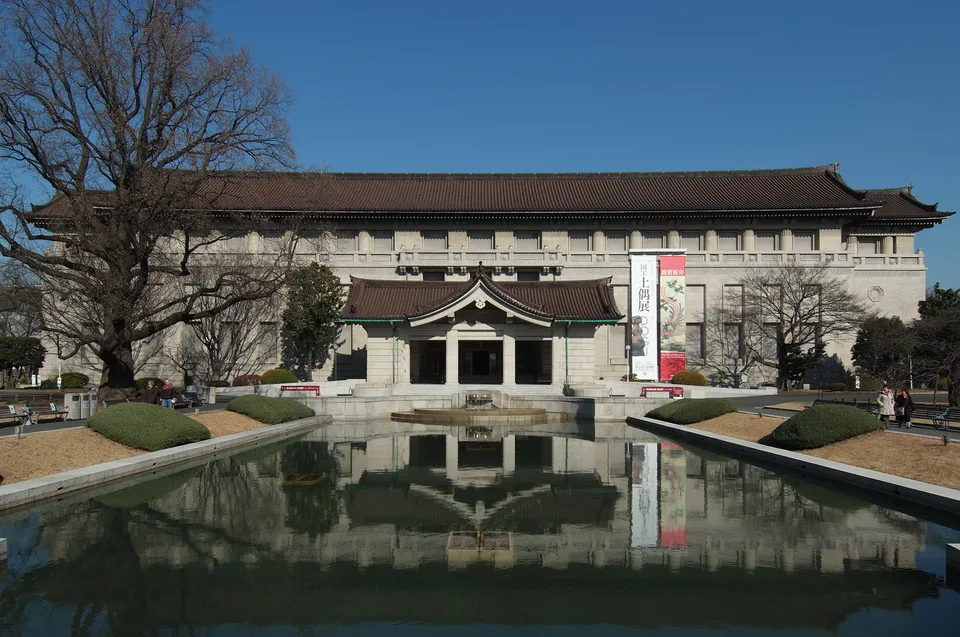
A pass usually looks strongest when the itinerary already contains expensive attractions. Low-cost museums show why attraction count alone is a poor metric. If your paid day is mostly Tokyo National Museum and other modestly priced cultural stops, individual admission can already be efficient. Adding an aquarium or observation deck just to reach three pass uses does not make the original museum day cheaper.
Disney, teamLab and Harry Potter: availability can be worth more than the discount
These products make pass comparisons look dramatic because their standalone tickets are much more expensive than a small museum. They are also exactly where availability and fixed times matter most.
If Disney is one of the reasons for your Tokyo trip, choose Disneyland vs DisneySea first, then compare the exact pass package and date. Do not count a Disney-sized saving before confirming that the product can actually secure the park/date you need.
The same principle applies to teamLab and Warner Bros. Studio Tour Tokyo. A cheaper bad timeslot can force an entire day to bend around the pass. A slightly more expensive standalone ticket at the right time may produce a better trip.
Rain can improve pass utilisation—but only if your inventory can move

A bundle with museums and aquariums can become more useful during rain. But fixed or sold-out times can make the opposite happen. A pass whose value is concentrated in one rooftop and two timed attractions is not automatically a rainy-day insurance product.
Build the weather backup first. Our Tokyo rainy-day itinerary is structured around areas that remain useful in bad weather. Then check which of those stops happen to be included. That direction of planning is much safer than buying the pass and using its catalogue as the weather plan.
Three calculations before checkout
1. Must-do total: add only the exact standalone tickets you would buy without a pass.
2. Transport reality: add only covered fares you would naturally pay. Do not assign the full unlimited-ticket face value automatically.
3. Route integrity: remove any “saving” that depends on an attraction you added to fill the pass or on a detour you would not otherwise make.
If the pass still saves more than roughly ¥1,000 or 10% per adult and the key reservations are available, the product has passed the ValueNavi test. If the saving disappears when you remove one filler attraction, the pass was never the bargain—the filler was doing the accounting.
Final verdict
Klook Pass Greater Tokyo is strongest when your expensive attraction list already exists. Tokyo City Pass is strongest when both its attraction inventory and its subway component fit the same dense city days. Individual tickets are strongest when the itinerary is light, mixed, weather-sensitive or still changing.
Do not optimize for the largest advertised discount. Optimize for the lowest cost of the trip you already wanted to take. A pass that saves ¥2,000 without changing the route is useful. A pass that “saves” ¥4,000 only after adding two attractions and an extra cross-city journey is a more expensive itinerary wearing a discount label.
UNKO Museum Tokyo 2026: Go If Odaiba Is Already in Your Day — Think Twice If It Isn’t
100% Doraemon & FRIENDS Tokyo 2026: The Shop Needs a Ticket, the Themed Cafe Does Not
Fukuro Matsuri Ikebukuro 2026: Mikoshi on Sep 27, Tokyo Yosakoi on Oct 11
September Grand Sumo Tokyo 2026 Is Sold Out: Official Resale and No Walk-Ups
Edogawa Fireworks 2026: The Best Free Side to Watch, When to Arrive and How to Get Out
References
Klook Pass Greater Tokyo — current package structure, availability and validity rules · Tokyo City Pass — official current products and prices · Tokyo Metro — Tokyo Subway Ticket prices and validity · Greater Tokyo Pass — official price and use rules. Checked August 26, 2026. Pass inventory, package inclusions and prices can change; compare the exact checkout product for your travel date.