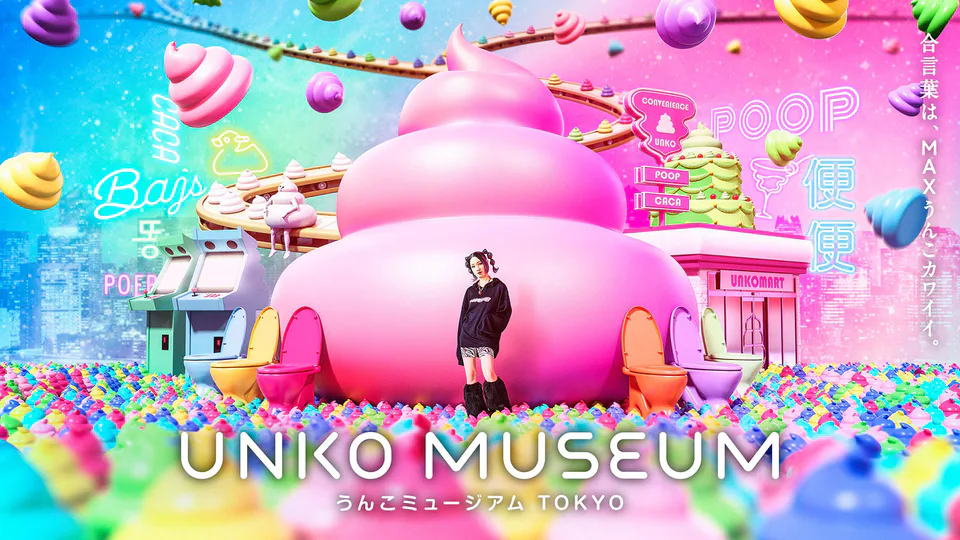
UNKO Museum Tokyo 2026 is easiest to justify when Odaiba is already part of your day. Inside, it is a compact mix of photo sets, silly interactive games and brightly colored poop-themed installations rather than a museum you slowly study for half a day. If you are already heading to DiverCity, Miraikan or Ariake, giving it roughly 1–2 hours can make sense. If you have only three or four days in Tokyo and would cross the city just for this one attraction, the real cost is not the admission ticket — it is the chunk of the day you give up.
ValueNavi decision table: when UNKO Museum is worth the slot
↔ Scroll table left or right
Your situation | ValueNavi call | Why | Main trade-off |
Odaiba is already in the itinerary and your group likes playful photos | Go | The attraction adds a compact indoor activity without creating a separate cross-city trip | You still need to lock a timed ticket and may wait at busy periods |
Rainy or very hot Odaiba afternoon | Strong add-on | Almost the entire value is indoors, so bad weather does not destroy the premise | It is entertainment rather than a deep museum visit |
First Tokyo trip, only 3–4 days, no other Odaiba plans | Usually skip | The standalone detour can consume two to three hours once transport and waiting are counted | You give up a central-Tokyo block for a relatively short attraction |
Family with children aged 3+ and everyone will participate | Good fit if the family price is acceptable | The games, shouting, drawing and photo sets reward shared participation | Two adults plus two children can cost ¥6,200–¥8,000 before transport or food |
You mainly want the merchandise | Do not buy admission | The official FAQ says the merchandise corner can be entered without a museum ticket | You will not access the interactive rooms |
This is the key editorial distinction: UNKO Museum scores well as an Odaiba add-on and much worse as a standalone Tokyo priority. The attraction itself does not change; the route around it does.
ValueNavi Attraction Score: 8.0/10 as an Odaiba add-on, 6.2/10 as a standalone detour
To make attraction comparisons consistent across ValueNavi, this score uses seven positive-direction dimensions: uniqueness 25%, time efficiency 15%, route fit 15%, weather resilience 10%, booking flexibility 10%, crowd resilience 10% and value for money 15%. A higher score is better. This is an editorial model built from verified operating facts and itinerary friction, not an official rating or a claim of first-hand testing.
Dimension | Odaiba add-on | Standalone detour | What moves the score |
|---|---|---|---|
Uniqueness | The theme and interactive format are genuinely distinctive | ||
Time efficiency | The same 1–2 hour visit is efficient inside an Odaiba day but weak if it creates a return trip | ||
Route fit | DiverCity is 3 minutes on foot from Tokyo Teleport Station; the route penalty appears when Odaiba was not otherwise planned | ||
Weather resilience | The core experience is indoors | ||
Booking flexibility | The official FAQ says purchased tickets cannot normally be cancelled or moved to another date | ||
Crowd resilience | Timed entry does not eliminate the possibility of an entry wait | ||
Value for money | The ticket is easier to justify when transport time is already being spent on Odaiba |
The two final scores use the same weights; only the scenario-dependent time, route and value assumptions change. That is deliberate. “Worth it” should change when the itinerary changes.
The 30-second decision: add it to Odaiba, don’t build Odaiba around it
Go if two or more of these are true: you are already spending time in Odaiba, you enjoy taking playful photos, and the people you are traveling with will actually join the joke. Think twice if your Tokyo trip is short, you dislike photo-led attractions, or you are expecting a serious exhibition with long-form interpretation. Those travelers are more likely to leave thinking the premise was fun but the detour was too expensive in time.
If you have not even decided how much Tokyo time you have, settle that first with 3, 4 or 5 Days in Tokyo? A 90-minute attraction can consume much more than 90 minutes once you add transport, a meal break and the friction of moving to the next neighborhood.
UNKO Museum Tokyo 2026 is an interactive photo stop, not a traditional museum
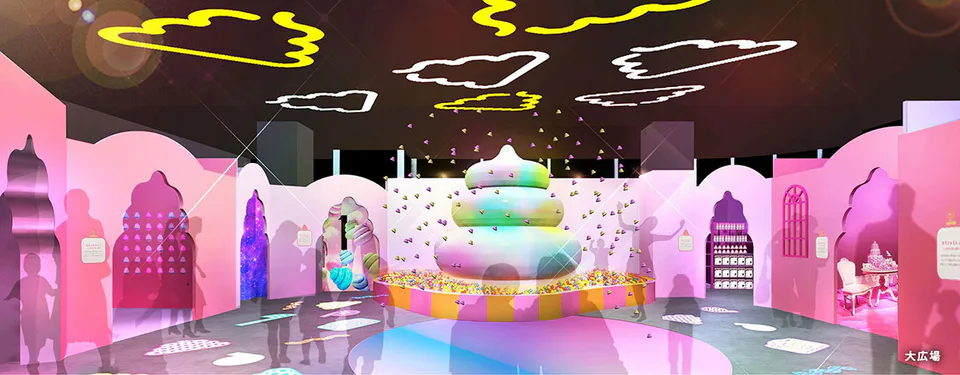
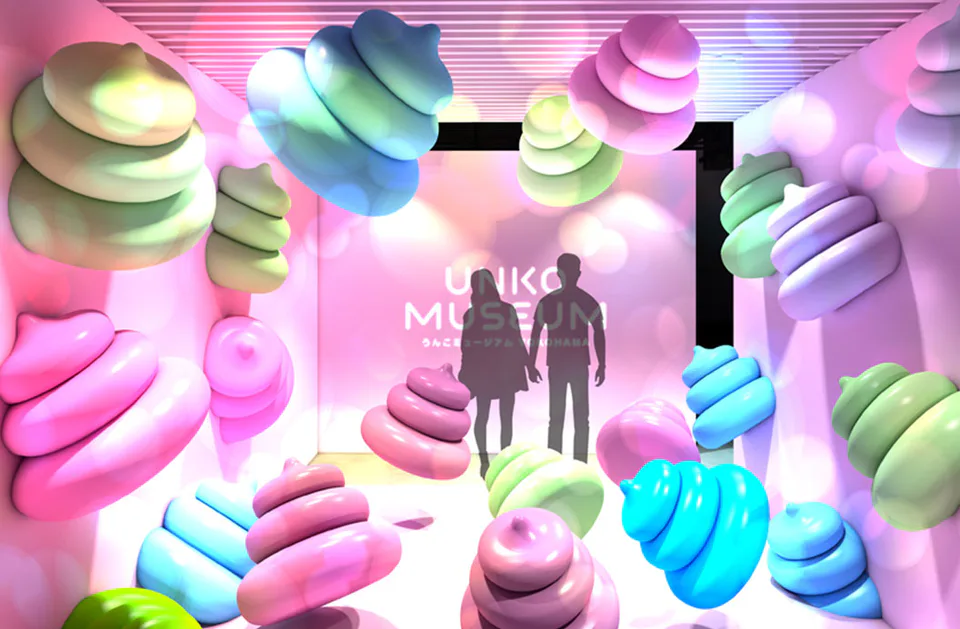
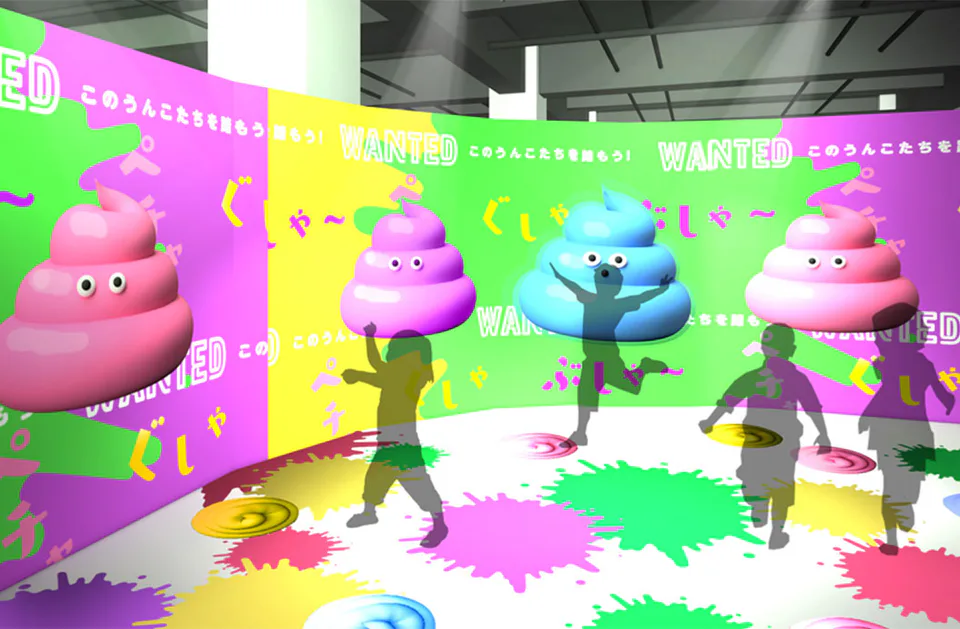
The venue’s core experiences tell you what kind of visit this is. MY UNKO MAKER starts the joke immediately; UNKO VOLCANO turns the theme into a large shared spectacle; other areas use throwing, shouting, dancing, drawing, arcade-style play and colorful sets to keep people moving. The point is participation. You look, touch, pose and play rather than follow a chronological story through a collection.
That distinction matters because it changes what “worth it” means. Someone who wants a light indoor break on a humid or rainy afternoon can get exactly what they came for in an hour or two. Someone who expects historical context, artifacts or long explanations is comparing it with the wrong kind of museum. The better comparison is an interactive entertainment stop with a very specific sense of humor.
One to two hours inside can still become a 2–3 hour block if Odaiba was not in your route
Klook currently suggests allowing about 1–2 hours inside. Rinkai Line’s own Odaiba access guidance lists standard travel time to Tokyo Teleport Station at 18 minutes from Shibuya and 24 minutes from Shinjuku, while UNKO Museum’s official access page places the venue about a 3-minute walk from Tokyo Teleport Station. Those figures let us build a more useful planning estimate.
↔ Scroll table left or right
Starting point | Published rail time to Tokyo Teleport | Walk to venue | 1–2h inside | Minimum arithmetic before queues / station walking |
Shibuya | 18 min | About 3 min | 60–120 min | About 81–141 min one-way-to-exit |
Shinjuku | 24 min | About 3 min | 60–120 min | About 87–147 min one-way-to-exit |
Those are not door-to-door guarantees. They exclude the walk inside a large station, waiting for the train, any entry queue, restroom or locker stop, and the journey onward. If you leave Shinjuku only for UNKO Museum and then return to a central-Tokyo area, the bare arithmetic is already roughly 114–174 minutes before those extra frictions. That is why “a 1–2 hour museum” can realistically deserve a 2–3 hour planning block.
The strongest pairing is Miraikan’s Grand Antarctica Exhibition: one stop gives you science and exhibition depth, the other gives you deliberately ridiculous interactive entertainment. If your day also involves Tokyo Big Sight or a large event in Ariake, the Tokyo Dome vs Ariake vs Makuhari event-stay guide helps decide whether concentrating more of the trip around Tokyo Bay actually improves your logistics.
Adult admission is date-priced: ¥2,000–¥2,800, or about US$12.55–$17.57
The official ticket calendar checked on August 27, 2026 shows adult bands of ¥2,000, ¥2,200, ¥2,400 and ¥2,800. Using the August 27 exchange rate of roughly ¥1 = US$0.00627, those are about US$12.55, $13.80, $15.06 and $17.57. Junior-high and high-school tickets are currently ¥1,500–¥1,600 (about US$9.41–$10.04), while children aged 3 and older are ¥1,100–¥1,200 (about US$6.90–$7.53). Exchange rates move, so treat the US-dollar figures as planning estimates rather than checkout prices.
↔ Scroll table left or right
Example | JPY total | Approx. USD | Decision use |
1 adult | ¥2,000–¥2,800 | US$12.55–$17.57 | The date band matters more than a single “normal price” quoted by an old guide |
2 adults | ¥4,000–¥5,600 | US$25.09–$35.13 | Reasonable for a shared novelty stop if Odaiba is already in the day |
2 adults + 2 children aged 3+ | ¥6,200–¥8,000 | US$38.89–$50.19 | This is the more honest family comparison before transport, meals or shopping |
The official site also says one adult aged 18 or over may accompany up to two children aged 2 or under free of charge. That boundary condition matters: the same “family of four” can have a very different admission total depending on the children’s ages.
Once the date is fixed, compare the official ticket page, Klook and KKday for that same date and entry time. Look at the actual amount in the currency you will pay, whether your preferred slot is still selectable, and whether the platform’s conditions match your itinerary. A tiny headline price difference is not useful if it forces a worse time slot or locks a day you still want to move.
Prebooking protects the time slot — it does not buy a Fast Pass
The official FAQ says same-day tickets are sold at reception, but admissions can be restricted and same-day sales can be suspended when the venue is crowded. That gives advance purchase a real purpose once you know your date: you reduce the risk of arriving without a usable ticket.
But do not turn that benefit into something it is not. The same official FAQ says visitors enter in arrival order and may still need to wait during busy periods. A timed ticket is not a queue-skipping product. If the day is crowded, you can still spend part of your booked window waiting to get inside.
Klook vs KKday: compare the same date, not the platform logo
Both platforms currently sell the ordinary admission product for UNKO Museum Tokyo. The useful comparison is therefore not “which brand is better?” but “which one still has the entry time I want, at what checkout price, under what conditions?” Klook currently describes its ticket as valid only for the selected date and lists no cancellation. KKday likewise states that completed orders cannot be cancelled, modified or refunded.
If both have the same useful slot, choose the checkout flow and app you actually use. If one has a worse time just to save a small amount, the cheaper ticket can cost you more in itinerary friction. Neither should be bought before the Odaiba day itself is settled.
Your Odaiba date is fixed: check available entry times on Klook
Compare the same date and time conditions on KKday
A fixed-date ticket is a bad buy while your Tokyo days are still moving
The bigger risk is not missing a ticket. It is booking first, then discovering that rain, a day trip, an event start time or a hotel move makes a different Odaiba day much better. The official FAQ says purchased tickets cannot normally be cancelled or have their date changed, so buying too early can turn a small attraction into an anchor that distorts the rest of the trip.
There is one useful late-arrival exception. The official FAQ says that if unavoidable circumstances make you miss the printed admission time, staff may allow admission at another time later that same day, but you may face a significant wait and you cannot enter before your booked time. That is a fallback, not flexibility you should plan around.
For a four-day Tokyo trip that is still deciding whether to spend a full day outside the city, settle the Kamakura day-trip decision first. A full-day commitment changes the shape of the trip much more than a 1–2 hour timed attraction. Fix the big blocks before locking the small ones.
Before September 14, the summer event adds extra value without changing the core decision
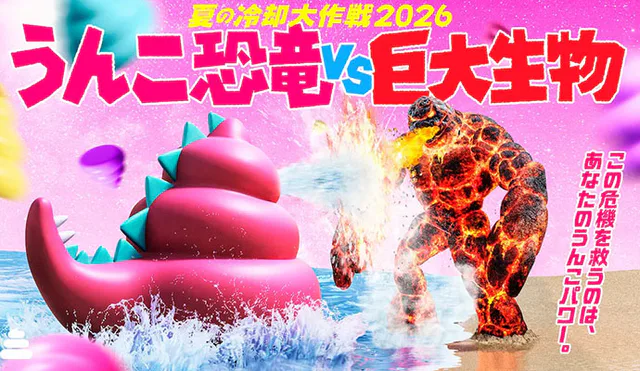
The current seasonal event, “Summer Cooling Strategy 2026: UNKO Dinosaurs vs. Giant Creatures,” runs from July 2 through September 14, 2026. TokyoOdaiba lists an UNKO VOLCANO sequence plus UNKO-dinosaur and summer-limited merchandise. It is a useful bonus if your Odaiba day already falls before September 14; it is not a good reason to rebuild an otherwise efficient Tokyo itinerary around this one stop.
More importantly, the event stops being a reason to visit after September 14. If you are reading this for late September or October, judge the regular attraction on its own rather than letting expired seasonal promotion inflate the value.
Use the restroom and deal with luggage before you enter
Two small operational rules can matter more than a few hundred yen of ticket difference. Re-entry is not allowed, and the official FAQ specifically tells visitors to use the restroom and take care of other necessities before entering. Food and drink are also not allowed inside. The practical move is simple: restroom, water or snack break, then scan in.
Luggage is the other trap. The museum does not provide baggage-check service and directs visitors to nearby lockers. If this is a hotel-change or checkout day, solve the suitcase problem before worrying about which ticket platform is marginally cheaper. If your Tokyo base is still undecided, start with Where to Stay in Tokyo for First-Time Visitors; if you have early trains and repeated intercity moves, the Tokyo Station vs Shinjuku base comparison is more useful than choosing accommodation by neighborhood name alone.
Next decision: Where to Stay in Tokyo for First-Time Visitors
Only want the merchandise? You do not need an admission ticket
The official FAQ contains one of the best money-saving details on the entire page: the merchandise corner can be entered without purchasing museum admission. If the colorful branding or limited goods are what caught your attention more than the interactive rooms, you can simply browse the shop and keep the admission budget for something else in Odaiba.
That is also a useful self-test before buying. Are you paying because you want to spend 1–2 hours shouting, posing, playing and moving through the themed rooms, or because the visual identity made you curious about the products? Only the first reason really requires a ticket.
The experience gets more value from shared jokes and photos than solo museum depth
A lot of the entertainment comes from reacting together: taking each other’s photos, laughing at the premise, competing in small games and making the deliberately ridiculous rooms feel social. Friends, couples and families who are willing to participate therefore have an easier path to feeling the time was well spent than a solo visitor expecting a must-see cultural institution.
This becomes more important on entertainment-heavy itineraries. If you are already giving two full days to Tokyo Disney, compare that choice with 1 or 2 Days at Tokyo Disney before adding another purpose-built entertainment stop. The question is not whether each attraction is fun on its own; it is whether too many of them crowd out the Tokyo neighborhoods you also came to see.
Final verdict: reserve after Odaiba is fixed, not before
UNKO Museum Tokyo 2026 is a good add-on for travelers who already have an Odaiba block and want 1–2 hours of low-effort indoor entertainment. It is a weaker standalone destination for a short first Tokyo trip, for visitors who dislike photo-led attractions, or for anyone whose schedule is still moving enough that a fixed ticket becomes a liability.
The strongest counterargument is that its uniqueness is unusually high: there are not many Tokyo attractions with the same premise. That is true, and it is why the standalone score is still 6.2 rather than a hard skip. The recommendation flips if this specific brand of absurd interactive entertainment is one of the trip’s priorities. What does not flip is the time arithmetic: uniqueness can justify the detour, but it does not erase it.
Use this order: first decide whether Odaiba belongs in the itinerary; second decide whether this attraction deserves 1–2 hours of that block; third compare the actual official, Klook and KKday prices and available entry times for the date you have fixed; finally recheck the cancellation and entry conditions immediately before payment. Do not reverse the process and let a small non-refundable ticket dictate a whole Tokyo day.
If you are still choosing a central base and evenings matter more than Tokyo Bay access, the Shinjuku vs Shibuya stay comparison can help keep accommodation decisions separate from one afternoon attraction. One Odaiba visit should not dictate where you sleep for the entire trip.
Sources and verification
UNKO MUSEUM TOKYO official site · Rinkai Line — Odaiba access times · TokyoOdaiba seasonal-event listing · Klook and KKday ordinary admission product pages. Facts and prices checked August 27, 2026.
USD conversions use the August 27, 2026 market rate of approximately ¥1 = US$0.00627 and are rounded for planning. Exchange rates, ticket prices, entry times, crowd controls and seasonal programming can change, so recheck the official date-specific ticket page and final checkout conditions before paying. This article may contain affiliate links; ValueNavi may receive a commission from qualifying bookings made through them, without increasing the price you pay because of the referral.