
For one event night inside a normal Tokyo trip, keep your existing city hotel unless the venue-side room removes a genuinely difficult post-event journey. For two consecutive event days, Ariake and Makuhari become much stronger because a nearby hotel deletes two high-friction crossings: the Day 1 return and the Day 2 outbound trip. Tokyo Dome is the exception because Suidobashi/Korakuen is already a central Tokyo base; staying near the venue does not separate you from the rest of the city as much as Ariake or Kaihin-Makuhari can.
The decision should therefore be made from a two-crossing test: does the event hotel remove at least two costly movements, or protect one hard airport/early-morning edge? If not, changing hotels for a single concert can replace one crowded train with checkout, luggage storage and another check-in the next day.
↔ Scroll table left or right
Your event pattern | Best starting answer | What the venue hotel buys | Main trap |
One Tokyo Dome concert in a 4–5 night Tokyo stay | Usually keep your Tokyo base | A Dome-area room is convenient, but the venue is already central and multi-line | Moving hotels to save one return trip |
Tokyo Dome concert + mobility/luggage concern | Suidobashi / Korakuen gets stronger | Shorter crowd exit and fewer hand-offs | Blindly using JR Suidobashi West Exit: Tokyo Dome says it has no elevator |
Two full days at Tokyo Big Sight | Ariake | Deletes Day 1 return + Day 2 morning commute; allows a room reset between sessions | Paying for Ariake when the second morning actually belongs in central Tokyo |
Ariake event + Haneda next | Ariake gets stronger | Tokyo Big Sight currently lists Haneda airport bus access at about 25 minutes | Assuming the same airport advantage applies to Narita |
Two-day Makuhari Messe exhibition | Kaihin-Makuhari | Avoids repeating the roughly 30-minute Tokyo→Kaihin-Makuhari rapid-line haul plus venue walk | Moving back to central Tokyo between event days |
One Makuhari event day + Tokyo sightseeing next morning | Conditional | Nearby room solves the late exit | You may simply move the difficult journey to checkout morning |
The hotel move should delete two expensive crossings, not one cheap train ride
An event-side hotel has two possible jobs: protect the end of today and protect the start of tomorrow. When it performs both, the premium becomes much easier to justify.
For a two-day exhibition, the sequence is:
Day 1 venue → hotel
hotel → Day 2 venue
A nearby room can simplify both movements. You may also be able to leave event materials, merchandise or a coat in the room instead of carrying everything on both days.
For one concert night inside a longer Tokyo stay, the sequence is different:
central hotel → event → venue hotel
venue hotel → next morning's Tokyo plan
Now the hotel move has removed one late return but created another morning relocation. If the next morning is back in Shinjuku, Asakusa or Tokyo Station, the net benefit may be small.
ValueNavi rule: move hotels when the new room deletes at least two high-friction movements or protects one hard edge such as a very early event start, an airport departure or a mobility constraint.
Tokyo Dome is different because the venue area is already a normal Tokyo base
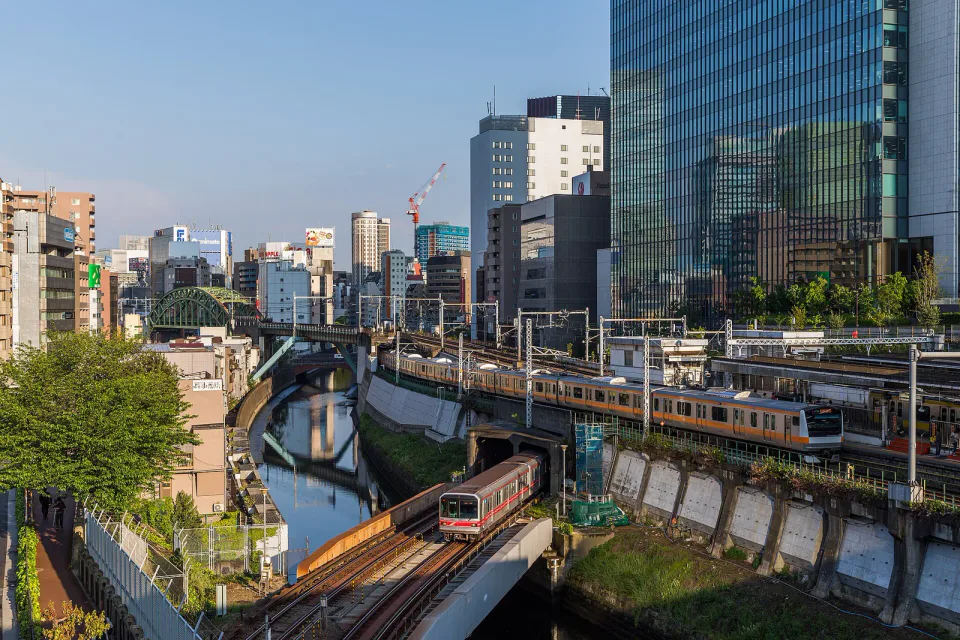
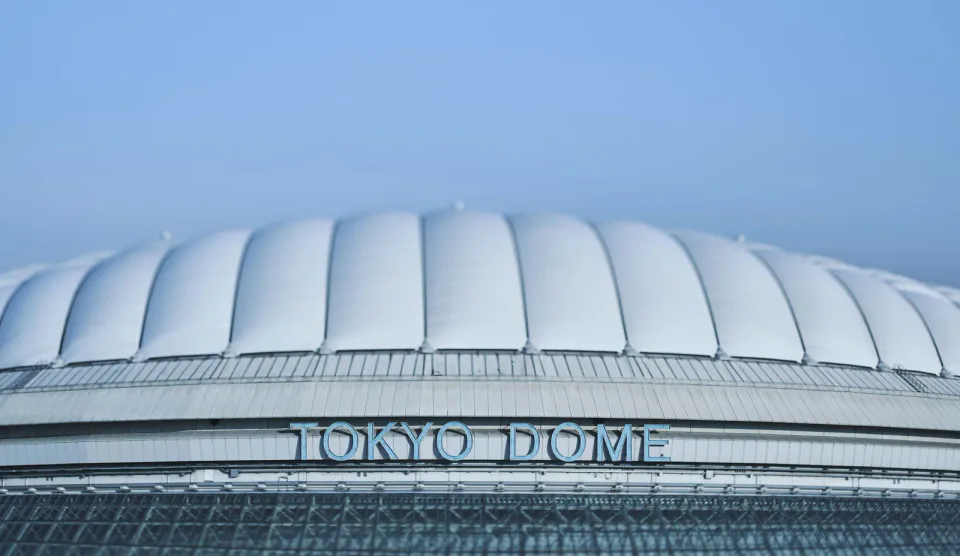
Tokyo Dome is served by JR Suidobashi, the Toei Mita Line, Korakuen on the Marunouchi/Namboku lines and Kasuga on the Oedo Line. That multi-line geography means a Dome-area hotel can still function as a normal central-Tokyo hotel after the event.
So the question is not simply “Is Tokyo Dome Hotel worth the walk-back?” It is whether Suidobashi/Korakuen fits the rest of your stay. If it does, staying near the Dome for several nights can be more rational than creating a one-night event split. If the rest of the trip is heavily west-Tokyo or Asakusa/Ueno focused, keeping the existing base may still win.
There is one important accessibility boundary. Tokyo Dome’s official access page states that JR Suidobashi West Exit has no elevator and publishes separate barrier-free approaches. A traveller using a wheelchair, stroller or several large cases should not choose the hotel or return route from the shortest-looking exit on a map. The easiest venue hotel can still have a poor station approach if you select the wrong exit.
If the Dome is your main event, use the Tokyo Dome Hotel concert-stay guide for the room-level decision after you have decided that the area itself works.
Ariake wins when the event owns both days — and it can also solve a Haneda edge
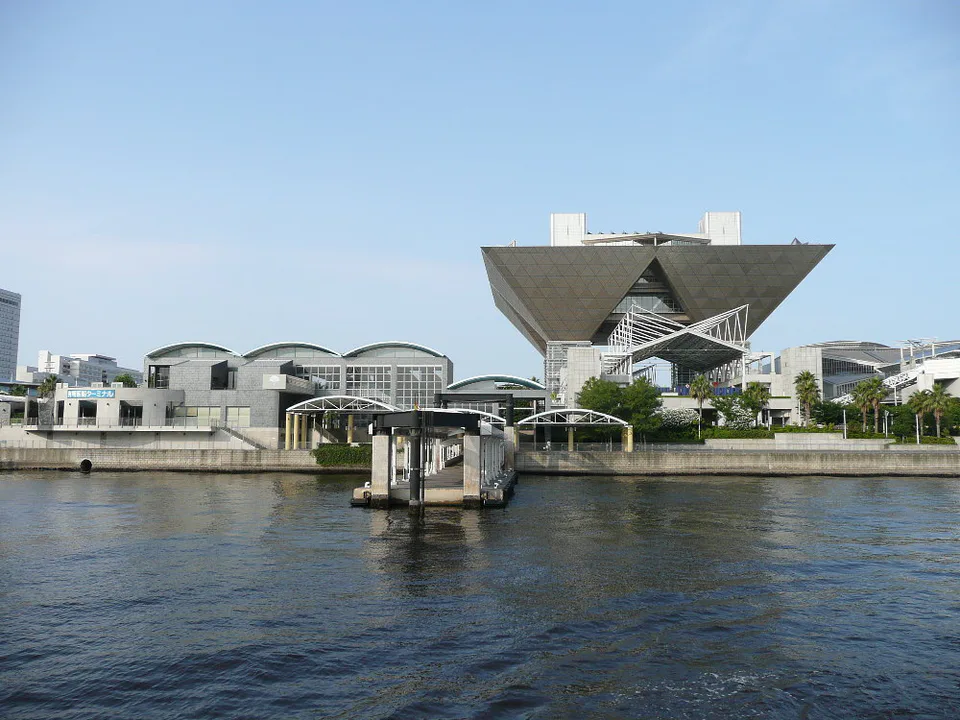
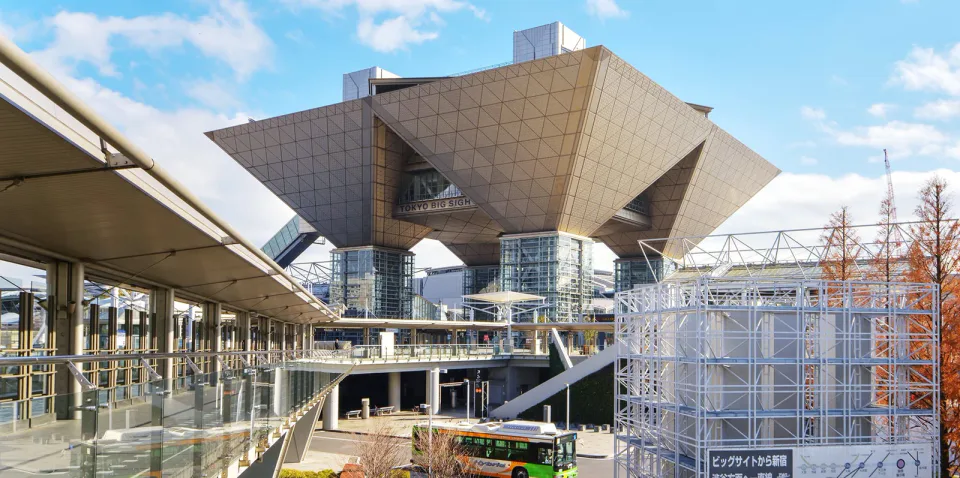
Tokyo Big Sight currently lists Kokusai-tenjijo Station at about seven minutes on foot and Tokyo Big Sight Station on the Yurikamome at about three minutes. Hotels around Ariake Park Building are also only a few minutes from Kokusai-tenjijo/Ariake stations. That makes the area a genuine event campus rather than merely a hotel district somewhere in Tokyo Bay.
For a two-day trade show, convention or fan event, I would usually stay in Ariake when the rate difference is reasonable. The room removes the first crowded outbound journey on Day 2 and can become a midday reset point if the programme has a long break.
The airport geometry can add a second job. Tokyo Big Sight currently publishes about 25 minutes by airport limousine bus to Haneda. By contrast, its Narita route is listed at roughly 80 minutes to Ariake Park Building, plus a short walk to Big Sight. So “Ariake is good for the airport” is too broad: it is a much more compelling Haneda-facing base than a Narita-facing one.
This can reverse a one-night decision. One Ariake event night followed by an early Haneda flight may be a strong two-job hotel. One Ariake concert followed by a full Shinjuku sightseeing day may simply relocate the commute to the morning.
Makuhari is where the two-day venue premium becomes easiest to justify
Makuhari Messe’s official access page puts the venue about five minutes on foot from JR Kaihin-Makuhari Station, which is about 30 minutes from Tokyo by Rapid service. The venue also warns that the complex is large and recommends arriving with extra time.
That makes a two-day event materially different from a one-night Tokyo concert. If you stay in central Tokyo, the long event-day movement repeats:
Tokyo → Kaihin-Makuhari → large venue
large venue → Kaihin-Makuhari → Tokyo
repeat next morning
A Kaihin-Makuhari hotel can remove the tired Day 1 return and the early Day 2 outbound journey. That is two clear pieces of utility before room quality enters the comparison.
Makuhari also has resilience beyond the Keiyo Line. The official access guide lists an alternative route of about 17 minutes by bus from Makuhari-Hongo Station, and the venue has airport-bus infrastructure including services from Makuhari Messe Central and neighbouring hotels. That does not mean every event-night bus is guaranteed; it means the area has more than one transport spine when the main line is disrupted.
For a single event day, however, keep the central hotel when the following morning is clearly back in Tokyo. A venue-side night should not be justified only by the phrase “Makuhari is far.” It should solve the late event and improve the next task.
The next morning can completely reverse the event-night recommendation
Choose the hotel from the first hard task after waking, not only the final task before sleeping.
Early Haneda after Ariake: Ariake becomes stronger because the airport-facing geography performs a second job.
Early Shinkansen from Tokyo Station after Makuhari: central Tokyo becomes stronger unless the event finish is so late that the night transfer itself is the larger risk.
Day 2 at the same venue: stay near Ariake or Makuhari; this is the cleanest repeated-crossing case.
Late leisure morning: venue proximity gets more valuable because checkout is not attached to another hard deadline.
This is also why a one-night split should be rare. If the second hotel solves only bedtime and makes breakfast/check-out worse, it has traded one friction for another.
Families, mobility needs and merchandise make the final kilometre more expensive
After a large event, the train fare is usually not the important cost. The expensive part is standing in a crowd, finding lifts, carrying merchandise and transferring when everyone is tired.
A family with a sleeping child, a traveller using a wheelchair or someone carrying exhibition samples should assign more value to a walkable hotel than two adults with one daypack. But they should also check the physical route rather than only the distance. Tokyo Dome’s no-elevator West Exit example shows why “five minutes from the station” is not enough information.
For Makuhari, the official venue publishes barrier-free access maps from Kaihin-Makuhari and transport facilities. For Big Sight, choose between Rinkai Line and Yurikamome from the actual hotel position. The shortest route is the one your group can repeat safely after the event.
Do not let a one-night event rewrite a five-night Tokyo itinerary
If the event is only one evening inside a first Tokyo trip, the normal city base should usually remain in control. Use Where to Stay in Tokyo for First-Time Visitors first, then ask whether the event creates enough friction to justify an exception.
Tokyo Dome often does not need an exception because it is already central. Ariake is more conditional: two event days or a Haneda edge strengthen the move. Makuhari has the strongest argument for a venue night, but even there I would not move solely for one daytime exhibition that ends early enough for a normal return.
If luggage is the only reason the split feels impossible, use luggage forwarding or leave the main case at the long-stay hotel when its policy permits. Do not carry a full Japan itinerary into a convention hall because of a one-night booking.
Three practical decisions
One Tokyo Dome concert: keep the existing Tokyo hotel unless Suidobashi/Korakuen also works for the wider stay or mobility makes a walk-back unusually valuable.
Two full days at Tokyo Big Sight: stay in Ariake. The room now deletes two repeated event movements and can double as a Haneda-facing final base when relevant.
Two full days at Makuhari Messe: stay near Kaihin-Makuhari unless the second morning unexpectedly belongs somewhere else. One event day only: compare the late exit against the cost of relocating the whole Tokyo stay.
Compare event hotels after fixing the venue and next-morning route
Final verdict
Tokyo Dome is the easiest venue to keep inside a normal Tokyo hotel strategy. Ariake becomes a strong hotel base when the event repeats or Haneda is the next hard edge. Makuhari has the strongest two-day venue-stay case because the Tokyo–Kaihin-Makuhari journey is long enough to matter when repeated.
The decision test is simple: count the expensive movements the venue hotel removes. If the answer is only one crowded ride, keep the existing hotel unless your group has a mobility/luggage reason. If the answer is Day 1 return + Day 2 outbound—or event exit + airport morning—the hotel premium is doing real work.
Where to Stay for USJ Halloween 2026: Universal City, Umeda or Namba
Where to Stay in Osaka With Parents: Cut Transfers Before You Pay for More Luxury
Where to Stay in Fukuoka: Hakata or Tenjin for Trains, Food and Day Trips
Where to Stay for Kochi Yosakoi: Station, Obiyamachi or Saenbacho
References
Tokyo Dome — official access and barrier-free routes · Tokyo Big Sight — train and airport access · Makuhari Messe — official access · Makuhari Messe — barrier-free access. Checked August 25, 2026. Event finish times, last trains, temporary buses and room inventory are event-specific and should be rechecked for the actual date.