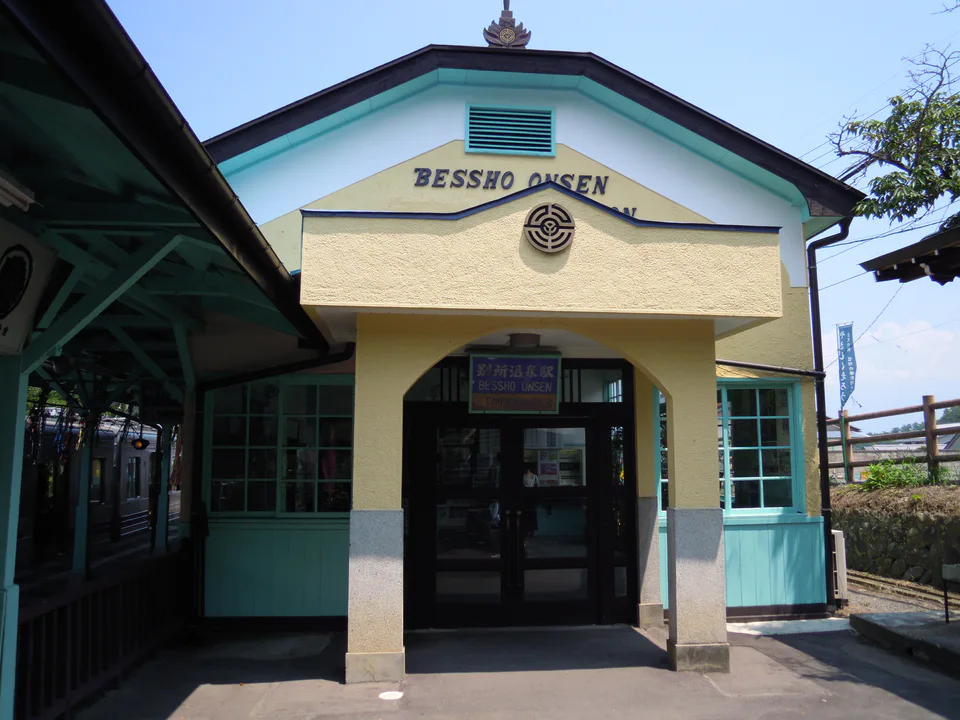
For most two-night trips, stay in Ueda if the hotel’s main job is protecting Shinkansen connections, luggage and a late arrival. Stay in Bessho Onsen when the night itself is one of the things you came for: a ryokan dinner, more than one bathing session and a slow morning before you leave. The important correction is that Bessho is close enough to visit from Ueda without sleeping there. Current Bessho Line journeys commonly take roughly half an hour, and Bessho’s public baths open early and remain available into the evening. “I want to soak in an onsen” is therefore not enough by itself to justify another checkout.
The overnight premium has to buy hours you would otherwise lose. If you can arrive in Bessho by mid-afternoon, eat at the ryokan, bathe before or after dinner and use the public baths or neighbourhood again the next morning, the last-mile transfer earns its keep. If you reach the area late and leave on an early Shinkansen, Ueda normally gives you a better trip even if the room itself is less atmospheric.
↔ Scroll table left or right
Your actual constraint | Start with | Why | What reverses it |
Late Shinkansen arrival | Ueda | You stop moving when the long-distance journey ends and avoid a dinner/check-in deadline | You have a room-only Bessho booking with a confirmed late arrival and no fragile final transfer |
Ryokan dinner + two or more bathing windows | Bessho Onsen | The overnight unlocks evening and early-morning value that a normal day trip does not | Your arrival is so late or departure so early that those windows disappear |
Large luggage + early onward Shinkansen | Ueda | One less local-line and hotel-last-mile hand-off before the important train | Main bags are forwarded and only an overnight bag goes to Bessho |
Two nights, one Bessho day but no ryokan priority | Ueda both nights | Bessho is close enough for a day/evening visit without creating another hotel move | The second night also changes Day 3 geography or buys a real ryokan experience |
Two nights and Bessho is the main reason for the stop | Bessho both nights or 1+1 | You can use the onsen district as a destination rather than a short detour | Most of the middle day actually depends on Ueda Station or eastbound rail |
The train is short enough that “onsen access” is not the overnight argument
Ueda’s official tourism material gives Bessho Onsen at roughly 40 minutes from Ueda Station, while the current Ueda Dentetsu timetable—revised March 14, 2026—shows many actual end-to-end Bessho Line runs in the high-20s to low-30s of minutes. The exact trip depends on the service, but the planning point is clear: Bessho is not a remote mountain transfer that consumes half a day.
That makes this a controlled accommodation comparison. A Ueda hotel still lets you visit Bessho’s temples, streets and baths. The reason to sleep in Bessho must therefore be something the return train cannot reproduce: a fixed ryokan dinner, a post-dinner bath, not watching the clock for the ride back, or waking in the onsen district before moving again.
This is also why a two-night split needs a higher burden of proof than the map suggests. Saving one roughly half-hour rail trip is rarely enough to justify packing, checking out, moving luggage, waiting for another room and checking in again.
Bessho’s public-bath hours show what the overnight is really buying
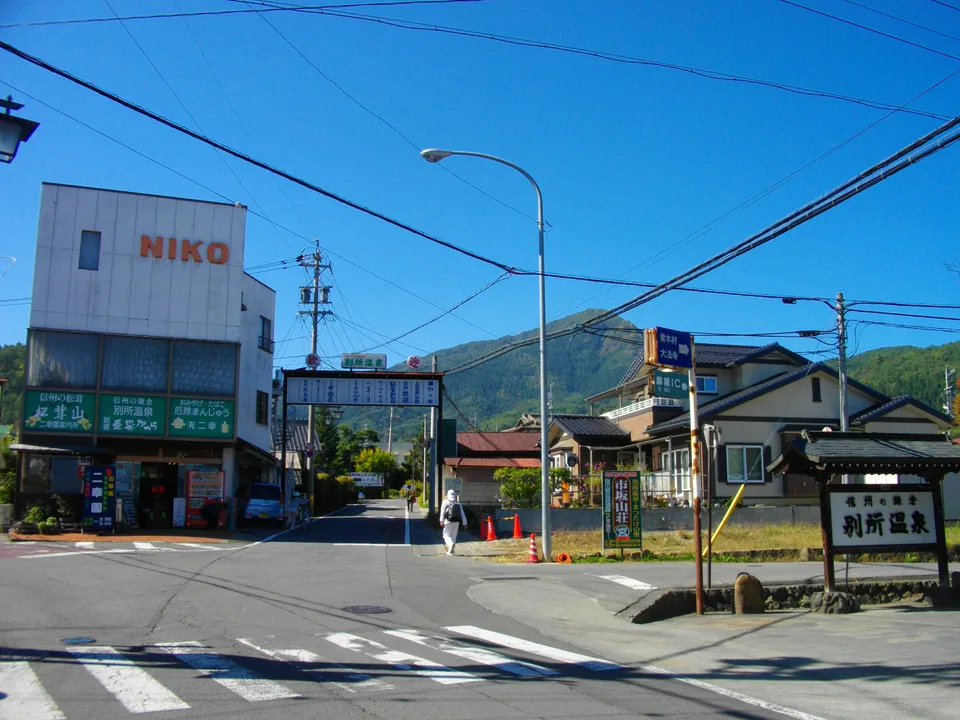
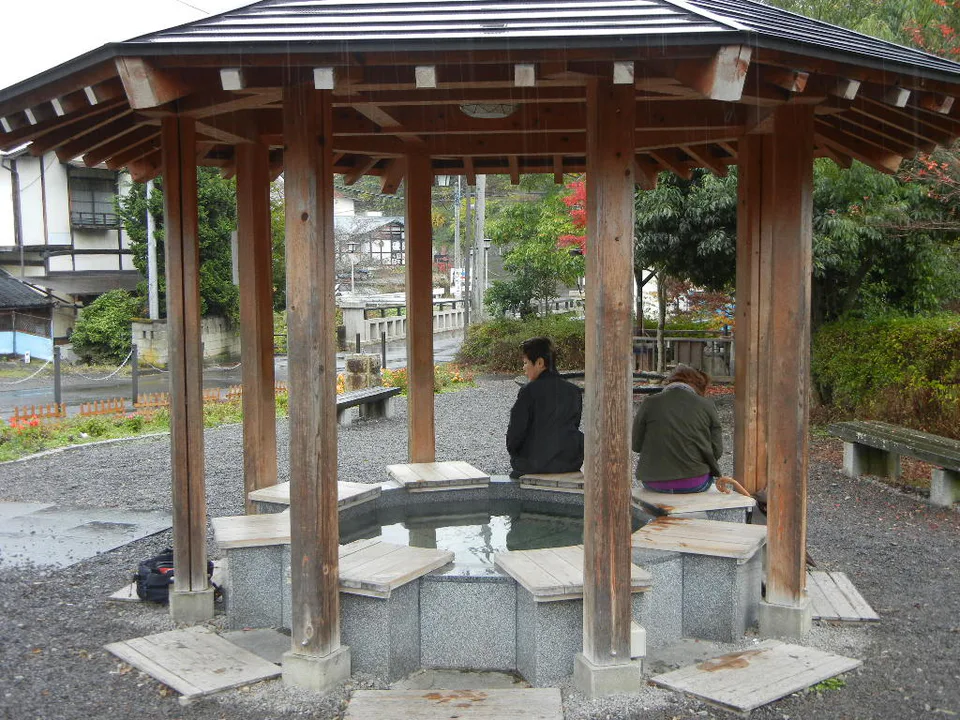
Ueda City’s current public-facility information lists the three municipal Bessho baths at JPY 300 each. Ishiyu is open 06:30–21:30, Daishiyu 06:00–21:00 and Oyu 06:30–21:30, with their stated weekly closing days. That is a much wider bathing window than a typical sightseeing attraction.
This creates two useful conclusions.
First, a Ueda-based day visitor can still have a legitimate onsen experience. If your plan is simply “walk Bessho, visit a temple and take one bath before dinner,” sleeping in Ueda can deliver that without a hotel move.
Second, the Bessho overnight gets stronger only when you use more than the day-trip layer. A good one-night sequence might include a bath before dinner, the ryokan meal, another bath or evening walk, then an early public bath or neighbourhood walk the next morning. The property and the district are now contributing across multiple time windows.
ValueNavi would therefore count usable onsen sessions, not the word “onsen” in the address. One bath you could have taken as a day visitor is weak evidence for an overnight premium. Dinner + evening bath + morning bath is a different product.
Ueda wins when the hotel is infrastructure
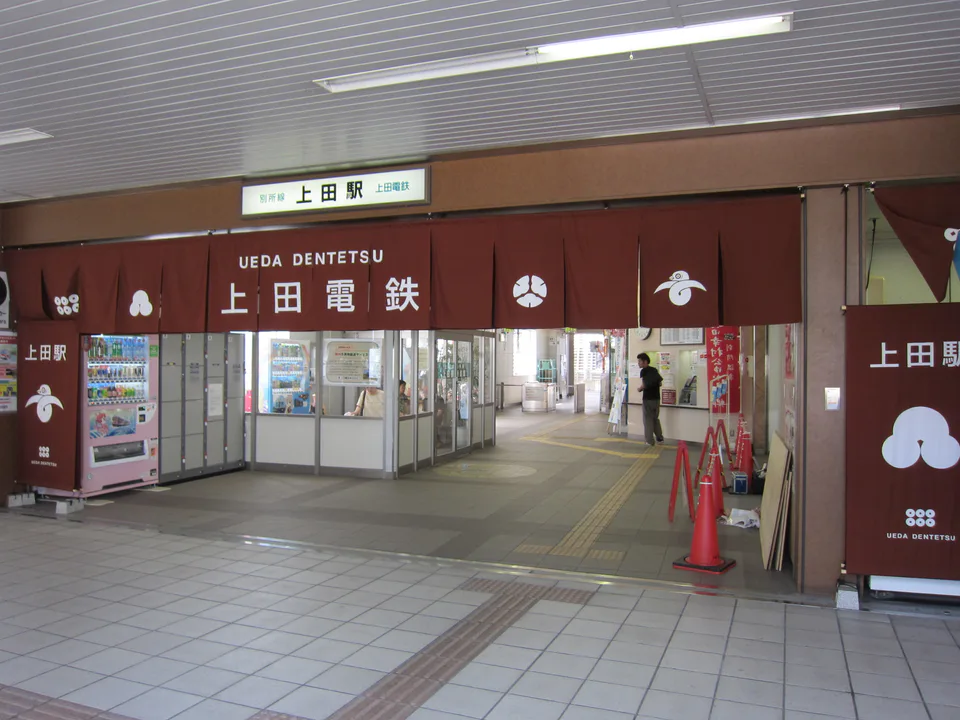
Ueda Station is the Hokuriku Shinkansen node for this comparison. If the stay sits between Tokyo/Karuizawa and Nagano or another rail-heavy leg, a station-area room turns the hotel into trip infrastructure: arrive, leave the suitcase, eat without a fixed ryokan schedule, and restart from the same transport node the next morning.
That advantage is strongest after a late arrival. A 30-minute local train sounds small in isolation, but it sits after the Shinkansen, platform navigation and whatever last mile still remains between Bessho Onsen Station and the actual ryokan. If dinner starts at a fixed time, every delay upstream now threatens the most expensive part of the night.
Ueda also wins when large luggage is the main constraint. You can leave the full suitcase by the Shinkansen station and visit Bessho with a day bag. If the bags are what make the more atmospheric stay feel impossible, use the Japan luggage-forwarding guide before allowing luggage alone to decide the destination.
Bessho wins when you are deliberately buying an evening, not a postcode
The strongest Bessho booking begins early enough that the hotel changes the shape of the day. You check in without rushing, use a bath, eat at the property, stop thinking about another train and wake in the district the following morning. In that pattern the transfer is not dead time; it is the gateway to a different block of the trip.
The weak version is the opposite: arrive after dinner, sleep, eat breakfast quickly and leave on the first practical train. You have paid for Bessho while using little of the experience that makes Bessho different from Ueda.
Before paying for half board, confirm the exact meal start and latest check-in for the booked rate. Before paying extra for “private onsen,” confirm whether that means an in-room bath, a reservable family bath or another shared arrangement. The destination name does not make all ryokan products equivalent.
If this is your first ryokan stay, the Japan ryokan and onsen selection guide is the upstream decision. A Bessho night is only rational if you actually value the room-and-meal product enough to use it.
One night: choose the side that owns the fragile edge of the stay
With only one night, do not optimise for a vague “best of both.” Protect the time-sensitive edge.
Late arrival: Ueda. The long-distance journey ends at the hotel instead of beginning another timed chain.
Early onward Shinkansen: Ueda. You remove one local train and hotel last mile before the hard departure.
Mid-afternoon arrival + ryokan dinner + no early rail pressure: Bessho. The room and baths finally have enough time to justify the move.
Only want one public bath and temple walk: Ueda can still be the better overnight. Visit Bessho during the day or early evening.
The test is simple: if sleeping in Bessho does not protect at least two useful Bessho-only windows, the station base is difficult to beat.
Two nights: do not split just because you can
Two nights create four sensible patterns.
Two nights in Ueda
Best for late arrival, large luggage, one Bessho day/evening and an onward rail itinerary. This is the lowest-friction version and should be the default when the ryokan itself is not a trip priority.
Two nights in Bessho
Best when the onsen district, temples, meals and slow pace are the reason for the stop. It avoids using the first night as a novelty and the second as a logistics repair.
Ueda first, Bessho second
This split has a clear job when Day 1 arrives late: sleep by the Shinkansen, use Day 2 without dragging the suitcase through an evening deadline, then enter Bessho deliberately for dinner and bathing. It is strongest when Day 3 does not require an extremely early departure.
Bessho first, Ueda second
This is the better split when the first afternoon is already free for the ryokan but Day 3 has an early or important Shinkansen. You use the onsen night properly, then move once toward the hard departure.
The directional rule is: the second hotel should reduce tomorrow’s expensive movement. If it recreates yesterday’s journey for no new experience, keep one base.
Families and older travellers: the final hotel route can reverse the town-level answer
Bessho Onsen Station itself is wheelchair-accessible to the platform, according to Ueda Dentetsu. That does not tell you whether the actual ryokan is level, close to the station or easy with two suitcases. Families and older travellers should check the last walk, hills, stairs, pickup point and pickup hours before assuming the onsen stay is low-friction.
The same is true in Ueda: “near Ueda Station” should be checked against the actual Shinkansen entrance and street crossing when mobility or heavy bags matter. A hotel five minutes closer to the platform can be more valuable on the departure morning than a larger room farther away.
If the Bessho property offers a transfer, get the exact station, reservation deadline and final pickup in writing. A shuttle that ends before your train arrives does not belong in the value calculation.
Bad weather strengthens a good ryokan, not every Bessho booking
Rain or cold weather can make an onsen-led night more attractive because dinner, baths and room time remain useful when outdoor sightseeing contracts. But bad weather also makes the final walk and luggage transfer worse.
That creates a useful red-team test: if the temples and street walk disappear, is the booked Bessho property still worth the detour? A half-board ryokan with several useful bathing windows may be. A basic room chosen only because it has “Bessho Onsen” in the address may not be.
Do not let poor weather automatically push the hotel away from Ueda. Let the quality of the indoor/onsen product decide whether the lost outdoor time can actually be replaced.
Final verdict
Choose Ueda when the hotel is part of the transport system: late arrival, early Shinkansen, large luggage or a two-night stay where Bessho is only one branch day. Choose Bessho Onsen when the overnight itself has a job: a timed ryokan dinner, at least two useful bathing windows and a slow morning that you would lose by returning to Ueda.
For two nights, do not split automatically. Split only when the second hotel either unlocks the full onsen evening or moves you toward the next hard departure. Because Bessho is close enough for a normal visit from Ueda and its public baths stay open into the evening, “we want to try an onsen” is not, by itself, enough reason to move the suitcase.
Compare Ueda and Bessho Onsen stays
References
Ueda Dentetsu — Ueda Station / 2026 Bessho Line timetable · Ueda Dentetsu — Bessho Onsen Station · Ueda Official Tourism — Bessho Onsen access · Ueda City public onsen information for Ishiyu, Daishiyu and Oyu. Checked August 25, 2026. Recheck the exact train, bath closing day and ryokan meal/check-in rules for the travel date.