
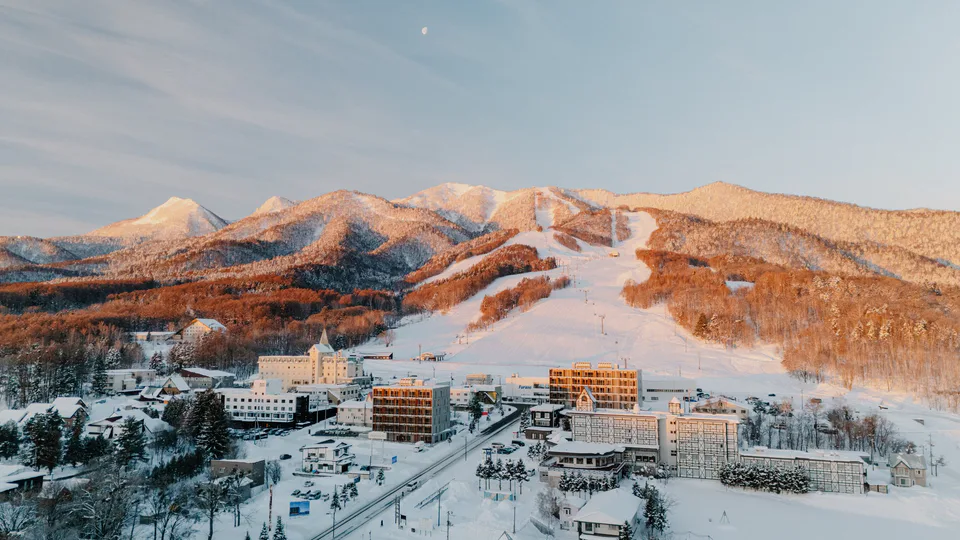
For a normal mid-winter Furano ski trip, choose Furano Zone or Kitanomine by the edges of your ski day, not by which side of the mountain you think you must ski. Furano Ski Resort’s two zones are connected near the top when the relevant lifts and trails are operating, and the resort’s lift pass covers the entire mountain. That means an intermediate or advanced skier staying in one zone does not need to change hotels simply to ski the other.
Choose Furano Zone when the cleanest possible morning matters most: Shin Furano Prince Hotel is directly connected to the slopes, the Ropeway is beside the hotel, rentals are available in the Furano Zone and the resort ecosystem works well for families or travellers who want meals, onsen and non-ski time contained in one place. Choose Kitanomine when you still want slope-side skiing but prefer a more independent ski neighbourhood, a slightly shorter Furano Station last mile and more freedom to choose restaurants, bars and accommodation outside one resort complex.
↔ Scroll table left or right
Your real priority | Start with | Why | What can reverse it |
Lowest-friction first ski morning | Furano Zone | Shin Furano Prince is true ski-in/ski-out beside the Ropeway, with rentals and resort facilities concentrated around the same base | Your lesson or preferred rental meeting point is in Kitanomine |
Independent dinners, bars and lodging choice | Kitanomine | It behaves more like a ski neighbourhood than a single resort-hotel ecosystem | Your group wants a self-contained hotel, onsen and non-ski facilities every evening |
Car-free arrival from JR Furano Station | Kitanomine has a small edge | Furano Tourism currently lists about 10 minutes by car/bus to Kitanomine versus about 15 minutes by car or 18 minutes by Lavender Bus to Furano Zone | Your hotel provides a better shuttle or you arrive on a ski-transfer service that stops at the property |
First-timer lessons / children | Choose the lesson meeting point first | Beginner terrain exists in both zones; lesson logistics are more important than stereotypes about which side is “easier” | Your preferred school only teaches or meets in one zone for your date |
Late March / spring skiing | Furano Zone gets stronger | Kitanomine has historically closed earlier while Furano Zone continues spring operations | The 2026–27 zone-specific closing schedule confirms both zones for your dates |
Three or four ski nights and you want to ski both zones | One hotel | One mountain pass and the upper-mountain connection usually make a zone-to-zone hotel move unnecessary | Operations, lessons or a non-ski itinerary create a specific reason to change base |
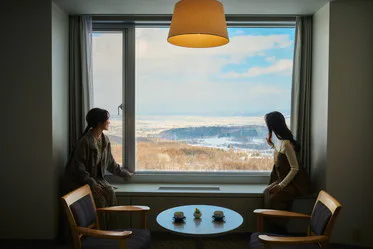
The most important correction: you do not choose a zone to unlock half the mountain
Furano Ski Resort currently describes the mountain as two zones—Furano and Kitanomine—with 28 trails in total. Its current mountain information says the two zones are connected near the top by a common trail, and the resort’s lift pass gives access to the entire mountain.
That changes the accommodation question. On a normal full-operation day, a competent skier can sleep in Kitanomine, ride up and ski into Furano Zone, or do the reverse. The hotel is therefore not a terrain passport. It is a tool for making mornings, evenings, equipment handling and non-ski time easier.
This is why I would not split a three- or four-night Furano ski stay into two hotels simply to “experience both sides.” You pay a checkout, luggage move and second check-in without buying a second ski area. Keep one base unless a specific operating constraint, lesson location or non-ski plan gives the move a job.
If Furano itself is not yet fixed, compare Niseko, Furano and Rusutsu before optimising the neighbourhood inside Furano.
Furano Zone wins when the first 90 minutes of the ski day matter most
Shin Furano Prince Hotel is the clearest argument for Furano Zone. The resort officially describes the hotel as directly connected to the slopes with ski-in/ski-out access, and the Furano Ropeway sits beside the hotel. Rental facilities are also available in the Furano Zone, including the Ropeway Station and Prince hotel locations.
For a family with children, a first-time skier, or anyone who wants to collect equipment and start without an extra road transfer, that compact sequence can be more valuable than having more independent dinner choices:
breakfast → gear → lesson/lift → skiing → hotel → onsen/dinner.
The trade-off is that Furano Zone can feel more hotel-contained. If your idea of a ski holiday includes walking out for a different restaurant or bar each night, the resort convenience that helps in the morning can feel restrictive after the lifts close.
Furano Zone also has a stronger late-season argument. The exact 2026–27 zone closing dates are not yet something I would treat as confirmed, but recent seasons show the operating pattern clearly: Kitanomine can close while Furano Zone continues into the spring-skiing period. Travellers booking late March or April should therefore verify the exact zone schedule before paying a non-refundable Kitanomine rate.
Kitanomine wins when you want the ski holiday to continue outside one hotel
Kitanomine should not be reduced to “the cheaper side” or “the side with pensions.” It has slope-close accommodation ranging from small lodgings to full-service hotels. Furano Tourism currently describes Nozo Hotel at the foot of the ski resort with a restaurant, bakery, large public bath and sauna, kids’ room and ski lockers. Hotel Naturwald is another example of accommodation positioned directly in front of the ski area.
The area’s stronger identity is independence. You can choose lodging and then choose dinner rather than having the hotel define the whole evening. For couples, groups of friends and repeat skiers, that can produce a more flexible stay than a self-contained resort complex.
Kitanomine also has a small transport edge from town. Furano Tourism currently lists the Kitanomine Zone at about 10 minutes from JR Furano Station by car or Furano bus. Furano Zone/New Furano Prince is listed at about 15 minutes by car or 18 minutes by Lavender Bus. That difference is not large enough to choose the entire holiday around, but it matters when you repeatedly enter town, arrive by rail with luggage or have non-ski days mixed into the stay.
The mistake is assuming Kitanomine sacrifices slope access completely. If your hotel is genuinely near the Gondola or No.1 lift, your ski morning can still be very short. Compare the exact hotel-to-lift route rather than the zone label.
Beginners should choose the lesson morning, not the trail-colour stereotype
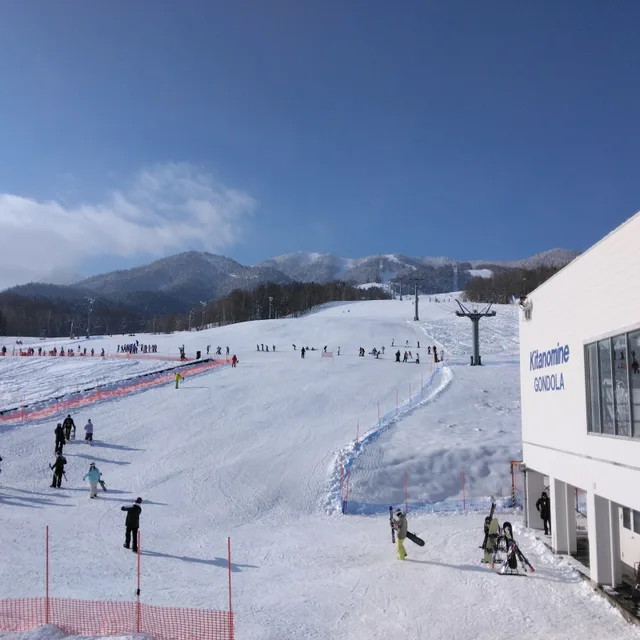
Both Furano and Kitanomine have beginner terrain in the resort’s current course information, and both sides include beginner practice features such as snow escalators. That makes “beginners must stay in Furano Zone” too simplistic.
The real beginner question is logistical: where is your lesson meeting point, where will you collect rental equipment, and how much buffer do you want before the lesson? Furano International Snowsports School currently offers lessons in Furano Zone or Kitanomine Zone, while Furano Snow School is based at the Kitanomine terminal. Rental locations also exist at both Furano Zone and Kitanomine Zone base facilities.
For a first ski morning, a 08:45 lesson check-in can be more important than which side has the prettier hotel. If your child needs rental boots fitted, a helmet changed and a bathroom stop before class, sleeping beside the correct meeting point removes several small failure modes.
Book in this order:
preferred lesson/school and date;
meeting zone and check-in time;
rental pickup location;
then hotel.
Reversing that order can leave you paying for slope-side convenience on the wrong side of the morning.
Intermediate and advanced skiers should care more about operating status than base zone
When the full mountain is operating, stronger skiers are the group least likely to need a hotel move between zones. The upper connection and one lift-pass system let the ski day flow across the mountain.
But that conclusion has a hard boundary: lifts, connecting trails and zones can close because of wind, weather, maintenance or seasonal operations. A “connected mountain” is only connected when the infrastructure needed for your route is running.
For this reason, I would not choose a Kitanomine hotel solely because “I can always ski to Furano Zone,” and I would not choose Furano Zone solely because “I can always ski back.” Check the live lift status each morning and understand the road/bus fallback if the inter-zone ski connection is unavailable.
Late March and April are a separate accommodation decision
Do not reuse a January zone recommendation for a spring trip. Furano Tourism’s March 31, 2026 notice said the seasonal morning ski shuttle had ended and Kitanomine had already closed, while the remaining skiing continued on the Furano/New Furano Prince side. The earliest regular Lavender Bus from Furano Station to New Furano Prince then shifted to 11:38, making a taxi necessary for an earlier start from downtown.
That is exactly the kind of date-specific failure that a generic “Kitanomine has more restaurants” article misses. The 2026–27 resort overview currently gives a tentative opening date of November 28, 2026, but detailed zone-by-zone closing dates and operating hours should be rechecked once the full season schedule is published.
ValueNavi rule: if your stay touches late March or April, verify Kitanomine’s exact operating dates before booking the hotel. If Kitanomine closes during your stay, Furano Zone’s accommodation premium can suddenly buy much more than convenience—it can buy the only practical early ski start.
Non-skiers can reverse the answer
A group of four skiers may optimise entirely around lifts. A family where one parent does not ski should not.
Furano Zone gives the non-skier a self-contained resort environment around Shin Furano Prince Hotel, including dining, onsen and nearby resort attractions. That can make the day easier when the non-skier does not want to travel into town independently.
Kitanomine gives a different kind of freedom: more independent accommodation and easier access toward Furano town. A non-skier who wants cafés, town errands or to meet the skiers for dinner may prefer that geometry.
Ask what the non-skier does between 09:00 and 15:00. If the answer is “use the hotel and relax,” Furano Zone gets stronger. If the answer is “go into town, cafés and shops independently,” Kitanomine can be the better compromise.
Car-free travellers should count the first and last mile with ski gear
Reaching JR Furano Station does not mean you have reached the ski base. Furano Tourism currently lists about 10 minutes to Kitanomine by car/bus and 15–18 minutes to Furano Zone/New Furano Prince. Seasonal evening and ski shuttles can help, but their timetables are not permanent.
That makes arrival time important. A hotel that looks only five minutes farther from the station can still be easier if your train lines up with its shuttle. Conversely, a late arrival after seasonal buses finish can turn both zones into taxi transfers.
For a fully car-free trip, test the hotel against the realistic 7-day Hokkaido without a car itinerary. If changing bases with winter luggage is the bigger problem, use the Japan luggage-forwarding guide before choosing a weaker ski base simply to avoid one suitcase transfer.
Do not split Furano and Kitanomine on a normal three- or four-night ski block
This is the strongest practical conclusion from the mountain layout. If you are skiing three or four nights in the middle of the season, I would normally book one hotel and keep it.
A zone split has to beat all of these costs:
packing wet ski gear;
checking out;
moving luggage between hotels;
waiting for the next room or storing bags;
rebuilding the lesson/rental routine;
and losing part of a ski day to a move that does not unlock a second mountain.
I would only split when the second hotel fixes a real itinerary problem: Kitanomine closes during the stay, the lesson schedule changes zone, one part of the group needs a different non-ski base, or the second hotel itself is an experience you deliberately want.
If the only reason is “we want to ski both Furano and Kitanomine,” keep one room.
Three traveller profiles
Family of four, first ski trip, lessons every morning
Choose the zone where the lessons and rental check-in are easiest. If the family wants a contained resort routine with onsen and meals after skiing, Furano Zone is the safer default. Kitanomine can still win if the chosen school meets there and the hotel is genuinely slope-close.
Couple or group of friends, confident skiers, three or four nights
Kitanomine often gets stronger because full-mountain skiing is still available while the evenings are more independent. Do not move to Furano Zone just to ski that side; use the lift network when operating.
Late-March skier travelling without a car
Start with Furano Zone and verify the current season schedule before booking. Recent seasons show Kitanomine closing earlier, and spring transport from downtown can also become sparse. This is a date-sensitive case where the January recommendation can reverse.
Final verdict
Choose Furano Zone when ski-in/ski-out convenience, a clean lesson/rental morning, a self-contained family routine or late-season operating resilience matters most.
Choose Kitanomine when you want slope access without living inside one resort complex, prefer independent restaurants and lodging, or value the slightly easier Furano Station/town connection.
Do not change hotels just to ski both zones. On normal full-operation days, the mountain connection and one lift-pass system already solve that problem. Change base only when a specific lesson, operational date, non-skier need or hotel experience makes the move earn its cost.
Where to Stay in Osaka for Couples: Choose Your Evening Before the Hotel
Hakodate and Onuma Autumn Leaves: Late Foliage Timing, Transport and Where to Stay
Where to Stay for Oirase Autumn Leaves: Gorge, Lake Towada, Hachinohe or Aomori
Where to Stay for the Saga Balloon Fiesta 2026: Saga, Tosu or Hakata
References
Furano Ski Resort — 2026–27 resort overview and two-zone structure · Furano Tourism Association — Furano Station access to Kitanomine and Furano zones · Furano Tourism Association — March 31, 2026 spring transport / Kitanomine closure notice. Checked August 25, 2026. The 2026–27 resort is currently scheduled to open November 28, 2026 on a tentative basis; recheck zone-specific lift dates, hours, lesson locations and transport before booking.