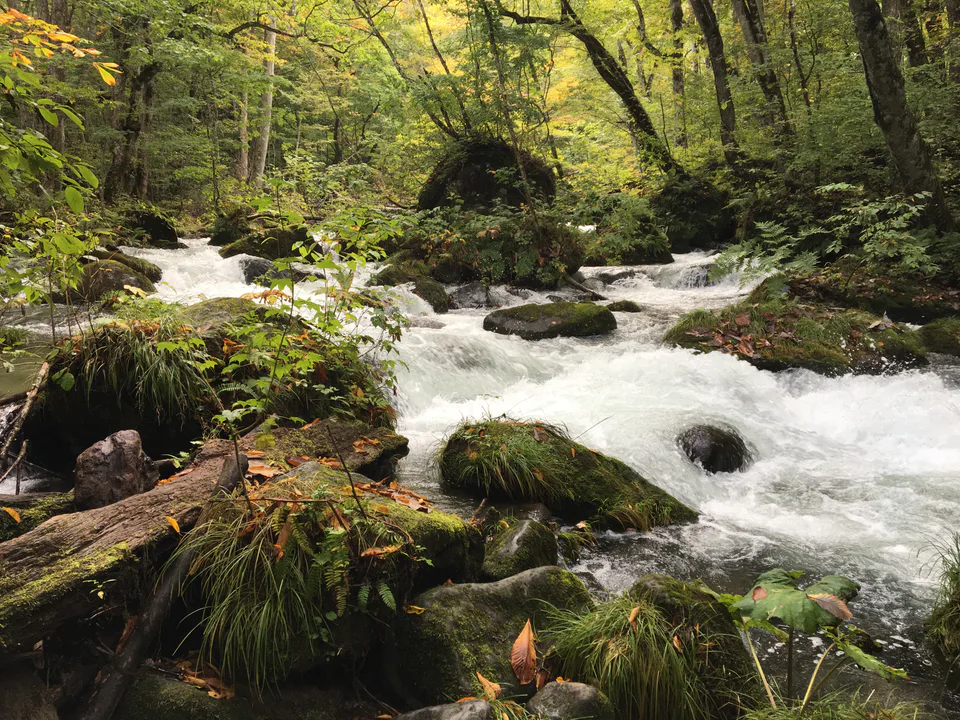
Stay in or beside Oirase Gorge when the reason for the trip is early forest time, photography or a second chance at the weather. Stay in Hachinohe when you arrive by Tohoku Shinkansen and only need a daytime Oirase visit. Stay in Aomori when the airport, Hirosaki or west-Aomori side is the stronger bookend. Lake Towada becomes the better overnight for a self-drive route that wants the lake evening and a directional gorge day.
The most important 2026 planning correction is that three different transport systems are often mixed together online: public JR buses, hotel long-distance shuttles and hotel-guest-only gorge shuttles. They are not interchangeable. JR Bus Tohoku’s autumn timetable is public transport. Oirase Keiryu Hotel’s 15:00 Aomori pickup and 14:30 Hachinohe pickup require a hotel reservation and advance shuttle booking. Its 06:00 gorge shuttle is also exclusively for hotel guests. Your accommodation decision changes dramatically depending on which system you can actually use.
↔ Scroll table left or right
Your priority | Best starting base | What the night buys | Main failure mode |
Dawn / quiet first light / photography | Oirase / Yakeyama | You are already at the gorge before city buses can deliver day visitors | Assuming every Oirase hotel includes Hoshino’s 06:00 shuttle |
One daytime visit after Shinkansen arrival | Hachinohe | Simple Shinkansen luggage base and direct public Oirase buses | Expecting a Hachinohe hotel to produce dawn access |
Aomori Airport / Hirosaki before or after Oirase | Aomori Station | Better route continuity on the west side of the prefecture | Using Aomori as a repeated daily commute to the gorge |
Self-drive lake + gorge sequence | Lake Towada or Oirase | Removes a city return and creates a directional nature route | Copying last year’s private-car restriction dates into 2026 |
Peak foliage + weather-sensitive photography | Two nights near Oirase | Two mornings / two weather windows instead of one | Paying two mountain nights when your plan only needs a normal daytime walk |
Public JR buses make Oirase a day trip — but not a dawn trip
JR Bus Tohoku currently publishes a dedicated 2026 autumn timetable from September 18. The added Mizuumi 102 leaves Aomori Station at 07:30 and reaches Lake Towada at 10:15. Existing Aomori and Hachinohe services also continue through the autumn period.
From Hachinohe, Oirase 21 leaves Hachinohe Station West Exit at 10:00 and Oirase 23 at 13:30. For those two outbound services, a reservation is required only when boarding at Hachinohe Station West Exit. JR Pass / JR East Pass users still need that reservation. Return services from Lake Towada toward Hachinohe and the Aomori–Towada services are currently non-reserved.
That is enough to make a normal daytime gorge visit practical from either city. It is not enough to make either city an early-light base. If your trip value depends on being beside the stream around sunrise or before the main daytime flow, sleeping in Hachinohe or Aomori is solving the wrong problem.
ValueNavi rule: use a city base when Oirase is a sightseeing day. Pay for a mountain night when Oirase itself owns one of the least replaceable hours of the trip.
Hachinohe is the cleanest Shinkansen gateway, not the best Oirase experience base
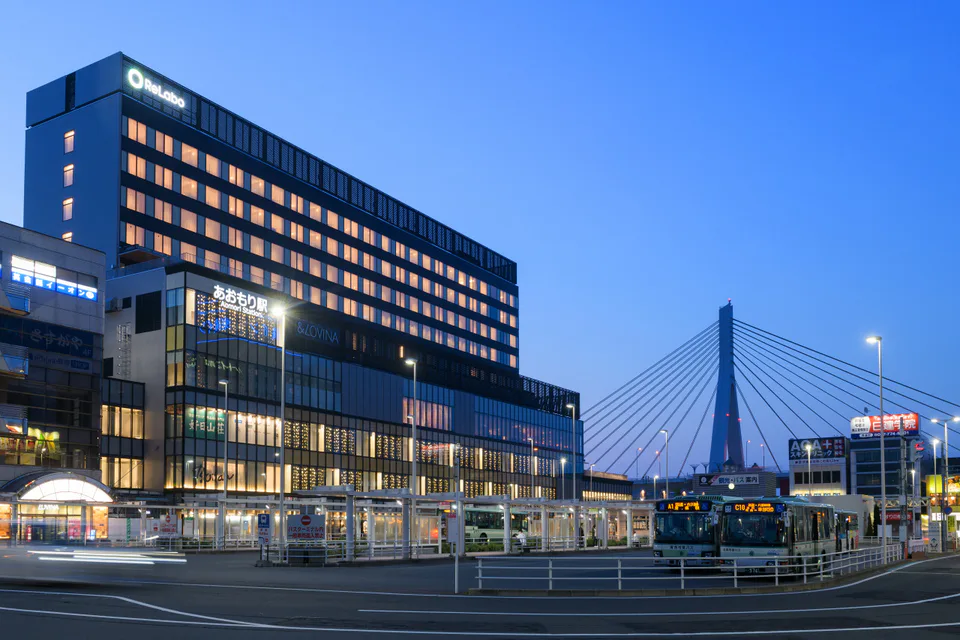
Hachinohe is strong for travellers arriving from Tokyo, Sendai or Morioka because the Shinkansen and the Oirase bus share the same transport node. You can keep the main luggage in a station-area hotel, reserve the outbound Oirase service and travel with an overnight bag or daypack.
The hotel is doing two jobs: absorbing a late Shinkansen arrival and protecting a fixed next-day departure. That is a real reason to stay there.
The answer weakens once you want two Oirase mornings. Repeating Hachinohe → gorge → Hachinohe spends the same long transfer twice and never gives you the quiet edge of the day. At that point one city night plus one or two mountain nights is usually more rational than keeping the room merely because Hachinohe is cheaper.
Aomori wins when the airport or Hirosaki is part of the same directional route
Aomori Station should be chosen for route continuity, not because “Aomori is the prefectural capital.” It makes sense when you fly through Aomori Airport, spend time in Hirosaki, continue toward Hakkoda, or need a flexible first night before weather-sensitive mountain travel.
The 07:30 autumn Mizuumi 102 is useful because it creates an earlier public-transport start than many visitors expect. But a 07:30 city departure is still not dawn in the gorge. Do not pay for an Aomori hotel and then describe it as an “early Oirase base.” It is a good public-transport gateway.
If the trip enters through Hachinohe and exits through Aomori Airport, a directional pattern can be better than returning to one city repeatedly: Hachinohe → Oirase / Lake Towada → Aomori. The hotel sequence should follow the route rather than force every night into one base.
Oirase Keiryu Hotel has transport advantages that do not belong to every Oirase hotel
This distinction matters enough to state explicitly. Oirase Keiryu Hotel currently operates a reservation-required long-distance shuttle from Aomori Station at 15:00 and from Hachinohe Station at 14:30 during April–November 2026. The Aomori service is paid; the Hachinohe service is free for hotel guests. Both require reservation at least two days in advance and close when full.
The same hotel also operates an exclusive guest shuttle inside Oirase Gorge from 06:00, generally hourly, with the last departure at 16:00 from April to October and 15:00 in November. It stops at several walking points in the gorge. That can turn a one-way walk into a much easier hotel-based route.
But none of this is a generic feature of “staying in Oirase.” A smaller inn, self-catering property or Lake Towada hotel may not offer either shuttle. When comparing rates, separate three things:
proximity to the gorge;
public transport anyone can use;
proprietary hotel transport available only to registered guests.
If the premium hotel is expensive, ask whether you will actually use the 06:00 shuttle or the long-distance pickup. If not, part of the premium has no value for your itinerary.
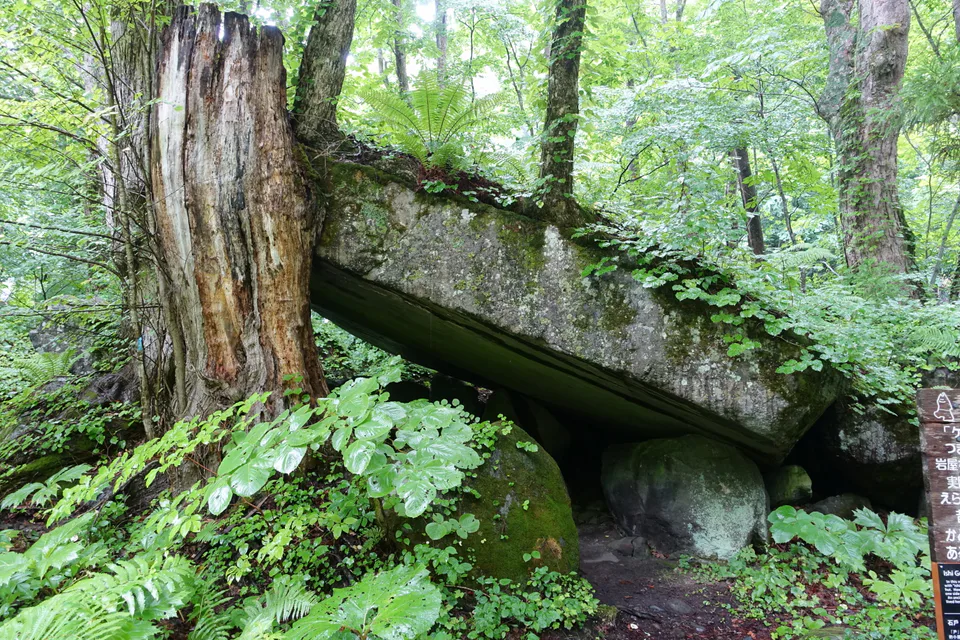
One mountain night buys one morning; two nights buy a weather option
The difference between one and two Oirase nights should not be “more relaxing.” It should be stated as inventory of useful time.
One night can give you an afternoon/evening arrival, one early morning and a full or partial walking day before you leave. This is enough for most first-time visitors who mainly want one strong gorge session.
Two nights give you two mornings and one complete day without a city transfer at either edge. That becomes valuable for peak foliage, photography, older travellers who want to shorten walking blocks, or anyone unwilling to let one morning of rain erase the trip’s main purpose.
Run the weather red-team before paying the second night: if the first morning is wet but safe, would the second morning materially improve the trip? If yes, Night 2 has a job. If you would simply spend both days on the same ordinary daytime route, it probably does not.
Lake Towada is strongest when the car route keeps moving
For self-drive travellers, Lake Towada can be a better second nature base than returning to Hachinohe or Aomori. A directional route can enter Oirase from one side, walk the gorge, sleep near the lake, then continue without retracing the entire mountain road.
The weakness is that “Lake Towada” is not one hotel location and not every lakeside property is equally convenient for the Oirase entrance or public transport. Check the exact port / Yasumiya / Nenokuchi geography and the next morning’s route before booking.
For car-free travellers, Lake Towada can still work because public JR buses run through the Oirase–Towada corridor, but the last usable service matters. Do not assume a lake-view hotel can be reached late after sunset just because a daytime bus appears on Google Maps.
Do not publish 2025 private-car restriction dates as 2026 facts
Oirase has used autumn private-car restrictions to reduce congestion and protect the gorge. Towada’s official tourism site confirms that the 2025 restriction ran October 27–November 2 on the approximately 10 km gorge section, with shuttle buses operating during the restriction.
As of this article’s August 25, 2026 verification, that 2025 schedule should not be copied forward as the 2026 autumn restriction calendar. Hoshino’s 2026 activity pages already warn that some guest shuttle/activity operations may be suspended on designated “Oirase Nature Museum / Private Car Restrictions” days, but the exact autumn road-control dates must be checked from the current Towada / Oirase official announcement once published.
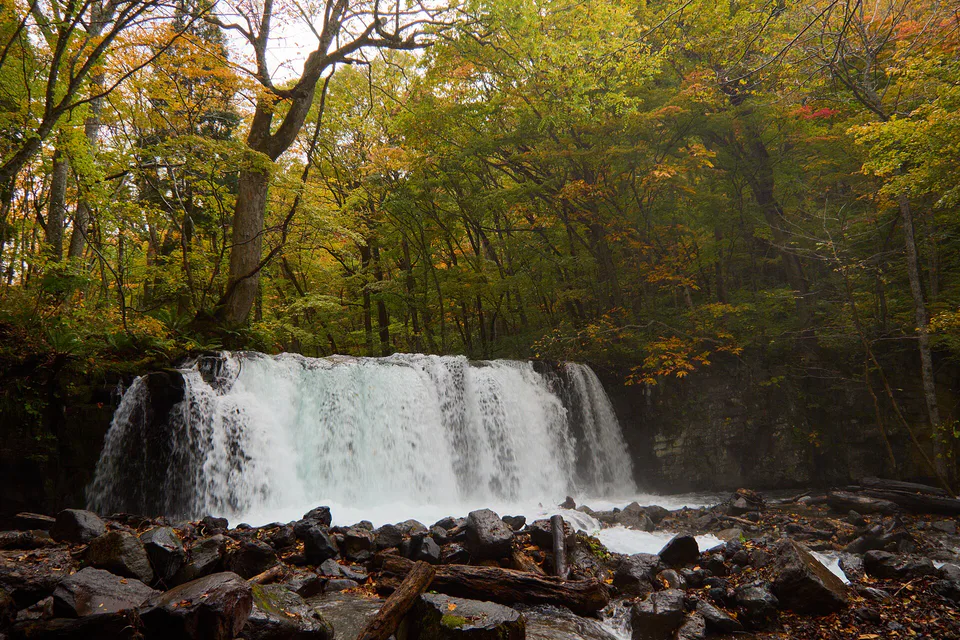
This matters for drivers. A Lake Towada or Towada City hotel can look perfect until the planned road access is restricted during the exact hours you expected to use it. Build the rental-car route around the current restriction notice, not last year’s blog post.
Peak foliage makes a refundable room more valuable than a precise foliage prediction
Autumn colour does not peak on a contractual date. Weather can also close or delay roads and buses. In 2025, for example, severe weather temporarily closed the Oirase section and changed JR bus operations during the autumn restriction period. The lesson for 2026 is not to predict the same disruption; it is that rural autumn logistics have real failure modes.
If rates allow it, use refundable accommodation while the foliage and weather window is still uncertain. Do not hold two non-refundable rooms merely as speculation, but do not lock an expensive mountain stay months early based on one exact “peak date” claim either.
A city base is more flexible under uncertain weather. A mountain base has higher payoff when conditions are good. The decision is therefore a classic flexibility-versus-access trade-off.
Large luggage should usually stay at the transport node
For a one- or two-night mountain segment inside a longer Japan trip, moving two 28-inch suitcases through seasonal buses can add friction with very little benefit. Hachinohe and Aomori are better luggage nodes than the gorge.
Where your hotel accepts storage or forwarding, take an overnight bag into Oirase and leave or send the main cases onward. This also reduces the penalty if you need to change buses or alter the route because of weather.
The Japan luggage-forwarding guide should be treated as part of the Oirase base decision, not a separate packing topic.
Four practical stay patterns
1. Tokyo → Hachinohe → one Oirase day → continue west
Stay Hachinohe. Reserve the correct Oirase bus if boarding the 10:00 or 13:30 outbound service at Hachinohe Station. This is a sightseeing-day pattern, not a dawn-photography trip.
2. Tokyo → Hachinohe → Oirase is the trip highlight
Hachinohe 1 + Oirase 1–2. Let Hachinohe absorb the Shinkansen arrival, then move into the mountains when the overnight actually unlocks the early hours.
3. Aomori Airport / Hirosaki → Oirase → Hachinohe Shinkansen
Aomori → Oirase → Hachinohe. This uses the prefecture directionally and avoids returning to Aomori after the nature segment.
4. Self-drive foliage loop
Oirase + Lake Towada can be stronger than one city base if both nights advance the road trip. Verify the 2026 private-car restriction before locking the route.
Compare refundable stays around Oirase and Lake Towada
Final verdict
Choose Hachinohe or Aomori when you need a gateway. Choose Oirase when you need an hour of the day that a gateway cannot deliver. Hachinohe is best aligned with Shinkansen arrivals and its reservation-controlled outbound Oirase buses. Aomori is stronger for airport / Hirosaki routing and has an added 07:30 autumn bus from September 18, 2026. Neither is a substitute for sleeping beside the gorge if dawn is the point.
One Oirase night buys one early morning. Two nights buy a second weather window. Lake Towada is strongest when it advances a self-drive route. And if your choice depends on Oirase Keiryu Hotel’s 06:00 shuttle, price that benefit honestly: it belongs to hotel guests, not to everyone who books a room somewhere near the gorge.
Hakodate and Onuma Autumn Leaves: Late Foliage Timing, Transport and Where to Stay
10-Day Japan Autumn Leaves Itinerary: Regional Routes, Transport and Where to Stay
Okutama Autumn Leaves Guide: Mitake Gorge, Lake Okutama and Car-Free Routes
Where to Stay in Aomori on Your First Night: Station, Aomoriya, Oirase or Hirosaki
Asahidake vs Kurodake Autumn Leaves: Ropeways, Hiking and Where to Stay
References
JR Bus Tohoku — 2026 Aomori/Hachinohe–Oirase–Lake Towada timetable · JR Bus Tohoku — additional autumn services from September 18, 2026 · JR Bus Tohoku — Oirase 21/23 reservation rules · Oirase Keiryu Hotel — guest shuttles from Aomori and Hachinohe · Oirase Keiryu Hotel — guest-only 06:00 gorge shuttle · Towada Travel — 2025 private-car restriction reference. Checked August 25, 2026. The 2026 autumn private-car restriction dates must be verified from the current official announcement when published; do not reuse the 2025 dates.