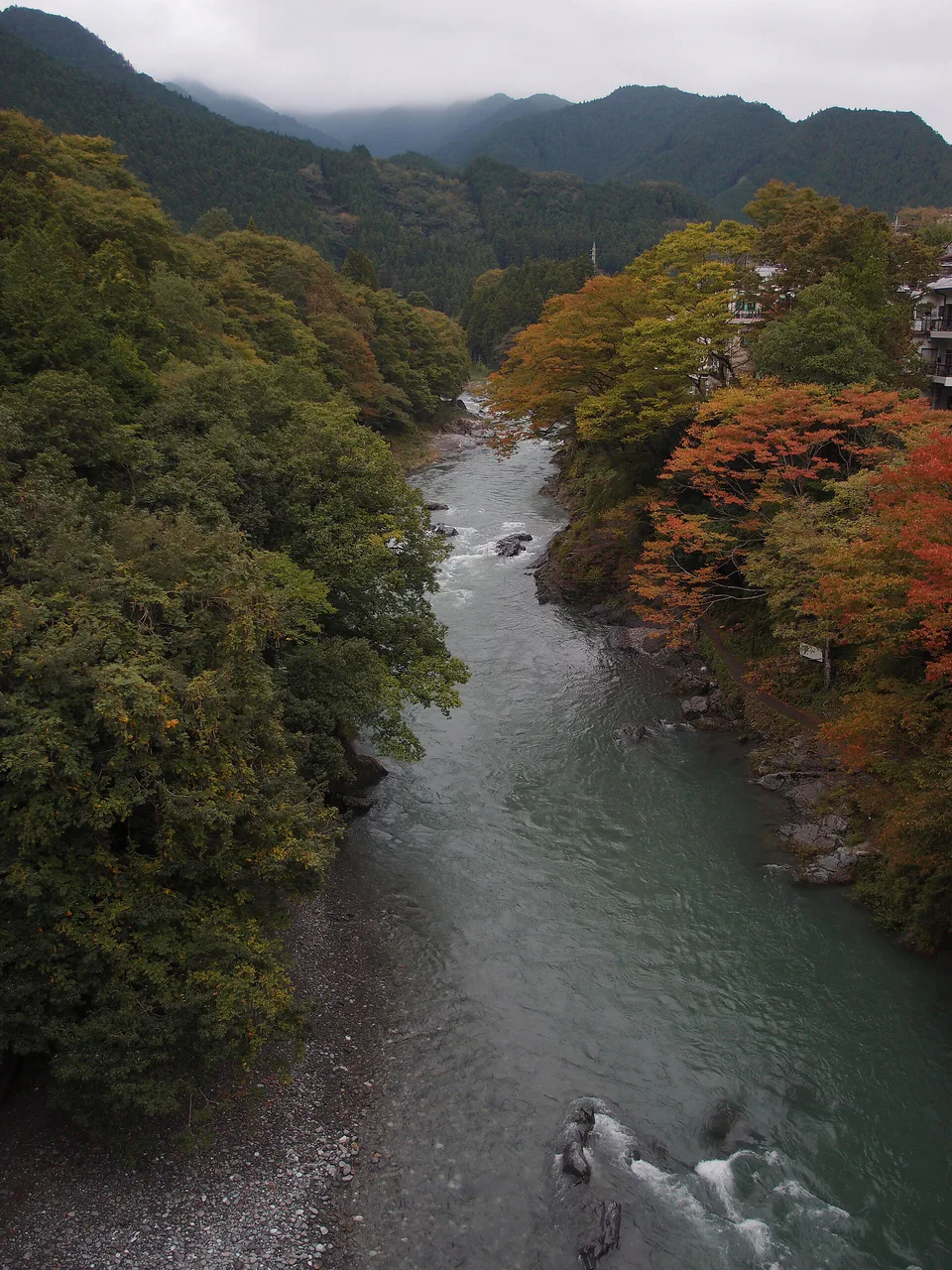
Okutamaautumn leaves are spread across separate rail stops and bus branches rather than one compact park. Mitake Gorge is the strongest first car-free choice, Okutama Station and Hikawa work for a half day or uncertain weather, Lake Okutama is for visitors who prioritise the dam and water scenery, and Nippara Cave is a separate full-day bus branch. Select one primary zone and keep a nearby rail-stop alternative; combining a complete Mitake walk, the lake and Nippara creates more waiting than sightseeing.
Last checked August 16, 2026. Before leaving Tokyo, compare the current foliage stage with the Japan autumn leaves live update and the broader Tokyo autumn leaves timing guide. Recheck the JR Ome Line, Nishi Tokyo Bus, floating bridges, trail closures, bear notices and weather again on the travel morning.
Okutama autumn leaves: the 30-second choice: pick one branch, not all of Okutama
Choose Mitake Gorge for the easiest first visit and the best rail-only flexibility. Choose Okutama Station and Hikawa for a short day, late start or weather uncertainty. Choose Lake Okutama when lake scenery matters enough to accept a rural-bus timetable. Choose Nippara only when the cave itself is a priority and the bus works. If you need a simpler western-Tokyo foliage day, compare Mt. Takao autumn leaves before forcing a second Okutama branch.
Mitake Gorge: the most forgiving first car-free route
From Shinjuku or Tokyo, travel through Tachikawa and Ome to Mitake. Depending on the starting hotel and connection, the trip commonly takes around 90 minutes to two hours. Descend from Mitake Station toward the Tama River and walk in the Sawai direction. A short ninety-minute section, a two-to-three-hour riverside route or a longer version with a brewery stop can use different JR stations as exits. This flexibility is the reason Mitake is my default for families, older travellers and first-time visitors.
With children or reduced mobility, prioritise the flatter riverside portion and leave at Sawai or Ikusabata rather than treating every path as mandatory. Wet rock, timber and river edges become slippery after rain, so shorten the route and keep Ome cultural stops or a station cafe as backup. The same “one strong zone” logic is useful in the Tokyo autumn day-trip comparison when you are deciding whether the whole day should leave central Tokyo.

Okutama Station and Hikawa: the late-start and half-day fallback
When the morning begins late in Tachikawa or Ome, or the afternoon weather is uncertain, continue to Okutama Station and keep the day compact. Check the visitor centre before using Hikawa Gorge, bridges or station-area paths. A station-based plan avoids a low-frequency rural bus and makes it easier to return before darkness. It also works better when the previous Tokyo day was already physically heavy, such as a long Shinjuku Gyoen–Meiji Jingu Gaien–Rikugien autumn route.
The Otama Walking Trail can be used in station-to-station pieces around Kori, Hatonosu and Shiromaru. Spring 2026 bridge work temporarily closed a section before reopening, which is exactly why the complete trail should never be treated as permanently available. Choose one or two rail-station sections, save the exit station offline and leave enough daylight for an unexpected detour.

Lake Okutama: choose the return bus before choosing the walk
Lake Okutama requires a Nishi Tokyo Bus from Okutama Station, and peak foliage departures can fill. Identify at least two return buses before leaving the station, then plan Ogouchi Dam, viewpoints and one short shore section. The long southern Ikoi path is roughly twelve kilometres and four hours, not a casual extension. Most visitors should use the dam area or a short lakeside section and preserve queue time.
Floating bridges can close because of water level, wind, maintenance or an official safety decision. An old photograph is not same-day access information. If the bridge is closed, keep the dam, lake view and short shore instead of chasing another crossing. If the bus is delayed, delete the second lakeside section. For another foliage trip where transport windows control the day, compare the Nikko autumn leaves guide rather than assuming all mountain day trips behave like central Tokyo.

Pair this with
Pair Okutama with the Tokyo autumn timing guide so a November city day does not get confused with an earlier mountain window. If colour is running late or an outer route closes, the Japan autumn leaves Plan B helps decide whether to move elevation, move region or stop chasing peak foliage entirely.
Nippara Cave: a separate branch, not a rainy-day add-on
Nippara Cave does not share the Lake Okutama bus. It requires a separate bus plus a short approach and stays cool year-round, with wet floors, narrow spaces and steep stairs. It is not a risk-free indoor backup for bad weather. Confirm the day's bus, road and opening information, preserve a return margin before entering and choose the station-area route instead for knee problems, claustrophobia, very young children or uncertain mobility.
An open cave does not authorise an unverified forestry road or mountain trail. If the outbound journey is already late, remain around Okutama Station rather than forcing the branch. Missing the bus and walking a narrow road is not a rescue plan. If rain affects the wider day, use the Japan rainy-day itinerary backup guide to replace the mountain sector rather than inventing a risky indoor substitute.

Bears, signal, luggage and the return margin
Okutama continues to publish trail and wildlife notices, including temporary closures after bear activity. A reopened path is not a guarantee of zero risk. Follow current instructions, make your presence known on nature paths, avoid exposed food and do not leave a recognised route for photographs. Carry cash, save bus times and Japanese stop names offline and keep the hotel address available without relying on mobile data.
Leave the main suitcase in Tokyo, Tachikawa or Ome, or forward it. Do not assume rural lockers will be available on a foliage weekend. Carry medication, insulation, rain protection, water and a power bank in the day bag. For connectivity planning, the Japan eSIM guide helps with normal navigation, but an eSIM does not replace an offline final bus.
Which hotel base reduces the most friction?
Tachikawa is the strongest first base when you have large luggage, arrive from central Tokyo late or want a second western-Tokyo day. Ome supports a slower two-day trip and onsen. Hachioji makes more sense when Mt. Takao is at least as important as Okutama. Arasawaya and Kankoso can work near Okutama Station when the overnight itself is part of the trip, but confirm dinner, payment, language support and cancellation before depending on them.
JR-East Hotel Mets Tachikawa
Search JR-East Hotel Mets Tachikawa on Booking.com
Compare JR-East Hotel Mets Tachikawa on Expedia
KAMENOI HOTEL OME
Search KAMENOI HOTEL OME on Booking.com
Compare KAMENOI HOTEL OME on Expedia
Keio Plaza Hotel Hachioji
Search Keio Plaza Hotel Hachioji on Booking.com
Compare Keio Plaza Hotel Hachioji on Expedia
Arasawaya and Kankoso
Search Arasawaya Okutama on Booking.com
Compare Arasawaya Okutama on Expedia
Search Kankoso Okutama on Booking.com
Compare Kankoso Okutama on Expedia
Plan B: shrink the route instead of changing branches
When the Ome Line is late or a bus is full, stay near Mitake, Hatonosu or Okutama Station rather than forcing another branch. When a floating bridge is closed, retain the dam and short shore. In heavy rain, high water or strong wind, cancel river edges, long lake paths, bridges and Nippara. If colour is early or past peak, keep the valley, lake, museums or cave without claiming peak foliage. The autumn Plan B is designed for exactly this kind of date mismatch.
If Okutama becomes too fragile for the day, return to a city foliage plan instead of substituting another remote mountain on the fly. The Rikugien autumn illumination guide and Tokyo rainy-day indoor itinerary are lower-risk backups from a central hotel.
Check Japan eSIM plans
View Japan eSIM plans on Saily
View Japan eSIM plans on Airalo
Hokkaido Autumn Leaves 2026: Daisetsuzan, Sapporo and Hakodate Routes
Kankakei Gorge Autumn Leaves Guide: Ferries, Buses, Ropeway and Where to Stay
Lake Kawaguchi vs Lake Yamanaka for Autumn Leaves: Views, Access and Hotels
Mt. Takao Autumn Leaves Day Trip: Cable Car, Trails and Timing