
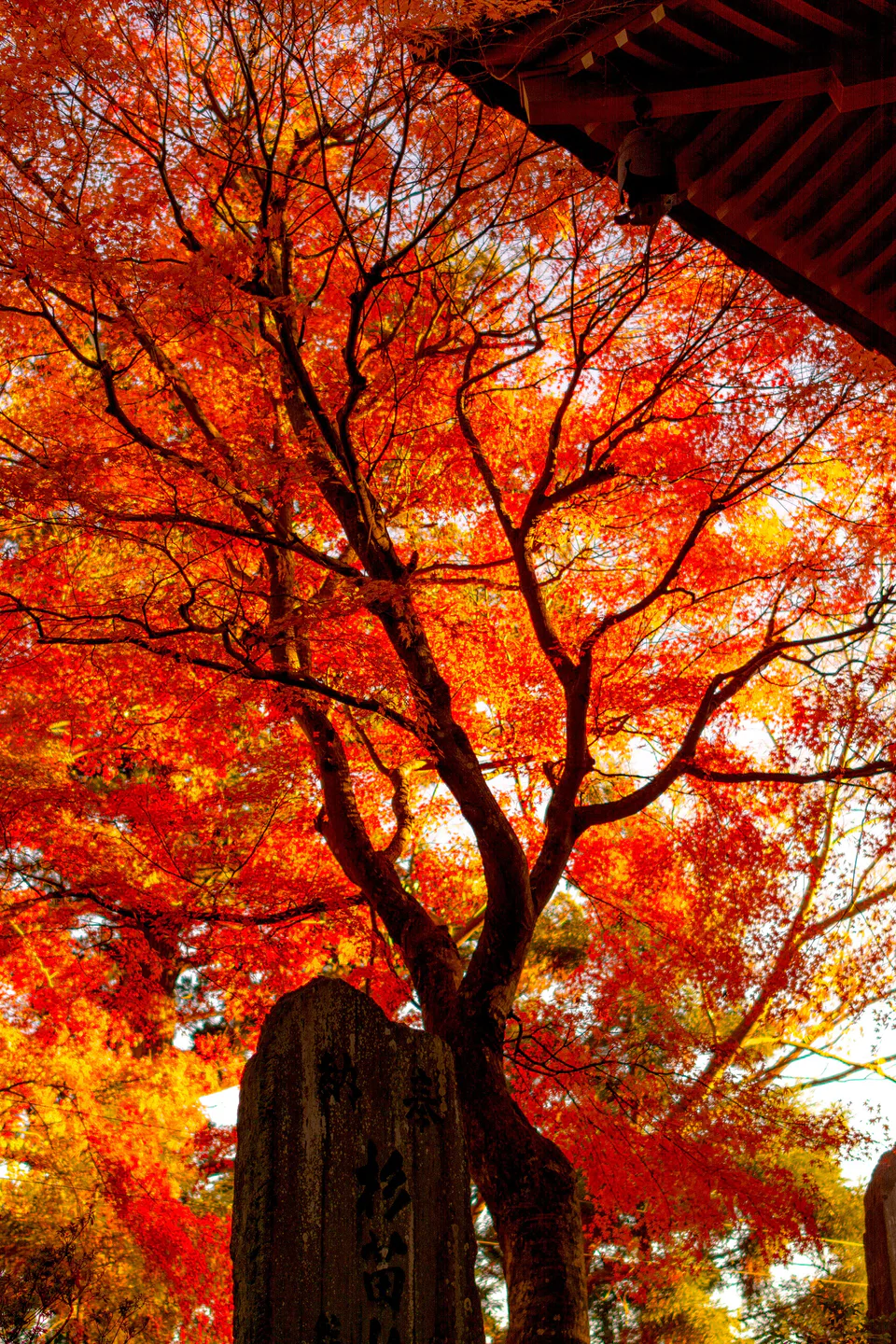
Tokyo does not have one autumn-leaves “peak.” It has several moving targets. The western mountains usually change first, Mt. Takao and Showa Kinen Park become useful in the middle, and low-elevation city gardens often carry color later. Ginkgo has its own timing again. The practical decision is therefore not “where are the best autumn leaves in Tokyo?” but which direction gives your travel date the best odds without creating a bad day if the color is early, late or wind-damaged.
As of August 27, 2026, GO TOKYO still frames November as Tokyo’s main foliage month and lists Mt. Takao’s autumn colors broadly from early to late November. Detailed live color reports will matter much more once your trip is within a week. A long-range date window should choose the area; current photos and weather should choose the exact spot.
ValueNavi date decision table: where should you aim first?
↔ Scroll table left or right
Your Tokyo date | First direction to test | Why | Main fallback |
Nov 1–10 | Okutama / Mitake / Mt. Takao | Higher and colder western areas normally move before central Tokyo. | Showa Kinen if mountain color or trail conditions are weak. |
Nov 11–20 | Mt. Takao + Showa Kinen | This is the most useful overlap between mountain color and accessible western-Tokyo parks. | Move into city parks if current photos show an early year. |
Nov 21–30 | Shinjuku Gyoen / Rikugien / Koishikawa / Gaien | Low-elevation gardens and ginkgo become the safer default. | Keep one western option only if live reports still look strong. |
Dec 1–10 | Late city gardens | Do not chase past-peak mountains simply because Tokyo still has color somewhere. | Pair one garden with an indoor activity so foliage is not carrying the whole day. |
This is a routing framework, not a 2026 peak forecast. Temperature, wind and rain can shift the answer. The closer you get to departure, the less weight you should give a generic “best time” article and the more weight you should give current official images and local conditions.
ValueNavi Score: choose by certainty, time cost and weather risk
These are editorial planning scores. A higher score means the location is easier to use well for that dimension, not that its leaves are objectively prettier.
Option | Time efficiency | Weather resilience | Crowd tolerance | Fallback flexibility |
|---|---|---|---|---|
Mt. Takao | ||||
Okutama / Mitake | ||||
Showa Kinen Park | ||||
Shinjuku Gyoen | ||||
Rikugien / Koishikawa | ||||
Meiji Jingu Gaien ginkgo |
The implication is useful: the more uncertain the weather and color, the more valuable a city garden becomes. Mountains give you a bigger seasonal excursion but punish a wrong call. Central gardens give you less “escape from Tokyo” feeling but are much easier to replace, shorten or combine with museums and food.
Nov 1–10: go west, but do not turn “earlier” into “guaranteed”
Early November is the weakest period for assuming central Tokyo is ready. Okutama, Mitake and the higher parts of Mt. Takao are stronger first checks. The mistake is converting a normal seasonal pattern into a promise. If the year is warm, even the mountains can be behind.
Okutama can take close to two hours from central Tokyo, which makes it a full-day commitment rather than an add-on. Pick either a river-valley walk around Mitake or a lake-and-bus day around Lake Okutama. Combining both often converts the trip into waiting, backtracking and bus anxiety. Build the day backward from the final useful bus and train rather than from the first photo stop.
Heavy rain, river alerts or strong wind should cancel a Mitake/Okutama nature day rather than merely “shorten” it. The hidden cost of a remote foliage day is that your fallback is poor once you are already deep into the route.
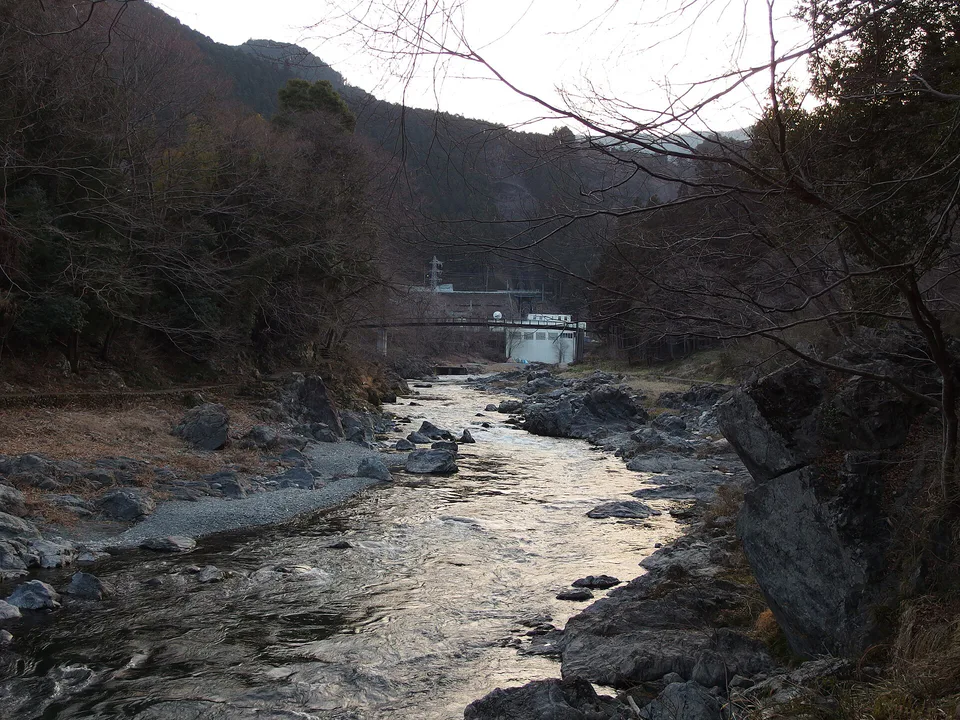
Nov 11–20: Mt. Takao is the easiest mountain bet, not the quietest
GO TOKYO places Mt. Takao about 50 minutes from Shinjuku and describes its autumn color broadly from early to late November. That access is exactly why it gets crowded. A weekday early start usually adds more value than squeezing in another attraction.
The cable car does not remove all walking. Yakuoin and the 599-meter summit still involve slopes, steps and crowd friction. Older travelers or families can legitimately stop after the cable car, viewpoints, temple and food rather than treating the summit as mandatory. Hikers and photographers should protect daylight for the descent instead of assuming a city-style evening timetable.
Showa Kinen Park is the lower-friction alternative. Its official guide explicitly lists ginkgo in November, and the park gives you multiple seasonal targets rather than one mountain trail. Strong wind can strip a ginkgo avenue while maples elsewhere in the park remain usable, so even one park can contain its own Plan B.
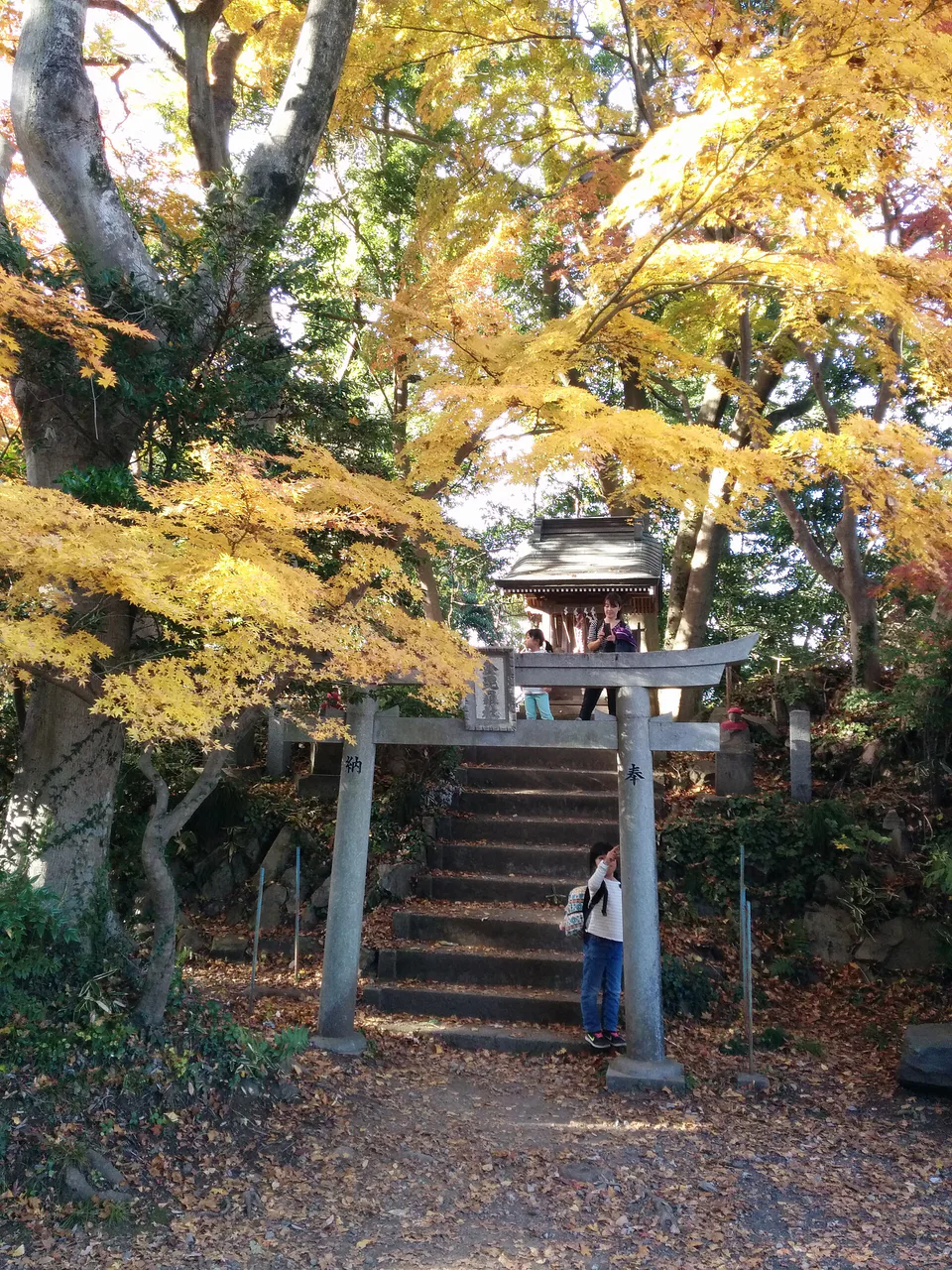
Nov 21–30: city gardens become the rational default
Late November is when Shinjuku Gyoen, Rikugien, Koishikawa Korakuen and Meiji Jingu Gaien usually make more sense than spending half the day chasing western mountains. Shinjuku Gyoen’s official October-to-March hours are 9:00–16:30, with last entry at 16:00. General admission is ¥500 (about US$3.10).
Shinjuku Gyoen is the best “uncertain year” choice because the scale and plant diversity reduce the all-or-nothing risk. Rikugien and Koishikawa Korakuen create more concentrated traditional-garden compositions for ¥300 (about US$1.90) general admission each, but that concentration also means popular viewpoints feel busier.
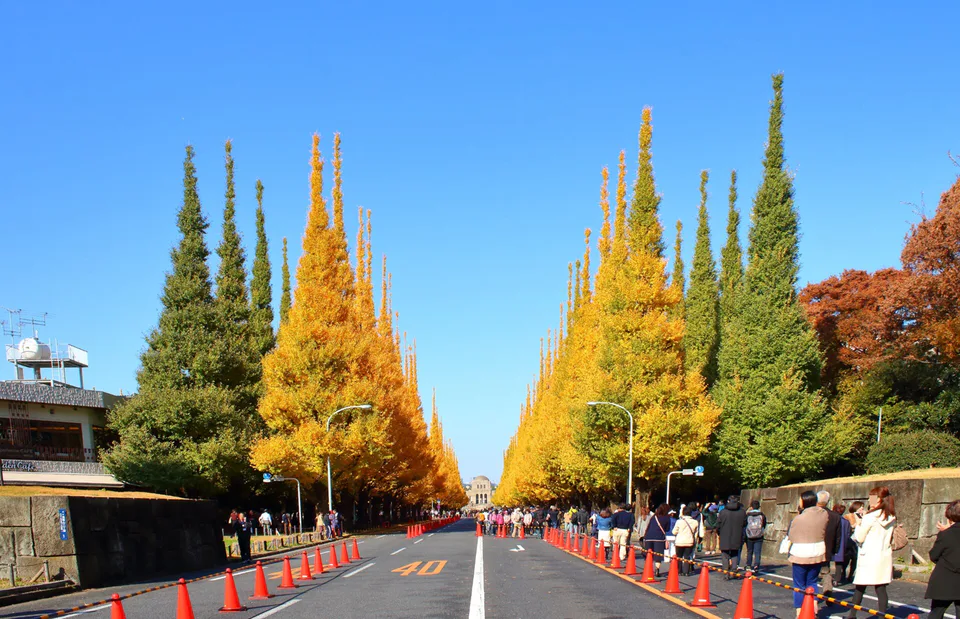
Meiji Jingu Gaien is a different decision: it is a ginkgo stop, not a red-maple forecast. Yellow canopy, yellow leaf carpet and nearly bare branches are three different states. Wind can move the scene from one to the next quickly. Treat it as a short urban stop paired with Aoyama or Shinjuku rather than the sole reason for crossing Tokyo.
Do not pre-plan a 2026 Rikugien night around a 2025 calendar
Rikugien is famous for autumn night viewing, but as of August 27 the current official Tokyo Metropolitan Park page had not published a 2026 autumn-night event in its event list. GO TOKYO’s event page still describes the night-viewing format and tells visitors to check official dates.
That is exactly the sort of seasonal information that should remain provisional. Build a daytime garden route first. Add a paid evening illumination only after 2026 dates, entry times, re-entry rules and ticketing are published. A temporary event should improve the day, not hold the whole itinerary hostage months in advance.
Dec 1–10: search for late low-elevation color, not a mountain that “should” have leaves
Early December can still work at Rikugien, Koishikawa Korakuen, Shinjuku Gyoen and other low-elevation gardens, but conditions become more sensitive to cold snaps and wind. Assume remote western mountains are no longer worth a long transfer unless current reports say otherwise.
The best late-season structure is one or two interchangeable gardens plus an indoor anchor. If the foliage disappoints, the day still has garden design, a museum, greenhouse, observation deck or long meal. That is a better risk-adjusted itinerary than spending two hours each way to chase one last patch of red.
Four Tokyo foliage days that survive imperfect conditions
Mt. Takao day
Leave Shinjuku early, handle the mountain before lunch crowds build, then descend with a queue buffer. Only add the onsen or TAKAO 599 Museum once you are safely back at the base. Do not prebook a rigid city-night event after a peak-season weekend hike.
Okutama or Mitake day
Pick one main theme—river valley or lake—and accept that this is a full-day western excursion. It is a poor fit for arrival day, departure day, travelers carrying luggage or groups that need easy weather fallbacks.
Showa Kinen + Shinjuku
Use the park for ginkgo and Japanese-garden color, then return toward Shinjuku for dinner or a city view. This route is much easier to shorten than a mountain day and suits families or older travelers better.
Urban-garden day
Pair Shinjuku Gyoen with Gaien on the west side, or Rikugien and Koishikawa with Ueno or Tokyo Station. Avoid west → east → west zigzags. In late autumn, cross-city transfers steal exactly the daylight you are trying to use.
Which base is worth paying more for during foliage season?
Choose Shinjuku if Mt. Takao, Showa Kinen or western Tokyo will occupy two or more days. The premium buys directionally useful mornings, not just nightlife. Tachikawa only becomes compelling when repeated western trips justify giving up central-Tokyo convenience.
Tokyo Station works better for Shinkansen-heavy travel and luggage forwarding; Ueno works well for northern gardens and Narita access. Keep the final international-flight night in a city base rather than a remote foliage area.
Examples of useful location types include Hotel Century Southern Tower, JR Kyushu Hotel Blossom Shinjuku and Hotel Sunroute Plaza Shinjuku in the west; Hotel Metropolitan Tokyo Marunouchi, Hotel Ryumeikan Tokyo and Mitsui Garden Hotel Ueno for central or northern access. These examples illustrate route logic, not a claim that any one hotel is cheapest.
Rail passes rarely solve the foliage problem
Use Suica or PASMO for normal city transport. Mt. Takao is mainly a Keio journey; Okutama and Mitake rely on JR plus local transport. A nationwide JR Pass rarely pays for itself because of Tokyo foliage alone. The real cost driver is failed routing and lost daylight, not a few city fares.
Failure-mode matrix: what should you do when the season is wrong?
↔ Scroll table left or right
Problem | Bad reaction | Better move |
Mountains still green | Cross even farther just because another blog says “peak” | Check current colder/higher spots, then switch to a non-foliage day if evidence is weak. |
Mt. Takao past peak | Go anyway because the train is easy | Drop to Showa Kinen or city gardens if live conditions are better. |
Ginkgo stripped by wind | Spend half a day at Gaien hoping for a leaf carpet | Switch to maple-focused gardens and keep Gaien as an optional short stop. |
Heavy rain / strong wind | Force Okutama or Takao because the day was “reserved” | Use one central garden plus museum, greenhouse or long indoor meal. |
Color is good but crowds are extreme | Add more stops to “make the trip worth it” | Slow the route down; queues already consumed the spare time. |
Use the autumn Plan B when the problem is color, weather or transport. Keep the same-direction rule: when a western day fails, replace it with something around western/central Tokyo rather than crossing the city twice.
Compare Tokyo foliage hotels
Compare Tokyo hotels on Booking.com
Compare Tokyo foliage bases on Expedia
Final verdict: use dates to choose the direction, then current conditions to choose the park
If your trip is in early November, test western Tokyo first. In mid-November, Mt. Takao and Showa Kinen become the practical core. In late November, city gardens and ginkgo are usually the safer use of limited daylight. In early December, prioritize low-elevation gardens with strong indoor fallbacks.
The strongest counterargument is that a famous place can look spectacular outside its “normal” window in an unusual year. That is true—and exactly why this guide should not be used as a fixed forecast. The best planning system deliberately separates the decision you can make months ahead (direction and route cost) from the decision you should make days ahead (actual color).
Frequently asked questions
What is the best month for Tokyo autumn leaves?
November is the most useful overall month according to GO TOKYO, but western mountain areas can be earlier and low-elevation city gardens can continue into early December.
Is a night near Mt. Takao necessary?
Usually not. A Shinjuku day trip works for most travelers. An overnight only makes more sense when repeated western-Tokyo days, dawn photography or a deliberately slow pace justify it.
Has Rikugien’s 2026 night event been announced?
Not on the official park event listing as of August 27, 2026. Do not use a 2025 schedule as a confirmed 2026 plan.
What works in rain?
Cancel exposed mountain and river-valley plans in poor conditions. Use one central garden with a museum, greenhouse, observation deck or indoor meal instead.
Official sources and last verification
Checked August 27, 2026 against GO TOKYO, the Ministry of the Environment’s Shinjuku Gyoen information, Tokyo Metropolitan Park Association pages for Rikugien and Koishikawa Korakuen, and Showa Kinen Park’s official guide. Specific foliage peaks remain weather-dependent; recheck live conditions in the final week.
Where to Stay
Mitsui Garden Hotel Ueno vs NOHGA: Station Access or More Room?
Hotel Gracery Shinjuku vs HOTEL GROOVE SHINJUKU: JR Walk or Airport Bus?
Hotel Metropolitan Tokyo Marunouchi vs Hotel Ryumeikan Tokyo: Early Shinkansen or 32.5m² Room?
Hakodate and Onuma Autumn Leaves: Late Foliage Timing, Transport and Where to Stay
Okutama Autumn Leaves Guide: Mitake Gorge, Lake Okutama and Car-Free Routes
Where to Stay for Tohoku Autumn Leaves: Sendai, Morioka, Aomori and Hachinohe
Lake Kawaguchi vs Lake Yamanaka for Autumn Leaves: Views, Access and Hotels
Japan Autumn Leaves Photography Guide: Timing, Weather, Lenses and Crowd Strategy