
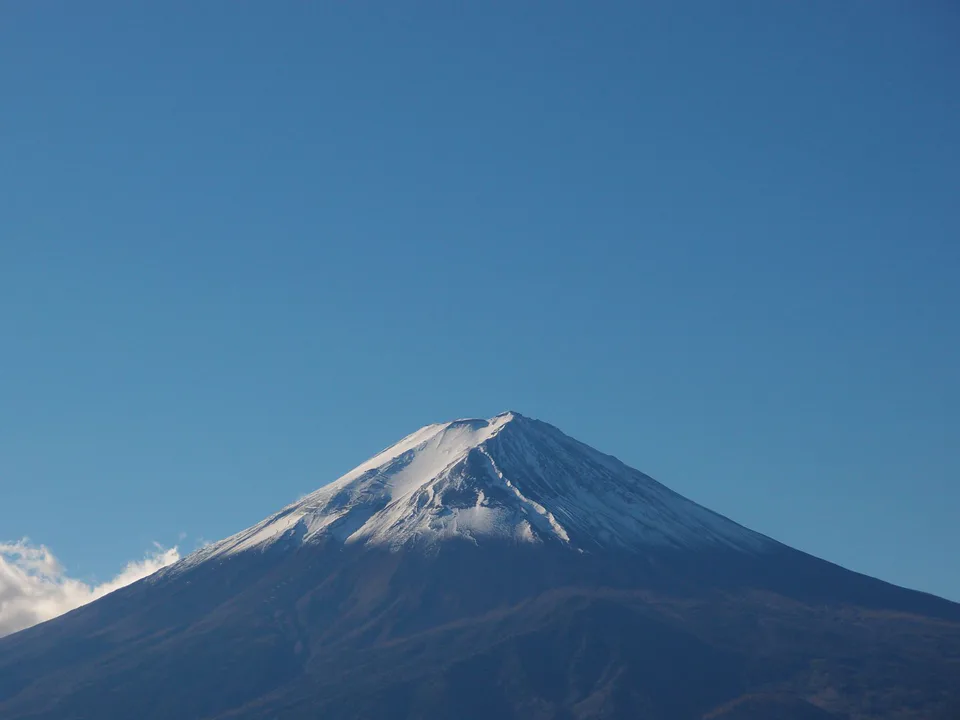
If your main reason for keeping one hotel is “I do not want to move the suitcase,” a fixed base is usually a good idea for Tokyo, Osaka, Sendai or Fukuoka — but only until the commute starts stealing the hours you were trying to save. My cutoff is not a city boundary. It is repeated travel friction: once two consecutive foliage days need roughly four hours of round-trip transport, a very early start, a late final connection or a destination whose best experience happens at dawn or after dark, I would break the base for one night.
The important distinction is hotel-move friction versus day-trip friction. Changing hotels creates packing, checkout, storage, transfer and check-in work once. A bad fixed base can recreate a smaller version of that cost every morning and evening. The best plan is therefore not “never change hotels”; it is “change hotels only when one move removes several expensive commutes.”
Checked August 27, 2026: the rail corridors used in this guide remain current. Osaka’s official tourism site still identifies JR, Hankyu and Keihan for Osaka–Kyoto travel and Kintetsu for Osaka–Nara. JR East currently sells the two-day Sendai Marugoto Pass for ¥2,930 (about US$18 at late-August 2026 exchange rates), covering ordinary/rapid JR trains and several local transport systems within its defined area. Those facts can make a base easier to use; they do not make a distant mountain day sensible by themselves.
ValueNavi decision table: keep one hotel or add one overnight?
↔ Scroll table left or right
Situation | Decision | Why | What you give up |
3–5 nights, different day trips on reliable rail corridors | Keep one base | The saved packing/check-in work is larger than the extra commute. | You accept returning to the same city every night. |
Two consecutive days in the same distant mountain district | Add one overnight | One hotel move can remove two long out-and-back journeys. | You pack a small overnight bag and change rooms once. |
Best experience is sunrise, morning mist, ryokan dinner or night illumination | Sleep near the destination | A city base cannot buy back hours outside the first/last transport window. | The city room may sit unused if you keep it. |
Large luggage, children or older family members; nearby day trips only | Strongly favour one base | Avoiding repeated packing has unusually high value. | You need to be stricter about maximum day-trip distance. |
Every day points in a different direction from the same major station | Keep one base near that station | Route optionality is the benefit you are paying for. | Station-area hotels may cost more than peripheral rooms. |
Fixed dinner, flight or Shinkansen after a weather-sensitive mountain day | Shorten the day or change the overnight | The risk is not the average travel time; it is the lack of recovery options after a disruption. | You may see less foliage that day. |
ValueNavi Fixed-Base Score: which city is easiest to use without moving?
These are editorial scores for autumn-leaves planning, not official transport ratings. Higher is better. “Overnight pressure” is inverted: a high score means fewer attractive foliage trips force you to sleep away from the base.
Base | Route optionality | Easy day-trip depth | Weather Plan B | Luggage advantage | Low overnight pressure |
|---|---|---|---|---|---|
Tokyo | 9/10 | ||||
Sendai | 8/10 | ||||
Osaka | 10/10 | ||||
Fukuoka | 7/10 |
Why Osaka scores so well: official Osaka tourism guidance still shows multiple independent rail corridors toward Kyoto and Nara, so a poor fit on one line does not automatically invalidate the base. Why Fukuoka loses points: the city is an excellent luggage and airport base, but many of Kyushu’s most compelling autumn experiences become road-, bus- or overnight-dependent once you leave the immediate Fukuoka orbit. A high-quality city hotel cannot fix a weak last mile.
The “four-hour commute budget” is a warning line, not a target
The original version of this guide used a rough four-hour round-trip threshold. I would keep it, but interpret it more strictly: four hours is the point where you should justify the commute, not the amount you should casually spend every day.
A two-hour outbound trip can still be reasonable when the train is direct, seats are reservable, the destination has a full day of value and several return services exist. The same two hours are a poor deal when they include an infrequent bus, a weather-sensitive road, a standing transfer and one realistic way home.
↔ Scroll table left or right
Round-trip transport load | ValueNavi interpretation | What must be true |
Under ~2 hours | Comfortable fixed-base territory | The destination still needs enough value to justify the fare, but transport rarely controls the day. |
~2–3 hours | Normal day-trip territory | Prefer one corridor, few transfers and a clear return plan. |
~3–4 hours | Conditional | The day should have a strong payoff and you should not repeat the same commute tomorrow. |
Over ~4 hours | Overnight starts winning | Only keep the base if there is a specific reason not to move and the route remains resilient. |
These bands are planning tools, not operator journey-time promises. Door-to-door time includes the walk from your room, station navigation, waiting and the final bus or local transfer — the exact pieces that route apps tend to make psychologically invisible.
Tokyo: the best fixed base when weather may change your plan
Tokyo’s biggest advantage is not simply the number of trains. It is replaceability. If a mountain forecast deteriorates, you can substitute city gardens, ginkgo avenues or a different western-Tokyo day without moving the hotel. That makes Tokyo unusually strong for a foliage trip booked before the colour and weather are certain.
Shinjuku is my default when Mt. Takao, western Tokyo or highway-bus days dominate. Tokyo Station wins when Shinkansen and airport movement dominate. Ueno can make sense for northbound rail and a lower room budget. Do not choose by district reputation alone: a hotel five minutes from the entrance you actually use can beat a more famous address with a long underground walk.
A strong three-day autumn sequence is one larger excursion, one city-garden day, then one flexible second excursion. What I would not do is commute from Tokyo to Kawaguchiko, Hakone or Oku-Nikko on back-to-back days simply to preserve a prepaid city room. Dawn Mount Fuji, lake mist, a ryokan dinner or an evening illumination changes the economics: the overnight is purchasing time windows, not just a bed.
Boundary condition: if your Tokyo hotel is unusually expensive and cannot be cancelled, keeping it while paying for a mountain room can feel wasteful. Compare the sunk city-room cost with the value of the experience you would lose. The cheaper decision on paper is not automatically the better trip.
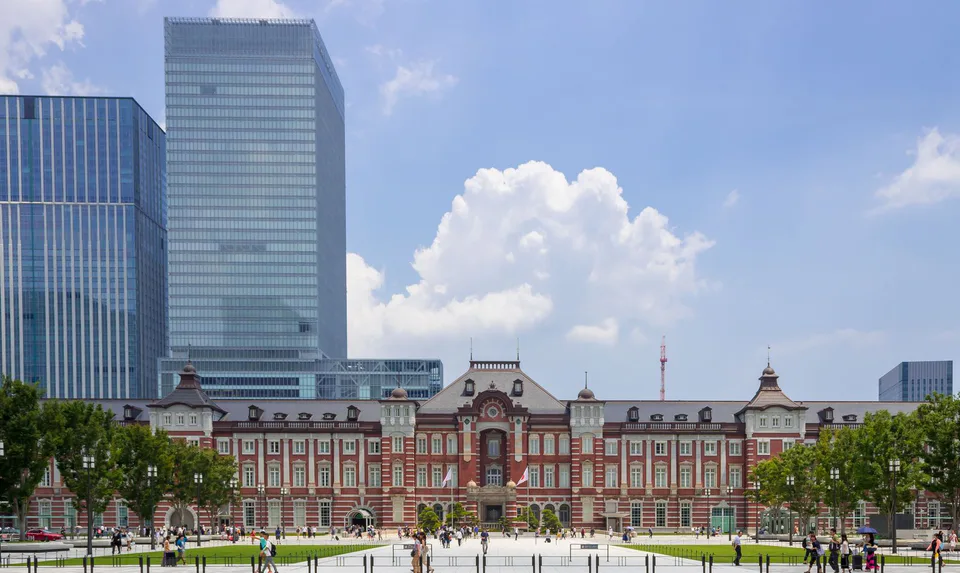
Sendai: use the rail spokes, then stop before Tohoku becomes a commute
Sendai is excellent for three to five nights when the plan follows rail spokes toward Yamadera, Matsushima, nearby Miyagi and selected Naruko days. A station hotel has unusually high value here because different days can leave in different directions.
JR East currently lists the Sendai Marugoto Pass at ¥2,930 (about US$18) for two days, with ordinary/rapid JR services and several local transport systems inside its defined free area. That can reduce ticket friction for the right itinerary. It does not make Oirase, Lake Towada or deep Hakkoda “close to Sendai.” Pass coverage and sensible base radius are separate questions.
My break point is when the trip starts requiring Hachinohe, Aomori, Morioka or a seasonal mountain bus as a second transport system after a long rail ride. If two such days are planned, move. Oirase and Lake Towada are the classic example: a night nearer the corridor can convert tomorrow morning from “repeat the transfer” into actual sightseeing.
Failure mode: do not assume a late Shinkansen solves an infrequent mountain bus. The last mile, not the fastest line-haul train, is usually the hard edge.
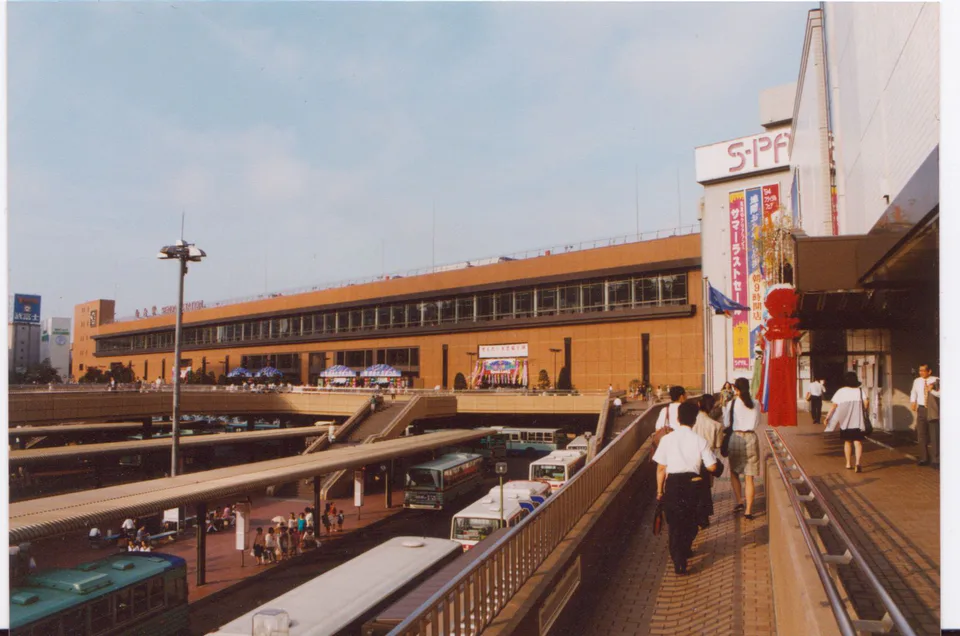
Osaka: the strongest “one hotel” city until Kyoto becomes the trip
Osaka is the easiest of these four bases to overuse because its rail network makes so many places look commutable. Official Osaka tourism guidance still points travellers toward JR and Hankyu for Kyoto, Keihan for Kyoto access from its own corridor, and Kintetsu for Nara. That variety is a genuine fixed-base advantage — if you choose the hotel around the railway you will actually ride.
Umeda fits JR/Hankyu-heavy days. Yodoyabashi or Kyobashi can be smarter for repeated Keihan use. Namba fits Kintetsu/Nankai-heavy trips and evenings in south Osaka. The hidden cost is cross-city positioning before the intercity journey even starts.
I would keep Osaka for daytime Kyoto trips. I would add Kyoto nights when two consecutive days centre on Kyoto, when Arashiyama needs an early start, or when late autumn illuminations are a priority. The decision is not “Osaka to Kyoto is easy.” It is whether repeating Osaka–Kyoto gives you anything after the second trip.
One-district rule: do not use the fixed base as permission to combine Nara, Arashiyama and Higashiyama into one day. Efficient intercity rail cannot repair an inefficient sightseeing map.
Fukuoka: the best luggage base, but the weakest excuse for crossing all of Kyushu
For three to five nights, Fukuoka is excellent for Dazaifu, Kitakyushu, Akizuki and selected Hita directions. Hakata is my default when JR, airport movement and intercity buses matter; Tenjin gets stronger when Nishitetsu and evening dining dominate.
The base breaks sooner once the itinerary points toward Yufuin, Beppu, Yabakei, Unzen, Takachiho or Kuju. Some are technically day-trippable under the right timetable; that is not the same as being good fixed-base days.
Yufuin shows the difference clearly. If the goal is shopping and a daytime walk, a return trip may be enough. If the goal is Lake Kinrin at dawn or a ryokan with dinner and private onsen, returning to Fukuoka destroys the part of Yufuin you were paying to experience. Takachiho, Unzen and Kuju create the same issue through reservation windows or last-mile access rather than ryokan timing.
Editorial verdict: Fukuoka is a base for one Kyushu direction at a time. Treating Hakata Station as proof that all of Kyushu is a day trip is the fastest way to turn a luggage-light itinerary into a timetable-heavy one.
The luggage question: one big suitcase should change the hotel, not every day trip
A fixed base has the highest value when the traveller has a large suitcase, children, an older companion or laundry needs. But “we have luggage” should normally change where the main hotel is, not force every destination into a return trip.
My preferred pattern is:
Keep the large case at the main base when the hotel allows it.
Use a small overnight bag for one strategically chosen remote night.
Do not carry the full international suitcase into a mountain bus corridor merely because the next hotel exists there.
Confirm storage deadlines, luggage-forwarding acceptance and check-in rules with the specific hotel; these are property policies, not universal Japan guarantees.
This hybrid plan removes the false choice between “move everything every night” and “never sleep outside the city.” For many autumn itineraries, one lightweight overnight is the lowest-friction answer.
ValueNavi recovery rule: two hard mornings in a row is usually enough
Fixed-base itineraries fail gradually. Day one starts at 06:00 and feels exciting. Day two starts at 05:30 because the next destination is farther. By day three, the traveller has technically avoided moving hotels but has recreated the fatigue of a touring itinerary.
I use a simple rule: after two early-start or long-return days, make the next day locally recoverable. That does not mean “do nothing.” It means choose an attraction that can be shortened, moved indoors or reached without a fragile last connection.
For children and older travellers, I would be stricter: one main sight before lunch, one cancellable second activity, and no assumption that a paid ticket justifies pushing through pain or fatigue. A fixed base should increase recovery capacity. If it removes hotel moves but leaves no recovery time, it has failed its purpose.
Failure modes: when “no hotel changes” becomes the expensive choice
↔ Scroll table left or right
Failure mode | What is actually going wrong | Fix |
Booking the cheapest room far from the useful station | You add a city transfer twice every excursion day. | Pay for the corridor, not the postcode. |
Using a rail pass to justify longer trips | Sunk transport value is replacing itinerary value. | Ask whether you would make the trip if each ride were paid separately. |
Returning after every illumination | The “same hotel” rule is controlling the best viewing time. | Add one overnight where evening is part of the attraction. |
Repeating the same two-hour corridor on consecutive days | You are paying the commute twice to avoid one hotel move. | Sleep in that corridor once. |
Planning by train time only | Station walk, queue, bus and final connection are missing. | Calculate door-to-door and save a second return option. |
Keeping the city room because it is prepaid | Sunk-cost thinking is deciding tomorrow’s itinerary. | Compare the lost room value with the experience/time recovered by moving. |
When should the recommendation reverse?
I would keep one hotel longer than this guide suggests if the group has mobility constraints, several large cases, a child who needs a stable sleep environment, or a hotel with unusually useful laundry/kitchen facilities. I would break the base earlier if photography depends on dawn, the destination has one scarce reservation, the last bus is fragile, or two consecutive days use the same distant corridor.
Weather can also reverse the answer. A fixed Tokyo or Osaka base becomes more valuable during an uncertain forecast because city alternatives are abundant. A remote overnight becomes more valuable when a short clear-weather window appears and being physically near the mountain lets you use it.
Final verdict: Tokyo and Osaka are the easiest cities here for a first-time traveller to keep as one autumn base. Sendai is excellent when the itinerary respects its rail spokes. Fukuoka is excellent when the plan stays within one Kyushu direction. None of them should be treated as a license to commute indefinitely. The fixed base is successful only when the hours saved by not moving luggage are still greater than the hours spent returning to the same bed.
Compare fixed-base hotels on Booking.com
Compare Japan autumn hotels on Expedia
Official checks
Japan Autumn Leaves in Mid-November: Kyoto, Tokyo, Fuji, Miyajima and Kyushu
Tokyo to Nikko Autumn Leaves: Trains, Passes, Day Trips and Overnight
Japan Autumn Leaves with Seniors and Children: Easy Routes and Hotels
Kenrokuen Autumn Leaves 2026: Early Entry, Illumination, Transport and Hotels
5- or 7-Day Kyushu Autumn Leaves Itinerary: Fukuoka, Yufuin, Beppu and Mountain Routes