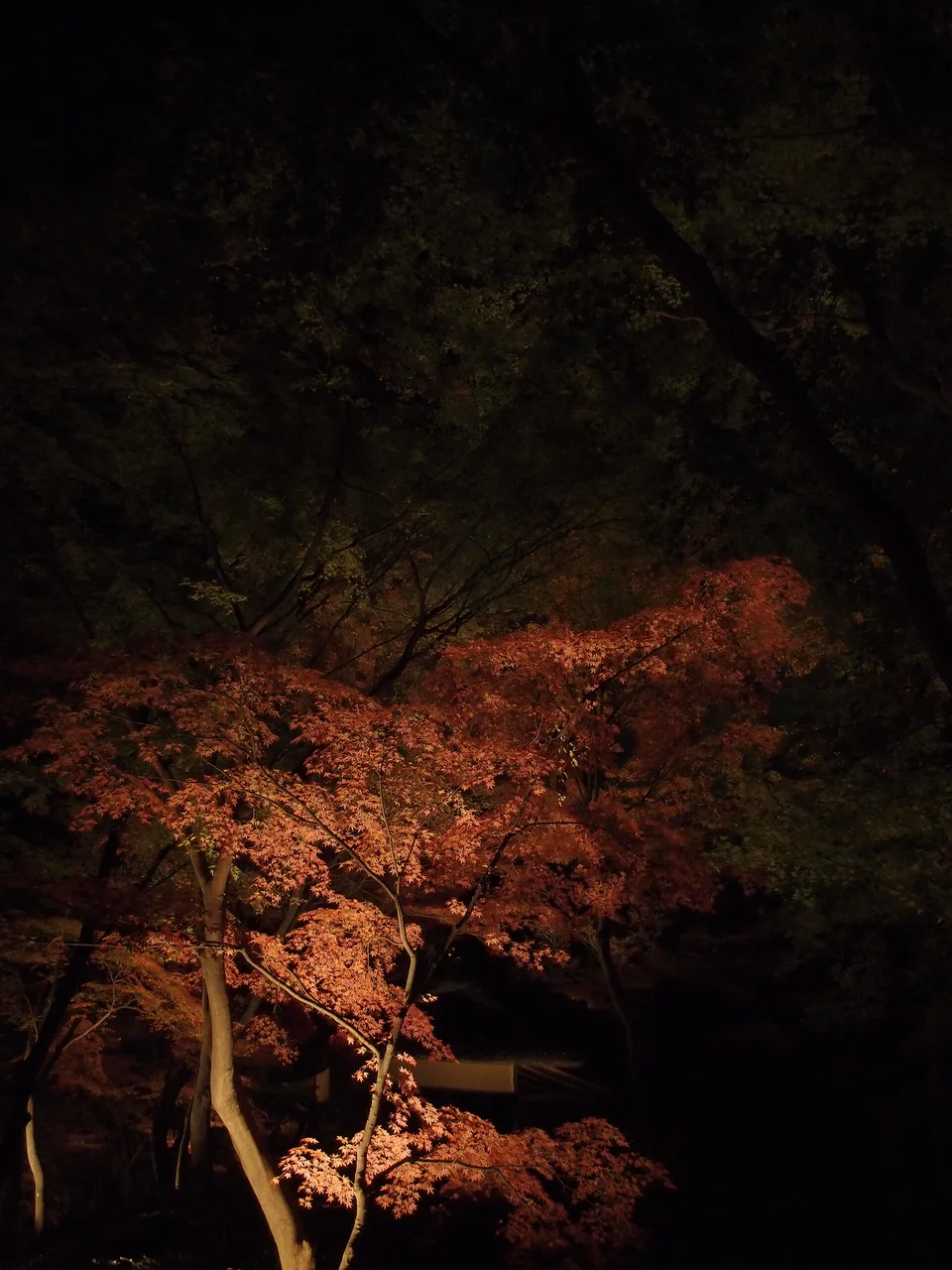
Japan autumn leaves in December can work, but only when the trip is designed as a winter-capable city itinerary with late foliage as an optional layer. Early December may still offer useful colour in Tokyo gardens, isolated Kyoto sites, Minoh, lowland Nara, the tail end on Miyajima, and selected lowland locations in Fukuoka or Saga. By mid-month, foliage should occupy a cancellable half-day rather than determine flights, nonrefundable hotels or long-distance rail tickets.
Japan autumn leaves December: the practical answer
For December 1–7, choose one corridor: Tokyo, Kyoto–Osaka–Nara, Hiroshima–Miyajima, or Fukuoka–Saga. For December 8–15, keep only a site supported by current-year photographs or an official condition report. After December 16, no region should be sold as a dependable foliage season; build around winter city culture, onsen, museums, temple architecture, illumination and food, with any remaining colour treated as a bonus.
What is confirmed for 2026, and what is not?
As of August 4, 2026, Japan’s detailed nationwide foliage forecast is not yet available for making December site-by-site promises. The regional order in this guide is therefore a historical planning framework, not a 2026 peak-colour forecast. Before departure, use four evidence layers: the current-year forecast, photographs or live cameras from the previous three to seven days, the mountain and city weather pattern, and official transport or venue notices. A photograph from another year proves only that colour existed at that exact place and date in that year.
Every December foliage stop should be removable the evening before without destroying the day. That requires a hotel in a city worth visiting without leaves, a museum or cultural backup in the same direction, and no dependency on a single rural return. If a possible late tree requires a nonrefundable Shinkansen, several transfers or the final bus of the day, it is not a sensible December foliage bet.
December 1–7: Tokyo is the safest flexible base
Tokyo is not safe because every garden remains red; it is safe because Rikugien, Koishikawa Korakuen, Shinjuku Gyoen and Gaien ginkgo can be exchanged within the same rail network. Stay in Ueno for Rikugien, museums and easy Tokyo Station access; Shinjuku for the western side, shopping and a low-risk indoor fallback; or Tokyo Station for intercity travel and airport protection. Assign only one condition-dependent garden to each day and pair it with an attraction that does not require foliage.
A three- or four-day Tokyo plan can give the clearest morning to one garden, use the afternoon for a museum, and reserve another day for ginkgo, fallen-leaf photography or winter illumination. Short December daylight makes it unrealistic to combine a western Tokyo excursion, two formal gardens and an evening event. When current reports show bare canopies, change the photographic objective to branches, reflections and leaf carpets instead of crossing the city for isolated colour.
Kyoto, Osaka and Nara: choose one area that still works
Kyoto can retain isolated early-December colour, but temples and gardens do not change together. Stay near Kyoto Station or Shijo, read the official condition information the evening before, and select one useful district rather than chasing historical late-colour records across the city. Let architecture, tea, craft, museums and dining carry the remaining hours. Use subway, JR, Keihan or Hankyu for the long movement and a bus only for the final segment during congestion.
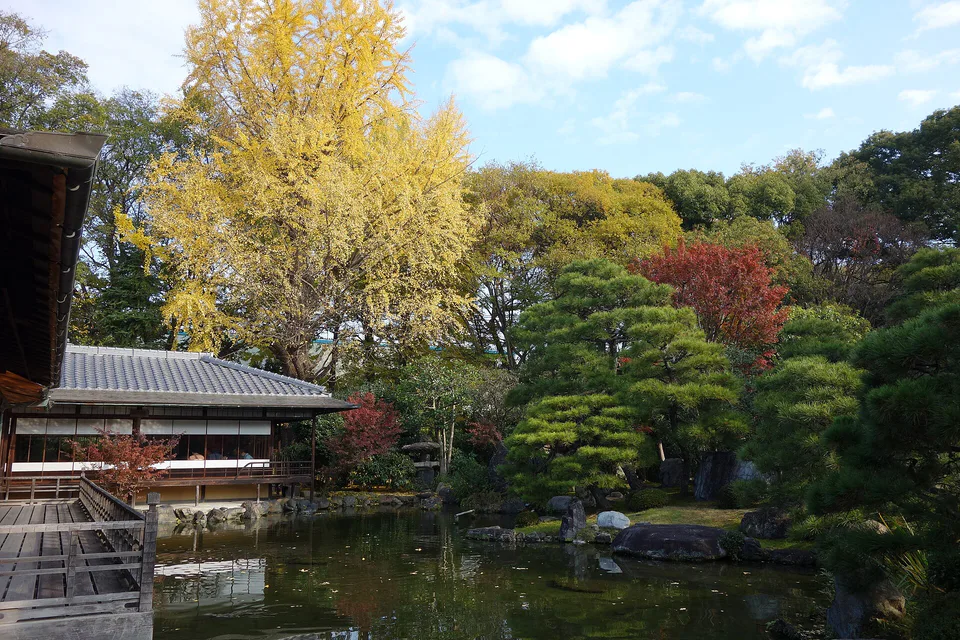
Minoh can be a complete nature day from Osaka when the trail, rain and return route are suitable. Osaka Castle, Nakanoshima and Expo ’70 Park are city colour rather than a guaranteed canopy. In Nara, make Nara Park, Naramachi, temples and museums the core, then check lower-elevation gardens; mountain Odaigahara is no longer a December target. Umeda is efficient for Kyoto and Minoh, while Namba is stronger for Nara, but a cheaper room does not justify daily cross-city foliage chasing.
Miyajima, Fukuoka and Saga: southern latitude is not a guarantee
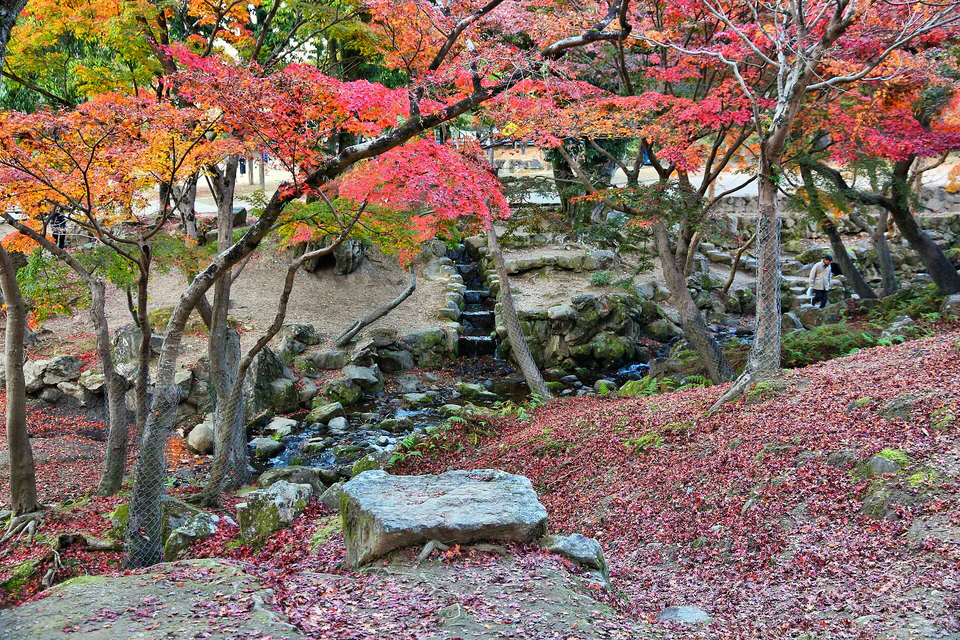
Momijidani on Miyajima should be treated only as a tail possibility. A three-day Hiroshima route still works through the shrine and tides, Daishoin, the Peace Memorial Museum, Shukkeien and food. Stay in Hiroshima for easier luggage and wet-weather logistics, or add one Miyajima night for dawn and fewer day visitors after confirming dinner and ferry timing. The hotel plan should not collapse when Momijidani is bare.
Historical late candidates in Fukuoka and Saga include Akizuki, Kiyomizuyama, Kawachi Reservoir, Takeo, Ureshino and selected Ogi lowlands, but their final transport and colour timing differ. Keep Hakata or Tenjin for three nights and give the best-weather day only to a place with current 2026 evidence. Use the second regional day for Takeo or Ureshino onsen, ceramics or Nagasaki City. The corridor remains worthwhile when foliage fails.
December 8–15: reduce foliage to a removable half-day
After the first week, retain only a late Tokyo garden or an isolated Fukuoka or Saga lowland site supported by current evidence. Kyoto as a whole, Minoh, Miyajima, Kawaguchiko, upper Mount Takao and the earlier Yufuin hills should not be the primary bet. If the evening check does not show clear evidence, activate the winter version the next morning. The correct test is whether the site is still worth visiting without foliage, not whether a few trees might remain.
After December 16: choose a winter destination, not a foliage destination
A few late trees at southern latitude or low elevation do not create a reliable season. Crossing Tokyo, Kyoto and Kyushu after mid-month has a high cost and a low probability of useful colour. Choose places that already work in winter: exhibitions and night views in Tokyo, architecture and culture in Kyoto, food in Osaka, history in Hiroshima, city scenery in Nagasaki, or onsen in Takeo and Ureshino. Remaining red or yellow leaves become an unexpected extra.
Four corridors that remain operational
Tokyo in four days: arrival and a city evening; one clear morning for a garden; one day for ginkgo, museums and shopping; and a final flexible garden or indoor day. Keep one hotel and do not move luggage for late foliage.
Kansai in five days: three Kyoto nights and two Osaka nights, or four Kyoto nights with a Nara day. Select only one district with current colour in Kyoto. An Osaka nature day and a Nara cultural day provide rain and bare-tree backups. Move the final night to Osaka only for a Kansai Airport morning flight or a meaningful Kyoto room-price difference.
Hiroshima and Miyajima in three days: two Hiroshima nights, or one Miyajima night plus one Hiroshima night. Use Hiroshima City, Miyajima and Shukkeien as three modules. Tide and foliage information change the order of the island day, not the hotel structure.
Fukuoka and Saga in five days: three Fukuoka nights, one Takeo or Ureshino night, and a final Fukuoka night when the flight requires it. Give the best weather to a verified lowland site; use ceramics, onsen and city content when rain or leaf fall removes foliage. Do not combine Unzen highlands, Yabakei, Akizuki and Miyajima in one late-season trip.
Hotels, international flights, luggage and tickets
Book a refundable city hotel first and add a rural or onsen night only after the seven-day check. Early darkness makes a station-adjacent hotel more valuable than a cheaper room reached by a low-frequency bus. Keep large luggage at one base, in storage or with a forwarding service rather than carrying it for one possible late garden. Waterfronts, dawn and open gardens feel colder than the city forecast, so carry a warm mid-layer, wind-resistant coat, gloves and grippy shoes.
IC cards are useful for urban subways and ordinary trains but do not create a Shinkansen ticket, limited-express reservation, sightseeing-train seat or rural bus booking. December flexibility is more valuable than maximising a rail pass. Protect the first and final nights around international flights and never place a single rural return on the day before departure. Open-jaw flights are useful only when they remove a real backtrack, not when they encourage cross-country foliage chasing.
Five failure scenarios and the correct response
Tokyo gardens have passed: keep the same city and use museums, observatories, winter lights and leaf-carpet photography. Kyoto has no late colour: use architecture, tea, craft and a quiet morning walk. Minoh is wet or closed: remain in Osaka. Momijidani is bare: retain the shrine, tides, Daishoin and Hiroshima. Fukuoka or Saga reports are weak: use Takeo or Ureshino onsen, ceramics or Nagasaki. None of these failures justifies a same-day journey of several hundred kilometres toward an old photograph.
Official verification
Use the current-year national foliage information first, then the official attraction, tourism association, railway and trail notices for the exact travel day. Japan Weather Association foliage information
Compare refundable Tokyo accommodation
Compare Tokyo hotels on Booking.com
Compare Tokyo hotels on Expedia
Related planning
Japan autumn leaves live update | Japan autumn leaves late November | Tokyo gardens and ginkgo comparison
Where to Stay
Centara Grand Hotel Osaka: Is the 40m² Family Room Worth It for Four?
Hotel Hankyu RESPIRE OSAKA: Is a 3-Minute Osaka Station Walk Worth the High-Rise Trade-Off?
Mitsui Garden Hotel Osaka Premier Review: Is Nakanoshima Worth the Trade-off?
Where to Stay
Mitsui Garden Hotel Ueno vs NOHGA: Station Access or More Room?
Hotel Gracery Shinjuku vs HOTEL GROOVE SHINJUKU: JR Walk or Airport Bus?
Hotel Metropolitan Tokyo Marunouchi vs Hotel Ryumeikan Tokyo: Early Shinkansen or 32.5m² Room?
Where to Stay
Kyoto Autumn Illumination 2026: Temples, Tickets, Transport and Hotels
Avoid Kyoto Autumn Crowds in 2026: Rail Corridors, Early Starts and Hotel Bases
Kyoto Hotels Sold Out in Autumn? Backup Bases in Otsu, Uji, Nara and Osaka