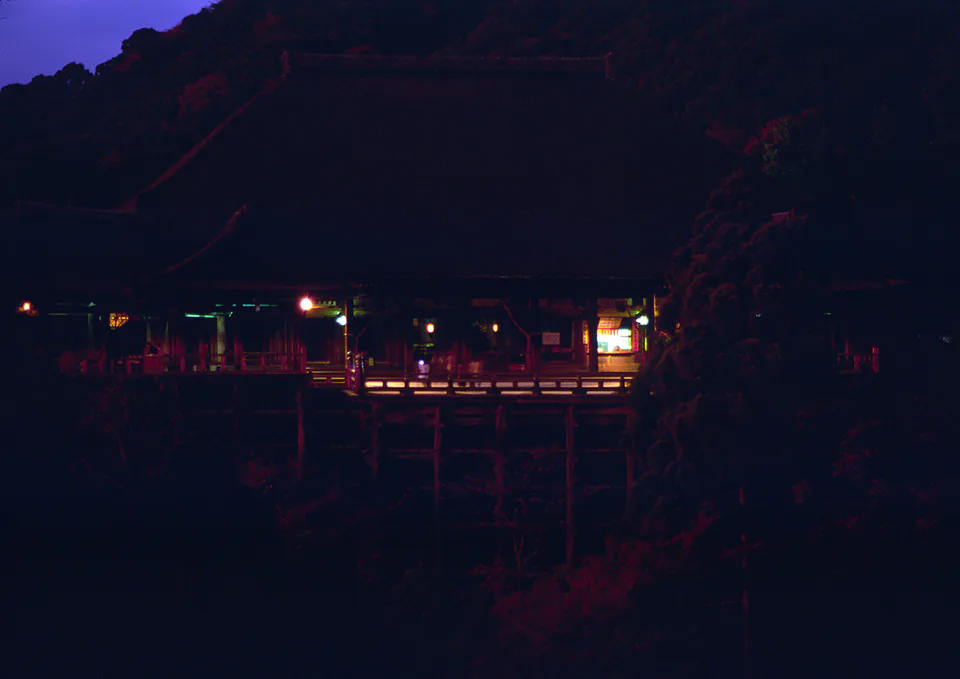
For a first Kyoto autumn-illumination night in 2026, plan one major temple as the anchor and let the rest of the evening serve it. Choose Kiyomizudera when the iconic Higashiyama night view is the point. Choose Eikando when dense maple atmosphere matters more than city panorama. Choose Toji when you are staying near Kyoto Station, travelling with older parents or simply want the night with the least complicated return.
The decision is not “which temple is best?” It is which temple still works after you include the approach, queue, admission cutoff, exit crowd, dinner and hotel return. Two events that both close around 21:00 do not create two usable evening slots; they create a race.
↔ Scroll table left or right
2026 anchor night | Choose it for | Confirmed operating fact | Main trade-off |
Eikando | Maples, Nanzenji/Okazaki pairing | Night reception 17:30–20:30, close 21:00; JPY 1,000 | Day and night are separate sessions; official English/Japanese pages currently disagree on the final date |
Kiyomizudera | Iconic first-Kyoto night | Nov 21–30; last entry 21:00; close 21:30; no reservation required | Uphill approach and heavy pedestrian flow |
Toji | Kyoto Station base, older travellers, simple logistics | Oct 31–Dec 13; 18:00–21:30, last entry 21:00; adult JPY 1,000 | Less of the Higashiyama evening-walk atmosphere |
The biggest 2026 planning issue at Eikando is an official date mismatch
Eikando’s Japanese official notice dated August 1, 2026 lists the night illumination from November 20 through December 6, with reception from 17:30 to 20:30 and closing at 21:00. The temple’s English “What’s New” page currently reproduces most of the same details but shows the end date as December 10.
Those two first-party pages conflict. ValueNavi will not silently reconcile them. If your trip falls December 7–10, treat the night visit as not confirmed for planning purposes until Eikando updates the pages or confirms the date directly. For dates through December 6, both versions cover the visit.
This matters because a hotel, dinner and east-Kyoto evening should not be built around a date that only one language version supports. Save the current official notice shortly before travel and recheck it again on the day.
Eikando’s day/night clear-out means the “perfect continuous temple day” does not exist
The Japanese and English notices agree that the daytime Autumnal Exhibition and the night visit are separate admissions. Day visitors must leave before the night session; you cannot remain inside through the changeover.
That is useful rather than inconvenient if you plan it correctly. A strong day is:
Nanzenji / Philosopher’s Path / daytime Eikando;
leave the temple area before the changeover;
eat, warm up, sit down and recharge devices;
return for the 17:30 night session.
The weak version is trying to stay on your feet in northern Higashiyama from morning until 21:00 because changing areas feels inefficient. The reset is not wasted time. It protects the one evening session you paid for.
Eikando also states that private cars and large tourist buses cannot enter during the autumn special period. Public transport should therefore be the baseline plan, not the fallback after parking fails.
Kiyomizudera is the strongest iconic night—and the hardest final 500 metres
Kiyomizudera’s official 2026 schedule confirms the autumn special night opening for November 21–30. The temple stays open until 21:30, with last entry at 21:00, and the official page states that no reservation is required.
The generous last-entry time can be misleading. Your practical cutoff is earlier because the temple entrance is not beside a rail station. Kiyomizudera’s access page gives a bus-to-Gojo-zaka route followed by about a ten-minute walk; in autumn that walk is uphill, pedestrian-heavy and often slower than the bare number suggests.
So I would choose Kiyomizu when the night view itself is worth the physical and crowd cost, not because it looks easy to pair with another closing-time event. For older parents, young children, formal footwear or anyone already exhausted from a full day, arriving earlier is more valuable than protecting the final possible admission.
A coherent sequence is Higashiyama daylight → early dinner → Kiyomizu. Do not add Arashiyama earlier just because both are “autumn sights.” You are spending the day’s walking budget before the evening even begins.
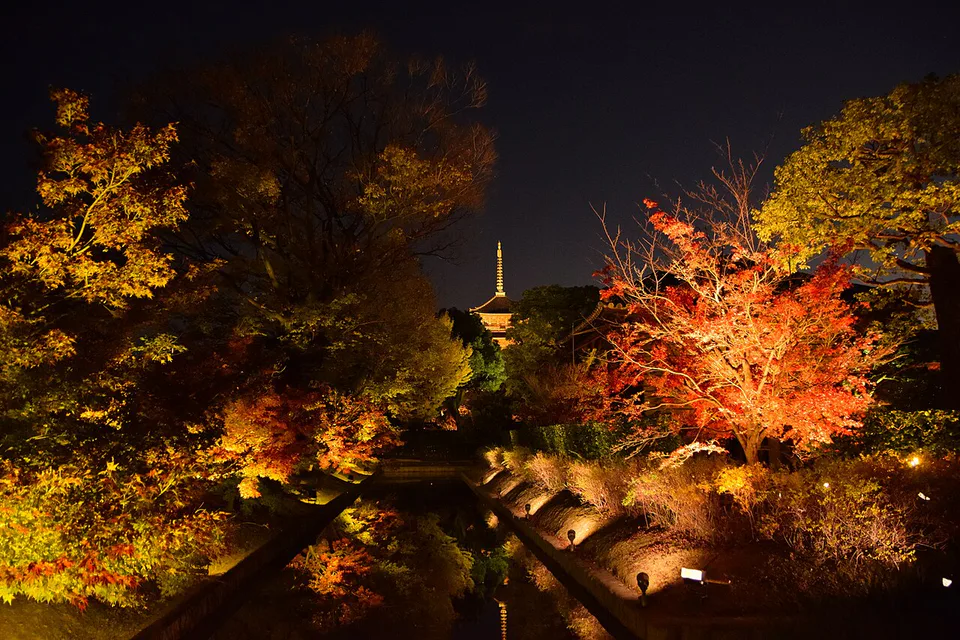
Toji is the low-friction answer that many itineraries underrate
Toji’s official 2026 autumn program confirms night illumination from October 31 through December 13, 18:00–21:30 with last entry at 21:00. The night admission is JPY 1,000 for adults and JPY 500 for high-school students and younger students under the official night fee table.
Its advantage is operational. A Kyoto Station-based traveller can eat, rest at the hotel, visit Toji and return without committing to the slopes and east-Kyoto pedestrian flow of a Kiyomizu night.
That makes Toji particularly strong for:
arrival day after a Shinkansen;
the final Kyoto night before an early JR departure;
older travellers or families protecting walking energy;
a rainy night when simpler access matters more.
The trade-off is experience type. Toji gives pagoda, temple architecture and reflection; it does not recreate a Gion/Higashiyama evening. Choose the friction you are willing to pay, not the temple with the longest recommendation list online.
One anchor illumination per night is the default
Kyoto illumination planning often fails because people compare closing times but ignore the time between exits and entrances.
A real transfer contains the final walk through the first temple, exit congestion, toilet/warm-drink stops, bus/subway/walking time, the second queue and the second site’s last-entry cutoff. Therefore, two illuminations only make sense when they are in the same compact district and the second visit is genuinely optional.
ValueNavi rule: one major paid illumination + dinner/walk is the normal first-trip night. Two paid events are a specialist plan, not an efficiency goal.
If you insist on two events, use the second-event abandonment test
Ask: if the first event takes 30 minutes longer than expected, can you calmly abandon the second?
If yes, the pairing may be reasonable. If no, you have turned both temples into timed transport checkpoints.
I would not pair Toji with Kiyomizu as a one-night “best of Kyoto” route merely because both accept visitors until 21:00. Their geography is wrong. Nor would I build Eikando + Kiyomizu as a rigid double when both are major autumn anchors. The map distance understates the crowd and walking cost.
A better double is one paid anchor plus a free/public night walk in the same area, where there is no second admission deadline.
Choose the hotel from the return journey
The hotel is part of the illumination plan because almost everyone leaves the event tired and at a similar time.
Kyoto Station: strongest for Toji, luggage-heavy arrivals/departures and Shinkansen/JR mornings.
Kawaramachi/Gion: stronger for Kiyomizu, east-Kyoto dinner and walking back into a central evening district.
Keage/Okazaki or an easy Tozai Line connection: stronger for Eikando/Nanzenji nights because it avoids making the exit entirely bus-dependent.
Use the Kyoto Station vs Gion decision if the hotel choice is still open. The correct illumination should follow the base and daytime geography when several options are equally attractive.
Staying in Osaka can still work for one Kyoto illumination. It becomes weaker when you also want an early Kyoto morning the same day or the next morning: the intercity commute is then paid on both edges of the night.
Dinner is a scheduling tool, not an afterthought
Many illumination nights are easier when dinner moves earlier than normal. Eating after the event sounds efficient, but it concentrates restaurant demand at the same time the crowd exits.
For Kiyomizu, I would generally solve dinner before the climb unless a specific late restaurant is already verified. For Eikando, the day/night changeover naturally creates a food and rest window. For Toji, Kyoto Station gives the most flexible before/after meal options.
Families and travellers with dietary requirements should treat this more strictly. “We will find something after 21:00” is not a robust plan when the whole group is cold and tired.
Rain changes which illumination is worth the effort
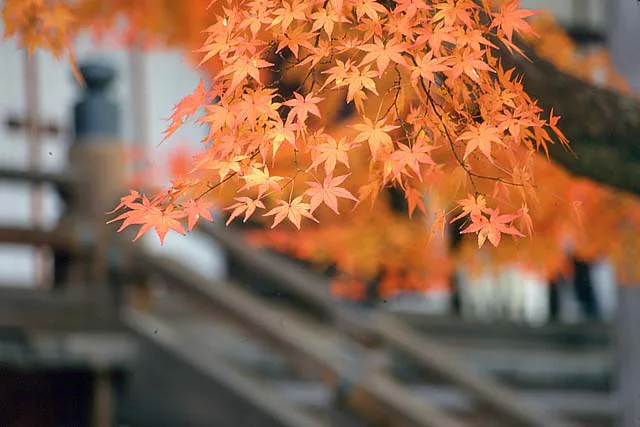
Light rain can make illuminated leaves and reflections atmospheric. It also slows every approach, creates slippery stone and compresses umbrellas into narrow paths.
Toji gains relative value because the access chain is simpler.
Kiyomizu loses relative value if the group has mobility issues because the uphill approach becomes more tiring.
Eikando day + night loses value faster if everyone is already wet and cold by the afternoon clear-out.
Do not let a non-refundable hotel or a famous photo force a walking plan that no longer suits the weather.

Three 2026 nights that have a clear job
Iconic first visit: Kiyomizudera
Higashiyama daylight → early dinner → Kiyomizu special night viewing. Best when the famous Kyoto night composition is a trip priority and the group can handle the approach.
Maple-first: Eikando
Nanzenji / daytime Eikando → full afternoon reset → return for Eikando night. Best when the temple’s maple atmosphere is the anchor and your date is definitely inside the confirmed operating period.
Low-friction: Toji
JR-heavy day or arrival → hotel rest → early dinner → Toji → easy Kyoto Station return. Best when the group values a good night with fewer transport decisions.
Final verdict
Kiyomizudera is the iconic choice, Eikando is the maple-first choice, and Toji is the logistics-first choice. For most first-time visitors, choose one paid illumination per night and spend the saved complexity on dinner, rest and a safer return.
The 2026 red-team point is Eikando’s current official-source mismatch. The Japanese notice lists the night through December 6, while the English page currently says December 10. If your date is December 7–10, do not book a Kyoto evening around Eikando until the temple resolves the discrepancy.
The goal is not to maximise the number of illuminated temples. It is to finish one night feeling that the event was the evening—not the checkpoint between two buses.
Official sources
Eikando Japanese official notice · Eikando English official notice · Kiyomizudera — 2026 special night viewing · Toji — 2026 autumn night viewing. Checked August 25, 2026. Event rules can change; recheck the temple’s own page before travel.
Okinawa Travel Guide: First-Time Itinerary, Hotels and Transport
Japan Autumn Leaves in Mid-November: Kyoto, Tokyo, Fuji, Miyajima and Kyushu
Dazaifu Shinko-sai 2026: Mikoshi Route, Candlelight and Transport
Iya Valley Autumn Leaves Guide: Driving, Buses, Vine Bridges, Onsen and Hotels
Osaka Hotels for Kyoto and Kobe Day Trips: When 3–5 Minutes to the Station Matter Twice a Day