Okinawa Main Island looks compact on a map, which creates a misleading first impression: land at Naha, collect a car, book one hotel and drive everywhere. The friction appears after the bookings are made. A late flight leaves little appetite for a dark drive to the north. A Naha hotel is convenient until three consecutive day trips head to Onna, Motobu and Kouri Island. A resort stay feels effortless until the final morning requires fuel, a rental-car return, a shuttle and an international check-in. A good Okinawa trip is built in a different order from a city break. Decide the number of usable days, which parts of the island matter, whether driving solves more problems than it creates, and where the first and last nights belong. Only then should you fill the map with attractions.
The planning answer most first-time visitors need
Simplest choice: five days and four nights, with Naha at the beginning, two nights in Onna or Nago, and a final Naha night when the departure is early. Lower-budget choice: stay in Naha, use the monorail, buses and organised day trips, and rent a car only for one or two northern days. Lowest-risk choice: do not place a marine activity on departure day, avoid a long drive after a late arrival, and choose cancellation terms you can actually use. This guide suits first- and second-time visitors focusing on Okinawa Main Island. It is not a hotel-by-hotel review, a rental-insurance manual or a guide to Miyakojima and Ishigaki.
How many days do you need in Okinawa?
Three days: one base and one direction
A three-day trip cannot comfortably cover Naha, the central coast and the far north, especially when arrival and departure times remove half-days. Choose Naha and the south, or Naha plus one west-coast or northern excursion. Multiple hotel changes cost more time than they save.
Four days: city plus coast
Four days can combine Naha, the west coast and Churaumi, but it cannot also treat a Kerama boat day, Blue Cave, the south and a leisurely resort stay as equal priorities. Two accommodation bases or a short car-rental window usually work better than trying to cover the island from one end.
Five days: the balanced first trip
Five days create room for a Naha arrival, a central-coast day, one weather-dependent activity and a full northern day. It is still a compact trip rather than a slow beach holiday, but it gives each major decision its own space.
Seven days: fewer compromises, not necessarily more stops
A week allows consecutive resort nights, a genuine weather buffer, slower travel with children or older relatives, or a Kerama day without sacrificing the north. Adding Miyakojima or Ishigaki changes the journey into a multi-island trip and should be planned as a separate flight segment.
Start with the island's transport map, not a list of attractions
Naha has the Yui Rail monorail, local buses and taxis. Airport and resort buses reach parts of Chatan, Onna, Nago, Motobu and the aquarium area, but Okinawa does not have an island-wide railway. Once an itinerary begins linking beaches, roadside stops and several northern sights, the final connection becomes as important as the main bus route. Travellers who remain in Naha, add one organised excursion and choose accommodation with a useful transfer can travel well without driving. A family carrying luggage between a resort, Churaumi and Kouri Island will usually gain much more from a car. The question is not whether Okinawa is a driving destination; it is whether your particular route needs door-to-door flexibility. For a practical test of a car-free city stay, read the two-day Naha itinerary without a car.
Driving in Okinawa: the licence question comes before the car comparison
Japan drives on the left and most rental vehicles are right-hand drive. The document rules depend on the jurisdiction that issued your licence. Many visitors need a paper International Driving Permit issued under the 1949 Geneva Convention together with their original licence and passport. Travellers from certain jurisdictions instead use their original licence plus an authorised Japanese translation. Digital or card-only permits should not be assumed valid. Check the current JNTO guidance and the rental company's requirements before paying. Even a legally prepared driver may not want to begin with a late-night transfer. Unfamiliar lane position, signs, parking rules and a tired group make the first hour harder. If the flight arrives in the evening, sleep in Naha and collect the vehicle the next morning. Once the route and paperwork are settled, use the Okinawa rental comparison for insurance, ETC, child seats and vehicle-class details.
Search Okinawa rental-car availability
Affiliate link. Confirm the exact pickup and return branches, opening hours, vehicle class, insurance, NOC, child seats and cancellation conditions on the live booking page.
Airport pickup or Naha pickup? You may not need a car for the whole trip
Airport-area pickup is logical when the flight lands early, the group is large and the first hotel is already north of Naha. Build in time for the rental shuttle, queue, contract explanation, vehicle inspection and luggage loading; the car is not necessarily waiting beside the arrivals door. A city pickup works better after a late arrival or when the first day is devoted to Naha. It can also avoid paying for a parked vehicle. Before an early departure, returning the car the previous afternoon and sleeping in Naha removes fuel, inspection, shuttle and traffic uncertainty from flight morning.
Where to stay in Okinawa: five bases with different jobs
Naha: airport bookends, food and car-free days
Naha is the easiest place for a late arrival, early departure and days built around the monorail, markets, Shuri and urban dining. It is a poor choice for repeated commutes to Onna and Motobu.
Chatan: a central compromise with an evening waterfront
Chatan suits couples and families who want restaurants, a walkable evening area and a position between Naha and Onna. There is no monorail, so a bus, transfer, taxi or car remains part of the plan.
Onna: resort time and marine activities
Onna is the natural base when the hotel, west-coast scenery and activities near Cape Maeda are part of the holiday itself. Its value falls if every evening is spent driving back toward Naha for shopping and dinner.
Nago: the practical northern hub
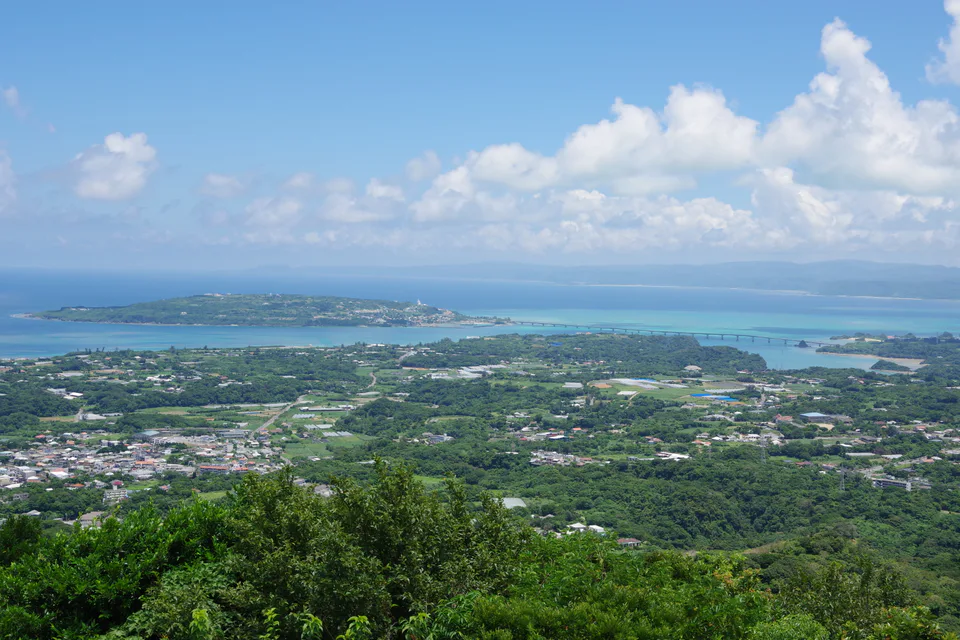
Nago offers more everyday services and route options than the quieter far north. It is a useful base for Churaumi, Kouri Island and northern drives, though it may feel more functional than a dedicated resort area.
Motobu: Churaumi and the north before the day-trippers arrive
Motobu suits travellers who want Ocean Expo Park, Bise and quieter northern mornings close to their hotel. Dining is more dispersed, and the journey south matters on departure day. For a first five-day trip, a reliable pattern is one Naha night, two nights in Onna or Nago, then a final Naha night. With favourable flight times, two Naha nights followed by two central or northern nights can be cleaner. One hotel reduces packing but increases driving; three or more hotels usually make check-in and luggage the hidden itinerary.
A five-day Okinawa itinerary framework
Day 1 — Arrive in Naha. Check in, eat locally and avoid a tired night drive.
Day 2 — Collect the car and move north through Chatan, Yomitan or Onna; choose two meaningful stops, not ten roadside pins.
Day 3 — Reserve a half day for Blue Cave or another marine activity, with the remaining time protected for the coast or resort.
Day 4 — Give the north a complete day: Churaumi, Bise and Kouri Island selected according to weather and group energy.
Day 5 — Match the plan to the flight. A late departure may allow the south; an early flight should contain little beyond the airport transfer.
For the detailed route, continue to the five-day Okinawa self-drive itinerary.
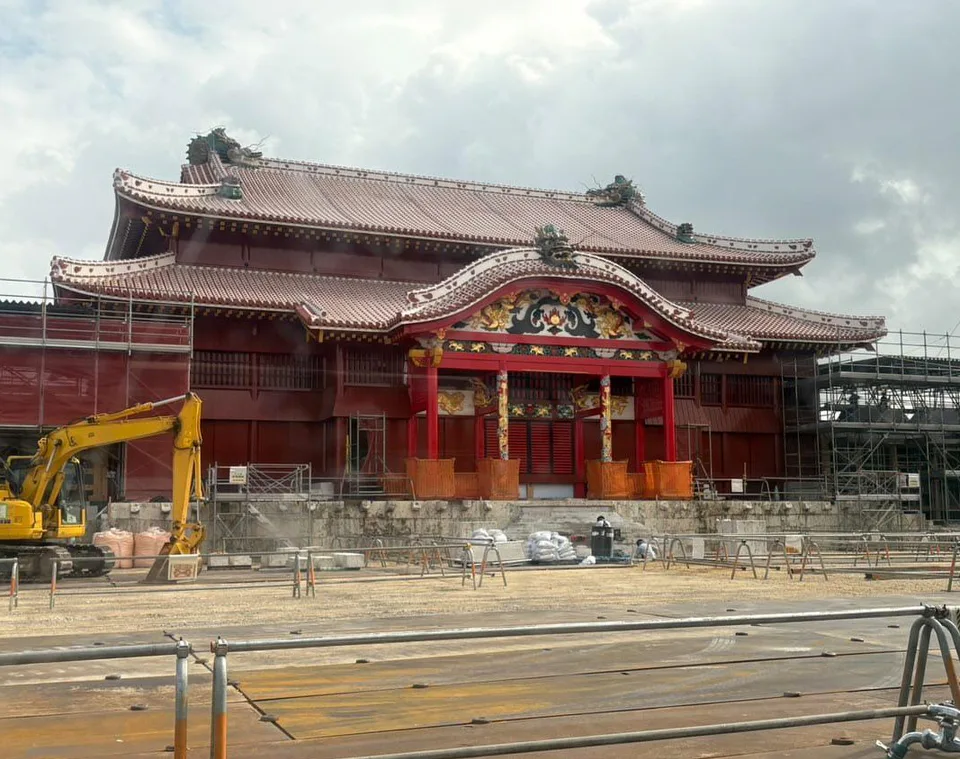
Trips from November 23, 2026 need a different Shuri Castle time budget
Shuri Castle changes meaning for first-time itineraries on November 23, 2026, when the restored Seiden interior opens to the public. The official system uses timed advance reservations in 30-minute slots for visitors who want to enter the Seiden; the adult paid-area admission also changes to JPY 1,000 from that date. For November 23–December 31 visits, individual reservations are released in two batches on September 1 and October 1 at 13:00. From January 2027 onward, sales begin at 13:00 on the first day of the month two months before the visit.
The bigger planning consequence is time. Shuri Castle’s official guidance currently estimates about 20 minutes from Shuri Station to Suimuikan, then roughly 5 minutes to Shureimon, 15 minutes to the ticket gate, another 15 minutes to the Seiden entrance, about 15 minutes inside the Seiden and around 40 minutes for the rest of the paid area back toward Suimuikan. Those are component estimates, not a promise of a fixed total, but they show why a post-reopening Shuri visit should no longer be treated as a tiny airport-day insert.
ValueNavi rule: before November 23, use the current reconstruction-period visit as a flexible Naha cultural stop. On or after November 23, if the restored Seiden interior matters, give Shuri a protected half-day block and book the interior slot first. Do not place the reserved visit behind a same-morning northern drive, marine activity or rental-car return that can make you miss the time window. If you only want the exterior and other paid-area spaces, the official site says a Seiden-interior reservation is not required, so the day can remain more flexible.
Churaumi, Blue Cave or the Kerama Islands?
Churaumi Aquarium is the easiest choice for families, older travellers and groups that do not want the day to depend entirely on sea conditions, although official opening information and temporary closures still need checking. Blue Cave is a half-day activity for travellers comfortable in the water and willing to accept a change of site or cancellation. A Kerama boat day occupies most of the day and brings the greatest exposure to wind, waves, seasickness, check-in times and a tiring return. Use the Blue Cave snorkelling guide for the near-shore option, and the Kerama discovery-diving guide when comparing a full boat day.
Families, couples and multigenerational groups need different pacing
Families benefit from fewer hotel changes and a route that respects meals, naps and time to wash after the beach. Couples often get more from protecting one Onna or Chatan evening than from adding another attraction. Older relatives may value fewer vehicle entries, shorter walks and simpler bathrooms more than a theoretically efficient sightseeing loop. None of these groups should combine a marine morning, a long northern drive and a fixed dinner booking without generous margins.
Rain and typhoons require two different backup plans
Ordinary rain does not automatically end a road trip. Marine activities, however, should operate only when the provider and local authorities judge the wind, waves, tides and warnings acceptable. During a typhoon, flights, ferries, buses, the monorail and roads may be suspended or closed, and driving is not a substitute for cancelled public transport. Bright weather after the storm does not mean the sea has recovered; swells can remain dangerous. Keep one indoor choice near each hotel rather than building a completely separate rainy itinerary. The Okinawa rainy-day culture guide provides deeper alternatives.
How to build an Okinawa budget without relying on a misleading average
The major components are flights and baggage, accommodation, the number and type of rental-car days, fuel, tolls and parking, marine activities, food and mobile data. A couple using business hotels in Naha and renting a compact car for two days is buying a different trip from a family using a beach resort and a larger vehicle for the full stay. Price the flights, two accommodation bases and the car on the same day, then add the activities that genuinely need reservations. Keep a separate margin for transport changes, weather and an unplanned meal. Never treat a non-refundable rate as equivalent to a flexible booking, and do not build the budget from an advertised minimum that is unavailable for your dates.
What to book early, and what can remain flexible
Book the route-defining items first: flights, peak or weekend accommodation, a rental vehicle when a particular size is required, and popular marine sessions. A resort that is central to the holiday also belongs in this group because replacing it changes the purpose of the stay. Ordinary meals, shopping, an unstructured Naha afternoon and many indoor attractions do not need to be fixed months in advance. Tickets and transfers should be bought according to the real travel date, official operating status and cancellation terms, not simply because a booking page displays urgency.
Okinawa planning mistakes that create avoidable friction
Collecting a car after a late flight and driving straight to the far north.
Sleeping in Naha every night while most days are in Onna and Motobu.
Comparing only the daily rental price and ignoring shuttles, parking, fuel and return time.
Treating Blue Cave, Kerama trips and beach conditions as guaranteed.
Changing hotel every night to save driving, then losing time to luggage and check-in.
Planning sightseeing before an early flight using only the map's normal travel time.
For trips from November 23, treating a reserved Seiden interior slot as though Shuri were still an untimed drop-in stop.
Quoting a fixed total budget, discount or lowest price without checking live dates and terms.
The best Okinawa plan removes journeys before it adds attractions
For most first trips, Naha should absorb the airport and city days, while Onna, Nago or Motobu should absorb the coast and north. Rent the car for the section that benefits from it instead of treating the vehicle as part of the admission ticket to Okinawa. The simplest, cheapest and lowest-risk itineraries are not identical; the right one protects whatever matters most to your group—resort time, marine activities, family energy or the freedom of a road trip.
More Okinawa guides
Families can use the Okinawa family road-trip guide, costs can be tested with the five-day Okinawa budget, and connectivity and airport-night planning are covered by the Okinawa eSIM guide and Naha Airport late-arrival and early-flight hotel guide
Official checks to make before departure
Driving documents and rules: Japan National Tourism Organization | Island transport: Visit Okinawa Japan | Typhoon precautions: Visit Okinawa Japan | Shuri Castle Seiden reservation: Shuri Castle official site | Aquarium hours: Okinawa Churaumi Aquarium | Cape Maeda sea status: official live page. Information checked on 25 August 2026.
Search accommodation across Okinawa
Search Okinawa on Booking.com
Search Okinawa on Expedia
These are accommodation affiliate links. Live availability, taxes, room types, payment and cancellation terms are confirmed on the final booking page.
Aichi-Nagoya Asian Games 2026: Tickets, Venues, Hotels and Transport
Takayama Autumn Leaves: Old Town, Hida Folk Village, Transport and Hotels
Beppu Hells 2-Day Itinerary: Route, Transport and Onsen Tips
Lake Towada Oirase 2 Day Itinerary: Buses, Walks, Cruise and Hotels
10-Day Japan Autumn Leaves Itinerary: Regional Routes, Transport and Where to Stay