
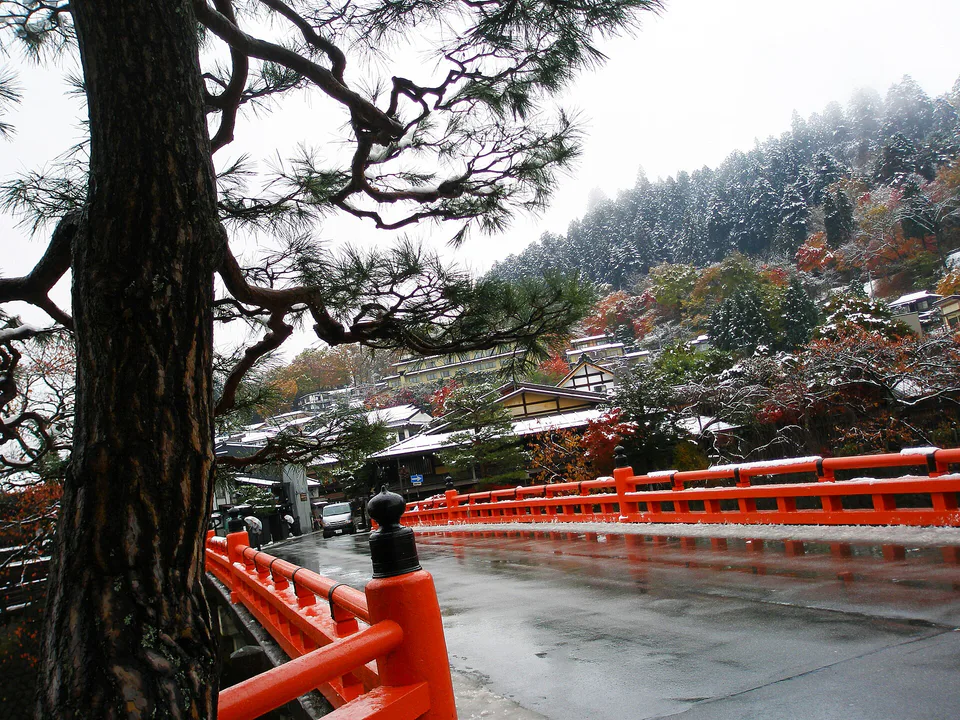
Do not plan Takayama autumn leaves from the word “October.” Plan from the foliage clock you are actually chasing. Shin-Hotaka in the Northern Alps usually peaks around mid-October, while Takayama’s central sights such as Nakabashi are normally strongest from late October into early November. Higashiyama and Hida Folk Village bridge the gap, with official typical windows beginning around mid-October. The same trip date can therefore mean “go high for colour” or “stay in town for colour.”
For a first visit, I would use one night for Takayama city only and two nights when you want one separate foliage branch day. The second day should have one job: Hida Folk Village, Shin-Hotaka, or an onward Shirakawa-go route. Do not combine them just because all three appear under “Takayama autumn” in search results.
Checked August 25, 2026. Takayama’s official tourism site publishes 2026 foliage guidance and a live colour-status section, but actual peak dates remain weather-dependent. The date bands below are planning ranges from official typical viewing periods, not a promise that a specific tree will peak on a specific day.
↔ Scroll table left or right
Your dates | Best first check | What I would not assume |
Early October | High-elevation areas / Shin-Hotaka | Takayama old town will already be at peak colour |
Mid-October | Shin-Hotaka, Higashiyama, Hida Folk Village | One foliage status applies to both the Alps and city streets |
Late October–early November | Takayama city + Hida Folk Village | You need a mountain day to justify an autumn trip |
Mid-November | Check live city status before committing to a remote foliage day | High-altitude colour will still match the city |
Late November | Specific late-colour trees such as Hida Kokubunji’s ginkgo, if current status supports it | “Takayama autumn leaves” still means broad red-maple peak |
The biggest planning mistake is chasing city colour on a mountain timetable
Takayama’s official tourism guidance says higher-elevation suburban areas begin their autumn season from early October, while the city normally reaches its best colour from late October into mid-November. Within the city, the official 2026 walking guide gives Nakabashi and Takayama Jinya a typical window of late October to early November, while Higashiyama, Shiroyama and Hida Folk Village start earlier, around mid-October.
Shin-Hotaka runs on an even earlier mountain clock. The ropeway’s official seasonal page says its foliage usually peaks around mid-October. The upper observation area reaches 2,156 metres, and the operator lists about 100 minutes by bus from Takayama Bus Center to Shin-Hotaka.
That 100-minute access time changes the decision. Shin-Hotaka is not an “extra stop” after the old town. It is a separate day or a major half-day whose value depends on visibility, wind and mountain colour. If your dates are October 10–18 and foliage is the main goal, I would check Shin-Hotaka first. If your dates are October 28–November 5, I would start with the city and Hida Folk Village before spending four hours of the day on a mountain round trip.
This is ValueNavi analysis, not a fixed colour forecast. Use the official live status near departure because warm weather, storms and early snow can shift or shorten the useful window.
Late October to early November is the easiest first-time overlap
If you have flexibility, late October into early November is the simplest period for a first trip centred on Takayama itself. The official typical windows overlap across Nakabashi, Takayama Jinya, Higashiyama, Shiroyama and Hida Folk Village. That gives you multiple fallback areas without needing to predict one exact tree.
It also creates a better weather strategy. On a clear day, use the longer Higashiyama or Shiroyama walk. In rain, keep the route tighter around the old town, Jinya, Nakabashi and indoor stops. If Hida Folk Village has the stronger colour, move that block to the afternoon or evening rather than forcing a mountain excursion.
The important point is optionality. A trip that works only if one remote foliage site is perfect is fragile. A city-centred trip with several overlapping foliage zones can still work when one area is early, late or wet.
Higashiyama is a real walk, not an old-town add-on
Takayama’s official guide describes the Higashiyama Walking Course as roughly 5 km and around two hours for the full route. Its typical foliage window is mid-October to early November. That makes it useful for travellers who want temples and autumn trees rather than only the photogenic merchant streets.
I would not place the full Higashiyama route after a long arrival from Nagoya and then add an evening illumination. The distance is modest on paper but the trip becomes walking-heavy once old-town streets, markets and station transfers are included. With one night, choose either the longer Higashiyama/Shiroyama walk or a slower old-town afternoon—not both at full length.
Older travellers and families should shorten the route rather than treating the 5 km loop as a completeness requirement. Autumn value comes from the time of day and colour, not from finishing every mapped segment.
Hida Folk Village is the best second autumn environment without leaving Takayama
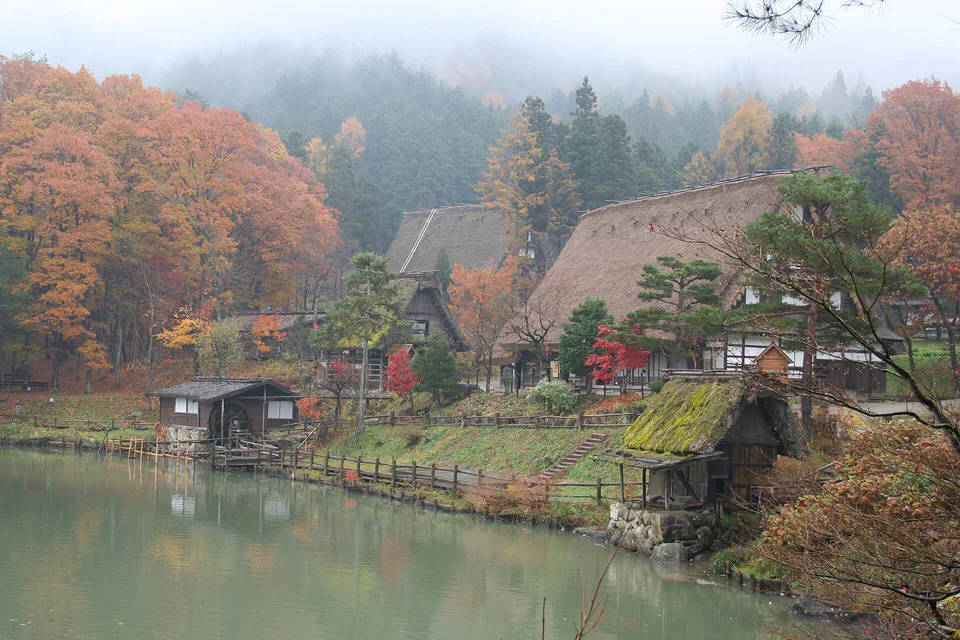
Hida Folk Village solves a different problem from the old town. The official site describes a large open-air village of traditional Hida houses, and the official 2026 autumn guide gives it a typical foliage window from mid-October to early November. You get thatched farmhouses, water, trees and a more rural visual setting without committing to the much longer transfer to Shin-Hotaka or Shirakawa-go.
That makes it my default Day 2 branch for a two-night first visit when the dates already suit central Takayama. You can keep the hotel, leave large luggage behind and use the day for one coherent landscape rather than turning the trip into another intercity transfer.
The 2026 Hida Folk Village autumn illumination runs on Saturdays, Sundays and public holidays from October 10 through November 8, from 17:30 to 20:30. The official event page lists admission during the illumination at JPY 300 for adults and JPY 100 for children.
But there is an important transport failure mode: Takayama’s official autumn guide explicitly says the normal bus does not operate during the illumination hours and recommends using a taxi. Do not book a station hotel, plan a 20:30 finish and assume the daytime bus timetable will bring you back. The night version has a different last-mile plan from the daytime version.
Shin-Hotaka is worth the day only when the mountain conditions are the point
Shin-Hotaka becomes the better second day when three conditions line up: your dates suit the earlier high-elevation foliage, visibility is good enough to justify the mountain journey, and you are willing to spend substantial transport time for alpine scenery.
The ropeway’s current English information lists the Takayama Bus Center journey at around 100 minutes and the observation deck at 2,156 metres. Its standard April–November operating pattern starts around 08:30, with earlier starts on October weekends and holidays. It can suspend service in strong winds even when the weather elsewhere looks acceptable.
This creates a hard red-team question: would you still be happy with the day if the upper panorama is clouded? If no, keep Shin-Hotaka as the weather-dependent branch and do not make a non-refundable Takayama itinerary depend on it.
If you are also considering Kamikochi, choose between mountain corridors rather than stacking both. Two nights in Takayama do not create enough spare time for a different alpine expedition every day.
The 2026 illuminations are a night-use bonus, not a foliage forecast
Nakabashi’s 2026 autumn illumination runs October 1 through November 30 from 17:30 to 21:00. Enakogawa uses the same dates and hours except October 9, when the official schedule says the illumination is not held. Those event dates are much wider than the normal city foliage peak.
That distinction matters. A bridge can be illuminated on October 3 while nearby city trees are still early, or on November 25 after much of the red-maple season has passed. The light-up is a reason to use the evening; it is not evidence that your travel date is peak foliage.
For a one-night stay, I would choose one evening corridor—Nakabashi/old town or Enakogawa—rather than walking both simply because they are free. Save energy for the morning market or the next transfer.
One night: keep the entire trip walkable
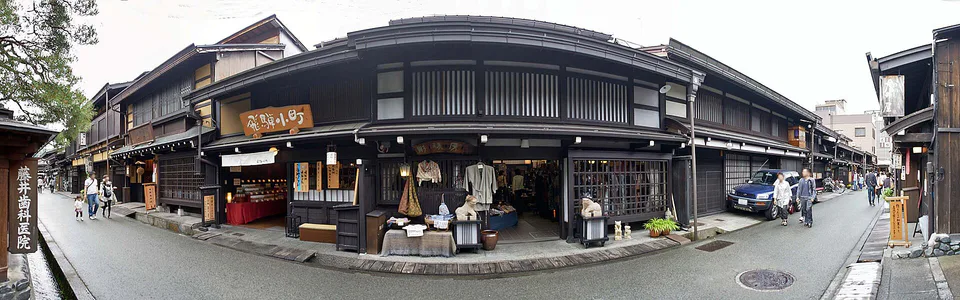
With one night, I would keep Takayama itself as the product. Arrive, store or drop luggage, use the old town plus either Higashiyama or a shorter foliage walk, have dinner, use one illumination if your date fits, then take the morning market before departure.
The official tourism FAQ lists the Miyagawa Morning Market from 07:00 to noon from April through November. That early window is part of why the hotel night has value: a Nagoya day trip arriving late morning cannot reproduce it.
Do not add Shin-Hotaka, Kamikochi or a full Shirakawa-go return trip to the same one-night stay. Once a remote branch consumes Day 2, Takayama becomes little more than a sleeping stop and the autumn-city reason for staying disappears.
Two nights: choose exactly one second-day branch
Two nights are the strongest first-time format because Night 1 buys the Takayama evening and the second full day can be selected by date and weather.
Early to mid-October: Shin-Hotaka gets stronger if the live mountain status is good; central Takayama may still be early.
Mid-October to early November: Hida Folk Village is the lower-friction second environment; Higashiyama also becomes strong if you prefer walking.
Late October to early November: city foliage is usually the core product. Use Hida Folk Village only if you want farmhouse scenery, not because you need “another foliage place.”
Takayama → Shirakawa-go → Kanazawa: make Shirakawa-go an onward transfer day rather than returning to Takayama when the broader itinerary already moves west/north. Use the Takayama–Shirakawa-go–Kanazawa route instead of backtracking.
The second night is not permission to add two branches. It is what lets you delay the decision until weather and live foliage status are clearer.
Three nights: add a mountain day only if the hotel base still saves luggage movement
A third night makes sense when Takayama is functioning as a stable mountain-region base. It can support one city day, one nearby foliage day and one alpine or regional branch without a new hotel every morning.
It becomes poor value if every waking day leaves Takayama before breakfast and returns after dinner. In that case the hotel is not a base; it is a nightly backtrack. If Shirakawa-go and Kanazawa are both fixed, move forward through the region. If Okuhida/Shin-Hotaka is the real priority, consider whether an Okuhida onsen night would remove a long return journey.
Station hotel or old-town hotel? Let the next morning decide
For autumn, the old town has the obvious emotional advantage: you can walk to Nakabashi, Enakogawa and dinner without rebuilding the route at night. But a station-area hotel can be the better travel product when Day 2 begins with an early bus or train.
I would favour the station/bus-center side when:
you have large luggage;
the next morning starts with Shirakawa-go or Shin-Hotaka transport;
you are arriving late enough that a ryokan dinner or hotel pickup would become fragile;
Takayama is a one-night transfer stop inside a wider Central Japan route.
I would pay more for an old-town or ryokan location when the evening itself is a major reason to stay and the next morning is deliberately slow. The ryokan selection guide is useful when dinner and bathing are part of the premium.
Takayama’s official FAQ currently lists luggage lockers at JR Takayama Station and the Nohi Bus Center plus staffed storage services. That makes a station-side arrival practical even when hotel check-in is later, but size and availability still need a same-day backup during peak weekends.
Late November is a different autumn product
Do not assume a late-November Takayama trip has simply “missed autumn.” The official city foliage guide lists Hida Kokubunji’s famous ginkgo much later, typically from late November into early December, while the main red-maple city window is earlier.
That is a different visual goal. If you want broad town-wide reds and yellows, late November is risky. If you are happy with late-season ginkgo, winter-edge atmosphere and fewer foliage expectations, the trip can still work. This is another reason to search by exact spot rather than “Takayama peak foliage.”
Weather failure modes: city rain and mountain wind are not the same problem
Rain in Takayama city can usually be solved by shortening the outdoor loop and adding indoor cultural stops. Strong wind at Shin-Hotaka can suspend the ropeway for safety even when the city is usable. Early snow can also change driving and walking conditions at higher elevation before central Takayama feels wintry.
Therefore keep two different backups:
City-weather backup: shorter old-town/Nakabashi route plus indoor sights.
Mountain-operation backup: stay in Takayama or switch to Hida Folk Village rather than trying to replace one alpine route with another alpine route under the same weather system.
The Japan rainy-day planning guide explains the broader swap logic.
Final verdict: choose the foliage clock before the attraction list
For a first Takayama autumn trip, I would target late October to early November if city foliage is the main reason to go, stay two nights if the schedule allows, and use only one second-day branch. In early to mid-October, Shin-Hotaka becomes much more important because the mountain foliage clock runs earlier. Around late October, Takayama city and Hida Folk Village become the safer centre of gravity.
One night should stay almost entirely in Takayama. Two nights let weather and live colour decide between Hida Folk Village, Shin-Hotaka or an onward Shirakawa-go route. Three nights are justified only when Takayama remains a useful base rather than a place you keep commuting back to.
If your dates overlap the Takayama Autumn Festival, treat the festival as a separate hard constraint because transport, crowds and hotel availability can overwhelm the normal foliage-first logic.
Official sources
Hida Takayama Official Travel Guide — 2026 walkable autumn foliage spots and typical viewing windows · Nakabashi 2026 autumn illumination · Enakogawa 2026 autumn illumination · Hida Folk Village 2026 autumn illumination · Shin-Hotaka Ropeway — seasonal foliage guidance · Shin-Hotaka Ropeway — current operating information. Checked August 25, 2026. Foliage timing and mountain operation are weather-dependent; recheck live colour and transport status shortly before travel.
Lake Kawaguchi vs Lake Yamanaka for Autumn Leaves: Views, Access and Hotels
Lake Kinrin Autumn Leaves Guide: Morning Mist, Fukuoka Access and Yufuin Hotels
Yamadera Autumn Leaves Day Trip: Sendai Trains, 1,015 Steps and Hotels
Japan Autumn Leaves with Seniors and Children: Easy Routes and Hotels
Iya Valley Autumn Leaves Guide: Driving, Buses, Vine Bridges, Onsen and Hotels