

Ordinary rain and a typhoon are not the same Okinawa travel problem. In normal rain, the goal is to reduce outdoor exposure and choose one useful indoor anchor near the hotel. When strong wind, lightning, ferry suspension, transport shutdown or an official warning enters the picture, sightseeing stops being the priority. Check Japan Meteorological Agency warnings first, then the transport you actually need, then the venue or operator. If any critical link is suspended or unsafe, stay where you can shelter safely instead of searching for a better indoor attraction across the island.
For a normal trip framework, keep the Okinawa 5-day self-drive itinerary and the Naha 2-day no-car itinerary as the sunny-day structure. This guide is the layer that tells you what to cut, move or abandon when weather changes the transport system itself. If your trip includes Naha Great Tug-of-War 2026 on October 11, weather escalation matters more than preserving the original festival plan.
Okinawa rain and typhoon: the 30-second decision
↔ Scroll table left or right
Condition | Best response | Do not do this |
Passing shower / ordinary rain | Stay in the same district; museum, market, café or mall | Drive across Okinawa trying to outrun one rain cell |
Marine activity cancelled | Get written cancellation status, then choose one land-based backup | Immediately book the same sea activity with another operator |
Ferry suspended | Stay in safe lodging; resolve both hotels, ferry and insurance | Take luggage to the terminal without a confirmed sailing |
Strong-wind warning / transport shutdown | Shelter safely and follow official instructions | Treat an indoor attraction as a reason to travel through unsafe conditions |
Storm has passed | Recheck roads, flights, ferries and venues separately | Assume sunshine means every service has reopened |
The first 10 minutes after the plan fails matter more than the replacement attraction
Save the original booking, booking number, price, cancellation wording and time of the operator notice. Open JMA warnings, typhoon information and rain-risk maps rather than relying on a general weather app. Then check the organisation that controls each movement: the airline for the flight, the relevant ferry operator for an island sailing, Yui Rail or local bus notices for ground transport, and official road information when driving.
For a cancelled marine day, contact the original provider or booking platform before becoming a no-show. Ask whether the product is cancelled, moved, shortened or rescheduled and what happens to the payment. A weather warning does not automatically create a universal refund right. If the failed plan was Kerama snorkeling or diving, or the Blue Cave, let the operator’s sea-condition decision stand instead of shopping for a company willing to go out.
In ordinary rain, choose one indoor anchor near the hotel
In Naha, OkiMu—the Okinawa Prefectural Museum and Art Museum—can absorb a substantial block of a rainy day when it is open. Kokusai-dori, Makishi Public Market and covered shopping streets can support the same-day plan without sending you across the island. These are ordinary-rain options, not reasons to leave safe accommodation during dangerous wind or transport shutdown.
If the hotel base is still flexible, use the HOTEL COLLECTIVE Naha guide and the Naha 2-day no-car itinerary to reduce the number of transfers that weather can break.
Central and northern Okinawa need a location-specific backup
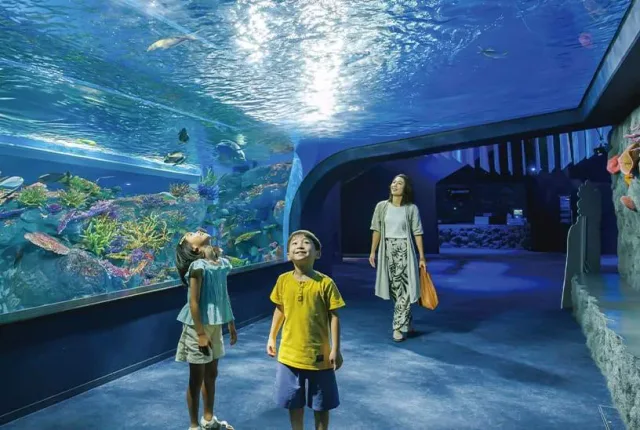
Guests already in Chatan, Yomitan or Okinawa City can use nearby indoor family facilities or commercial areas when the roads and venue are operating normally. Guests already in Motobu or Nago can consider the indoor galleries at Churaumi Aquarium when Ocean Expo Park, access roads and parking are open. Do not drive from Naha to Churaumi just because an aquarium is indoors while wind, visibility or road conditions are deteriorating.
A northern hotel such as The Orion Hotel Motobu or Ala Mahaina changes the backup logic because Churaumi is local rather than a cross-island drive. An Onna base such as HIYORI Ocean Resort Okinawa needs a different fallback again. Backups should start from where you are, not from a universal “best rainy-day attraction” list.
Southern Okinawa can work in rain, but caves and parks are not typhoon shelters
Gyokusendo at Okinawa World can be useful in ordinary rain, but visitors still move between outdoor surface facilities and the cave can be affected by heavy weather or safety restrictions. The same rule applies everywhere: “indoors” describes part of the attraction, not the safety of traveling there. When official warnings or transport conditions say stay put, do not use a cave, mall or museum as an excuse to leave.
Pair this with
Pair this backup system with the Okinawa 5-day self-drive itinerary and the Okinawa car-rental guide. If a marine day is the main reason for the trip, add the Kerama discovery-diving guide so no-fly margins and boat-day fatigue are protected when dates move.
Wet-weather driving should get shorter before it gets slower
Turn on lights early, increase following distance, reduce speed and avoid unnecessary lane changes. Never enter standing water when the road depth is unknown, especially at underpasses and low sections. A rental-car extension is not automatic after a flight cancellation: contact the rental branch before the original return time and confirm the vehicle, extra charge, branch hours and insurance period in writing.
The Okinawa cycling-route guide is useful on a good-weather day, but Kouri Bridge and other exposed coastal routes should disappear early from the plan when wind rises. A famous view is not a reason to test bridge conditions.
Flight and ferry disruption should be solved before replacement sightseeing
For a flight, read the operating airline’s notice before traveling to Naha Airport. Save the original ticket or booking record, airline cancellation or delay certificate when available, replacement itinerary and itemised receipts for necessary costs. For a ferry, use the ferry operator or municipality’s live sailing notice. Different islands can have different vessel and recovery schedules even after the weather improves.
If the disrupted day was meant to connect to another Okinawa island or a longer trip, use the Miyakojima 4-day itinerary or the Ishigaki–Taketomi–Iriomote guide only after transport is restored. Do not treat the original itinerary as a debt that must be repaid immediately.
If you need an extra Naha night, extend the current hotel first
Ask the current hotel whether the same room can be extended before searching for another property. If it cannot, move only when travel is safe and the new hotel confirms it can receive guests. Compare the total price, room type, taxes, cancellation terms and safe route rather than jumping to the first available listing.
When disruption is real and a new room is genuinely required, compare available Naha stays on Booking.com or available Naha stays on Expedia. Search results do not guarantee that the room is reachable, cancellable or available when you arrive.
Check availability on Booking.com
Check availability on Expedia
Build the evidence pack while the disruption is happening
Keep screenshots of warnings and operator notices, the original itinerary, proof of non-refundable bookings, rebooking messages and itemised receipts for necessary hotel, transport, food or essentials. Travel insurance benefits depend on the exact policy wording; a typhoon does not automatically mean every replacement expense is reimbursed. If connectivity itself is a weak point during disruption, review the Okinawa eSIM guide before departure rather than after the airport queue starts.
With children, reduce the plan faster rather than adding more backups
For an ordinary wet day, one confirmed indoor anchor plus a nearby meal is enough. Carry dry clothes, medication, nappies or child essentials, snacks and power. When transport may stop early, return before the last comfortable route disappears. The Okinawa family road-trip guide is a better sunny-day framework than trying to preserve every attraction through deteriorating weather.
When you need help without Japanese, use official channels
The JNTO Japan Visitor Hotline currently operates 24 hours a day, 365 days a year in English, Chinese and Korean for tourism emergencies and assistance. For immediate emergencies in Japan, police is 110 and fire or ambulance is 119. Your hotel desk, airline app and original booking platform’s written message channel are also useful because they create a record of what was advised and when.
For first-time visitors, the broader Okinawa planning guide can reduce avoidable transport mistakes before weather becomes part of the problem.
Final verdict: the best backup plan tells you when to stop sightseeing
For ordinary rain, stay local and use one meaningful indoor anchor. For a marine cancellation, resolve the original booking before replacing it. For ferry or flight disruption, solve accommodation and transport before sightseeing. During dangerous wind, lightning, shutdowns or official shelter instructions, stay safely sheltered. Okinawa’s best rainy-day plan is not the longest list of indoor attractions; it is the plan that becomes smaller as risk becomes larger.
Osaka 5-Day Itinerary: Give USJ a Full Day — Namba, Umeda, Kaiyukan and Tennoji Without Backtracking
Tokyo to Nikko Autumn Leaves: Trains, Passes, Day Trips and Overnight
Tofukuji Fushimi Inari Uji Day Trip: JR, Keihan, Foliage and Crowds
Okinawa Family Hotels: The Winner Changes Once You Add Bed-Sharing, Laundry and Pool Time

References
Japan Meteorological Agency — current warnings, typhoon information, radar and heavy-rain risk maps.
JNTO — Japan Visitor Hotline and emergency-number guidance for international visitors.
Also recheck Naha Airport, Yui Rail, BusNavi Okinawa, JARTIC road information, the relevant ferry operator and each attraction or marine operator on the actual day. Weather recovery is not synchronized across services.