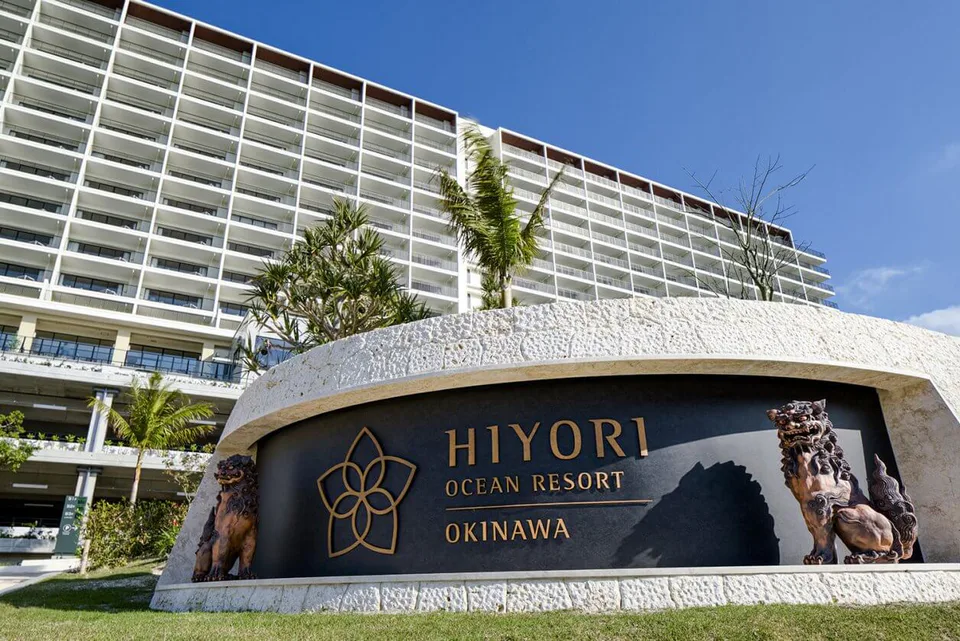
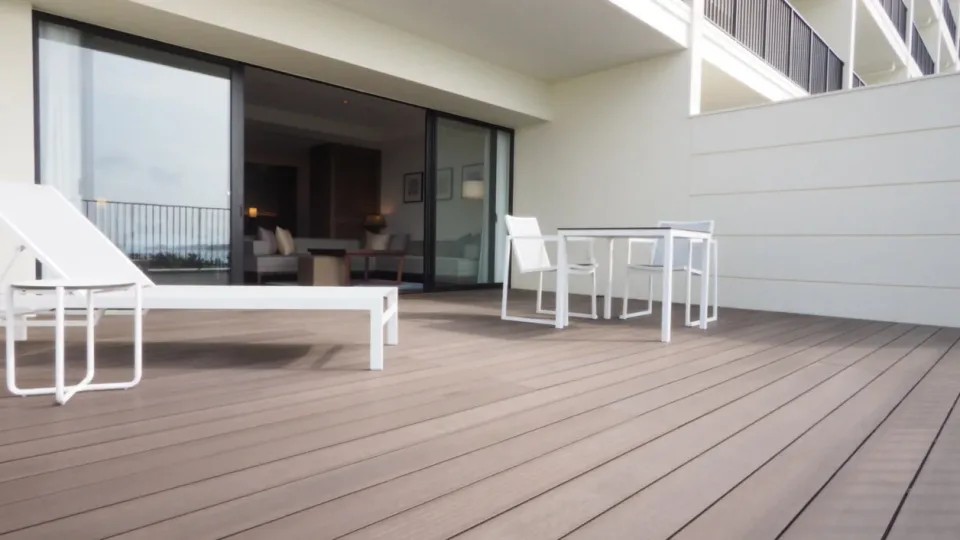
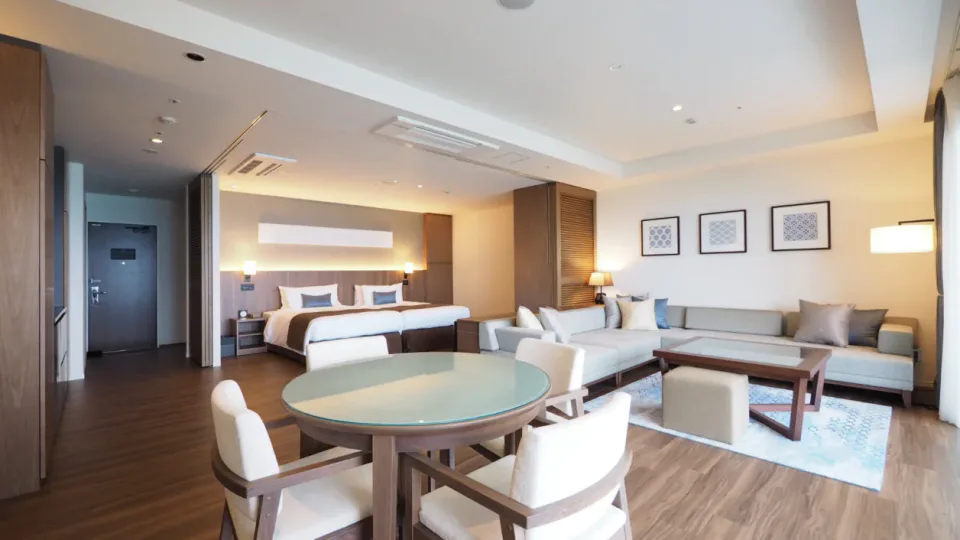
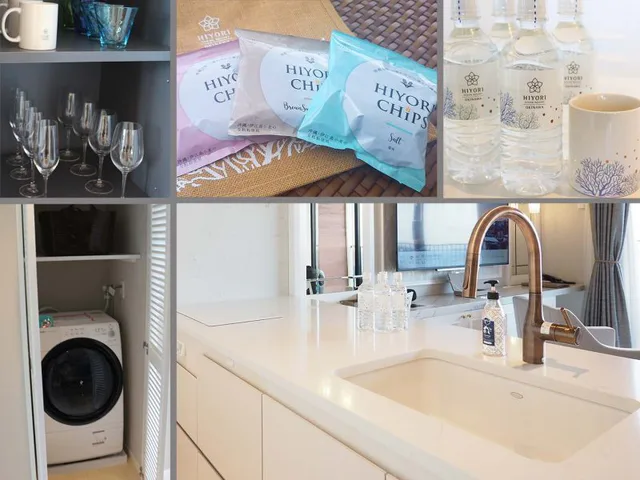
HIYORI Ocean Resort Okinawa is worth its large-suite premium when a three-night stay will actually use the apartment functions more than once. The standard Ocean Suite is 56.4–60.87m² plus a 14.4m² terrace, and the official room specification includes a full kitchen in the room. For a couple or family who will wash swimwear, keep breakfast supplies, eat takeaway in the room and spend at least one slow morning or evening at the property, the extra space is functional rather than decorative. If you leave at 08:00 and return at 22:00 every day—or if direct beach access is the non-negotiable feature—the same premium is much harder to justify.
The important correction is that “large resort room” and “resort time” are separate purchases. A 56m² room solves luggage, laundry and shared-space problems even on a cloudy day. Pool, terrace and sunset value depend on weather, operating hours and whether you are actually at the hotel. Price those two layers separately.
HIYORI Ocean Resort Okinawa: the 30-second decision
↔ Scroll table left or right
Your three-night pattern | Verdict | Why |
Family/couple, two or more laundry loads, some in-room meals, at least one slow half-day | Strong fit | The suite functions repeat across the stay instead of being used once |
Central/northern Okinawa road trip, return to Onna before late evening | Strong fit | Onna works as the route base and the room still gets usable hours |
Every day is early-out / late-back | Think twice | You are paying for living space, kitchen and terrace while mostly using the bed |
Direct room-to-beach access is the priority | Compare another Onna resort | HIYORI is an elevated ocean-view resort, not a room-to-sand product |
No rental car and several off-property days | Conditional | Airport/highway-bus access exists, but hotel pickup and timetable coordination add repeated friction |
Start with the Ocean Suite; make every upgrade prove what it changes
The official room list makes the Ocean Suite a strong baseline rather than an entry-level compromise. It publishes 56.4–60.87m² of interior space, a 14.4m² terrace, two 120cm beds, one extra bed and two daybeds for maximum occupancy of five, plus a full kitchen with IH hob, refrigerator/freezer, microwave, cookware and tableware.
↔ Scroll table left or right
Room | Interior / terrace | What the upgrade actually buys |
Ocean Suite | 56.4–60.87m² / 14.4m² | The default apartment-style product; start here |
Premium Ocean Suite | 56.4m² / 14.4m² | Higher-floor/specific premium features; not extra published floor area by default |
Ocean Corner Suite | 65.47–65.58m² / 20.4m² | Genuinely more interior and terrace space plus wider-view geometry |
Lanai Suite | 56.4–65.47m² / 32.91–39.55m² | A much larger terrace; valuable only if outdoor room time is part of the stay |
For four or five adults, capacity needs another check. The standard published setup reaches five by using an extra bed and two daybeds; five guests do not receive five equivalent regular beds. If equal sleeping surfaces matter, the room can fail the group even though its square metres look generous.
Three nights is where the washer-dryer and kitchen can pay back repeatedly
The suite premium becomes easier to defend when the same function is used more than once. After a marine day, wet swimwear can be processed without a communal-laundry trip. On another night, children’s clothes or road-trip laundry can be handled while the group showers or repacks. The kitchen does not need to replace restaurant dinners: fruit, takeaway, drinks, breakfast supplies or a child-specific meal can be enough to make it useful.
Use a simple deletion test. If you remove the washer-dryer and kitchen from your imagined stay, would you still pay the same premium for the room size and view? If yes, HIYORI can still fit. If no—and you also plan to be outside all day—the booking may be solving needs you do not actually have.
Pool hours: the official pages currently disagree, so use 09:00 as the safe planning time
As of August 25, 2026, HIYORI’s own official pages are internally inconsistent. The current Japanese dedicated pool-usage page lists the outdoor Infinity Ocean Pool from 08:00 to sunset and the indoor pool from 08:00 to 20:00. The current English pool page and another facilities-information page list a 09:00 start instead. This is an official-source conflict, not a reason to pick whichever time makes the itinerary look better.
For planning, I would therefore treat 09:00 as the safe earliest swim time unless the hotel confirms 08:00 for your date. That one-hour conservative buffer matters if you are trying to combine a pre-checkout swim with a 10:00 departure. If pool time is casual rather than itinerary-critical, the discrepancy is much less important.
There is another useful seasonal boundary. The hotel FAQ says the outdoor pool’s basic operating season is April 1–October 31, but it also says the water is maintained so guests can enter year-round; the outdoor pool is not heated, so water temperature follows the weather. The indoor pool is heated and described as year-round. That means “outdoor pool available” and “outdoor pool worth using” are not the same claim in winter.
The indoor pool also becomes adults-only from 18:00 to 20:00 under the current official rule. Families should not plan an after-dinner children’s swim simply because the pool remains open until 20:00.
Breakfast and the guest bath compete with the same morning hours
HIYORI’s March 2026 notice sets breakfast at JPY 4,400 for adults and JPY 3,080 for elementary-school children from April 1, 2026; preschool children remain free. The article’s current service window is 06:30–11:00 with last order at 10:30. The large in-room kitchen creates a real substitute, so breakfast should be judged by the package price difference rather than by convenience alone.
Hiyori-no-Yu currently operates 05:00–10:00 and 14:00–24:00, with Tuesday afternoon starting at 16:00. On a departure morning, breakfast, bath, pool and packing all compete for a finite window. A noon checkout helps, but you still cannot count every amenity as though it were used simultaneously.
For a three-night stay, I would deliberately assign different mornings: one hotel breakfast, one simple in-room breakfast, and one morning where the bath or pool gets priority. That turns the suite’s kitchen into schedule flexibility rather than merely an amenity list.
Parking is cheap enough to be visible but not large enough to decide the hotel
The hotel FAQ currently lists self-parking at JPY 1,100 per night, so three nights adds JPY 3,300. Valet service is also listed at JPY 1,100. The parking cost belongs in the total, but it should rarely decide the comparison by itself.
The bigger transport issue is route shape. HIYORI works best when Onna, Cape Maeda, Chatan, Nago or Motobu are spread across the stay. If most days are Kokusai-dori, Tomari Port, Shuri and Naha nightlife, the suite becomes larger while the daily driving becomes longer. A bigger room does not compensate for choosing the wrong geographic base.
If the first flight lands late, I would normally keep the first night in Naha and collect the rental car or drive north the next morning. The resort is easier to justify when the arrival day has already been protected instead of turning an expensive first night into a late check-in.
No-car travel is possible, but count every scheduled hand-off
HIYORI publishes access using airport limousine/highway-bus/Okinawa Airport Shuttle routes plus hotel pickup from designated points. That makes a no-car stay possible, but not equivalent to a station-connected city hotel.
For a three-night no-car stay, count how many times you need to coordinate a bus or hotel pickup. One airport arrival and one airport departure are manageable. Multiple off-property sightseeing days can turn the same system into repeated timetable friction. If the itinerary is mostly hotel time plus one organised excursion, no-car becomes much stronger.
Weather changes which half of the premium survives
HIYORI’s apartment functions are relatively weather-resistant: the room size, kitchen, washer-dryer and indoor pool still exist when the weather deteriorates. The terrace, infinity-pool atmosphere and ocean-view outdoor time are more weather-dependent.
This is why I would not describe the suite premium as one indivisible benefit. On a stormy day, part of the premium survives and part does not. The hotel’s own typhoon guidance warns that severe weather can cause facilities to change or suspend operations, terrace furniture to be removed and, in a power outage, electrical facilities such as the IH kitchen and Wi-Fi to become unavailable. During active typhoon conditions, live hotel notices outrank the normal amenity schedule.
The best bad-weather test is: if the terrace and outdoor pool disappeared tomorrow, would the room, indoor pool, bath, laundry and route location still justify the rate? If yes, the booking is more resilient.
What you give up by choosing HIYORI
Direct beach access: the property is built around elevated ocean views rather than a room-to-sand sequence. If spontaneous beach access is the main resort goal, compare a beachfront Onna property.
Low-use-space risk: 56m² is valuable when the group unpacks, eats, rests and launders in the room. It is expensive storage when everyone leaves early and returns late.
Five-person bed equality: maximum occupancy uses an extra bed and daybeds, so capacity is not the same as five equivalent adult beds.
No-car spontaneity: buses and pickup can work, but they introduce schedule coordination that a rental car removes.
Final verdict
I would book the Ocean Suite for three nights when at least three of these are true: the itinerary is centred on Onna/northern Okinawa; the group will do laundry more than once; the kitchen will replace at least some breakfast/snack logistics; two large suitcases or family gear make a compact room costly; and at least one half-day or two evenings are deliberately left for the room, pool or bath.
I would compare another Onna resort when direct beach access matters more than apartment functions. I would compare a cheaper hotel when the room is only a sleep stop. And I would not upgrade beyond the Ocean Suite unless the extra feature can be named: more interior space, a much larger terrace, a specific view or a specific bathing feature.
The decision is not whether 56m² is objectively “worth it.” It is whether the same 56m² solves several repeated problems across all three nights.
Okinawa Hotel Cancellation Policies: When Is Free Cancellation Worth Paying For?
Oriental Hotel Okinawa Resort & Spa Review: Is the 170m Pool Worth a 7-Minute Beach Walk?
Osaka Night Views: When Free Beats the Observation Deck — and When HARUKAS 300 Is Worth Paying For
Early Shinkansen from Osaka: Should You Stay in Shin-Osaka or Move Only for the Last Night?
Sources
HIYORI Ocean Resort Okinawa — Rooms
HIYORI Ocean Resort Okinawa — Access
HIYORI Ocean Resort Okinawa — Facilities
HIYORI Ocean Resort Okinawa — FAQ
HIYORI Ocean Resort Okinawa — Japanese pool-use page
HIYORI Ocean Resort Okinawa — English pool-use page
Pool pages currently disagree on the morning opening time; 09:00 is a ValueNavi conservative planning assumption, not an official resolution of that discrepancy. Room types, rates, transport and facility operation can change by date. Recheck the hotel’s live notices before travel.