
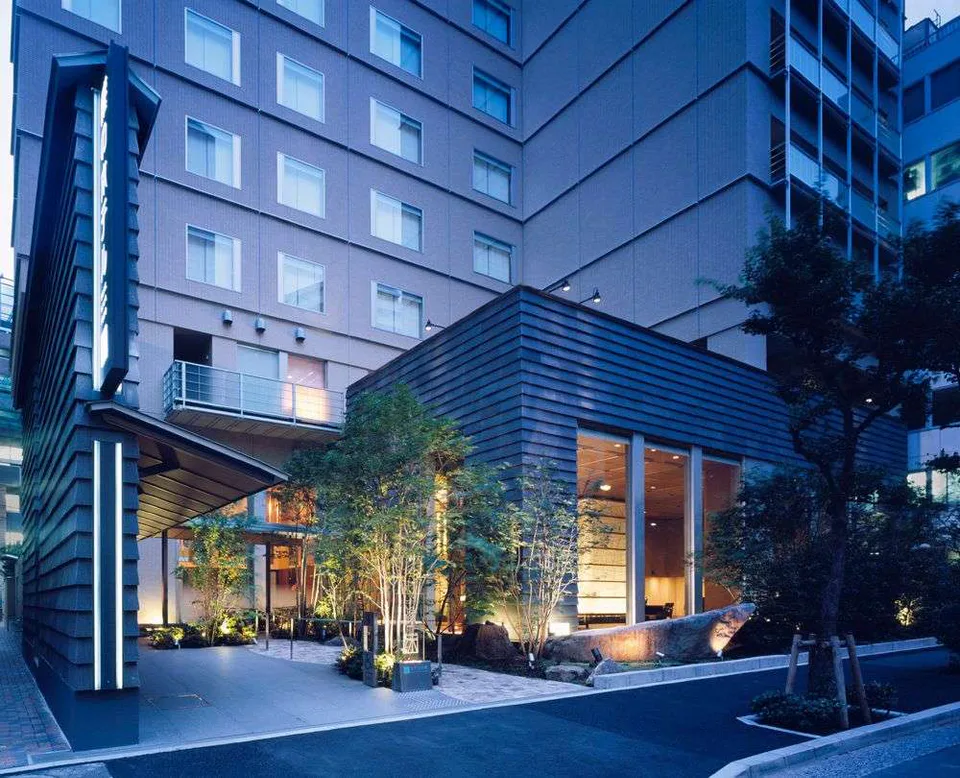
Hotel Niwa is a compact-room hotel where the decision changes depending on how much of the stay happens outside the room.
Yes, an 18 m² room at Hotel Niwa Tokyo can be enough for two people for three to five nights—but only when both travellers pack relatively light, spend most of the day out and are willing to use the hotel's shared spaces. If you have two large hard-shell suitcases, shop heavily or want both people to unpack and move around the room at the same time, I would price the 24 m² Superior room before booking. The six-square-metre difference is a 33% increase in published floor area, and on a five-night stay that extra space is reused every evening.
That is the decision gap most hotel pages do not answer. The question is not whether 18 m² is “small by Tokyo standards.” It is whether your luggage and evening routine will force the room into a daily reset: close the suitcase to reach the bathroom, move shopping bags before bed, or wait for the other person to finish packing before you can use the floor. Hotel Niwa partly offsets a compact room with a 24-hour Refresh Lounge, a 24-hour Relaxation Room and a 24-hour laundry corner. Those shared facilities are useful, but they do not make two open suitcases disappear.
If your priority is in-room laundry rather than shared-space comfort, compare Tokyu Stay Shinjuku Eastside. If you need an apartment-style room, KOKO HOTEL Residence Tokyo Oshiage solves a different problem altogether.
Hotel Niwa Tokyo: the 30-second decision
↔ Scroll table left or right
Your stay | Start with | Why | When it stops making sense |
1–2 people, 1–2 nights, cabin luggage | 18 m² Standard | Lowest room tier already solves sleeping; limited time for clutter to accumulate | You need a desk and open luggage at the same time |
2 people, 3–5 nights, medium luggage | Compare 24 m² Superior | 33% more published area and a wider daily operating margin | The upgrade is expensive and both travellers are out all day |
2 people, 3–5 nights, pack light + use lounge/laundry | 18 m² can still work | Shared spaces move some waiting, planning and laundry outside the room | Both travellers want private downtime in the room |
2–3 people, need materially more room | 30 m² Comfort Twin | 30 m² and capacity for a third guest with an extra bed | You are only paying for size you will not use |
ValueNavi Room Compression Test: 18 m² is enough until two tasks compete for the same floor
Published area is not usable empty floor, so I would not pretend to know how many square metres remain after the beds, bathroom and furniture. Instead, run a task-conflict test. List the activities that require floor or desk space at the same time: opening two suitcases, dressing, using the desk, sorting shopping, charging devices and reaching the bathroom.
↔ Scroll table left or right
Evening pattern | 18 m² Standard | 24 m² Superior | ValueNavi verdict |
One carry-on each; bags closed after unpacking | Low compression | Very low compression | Standard is rational |
Two medium cases opened one at a time | Manageable | Easier | Compare the upgrade price, do not auto-upgrade |
Two large cases left open + shopping bags | High compression risk | More forgiving | I would lean Superior |
One person works at desk while the other packs | Likely task conflict | Lower conflict | Superior has more usable daily value |
The threshold is not “18 m² is bad.” The threshold is when the room needs repeated choreography. A compact room that works after one two-minute reset is fine. A room that requires the same reset every morning and night has a hidden time cost.
The six-square-metre upgrade is a 33% area increase—use that number carefully
Hotel Niwa officially lists Standard Double and Standard Twin at 18 m² and Superior Double and Superior Twin at 24 m². Six extra square metres is 33.3% more published floor area. That is a useful relative comparison, but it does not mean 33% more empty floor: the furniture and bathroom layouts differ.
↔ Scroll table left or right
Room tier | Published area | Beds | Decision use |
Standard Double | 18 m² | 1 × 160 cm | Best compact choice for a couple comfortable sharing one bed |
Standard Twin | 18 m² | 2 × 95 cm | Two separate beds, but the same headline room area |
Superior Double | 24 m² | 1 × 184 cm | More room plus a wider bed and work area |
Superior Twin | 24 m² | 2 × 105 cm | My first upgrade comparison for two friends on a 3–5 night stay |
Comfort Twin | 30 m² | 2 × 120 cm; extra bed available | Use when room size or three-person capacity is a hard requirement |
Premium Twin | 36 m² | 2 × 120 cm | Pay for the space and separate shower/jetted-bath features, not just the label |
ValueNavi Stay-Fit Score: the same 18 m² room can score 44 or 30 depending on the traveller
This is an editorial fit score, not a hotel quality rating. It uses five dimensions—room tolerance, luggage tolerance, shared-space leverage, route fit and stay-length value—each scored out of 10 for a specific traveller profile.
Profile A: two light packers, four nights, out all day, willing to use the lounge
↔ Scroll table left or right
Dimension | 18 m² Standard | 24 m² Superior |
Room tolerance | 8 | 10 |
Luggage tolerance | 8 | 10 |
Shared-space leverage | 10 | 8 |
Route fit | 9 | 9 |
Stay-length value | 9 | 8 |
Total / 50 | 44 | 45 |
That near-tie is the point. For light packers who deliberately use the hotel's shared spaces, the Standard can be the more disciplined booking if the Superior premium is meaningful.
Profile B: two large suitcases, five nights, shopping-heavy, private-evening time
↔ Scroll table left or right
Dimension | 18 m² Standard | 24 m² Superior |
Room tolerance | 5 | 9 |
Luggage tolerance | 4 | 8 |
Shared-space leverage | 6 | 6 |
Route fit | 9 | 9 |
Stay-length value | 6 | 10 |
Total / 50 | 30 | 42 |
Here the answer separates sharply because room compression repeats for five nights. The score is not claiming the Superior is “better” in general; it is showing why the recommendation flips when the luggage and stay pattern change.
The 24-hour lounge matters only if it replaces something you would otherwise do in the room
The hotel's third-floor Refresh Lounge is open 24 hours and includes a small tatami area and library. The Relaxation Room, with three massage chairs, is also open 24 hours. These facilities are unusually relevant to the 18 m² question because they can move low-privacy activities—reading, route planning, waiting while the other person showers—out of the room.
But shared space has a boundary. It cannot store your luggage, guarantee that you will have the exact seat you want or replace private couple/friend time. If both travellers return at 21:00 and want to sit privately, unpack shopping and talk, the 24 m² room gives a benefit the lounge cannot reproduce.
Laundry changes packing; it does not create floor area
Hotel Niwa's official laundry corner is open 24 hours. As of the 27 August 2026 fact check, washing is ¥600 per load (about US$3.76 at the current exchange rate) and drying is ¥100 per 10 minutes (about US$0.63). The machines use alkaline ionised water and the hotel states detergent is not required.
The useful value is not the ¥600 fee itself. If one wash lets each traveller pack one or two fewer outfits, the luggage may become materially easier to live with for five nights. That is a packing-system benefit. If you already bring five complete outfits and never wash, the laundry corner should add almost no value to your hotel decision.
Suidobashi is balanced, but balanced is not the same as best for every route
Hotel Niwa is officially about four minutes on foot from the East Exit of JR Suidobashi, about five minutes from Toei Mita Line Suidobashi and about eight minutes from Jimbocho. That gives the hotel multiple transport options without placing it inside a giant terminal.
I like that for a Tokyo itinerary pointing in several directions. I like it less when every morning starts from the same specialist hub. Repeated western-Tokyo and highway-bus departures can make Shinjuku a better base; repeated Narita movements can make Ueno more logical. Compare Where to Stay in Tokyo for First-Time Visitors before paying a room premium to solve a location problem you do not actually have.
The hidden cost is not the four-minute walk itself. It is transfer repetition. If four of five days require you to pass through the same larger hub anyway, a balanced central base can be less efficient than a specialised one.
Upgrade break-even: price the extra 6 m² across the whole stay
Hotel rates vary too much by date for a permanent yen rule, so use this:
Superior upgrade per person per night = (Superior total − Standard total) ÷ number of travellers ÷ number of nights.
Keep both room totals in Japanese yen and add a current US-dollar conversion beside them when budgeting. Then ask what the premium buys every night: less luggage choreography, more usable separation and a wider work/sitting margin. If those solve a repeated problem, the upgrade is defensible. If both travellers are out from breakfast until bedtime and use the lounge, the Standard may remain the better value.
Do not compare an 18 m² non-refundable room on one platform with a 24 m² flexible room on another and call the difference an upgrade premium. Hold dates, occupancy, bed type, breakfast, tax and cancellation deadline constant.
Failure modes: when guests book the right hotel but the wrong room
Failure mode 1: assuming “Tokyo hotel, so 18 m² is normal” ends the decision. Normal does not mean suitable for two large cases over five nights.
Failure mode 2: paying for 24 m² but never using the room. A 33% area increase has little value if you return only to sleep.
Failure mode 3: treating the lounge as free extra room area. It is useful shared space, not private storage or guaranteed seating.
Failure mode 4: choosing Niwa for every Tokyo itinerary because Suidobashi looks central. The best base depends on repeated route direction, not a map's geometric centre.
Failure mode 5: upgrading all the way to 30–36 m² without comparing the 24 m² breakpoint. Superior is the most important price check because it is the first meaningful area step from Standard.
When I would choose neither Standard nor Superior
If one traveller needs a large desk setup and the other wants private floor space every evening, I would compare the 30 m² Comfort room or another hotel rather than trying to force an 18/24 m² decision. If in-room washer-dryer access is a hard requirement, Tokyu Stay Shinjuku Eastside is structurally a better comparison. If the trip is centred on Shinjuku nightlife and western departures, HOTEL GROOVE SHINJUKU or another Shinjuku base may remove more friction than six extra square metres in Suidobashi.
Compare the exact room before booking
Booking.com — compare Standard and Superior on the same dates
Trip.com — compare the same Hotel Niwa room tiers
Agoda — match room type and cancellation terms
Final verdict
For two light packers staying three or four nights, I would not reject Hotel Niwa's 18 m² Standard room automatically. The 24-hour lounge and laundry give the compact room more practical support than its area alone suggests. For two travellers with large suitcases, five nights and shopping-heavy evenings, I would compare the 24 m² Superior first because the extra six square metres remove a repeated room-management problem. If the Superior premium is high and you will barely use the room, keep the Standard. If your itinerary repeatedly starts somewhere other than Suidobashi's network, solve the location before solving the floor plan.
Sources
Hotel Niwa Tokyo — official guest rooms and laundry information
Hotel Niwa Tokyo — official access
Hotel Niwa Tokyo — official shared spaces and gardens
Official facts re-checked 27 August 2026. Room types, rates, availability and cancellation terms can change by date. Currency conversions are approximate and can move. This article may contain affiliate links; ValueNavi may earn a commission from qualifying bookings at no additional cost to you.