
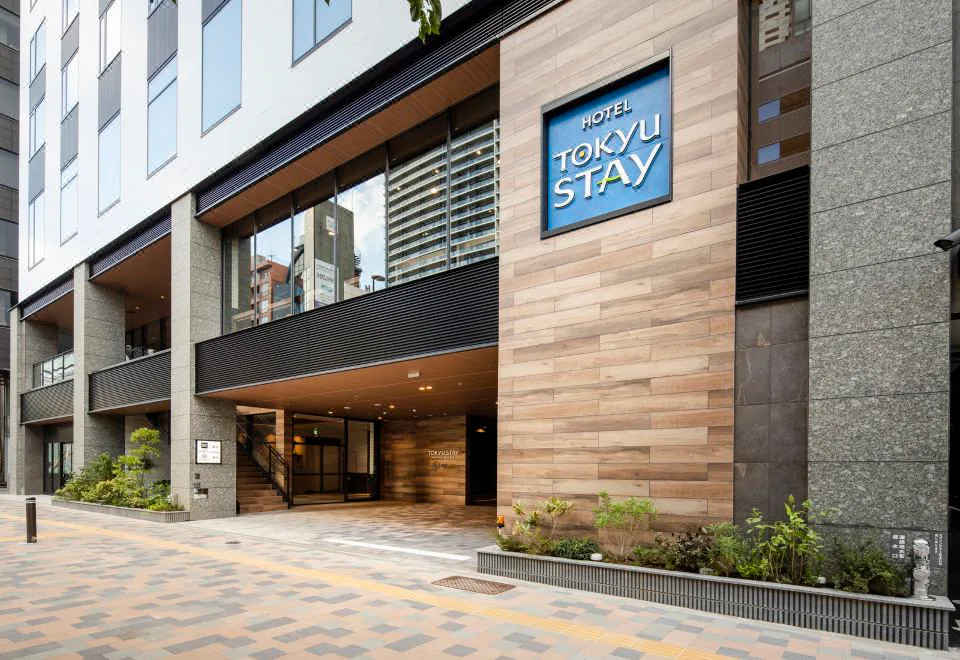
Tokyu Stay Shinjuku Eastside becomes more persuasive as the stay gets longer. Its practical value is the in-room washer-dryer, microwave and—on selected Residential and larger categories—kitchenette. Over four to seven nights, those functions can reduce clothing, laundry trips and late-night food friction. If you only need a calm three-to-five-night base with shared lounge space, compare Hotel Niwa Tokyo before paying for appliances you may barely use.
The trade-off is geography. Higashi-shinjuku and Shinjuku-sanchome are the practical anchors; this is not a JR Shinjuku doorstep hotel. When most mornings begin with highway buses or western JR departures, the transfer repeats. A South Exit base such as Hotel Century Southern Tower can make those days simpler.
Tokyu Stay Shinjuku Eastside: the 30-second decision
I would book it for four to seven nights when the itinerary is mostly city-based, the subway lines are useful and I expect to run laundry at least twice. I would start with Residential categories when a kitchenette matters. For travellers who want nightlife at the door rather than long-stay utility, HOTEL GROOVE SHINJUKU is the more direct alternative. For a quieter stadium-area base with a guest bath, compare Mitsui Garden Hotel Jingugaien Tokyo Premier.
Room choice: washer-dryer does not mean every room has a kitchenette
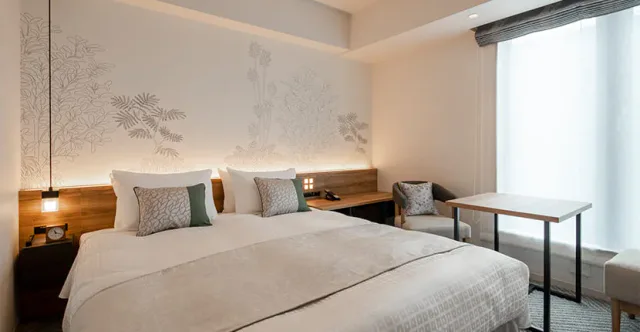
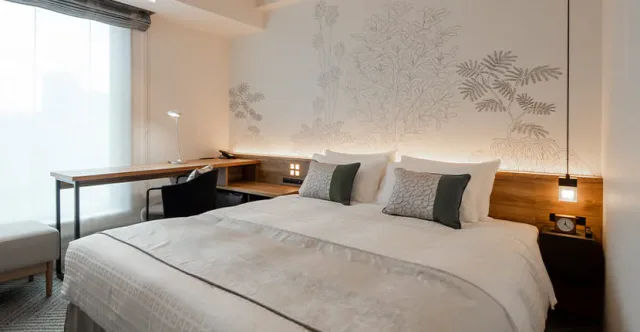
The 18 m² Comfort Double can still give you the washer-dryer and microwave, but it is not the same long-stay product as a Residential room. For two travellers, the 20 m² Residential Double is a meaningful breakpoint because a kitchenette joins the laundry setup; the 25 m² Residential Twin is the parallel choice for separate beds. If larger rooms are the real priority, compare KOKO HOTEL Residence Tokyo Oshiage rather than assuming a kitchenette alone solves every long-stay problem.
↔ Scroll table left or right
Room | Area / equipment | Best fit |
Comfort Double | 18 m²; washer-dryer + microwave | Light packers who do not need a kitchenette |
Residential Double | 20 m²; washer-dryer + microwave + kitchenette | My first two-person long-stay comparison |
Residential Twin | 25 m²; twin beds + kitchenette | Two people with more luggage or separate beds |
Superior / Deluxe Twin | 32–41 m²; kitchenette | Pay when space or occupancy drives the upgrade |
Four, five or seven nights: when the equipment starts to pay back
At four nights, one laundry cycle can already reduce the need to pack a complete fresh outfit for every day. At five nights, two cycles may be useful if summer humidity, rain or active walking produces more laundry. At seven nights, two or three cycles become realistic and the packing difference can be substantial. The value is not the laundromat fee alone; it is fewer clothes, less suitcase volume and the ability to wash while you shower, charge devices or plan tomorrow. If you would not use the machine even once, its value should be close to zero.
The kitchenette has a different threshold. A traveller who eats every meal out may only use it for fruit, drinks or reheating convenience-store food. A family, dietary-restriction traveller or someone staying a week can use it repeatedly for breakfast, a simple late meal or supermarket food. The right question is not “Does the room have a kitchenette?” but “How many meals or snack situations will this actually improve?” That keeps a Residential upgrade tied to real use.
There is also a room-size interaction. Two travellers in 20 m² gain the kitchenette but still have only a modest floor area. If both carry large suitcases, the 25 m² Residential Twin can be the more balanced long-stay product because separate beds and extra floor space arrive together. I would compare the full-stay price gap, not just the nightly difference, and decide whether the additional five square metres will be used every day.
Location: subway-heavy and JR-heavy trips value the hotel differently
Higashi-shinjuku and Shinjuku-sanchome are useful for dispersed city days. The penalty appears when the real departure point is JR Shinjuku. One Kawaguchiko or Hakone day is manageable; several consecutive hub-led days can make the extra transfer annoying. Use the Tokyo to Kawaguchiko guide and Tokyo to Hakone guide to count the real departure stations before booking.
If the trip combines both Kawaguchiko and Hakone, the hotel question becomes part of a larger luggage-and-transfer problem. The Tokyo–Kawaguchiko–Hakone itinerary shows when changing bases can be more rational, while the Japan luggage-forwarding guide can reduce the burden of moving every suitcase.
Arrival day: do not overvalue long-stay equipment before you can use it
A late airport arrival is mostly a transport and luggage problem. The washer-dryer and kitchenette may become useful on later nights, but they do not shorten the first transfer from Haneda or Narita. If the flight lands very late, an airport hotel can still be more rational for night one. If you proceed to Shinjuku, keep the first evening simple: check in, confirm the machine and kitchenette instructions, buy only a small amount of food, and delay the first laundry cycle until you actually have a useful load.
The same principle applies to supermarket shopping. A kitchenette does not justify stocking a temporary apartment. For a five-night stay, breakfast items for two mornings, fruit, drinks and one emergency late meal may be enough. Buying ingredients you never cook simply moves money and time from restaurants into waste. The equipment is most valuable when it removes friction, not when it creates another task list.
Pair this with
Pair this article with Hotel Century Southern Tower for South Exit and Busta convenience, Hotel Niwa Tokyo for shared-space comfort, and Hotel Gracery Shinjuku vs HOTEL GROOVE SHINJUKU when nightlife and JR access matter more.
A realistic weekly routine
A workable seven-night rhythm might be laundry on nights two and five, a supermarket breakfast on two early-start mornings, and reheated food after one late return. That is enough use to make the room equipment meaningful without turning the stay into an apartment holiday. If every night ends with a restaurant and every morning starts with a café, the kitchenette becomes secondary and you should compare the room primarily by size, bed and location.
Simplified housekeeping is the other side of the long-stay model. Independent travellers may prefer less daily intrusion; others want a conventional full-clean rhythm. If traditional hotel service matters more than appliances, compare JR Kyushu Hotel Blossom Shinjuku or use the Hotel Gracery Shinjuku vs JR Kyushu Hotel Blossom comparison to frame the room-and-station trade-off.
Four itinerary patterns that change the value
A city-heavy week is the strongest pattern because subway access and laundry repeat. A shopping-heavy week also fits because you can wash clothes and use the room between outings. A large-event trip needs separate checking: the Tokyo event accommodation guide can show when proximity to the venue should outrank long-stay equipment. For autumn city days, use the Shinjuku Gyoen–Meiji Jingu Gaien–Rikugien comparison to test the east/west Tokyo balance.
A rainy week can increase the value of the microwave and room time, but it should not make hotel equipment the whole plan. The Tokyo rainy-day indoor itinerary is the real backup. If reliable mobile navigation is part of a long independent stay, the Japan eSIM guide for Tokyo, Osaka and Kyoto is a practical companion.
Compare the exact room, not the hotel name
Hold dates, exact room category, washer-dryer, kitchenette, bed type, breakfast, taxes and cancellation terms constant. A Comfort Double and Residential Double are different long-stay products even when the price difference looks small. Verify equipment on the final booking page because OTA room translations can vary, then calculate the total upgrade across the entire stay instead of reacting to one nightly rate.
Booking.com — compare Tokyu Stay Shinjuku Eastside rooms
Trip.com — compare Tokyu Stay Shinjuku Eastside rooms
Agoda — compare Tokyu Stay Shinjuku Eastside rooms
Tokyu Stay Shinjuku Eastside FAQ
Does every room have a kitchenette?
No. Residential and selected larger categories list kitchenettes; Comfort rooms should not be assumed to include one. Confirm exact room equipment before payment.
Is this the same as staying beside JR Shinjuku Station?
No. Higashi-shinjuku and Shinjuku-sanchome are the practical nearby stations. Count the extra transfer or walk on days that specifically begin at JR Shinjuku.
Kagoshima or Ibusuki: Where to Stay for One Night Without a Car
Hakata or Tenjin for an Early Flight? Where to Stay Last Night in Fukuoka
Sapporo vs Chitose for the Last Night: Where to Stay in Hokkaido
HIYORI Ocean Resort Okinawa: Is a 56m² Suite Worth It for a 3-Night Onna Stay?
Hakone Loop Before Check-In or After Checkout? The Best Order for a One-Night Ryokan Stay
Sources
Tokyu Stay Shinjuku Eastside — official hotel page
Tokyu Stay Shinjuku Eastside — official room details
Room types, rates, availability and cancellation terms can change by date. This article may contain affiliate links; ValueNavi may earn a commission from qualifying bookings at no additional cost to you.