
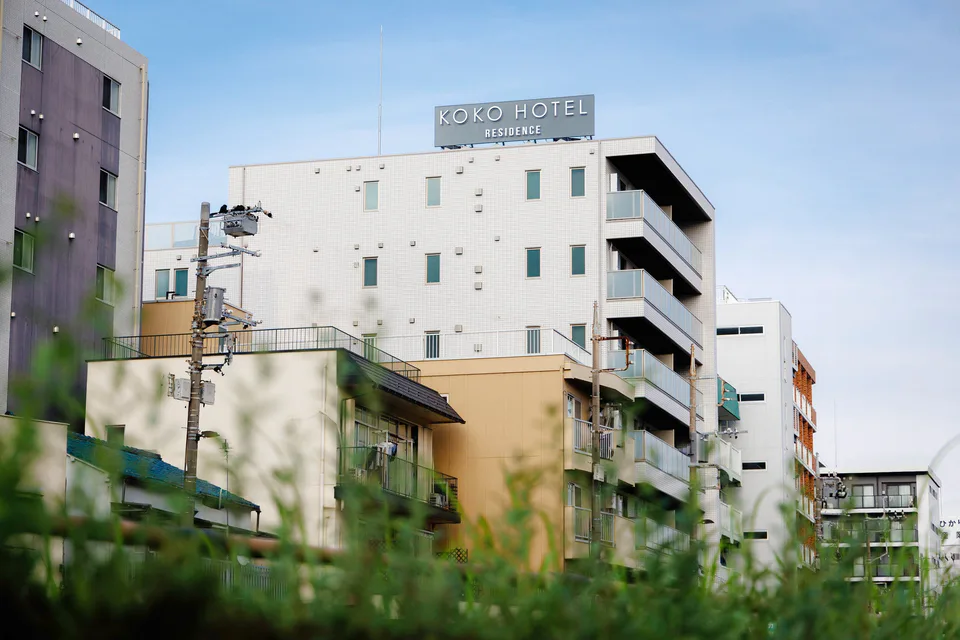
KOKO HOTEL Residence Tokyo Oshiage exterior. The hotel opened on July 16, 2026. Source: Polaris Holdings press release.
KOKO HOTEL Residence Tokyo Oshiage is not a normal “new hotel” story. The real booking question is whether a larger apartment-style room in Oshiage makes your Tokyo trip easier enough to justify staying on the eastern side of the city. The hotel opened on July 16, 2026 with only 25 rooms, but those rooms run from 42.3 to 58.2 m², and the official room pages list a kitchen, washing machine, microwave and separate bathing and wash areas. That changes the decision for families, groups and travelers staying long enough to cook, wash clothes or reorganize luggage inside the room.
My editorial view: this hotel is selling a lower-friction multi-night base for groups, not a central-west Tokyo sightseeing address. If your trip is built around Tokyo Skytree, Asakusa, Ueno, airport arrivals or several nights in one base, the residence format has a strong logic. If your days and nights are concentrated around Shinjuku, Shibuya and the west side, the room advantage has to be large enough to compensate for repeated cross-city travel.
KOKO HOTEL Residence Tokyo Oshiage review: the 30-second decision
↔ Scroll table left or right
Decision | Best condition | Why it matters |
I would book | Three to seven people, four or more nights, or a trip that values laundry, kitchen space and an easier airport-to-Oshiage arrival. | The room is functioning as a temporary home base, so the large floor area and in-room utilities are used repeatedly rather than paid for once. |
I would compare again | Two or three travelers on a short stay, or a mixed itinerary split between east and west Tokyo. | The room may be excellent, but the value depends on the price gap versus a smaller hotel closer to the neighborhoods you use most. |
I would skip | Solo or couple trip centered on Shinjuku/Shibuya nightlife, a car-dependent stay, or anyone expecting full daily housekeeping by default. | You would be paying for residence-style space while accepting a less useful base and a cleaning model that is not standard daily service. |
The point is not that Oshiage is “far from Tokyo.” It is inside Tokyo and well connected. The point is that a hotel base creates repeated travel. A direct train does not remove the time spent moving east to west every morning and back again at night. The more you use the room’s space, washer and kitchen, the easier that trade-off becomes to justify.
What actually changed when this hotel opened in July 2026
Polaris Holdings announced the grand opening on July 16, 2026. The hotel is a seven-floor, 25-room apartment hotel developed in Sumida. The official and developer material place the room-size range at 42.3–58.2 m² and describe kitchens, refrigerators and washing machines in the guestrooms. The official site currently shows five main room categories: Standard, Comfort, Moderate, Superior and Deluxe.
That combination is unusual enough to matter. A traveler choosing a typical city hotel often treats the room as a place to sleep. Here, the room itself can absorb tasks that normally spill into the rest of the trip: preparing a simple breakfast, washing clothes after several days, opening and repacking luggage, letting different members of a group sit apart, or staying in for an hour without feeling that the whole party is occupying the same narrow aisle.
This is an editorial inference from the verified room sizes and equipment, not a claim that every room has the same layout or that every group will find the space comfortable. Before booking, check the exact room plan, bed configuration and occupancy shown for your rate. Large square footage does not automatically mean that seven adults will have seven conventional beds.
Arrival reality: Oshiage is the practical reason to consider it
The official access page places the hotel about a five-minute walk from Oshiage Station via exits A1 or B3, and about ten minutes on foot from Tokyo Skytree Station. Tokyo Skytree and Tokyo Solamachi are also described by the operator as roughly a ten-minute walk. For a family or group arriving with several suitcases, the last walk is therefore short enough to be a real part of the value proposition rather than a marketing footnote. If that walkability matters because the 2026 character collaboration is part of the trip, check Chiikawa × Tokyo Skytree 2026 before buying a 350m-only ticket; the event changes which observation-deck ticket actually fits the visit.
The more important airport detail is that Oshiage is served by through-running airport rail patterns. The hotel states that Narita Airport to Oshiage can be reached without a transfer on applicable services, and that Haneda can also reach Oshiage without a transfer using Keikyu and Toei Asakusa Line through service. This does not mean every departure is direct. Train patterns vary by time and airport terminal, so verify the exact service on your travel date before building a zero-transfer plan.
Airport arrival with luggage
For a late or luggage-heavy arrival, I would value the airport-to-Oshiage structure more than a theoretical five-minute saving inside central Tokyo. One train plus a final five-minute walk is easy to understand when everyone is tired. A central hotel can still be better overall, but only if its location saves more time across the rest of the stay.
For the larger luggage decision, use Japan Autumn Luggage Forwarding: Hotels, Lockers and Mountain Overnight Bags and, for a Fuji/Hakone side trip, Luggage Forwarding for Kawaguchiko and Hakone: What Actually Works.
The location trade-off inside Tokyo
Oshiage works best when several days naturally lean east or north-east. Skytree and Solamachi are walkable. Asakusa is close by rail. Ueno and the northern side of central Tokyo are easier to combine than if you were commuting from the far west. Oshiage also sits on the Hanzomon Line, so some westbound trips can remain direct even though they are long.
The weakness appears when your itinerary repeatedly restarts in Shinjuku, Shibuya or other west-side neighborhoods, especially after dinner. A direct train is still time spent on a train. If four people save money and gain 40-plus square metres, that may be a good exchange. If two people are staying for two nights and barely use the kitchen or washer, it is much harder to justify.
Pair this with
If your Tokyo dates include autumn color, compare the base against Tokyo Autumn Leaves: Timing for Mt. Takao, Okutama, Gardens and Ginkgo. If Nikko is part of the plan, read Tokyo to Nikko Autumn Leaves: Trains, Passes, Day Trips and Overnight. For a trip that deliberately keeps one Tokyo hotel for many nights, use Japan Autumn Leaves Without Changing Hotels: Tokyo, Sendai, Osaka and Fukuoka Bases to check when a fixed base still makes sense.
Room decision: choose by party size and bed plan, not square metres alone
The room ladder is where this hotel becomes specific. Standard and Comfort rooms stay around 42–44 m². Moderate moves to 45.1 m² and the official page explicitly says its larger sofa becomes a bed for occupancy up to five. Superior jumps to 54.1 m² and Deluxe to 58.2 m²; both are officially described for up to seven guests. That does not mean “bigger is always better.” It means you should choose the room only after matching the number of adults, children, conventional beds, sofa-bed use and number of nights.
↔ Scroll table left or right
Room | Verified area | Occupancy evidence | Decision use |
Standard | 42.8–44.1 m² | Official site lists the size and bed widths; Booking currently displays this category for up to five. | Start here when the room is mainly for a smaller family or group and the booked bed arrangement is acceptable. |
Comfort | 42.3–43.0 m² | Official page says up to five guests. | Similar floor area to Standard; choose by the actual rate, bed plan and cancellation terms rather than assuming the name means an upgrade. |
Moderate | 45.1 m² | Official page says the large sofa can be used as a bed and the room can sleep up to five. | More useful when the living zone matters, but sofa-bed use should be treated as part of the sleeping plan. |
Superior | 54.1 m² | Official page says up to seven guests. | The first meaningful floor-area jump for a larger party. Check whether the exact bedding suits seven adults. |
Deluxe | 58.2 m² | Official page says up to seven guests. | Best for a group that will actually use the extra living area; weaker value for a small party out all day. |
decision: for a group of five, I would not automatically jump to Superior or Deluxe. I would first verify whether the Standard, Comfort or Moderate bed plan is acceptable for the actual travelers. For six or seven people, the larger categories become structurally more relevant, but I would still compare the cost with two smaller rooms elsewhere. One large residence room improves together-time and reduces duplicate room facilities, but it also puts everyone on one bathroom schedule and one booking.
For a multi-generation family, the separate bath, toilet and washbasin described by the hotel are more consequential than a decorative design feature. They allow parts of the morning routine to happen in parallel. That is a practical advantage that becomes more valuable as the group grows.
Why the kitchen and in-room washer matter more than usual
Every main room category on the current official page lists kitchen equipment, a washing machine, microwave, kettle, IH cooktop, plates, glasses and basic kitchen tools. I would not treat that as a reason to plan elaborate cooking. The stronger use case is reducing small daily friction: breakfast before an early start, reheating food, preparing something for a child, washing a few days of clothes, or avoiding a late-night laundromat run.
The washer is especially valuable when the hotel is used as a four-to-seven-night base. A two-night guest can ignore it. A traveler halfway through a two-week Japan trip can use it to shrink the amount of clothing that must be carried forward. That makes the utility part of the luggage strategy, not just a facility checkbox.
The kitchen also changes the economics of a group stay in a way a nightly room price does not show. A party of five does not have to buy every breakfast or snack outside, and one person can eat at a different time without moving the whole group. I would still avoid assuming cookware is extensive enough for any specific recipe: the official site lists kitchen tools, but the exact inventory should be confirmed if cooking is essential.
Service model: this is a residence-style stay, not daily full-service housekeeping
The current official service page says standard room cleaning is provided once every three days. It also lists additional room cleaning at ¥4,000 per day, with the usual warning that fees and policies can change. Front-desk assistance is currently listed from 5:00 a.m. to 1:00 a.m., while normal check-in is 3:00 p.m. and check-out is 11:00 a.m.
This is one of the biggest reasons to read the hotel as a residence product rather than a conventional daily-service hotel. A four-night stay may involve a different cleaning rhythm from what some travelers expect. For me, that is not automatically a negative because the room includes a washer and home-style equipment, but it must be part of the booking decision. If daily room reset is important, confirm the paid-cleaning policy and total cost before choosing this property.
The hotel also lists its rooftop terrace as available from 7:00 a.m. to 9:00 p.m. The operator promotes a close view of Tokyo Skytree. That makes it a usable early-evening or morning space, not a late-night lounge. If your itinerary returns after 9:00 p.m., do not pay a location premium because you imagine using the rooftop at midnight.
If you actually stay four nights: a decision timeline
This is a planning scenario, not a claim that ValueNavi stayed at the hotel. It tests whether the residence features get used enough to justify the location.
Arrival evening: use a direct or low-transfer airport service when available, walk the final section from Oshiage, unpack once and buy simple food nearby.
Night two: run a small laundry load instead of carrying dirty clothes into the next half of the trip.
Morning three: use the kitchen for a fast breakfast if the group has different departure times; keep the dining/living area free for bags rather than leaving every suitcase on the bed.
Night three: decide whether the rooftop terrace fits before its 9:00 p.m. close instead of assuming it is a late-night facility.
Day four: plan around the published housekeeping cycle rather than expecting a conventional daily full clean.
If almost none of those residence functions would be used, the hotel’s strongest advantages are being left on the table. In that case, a smaller room in a more central neighborhood can be the better purchase even if it looks worse on a square-metre comparison.
Facilities with consequences
↔ Scroll table left or right
Feature | Verified condition | When it changes the decision |
Kitchen | Listed in all main room categories with IH cooktop, microwave and basic tools. | Longer stays, children, different meal times or travelers who want simple in-room meals. |
Washing machine | Listed inside all main room categories. | Four-plus-night stays, longer Japan trips and anyone trying to travel with less clothing. |
Separate bath/toilet/washbasin | Listed on the official room pages. | Families and groups who need several people to get ready at the same time. |
Rooftop terrace | Official service hours currently 7:00–21:00. | Useful when your schedule brings you back before 21:00; negligible for late-night itineraries. |
Housekeeping | Standard cleaning currently once every three days; paid extra cleaning is listed. | A material trade-off for guests who expect daily service. |
Parking | No hotel parking; nearby coin parking is suggested by the hotel. | A reason to compare another base if a rental car is central to the stay. |
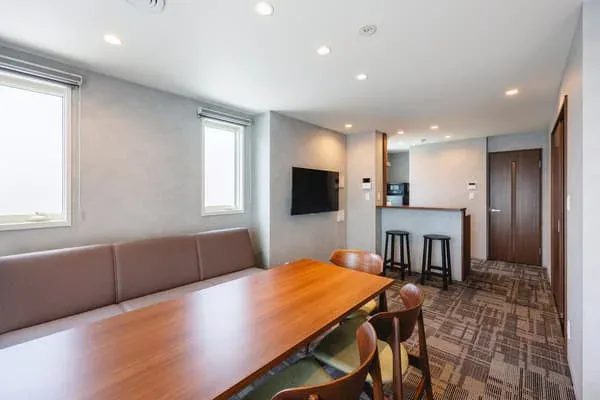
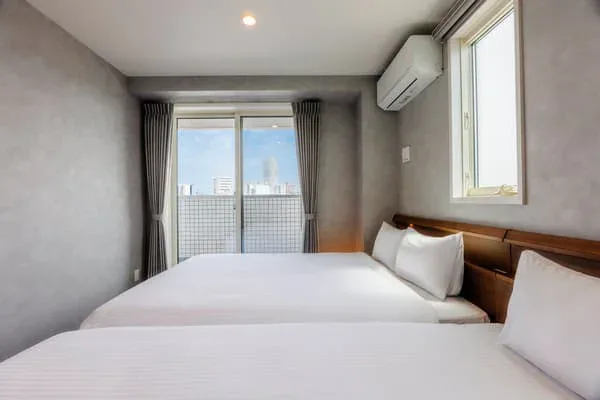
All images above are real hotel images from KOKO HOTEL or the July 2026 opening release. Room-image labels are kept conservative where the source does not identify a more specific category.
Location × itinerary: when Oshiage helps, and when it becomes repetitive
↔ Scroll table left or right
Trip pattern | Fit from Oshiage | Friction to price into the stay | My call |
Skytree / Solamachi / Asakusa-heavy trip | Strong | Very little last-mile friction; the hotel and core east-Tokyo sights are close. | One of the clearest reasons to choose this property. |
Ueno / east and north Tokyo | Good | Some local rail movement, but the hotel remains on the useful side of the city. | Good for several nights if room utility matters. |
Shibuya / Shinjuku every day | Mixed | Repeated east–west travel, even where a direct route exists. | Compare a smaller west-side hotel before paying a premium for space. |
Nikko side trip | Good planning fit | You still need to reach the correct Tobu departure and protect the return plan. | Oshiage keeps you closer to Asakusa-side departures than a far-west Tokyo base. |
Kawaguchiko / Hakone side trip | Mixed | Those trips often favor Shinjuku, Tokyo or Shinagawa departure logic. | Use luggage forwarding or an overnight bag rather than letting this hotel dictate a poor intercity route. |
Airport arrival/departure with several bags | Potentially strong | Only selected through services are direct, so the exact train still matters. | Worth extra weight in the decision when the direct service aligns with the flight. |
For Fuji-area travel after Tokyo, compare Tokyo to Kawaguchiko: Train, Bus or Tour Compared and the Tokyo, Kawaguchiko and Hakone 3-Day Itinerary. The lesson is the same: choose the hotel base by the door-to-door trip, not by the map pin alone.
What you give up by staying here
The first trade-off is location optionality. Oshiage is excellent for its own side of Tokyo, but a hotel near Tokyo Station, Ueno, Shinjuku or another hub may produce a better whole-trip result depending on your route. Do not compare only “minutes from a station.” Compare how often you have to cross the city.
The second trade-off is service intensity. Housekeeping once every three days fits the residence model, but travelers who want a conventional hotel reset every day should price the paid alternative or choose another property.
The third trade-off is occupancy efficiency. A room that can hold seven is not automatically comfortable for seven adults with large luggage, different sleep schedules and one bathroom routine. The official capacity tells you what can be sold; your party still has to decide what will be pleasant. For a six- or seven-person group, compare one Superior or Deluxe room against two standard hotel rooms in the neighborhood you actually want.
The fourth trade-off is newness. Opening in July 2026 gives the property a fresh building and current equipment list, but it also means there is less long-term operating history to lean on. I would not infer soundproofing, mattress comfort, queue behavior or maintenance quality from the opening date. Those are exactly the areas where a new-hotel article can become unreliable if it invents a “review” from specifications.
Booking decision: compare the same room plan
If this hotel fits your trip, compare the exact same room category, occupancy, breakfast inclusion if any, taxes, cancellation deadline and payment terms across platforms. Do not assume either platform is cheaper, and do not compare a five-person refundable plan on one site with a two-person non-refundable plan on another.
Check KOKO HOTEL Residence Tokyo Oshiage on Booking.com
Check rooms on Expedia
Affiliate note: these buttons use ValueNavi’s approved Stay22 direct-deep-link layer. They point to the same named hotel on Booking.com and Expedia; they are not city search pages. Availability, prices and room labels can change by date, so the booked rate remains the source of truth.
Final verdict: would I book it?
↔ Scroll table left or right
Decision | Condition | Reason and trade-off |
I would book | A family or group staying four or more nights, especially with three to seven people, airport luggage, laundry needs or an east-Tokyo itinerary. | The 42.3–58.2 m² room ladder, kitchen, washer and short Oshiage walk are being used as a system. The trade-off is accepting residence-style cleaning and an east-side base. |
I would compare again | Two or three people, a two- or three-night stay, or an itinerary divided evenly between east and west Tokyo. | Space is valuable only if the rate gap and travel pattern justify it. Compare the exact room plan with a smaller hotel closer to the places you will use at night. |
I would skip | A solo/couple trip focused on Shinjuku or Shibuya, a car-dependent stay, daily-housekeeping expectations or a plan that returns after the rooftop closes every night. | Most of the residence premium would go unused while the location or service model creates repeated friction. |
My final positioning is simple: KOKO HOTEL Residence Tokyo Oshiage is not compelling because it opened in 2026. It is compelling when several travelers can turn a 42–58 m² apartment-style room, in-room laundry and Oshiage access into less daily friction. If your itinerary does not use those advantages, choose location first and newness second.
Frequently asked questions
When did KOKO HOTEL Residence Tokyo Oshiage open?
It grand-opened on July 16, 2026. Both the hotel operator’s opening release and the developer announcement use that date.
How large are the rooms?
The verified room range is 42.3–58.2 m². Standard is 42.8–44.1 m², Comfort 42.3–43.0 m², Moderate 45.1 m², Superior 54.1 m² and Deluxe 58.2 m².
Does every room have a kitchen and washing machine?
The current official equipment lists for the main room categories include kitchen equipment, a washing machine, microwave and IH cooktop. If one of those items is essential for your stay, confirm the selected room and rate again before payment in case the operator changes equipment or category details.
Can you really stay with seven people?
The official page states a maximum of seven guests for Superior and Deluxe. Booking currently also displays seven-person capacity for those categories. That is a sales capacity, not a promise that every seven-person group will like the sleeping arrangement. Verify the conventional beds, sofa-bed use and child policy on the actual rate.
Can I reach Oshiage from Narita or Haneda without changing trains?
The hotel says that applicable Narita services can reach Oshiage without a transfer, and that Haneda can do the same through Keikyu and the Toei Asakusa Line. The exact direct service depends on time and terminal, so check the current airport railway timetable for your date.
How often is the room cleaned?
As checked on August 11, 2026, the official hotel service page lists standard room cleaning once every three days and paid additional cleaning at ¥4,000 per day. Treat this as changeable operational information and recheck close to the stay.
Does the hotel have parking?
No hotel parking is provided. The operator directs drivers to nearby coin parking. If a rental car is central to your Tokyo stay, price parking before choosing this property.
Oriental Hotel Okinawa Resort & Spa Review: Is the 170m Pool Worth a 7-Minute Beach Walk?
Hotel Gracery Shinjuku: Is the 5-Minute East Exit Walk Worth Staying in Kabukicho?
MUWA Niseko Review: When Is Ski-in/Ski-out Worth the Premium?
JR Kyushu Hotel Blossom Shinjuku Review: Is the 25m² Superior Twin Worth It?
Tokyo Dome Hotel: Is Walking Back After a Concert Worth the Premium?
References
KOKO HOTELS — official KOKO HOTEL Residence Tokyo Oshiage page
Polaris Holdings — July 16, 2026 grand-opening release
Prime Life Technologies — July 14, 2026 development and opening release
Booking.com — KOKO HOTEL Residence Tokyo Oshiage property page
Expedia — KOKO HOTEL Residence Tokyo Oshiage property page
Hotel, room, access, service and OTA identity checks were last verified on August 11, 2026. Timetables, operational policies, room labels, prices and availability can change.