
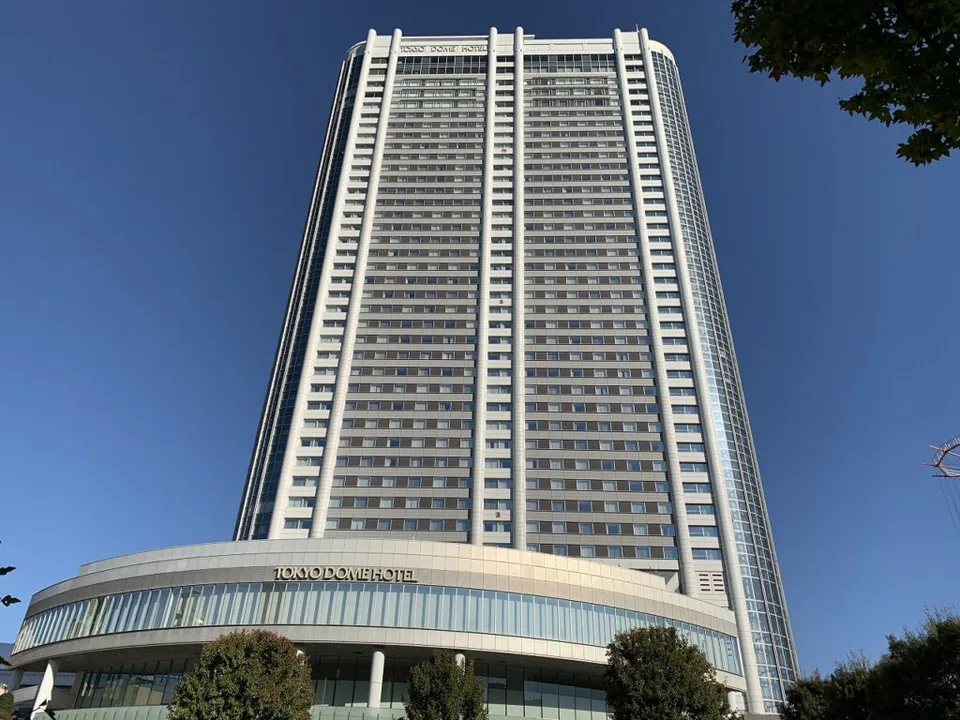
Tokyo Dome Hotel is most valuable when the Dome event is the final task of the day, not simply because the building is central.
If a Tokyo Dome concert or baseball game is the reason for the trip, I would pay a moderate premium for Tokyo Dome Hotel when the event ends late and the alternative is entering a crowded station with merchandise, tired legs or children. The hotel does something unusually concrete on that night: it removes the post-event train journey entirely.
I would not automatically keep the hotel for a four- or five-night Tokyo stay just because one night is perfect. If the rest of the trip is Shinjuku-, Shibuya- or airport-led, a split stay can be more rational: use Tokyo Dome Hotel for the event night, then use the base that fits the remaining days. The hidden question is therefore not “Is Tokyo Dome Hotel expensive?” It is how many difficult movements does the premium delete?
There is also a 2026 operational catch. Tokyo Dome Hotel currently warns that on selected event dates in August and September, check-in around 14:00–18:00 can take as long as roughly 1.5–2 hours at the busiest times. A venue-adjacent hotel can save the end of the day while still creating a pre-show bottleneck if you arrive at the worst possible time. This guide prices both sides of that trade-off.
Tokyo Dome Hotel: the 30-second decision
↔ Scroll table left or right
Your actual trip | My starting choice | Why | Main sacrifice |
Late concert, 1 night, merchandise, no plans after | Tokyo Dome Hotel | The event ends with a walk, not a station transfer | Event-night rate can be higher |
Event is 1 night inside a 5-night Shinjuku/Shibuya trip | Compare a 1-night split stay | Keep the event-night advantage without paying daily route friction | One hotel move and luggage handoff |
Early-afternoon arrival on a listed congestion date | Use luggage storage + check current check-in options | Hotel warns of 1.5–2 hour peak waits | Being next to the venue does not guarantee instant room access |
No Tokyo Dome event | Compare normal Tokyo bases | The strongest reason for the location disappears | You may give up the building/view if that was part of the appeal |
ValueNavi Post-Show Friction Ledger: what the hotel premium actually removes
Most hotel comparisons treat “two minutes from JR Suidobashi” as the location benefit. For an event guest, that misses the point. Tokyo Dome Hotel's official access is about one minute from Toei Mita Line Suidobashi A2 and about two minutes from JR Suidobashi East Exit, but after a Dome event the strongest option is to use neither station.
↔ Scroll table left or right
Post-show task | Stay at Tokyo Dome Hotel | Stay elsewhere | Why it matters at 22:00 more than 14:00 |
Leave venue crowd | Walk toward hotel | Walk toward station/line | Everyone leaves in the same narrow time window |
Ticket gate / platform | Deleted | Required | Standing and queue tolerance is lower after a long event |
Train ride | Deleted | 1+ segments depending on base | Merchandise and children make crowding more costly |
Final station-to-hotel walk | Deleted as a separate stage | Still required | The day is not finished when you leave the train |
Risk of deciding to skip a late snack/shower because you are exhausted | Lower | Higher when another transfer remains | Convenience has more value when energy is depleted |
This is not a claim that every event crowd produces the same delay. It is a structural comparison: one option removes the entire public-transport stage. That is why I would value Tokyo Dome Hotel much more for a late concert than for a daytime baseball game followed by dinner in Shinjuku.
ValueNavi Event-Night Premium Test: calculate the premium per person, not the hotel rate
Hotel prices move by artist, game, weekend and cancellation policy, so I would not publish a permanent “worth it under ¥X” rule. Use the exact event date and calculate:
Event-night premium per person = (Tokyo Dome Hotel total − realistic alternative hotel total) ÷ number of travellers.
Then compare that premium with what it buys: no post-show rail segment, less crowd exposure, less walking after the final station and a faster end to the day. The cash transport saving may be small; the real purchase is the removal of a high-friction task. That is a subjective benefit, so the correct threshold is different for a solo traveller with no luggage and a family carrying goods after a 22:00 finish.
Keep both hotel totals in Japanese yen. If you need a US-dollar planning figure, add the live conversion beside the yen amount rather than replacing it; on 27 August 2026, ¥1,000 was roughly US$6.27. Exchange rates move, while the underlying Japanese room rate is still quoted in yen.
One event night vs the whole Tokyo stay: this is where most people overpay
The location premium is reused only when Tokyo Dome or nearby Suidobashi routes remain useful. Suppose a five-night trip has one concert, two Shinjuku-heavy nights and two Shibuya-heavy days. Staying beside the Dome for all five nights protects one evening but creates four days of repeated cross-city movement. In that case I would compare a one-night split stay rather than asking whether Tokyo Dome Hotel is “good for Tokyo.”
↔ Scroll table left or right
Strategy | Event-night friction | Other-day route fit | Luggage friction | Best for |
Tokyo Dome Hotel for all nights | Excellent | Depends on itinerary | No hotel move | Mixed central-Tokyo itinerary or several Dome-area days |
Tokyo Dome Hotel for event night only | Excellent | Can optimise the remaining base | One hotel move | Event is important but geographically isolated from the rest of the trip |
Stay elsewhere for every night | Lowest | Potentially excellent | No hotel move | Price-sensitive travellers who tolerate post-show transport well |
The split-stay option becomes much easier if you move luggage before the event. Tokyo Dome Hotel currently states that it accepts baggage before check-in. That does not mean the room will be ready early: luggage storage and room access are separate things. Move the bag, keep the event essentials with you, then follow the current check-in procedure.
If the rest of the trip is clearly west-Tokyo-heavy, compare Hotel Century Southern Tower or Tokyu Stay Shinjuku Eastside rather than letting one event night choose the whole base.
Event-day check-in is the hidden failure mode
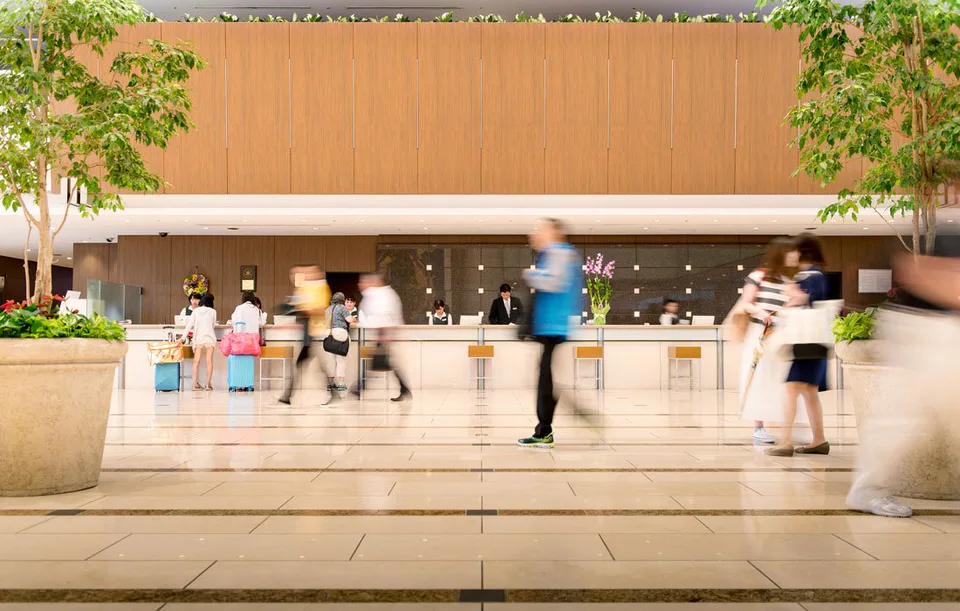
On selected 2026 event dates, the front-desk bottleneck can be more important than the hotel's excellent venue location.
Tokyo Dome Hotel's current notice for August and September 2026 says that on event dates, check-in procedures around 14:00–18:00 can reach roughly 1.5–2 hours at the longest. The hotel distributes numbered tickets in the first-floor lobby, and the QR code on the ticket lets guests monitor their turn outside the immediate queue. It also confirms that pre-check-in luggage storage is available.
The hotel has self check-in and smartphone pre-check-in options, but do not assume every rate plan, payment method or room setup is eligible. Some special plans explicitly require the front counter. The safe rule is: check the procedure attached to your exact reservation before event day.
For a 17:00 or 18:00 show, I would not design the day around “arrive at 15:00, check in, shower and leave the room at 16:30.” On a listed congestion date, that sequence has no buffer. Either move the luggage earlier, complete any eligible pre-check-in steps beforehand or arrive with a plan that does not depend on immediate room access.
ValueNavi Event-Stay Score: the hotel is a 9/10 event tool, not a universal 9/10 Tokyo base
This is an editorial fit score, not a hotel quality rating. I score five dimensions out of 10: post-event friction, pre-event reliability, room fit, wider-Tokyo route fit and stay-length value. The numbers only apply to the stated trip.
Profile A: two adults, late concert, one night, merchandise
↔ Scroll table left or right
Dimension | Score / 10 | Why |
Post-event friction | 10 | No rail segment after the show |
Pre-event reliability | 6 | Excellent location, but listed event-day check-in congestion is real |
Room fit | 9 | Core Twin categories are 33 m² |
Wider-Tokyo route fit | 8 | Multiple stations/lines nearby |
Stay-length value | 10 | The one-night stay uses the hotel's strongest advantage directly |
Total | 43 / 50 | Strong event-night fit |
Profile B: same concert, five nights, every other day Shinjuku/Shibuya-led
↔ Scroll table left or right
Dimension | Score / 10 | Why |
Post-event friction | 10 | Still excellent on concert night |
Pre-event reliability | 6 | Same check-in risk |
Room fit | 9 | Room does not become worse |
Wider-Tokyo route fit | 5 | Repeated west-Tokyo journeys dilute the location advantage |
Stay-length value | 5 | One perfect night is being paid across five nights |
Total | 35 / 50 | Split stay becomes worth testing |
The useful result is not the total. It is the reason the same hotel loses eight points when the itinerary changes. The building has not changed; the number of times its strongest advantage is reused has.
33 m² Twin rooms: Premium does not automatically buy more floor
Tokyo Dome Hotel currently lists Standard Twin B on floors 9–22 at 33 m² with two beds about 1,110–1,130 mm wide. Standard Twin A on floors 23–34 is also 33 m², with 1,200 mm beds. Premium Twin on floors 35–38 remains 33 m², with 1,220 mm beds and Park-side or Palace-side configurations.
↔ Scroll table left or right
Room | Published area | What the upgrade actually changes | What it does not guarantee |
Standard Twin B | 33 m² | Lower standard floors; 1,110–1,130 mm beds | Premium view/service |
Standard Twin A | 33 m² | Higher standard floors; 1,200 mm beds | More published floor area |
Premium Twin | 33 m² | 35–38F, 1,220 mm beds, Park/Palace orientation and premium-floor benefits | More published floor area |
So if two large suitcases are the concern, do not use “Premium” as a shortcut for “bigger.” All three Twin categories above publish the same 33 m². Pay for the floor, view orientation, bed width and premium-floor services only if those are what you actually want.
Want a Tokyo Dome view? Book the direction, not just the altitude
Premium Twin is explicitly sold in Park-side and Palace-side configurations. A higher floor does not, by itself, define what you face. If the Dome view is part of the premium you are willing to pay, save the exact room name and orientation shown in the rate plan and verify it before arrival. “High floor” and “Dome view” are not interchangeable purchasing conditions.
Laundry matters after several nights, not on the concert night itself
The seventh-floor self-laundry is open 24 hours with five coin-operated washer-dryers. Current official pricing is ¥700 for a wash-and-dry cycle (about US$4.39), ¥500 for wash only (about US$3.14) and ¥200 for 30 minutes of drying (about US$1.25). Detergent is automatically dispensed.
For a one-night concert stay, I would assign almost no booking value to that. For four nights in humid summer weather, it can reduce the amount of clothing you carry. This is exactly why the same amenity should not receive the same score in every article: utility depends on how often it changes the trip.
Location is flexible, but it is not neutral
Official access currently lists five rail/subway lines across Suidobashi, Korakuen and Kasuga: JR Sobu Line at Suidobashi East Exit about two minutes away; Toei Mita Line Suidobashi A2 about one minute; Tokyo Metro Marunouchi and Namboku lines at Korakuen about five minutes; and Toei Oedo Line Kasuga about six minutes.
That gives the hotel useful route redundancy. It does not erase geography. A trip that repeatedly finishes in Shinjuku or Shibuya still spends time coming back east; a trip that repeatedly uses Tokyo Station or central/east Tokyo may fit the base better. The relevant comparison is repeated door-to-door movement, not the number of coloured lines on the hotel map.
If Narita access and east-Tokyo days dominate, compare NOHGA HOTEL UENO TOKYO. If you are still choosing a general base, use Where to Stay in Tokyo for First-Time Visitors before letting the event choose every night.
Failure modes: how to book the right event hotel the wrong way
Failure mode 1: arriving during peak check-in and assuming proximity guarantees a relaxed pre-show hour. The current 2026 event-date notice explicitly warns otherwise.
Failure mode 2: paying Premium because you think it means a larger Twin. Standard Twin A/B and Premium Twin are all published at 33 m².
Failure mode 3: paying the event premium for five nights when only one night uses it. Test a split stay.
Failure mode 4: choosing the hotel for a concert, then planning post-show drinks across town. If you willingly re-enter the rail network after the event, you give away much of the hotel's biggest advantage.
Failure mode 5: treating pre-check-in as guaranteed early room access. Advance procedures and baggage storage can reduce friction; they do not promise that the room is available before the booked check-in conditions.
When I would not stay here
I would skip Tokyo Dome Hotel when the event ends early, I am travelling light, the alternative base is direct enough and the event-night price difference is large. I would also skip it for the full trip when the other four or five days have a strong geographic centre elsewhere.
The answer can reverse for a family, an older traveller, someone with mobility limits, a solo fan carrying expensive merchandise or anyone whose priority is to be completely done with transport when the event ends. In those cases the same post-show transfer is not a small inconvenience; it is the hardest remaining task of the day.
Final verdict
For a late Tokyo Dome event, Tokyo Dome Hotel is one of the easiest hotel premiums to justify because it buys a specific outcome: the event ends and the public-transport stage disappears. I would pay that premium for the event night when the per-person difference feels reasonable relative to the crowd, fatigue and merchandise you avoid carrying through the rail system.
I would not let that one advantage dictate an entire Tokyo stay. If the remaining days point strongly toward Shinjuku, Shibuya, Ueno or another hub, price a one-night split stay. And on 2026 event dates, solve check-in before you solve the room upgrade: a 33 m² Premium Twin cannot recover the time you lost by arriving at the busiest front-desk window.
References
Tokyo Dome Hotel official August–September 2026 check-in congestion notice; official Access page; Standard Twin B, Standard Twin A and Premium Twin room pages; official self-laundry information; official check-in guidance. Facts re-checked 27 August 2026.
Event schedules, check-in congestion notices, room inventory, rates and procedures can change. Re-check the hotel's current notice for your exact event date. Currency conversions are approximate. This article may contain affiliate links; ValueNavi may earn a commission from qualifying bookings at no additional cost to you.