
For a first Okinawa trip, choose the hotel area by the days you will repeat, not by which coastline looks most central on a map. Naha is the safest no-car and airport-edge base. Chatan is the best compromise when you want walkable dinners and sunsets but will still drive. Onna is worth its resort premium only when beach, pool or hotel time is protected in the itinerary. Nago is the better northern hub when your days branch in several directions; Motobu is better when two consecutive days are concentrated around Churaumi Aquarium, Bise, Nakijin and Sesoko.
The most common mistake is changing hotels because two places are far apart once. A hotel move only earns its cost when it removes repeated road time, protects an early/late airport edge, or creates resort hours you would otherwise lose. On a four-night trip, two bases are usually enough. Three bases require a specific operational reason.
↔ Scroll table left or right
Your trip pattern | Best starting base | What it buys | What can reverse it |
No car / first visit / late arrival | Naha | Yui Rail, airport access, dining and the most flexible transport recovery | Two or more full days are north of central Okinawa |
Drive + want easy dinners and a lively waterfront | Chatan | Walkable evening value without paying for a full resort | Your itinerary is mostly Churaumi/Yanbaru or mostly Naha/south |
Beach/pool/resort time is a trip priority | Onna | Resort facilities and central-west coast access | You leave early every morning and return after dinner |
Kouri, Yanbaru, Motobu and multiple northern directions | Nago | A practical road hub with city services | Most northern time is actually clustered beside Churaumi |
Churaumi/Bise/Nakijin/Sesoko over 2 days | Motobu | Deletes repeated Naha/central-island drives | You want nightlife, spontaneous dining or a flexible no-car base |
First eliminate the wrong bases: are you driving?
Without a car, Naha is the default because it combines the airport, Yui Rail, major bus connections, shops, restaurants and ferry access in one place. Okinawa’s official tourism guide describes Yui Rail as running directly from Naha Airport through the city centre, with stops near Kokusai Street. That is a fundamentally different transport product from Chatan, Onna, Nago or Motobu, where every change of plan depends more heavily on a bus, hotel shuttle or taxi.
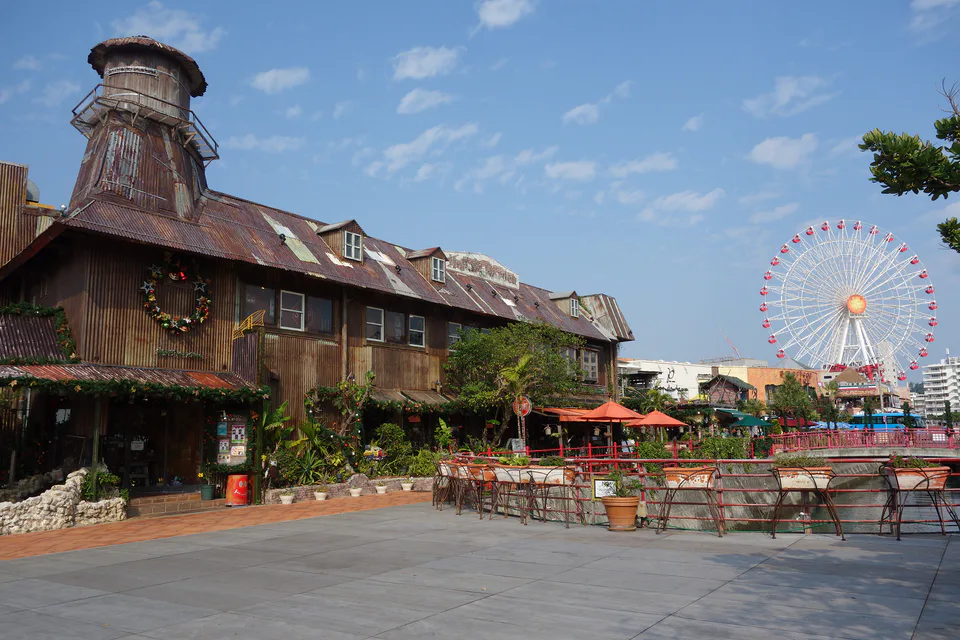
Chatan is the strongest exception. Official tourism guidance puts it at roughly 40 minutes from the airport by car and around 60 minutes by bus, and American Village gives you a relatively walkable cluster of restaurants, shops and waterfront paths once you arrive. A no-car Chatan stay can therefore work when the trip itself is Chatan-centric. It is much weaker when Chatan is merely the sleeping point for daily cross-island sightseeing.
Onna is also reachable without driving: Okinawa Bus currently operates airport limousine routes to a number of Onna Coast resorts, and the official tourism guide gives roughly 75 minutes from the airport by bus. But “the bus stops at my hotel” is not the same as “I have a flexible no-car base.” Restaurants, beaches and neighboring hotels can be spread along Route 58, and a property with no useful walking environment can turn every meal or activity into another timetable problem.
For a detailed no-car trip, use the Okinawa no-car hotel split guide. The right question is not whether a northern hotel is technically reachable. It is whether the transport still works after dinner, after rain, or when you change tomorrow’s plan.
2026 bus trap: Airport Limousine no longer means Nago or Motobu
This is one place where older Okinawa guides can now mislead you. Okinawa Bus states that from April 1, 2026 its Airport Limousine Bus abolished Area E: the limousine no longer serves Nago Bus Terminal, Kinen Koen Mae/Ocean Expo Park, Royal View Hotel Okinawa Churaumi or The Orion Hotel Motobu Resort & Spa.
That does not mean Nago and Motobu lost airport access. The official Okinawa tourism site currently lists Okinawa Airport Shuttle for Onna/Nago/Motobu and Yanbaru Express Bus for Nago/Motobu/Nakijin, while Ocean Expo Park’s own access page lists multiple airport services including Route 117. The failure mode is more specific: booking a Motobu hotel on the assumption that the old Airport Limousine route still serves it.
For a non-driver, this distinction matters because the operator, stop, reservation method and timetable are now part of the hotel decision. Check the exact current route to the exact property rather than relying on a hotel review written before April 2026.
Naha: choose it for flexible edges, not because every Okinawa trip should sleep there
Naha is strongest on arrival and departure days. It absorbs a late flight better than a resort, lets you delay the rental car until the next morning, and gives you the broadest evening choice without driving. It is also the cleanest base for Shuri, Kokusai Street, Tomari Wharf and southern-island connections.
Its weakness is repetition. If two consecutive full days go to Onna, Motobu, Kouri or Yanbaru, keeping the same Naha room saves one checkout but can force you to buy the same northbound road segment twice. This is when “one hotel is always easier” stops being true.
Within Naha, choose the subarea by the transport edge you care about. Kokusai Street/Makishi is the evening-first choice. Asahibashi is stronger for Naha Bus Terminal, airport buses and luggage-heavy transfers. Oroku is a useful airport-edge night. A hotel in Naha should solve a specific part of the trip; it should not win merely because Naha has the most hotels.
If the trip begins or ends at an awkward hour, use the Naha late-arrival and early-flight hotel guide before paying for another resort night.
Chatan: choose it when the evening should still work after you park
Chatan is not the geographic answer to every Okinawa itinerary. Its real advantage is what happens after the driving day ends. American Village and the surrounding waterfront give you restaurants, shops, cafés and sunset walks without requiring another car journey for dinner. For families or couples who want an active evening but do not want central Naha, that is meaningful.
It also sits in a useful central-west position. Okinawa’s official tourism guide says Naha, Yomitan and the Onna Coast are all within easy driving distance of under an hour. That makes Chatan strong for mixed itineraries: one Naha/south day, one Yomitan/Onna day, perhaps a marine activity, and evenings back around American Village.
The answer reverses when the route moves decisively north. Churaumi is still a long day from Chatan, and repeated Yanbaru or Kouri days turn “central” into repeated backtracking. Chatan is therefore a better mixed-direction base than a northern base.
For families choosing specific properties, the Vessel Hotel Campana family-room guide and Hilton Okinawa Chatan Resort review solve different versions of the same area choice.
Onna: the resort premium only works if you schedule resort hours
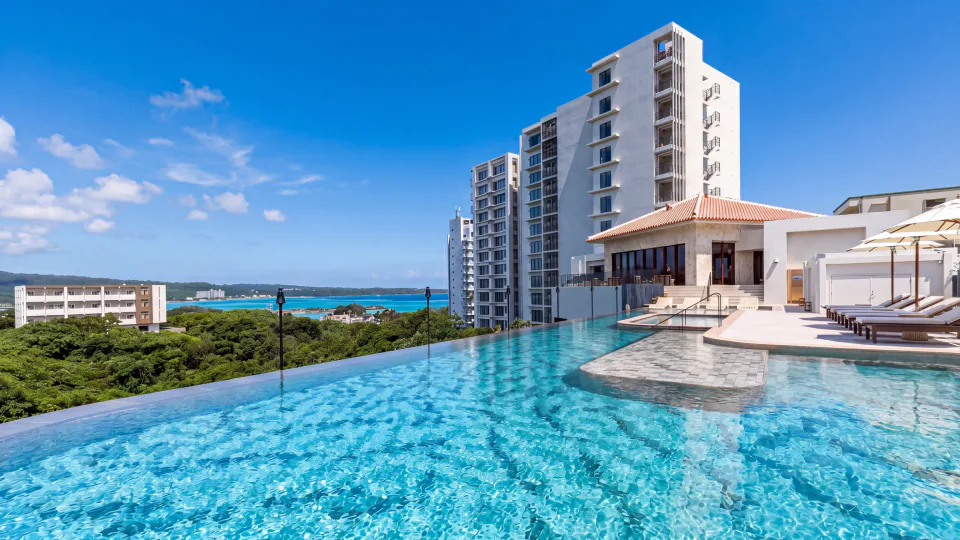
Onna is Okinawa’s clearest resort destination. The official tourism guide describes it as the island’s premier beach-resort area and puts the trip from Naha Airport at roughly one hour by car. That makes it attractive for couples, families, Blue Cave/Cape Maeda plans and trips where the beach or hotel itself is part of the reason for travelling.
The hidden cost is paying resort rates while using the property like a roadside motel. If you leave before breakfast for Churaumi, return after dinner and repeat the next day, a sea-view room, pool and beach may add very little to the trip.
I would use a simple resort-window test. Before paying the Onna premium, identify at least two hotel-use windows you genuinely expect to keep: arrival afternoon, sunset/evening, a slow breakfast/morning, or a protected half-day by the pool or beach. If you can only name “sleep,” compare Chatan, Nago or a cheaper driving base again.
The same test helps families. Onna can be excellent when children will actually use pools, beach access and on-site activities. It can be poor value when every day is a long road trip and every dinner is outside the resort. If Onna wins, compare actual resort products with the Monterey vs Manza vs Hyatt Seragaki comparison rather than buying by star rating.
Nago vs Motobu: choose the hub when routes branch, choose Motobu when they cluster
Nago and Motobu are often grouped together as “northern Okinawa,” but they solve different itineraries.
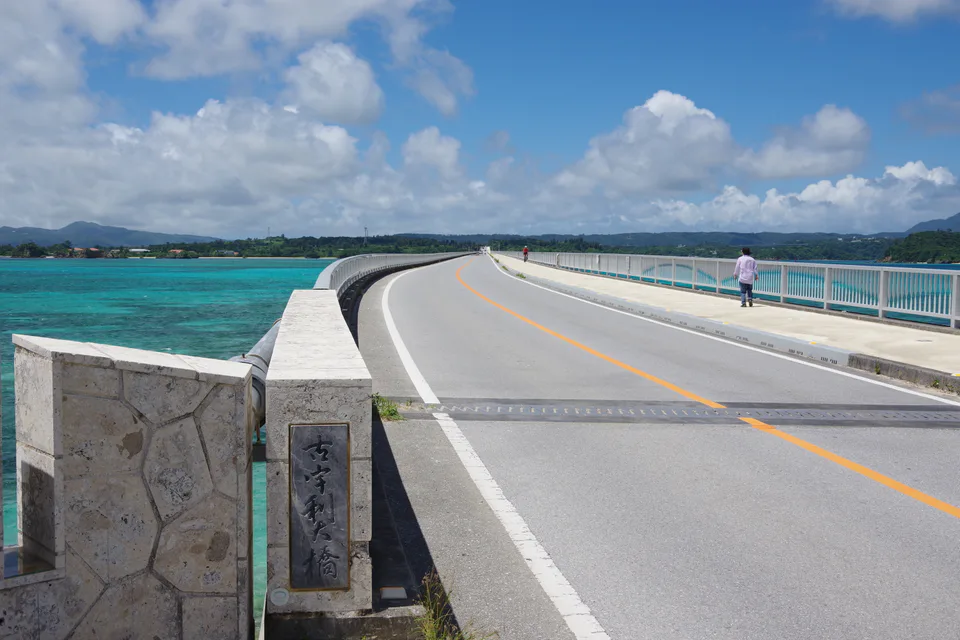
Choose Nago when the next two days branch in several directions: Kouri and Nakijin one day, Yanbaru or the east/north another, with supermarkets and city services useful at night. Nago is a hub decision. A city hotel and a coast resort near Nago are also different products, so check whether the property is actually near the routes you intend to use.
Choose Motobu when the trip is geographically concentrated: Churaumi Aquarium, Ocean Expo Park, Bise Fukugi Tree Road, Nakijin, Sesoko and nearby coastal stops. Official tourism guidance puts the drive from Naha to the Motobu Peninsula at around 90 minutes. If you would otherwise drive that long northern approach on two consecutive days, one hotel move can remove a repeated cost that matters.
Motobu is weaker when flexibility is the priority. The official tourism guide notes that bus service around the peninsula is infrequent. Ocean Expo Park is still reachable from Naha Airport by several direct or through services, but a no-car stay remains timetable-shaped. A late dinner change or spontaneous detour is easier with a car than with a bus plan.
For the specific Churaumi hotel decision, use The Orion Hotel Motobu vs Ala Mahaina. If the whole question is whether the move north is worth it at all, use the Motobu vs Nago Churaumi timing guide.

When is changing hotels actually worth it?
Do not count a hotel move as “free” because the two areas are on the route. A move includes packing, checkout, luggage loading or storage, another check-in and the risk that the room is unavailable when you arrive. On a short Okinawa trip, that can consume the middle of a day.
I would move hotels only when the new base performs at least one high-value job strongly:
Deletes a repeated long drive: for example, two northern days that would otherwise start and end in Naha.
Protects an airport edge: for example, returning to Naha/Oroku before an early flight instead of starting the airport day in Motobu.
Creates accommodation time: for example, moving to Onna because you are deliberately keeping the afternoon, sunset and following morning for the resort.
If the move only saves one ordinary drive and creates no new experience, keep the room and drive.
Four nights: two bases are usually enough
For a five-day/four-night first trip, I would normally cap the itinerary at two hotel areas.
Balanced self-drive: Naha first night → Chatan or Onna for two nights → Naha final night when the flight is early. If the return flight is late, the final Naha move may be unnecessary.
North-heavy family trip: Naha/Chatan first night → Nago or Motobu for two nights → Naha final night if airport margin matters.
No-car trip: keep Naha as the main base. Add one Chatan or resort night only after confirming both luggage movement and the exact onward/airport transport.
The pattern should follow the direction of the trip, not a desire to “try” more neighborhoods. The four-day Okinawa itinerary uses the same principle: each full sightseeing day should move mainly in one direction.
Five to seven nights: let the hotel change follow a change in geographic centre
Longer trips are where a real split stay becomes easier to justify. If Days 1–2 are Naha/south, Days 3–5 are Onna/north and Day 6 is an early flight, the itinerary has changed centre twice; the hotel can change with it.
What still does not make sense is Naha → Chatan → Onna → Nago → Motobu merely because each is listed as a separate area. Chatan and Onna can be close enough that the second move buys little. Nago and Motobu can be close enough that one northern base covers both if the schedule is mixed. Hotel changes should follow a change in daily route geometry, not municipality borders.
The final night should be decided backward from the flight
A late-afternoon flight and a 07:00 flight should not produce the same final-night advice. Start with the airport reporting time, then add rental-car fuel/return, inspection, shuttle or Yui Rail, traffic and a buffer for disruption.
If the final night in Onna still leaves a comfortable airport morning, keep the resort and avoid another checkout. If the plan only works when Route 58, rental return and the airport all behave perfectly, move the last night to Naha or Oroku. The hotel move is then buying flight resilience, not another city experience.
For this exact choice, use Onna vs Naha for the last night.
Families, older travellers and large luggage: count hand-offs as well as kilometres
A two-base trip can be easier than one base if it removes long drives, but each move becomes more expensive with child seats, strollers, multiple suitcases or limited mobility. Count the practical hand-offs: room → car → parking → lobby → storage/check-in, then repeat.
For families, Chatan often wins when easy dinner and a short evening walk matter more than a private resort beach. Onna wins when the children will actually use the hotel facilities. Nago wins when every day is a different northern drive. Motobu wins when Churaumi and nearby sights dominate two days. The label “family hotel” matters less than whether the area makes the family repeat the same difficult transfer.
Older travellers should pay extra attention to the final 500 metres. A hotel can appear to have an airport bus stop while still requiring an awkward road crossing, slope or internal resort walk. Verify the exact stop and hotel entrance rather than relying on municipality-level transport claims.
Weather changes the value of the base
Okinawa weather is a reason to prefer flexible geography over a perfectly optimised sunny-day plan. A resort with pools and indoor facilities can retain value in ordinary rain; a remote property chosen only for one beach may not. A Naha or Chatan base provides more alternative food and indoor options when an activity cancels. A Motobu stay can still work if Churaumi/Ocean Expo Park is the anchor, but a Yanbaru nature stay becomes more weather-sensitive.
During typhoon disruption, road and bus operations can change quickly. Use live operator information rather than assuming the original airport transfer still runs. The Okinawa rainy-day and typhoon guide covers when to swap days rather than forcing the original route.
Final verdict: choose the place that removes tomorrow’s hardest repeated movement
Naha is the default when transport flexibility and airport access dominate. Chatan is the best mixed-direction base when you want a usable evening outside the hotel. Onna is the resort choice, but only when you can name the resort hours you will actually use. Nago is the northern hub; Motobu is the northern cluster base.
For most four-night first trips, two bases are enough. Move north when it deletes repeated northbound driving; move back to Naha only when the flight needs the margin. If a hotel change does neither of those things and creates no protected resort time, it is probably just moving luggage.
Compare Okinawa stays after choosing the right area
References
VISIT OKINAWA JAPAN — Naha · VISIT OKINAWA JAPAN — Chatan · VISIT OKINAWA JAPAN — Onna Coast · VISIT OKINAWA JAPAN — Motobu Peninsula · VISIT OKINAWA JAPAN — shuttle buses · Okinawa Bus — 2026 Airport Limousine timetable change · Ocean Expo Park — current bus access. Checked August 25, 2026. Bus routes, hotel stops and traffic conditions can change; verify the exact property and travel date before booking.