30-second answer | Solo travelers should buy control before room size
For a first solo Okinawa trip without a rental car every day, Naha is usually the strongest default because it keeps the most recovery options open: airport monorail, buses, tours, taxis and short-term car rental. Chatan wins when American Village is genuinely where you want to spend two or more evenings. Onna wins only when the resort itself is part of the itinerary, not merely where you sleep after sightseeing. Nago or Motobu becomes worth a second base when it removes repeated northern backtracking.
Solo travel changes the hotel equation because nobody is sharing the fixed costs with you. One person carries the full rental-car, parking, taxi and room premium. The upside is equally important: nobody else needs you to preserve their breakfast time, shopping stop, pool plan or bedtime. Your hotel should therefore maximize the ability to change your mind without creating another transport problem.
If the base itself is still unclear, use Where to Stay in Okinawa. If the real uncertainty is driving, settle whether you need a car in Okinawa before paying for a hotel whose location only works with one.
↔ Scroll table left or right
Solo pattern | Start with | What you are actually buying | When it loses |
First trip, no full-time car | Naha | Maximum transport flexibility and easy plan changes | Your trip is overwhelmingly resort / north-Okinawa based |
2+ American Village evenings | Chatan | Dinner, sunset and the room stay inside one evening loop | American Village is only one daytime stop |
Protected hotel afternoon / slow resort time | Onna | You actually consume the pool, beach, breakfast and downtime premium | You leave early and return after dinner every day |
2 consecutive northern days | Nago / Motobu second base | Less repeated backtracking and a useful northern morning | There is only one Churaumi day |
Scattered coastal sights | Partial-trip rental car | Schedule control on the days that actually need it | The car spends most days parked |
ValueNavi 4 p.m. Freedom Test | The best solo base is the one that survives a changed mind
Imagine it is 4 p.m. and you decide to stay longer at the current stop, skip tomorrow’s tour, eat somewhere different or return early. How much of the evening has to be rebuilt because of the hotel location? That is a more useful solo-travel test than ranking rooms by square metres.
↔ Scroll table left or right
What happens at 4 p.m.? | Low-friction base | High-friction base |
You stay out 2 hours longer | Several realistic ways home remain | The day depends on one narrow bus / transfer window |
You cancel the next day | Other food, shopping or local activities are easy to reach | The hotel itself has little to do and the surrounding area is sparse |
You are tired after dinner | Room is inside the evening walking loop | You still owe the trip another transfer just to sleep |
You decide to rent a car tomorrow | Hotel does not force you to keep the car for unrelated days | The whole stay only works if you retain the car continuously |
Naha generally scores well because a changed plan does not automatically strand the rest of the itinerary. Chatan can score just as well when American Village is the evening plan. An isolated resort can score well only when staying at the resort is itself an acceptable replacement plan.
Solo fixed costs are louder because there is nobody to split them with
A couple can divide the psychological cost of a taxi or rental car across two travellers. A solo traveler cannot. That does not mean every solo trip should be cheap. It means a convenience premium needs to remove more friction to justify itself.
A car parked outside the hotel for two days is fully your cost. An ocean-view room you see only after dark is fully your premium. A taxi used because the hotel is awkward after dinner is not being shared. This is why “cheap room rate” can be a poor filter: a lower room price can quietly create a higher transport burden every day.
Naha | Choose the final walk after dinner, not the shortest station distance on paper
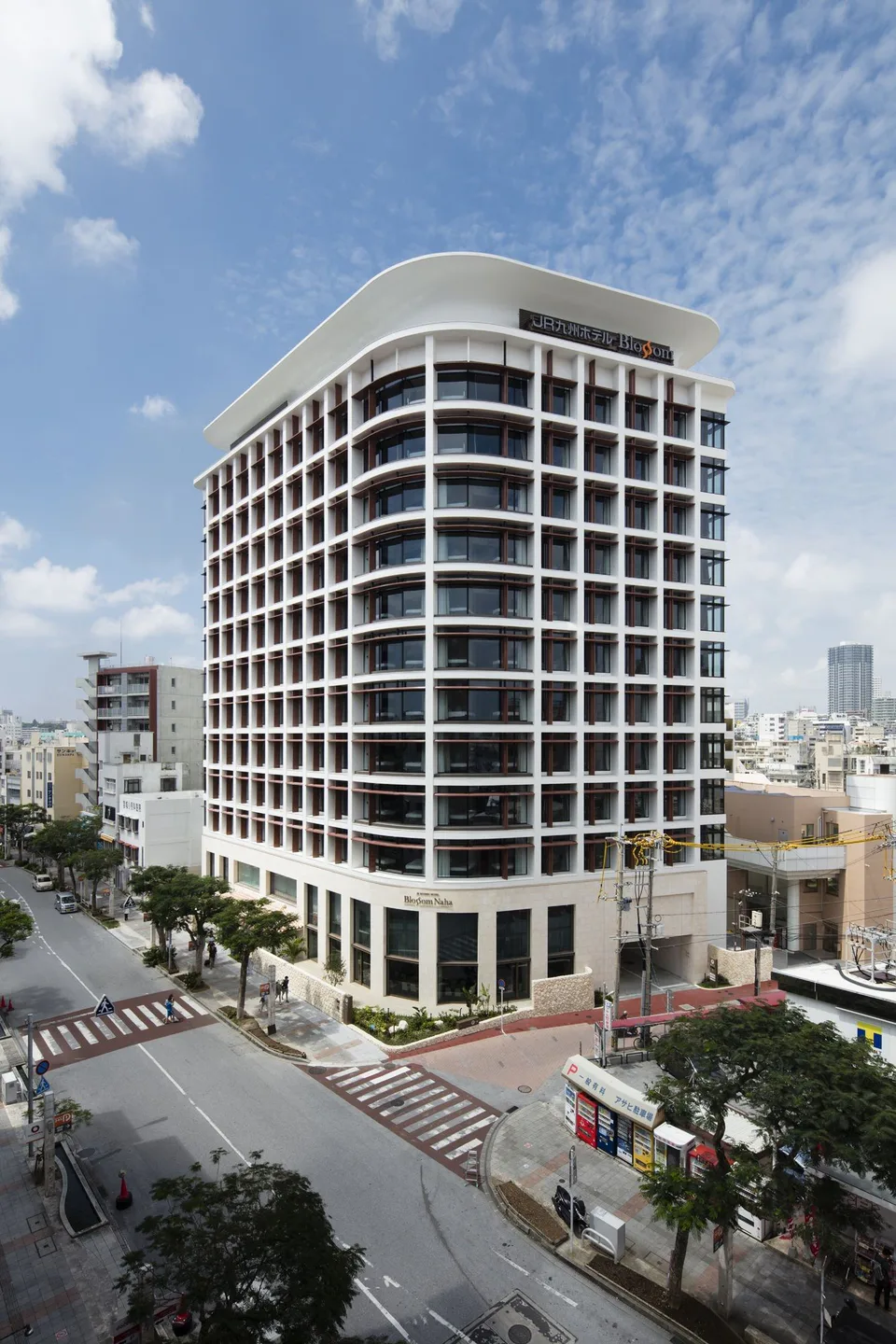
JR Kyushu Hotel Blossom Naha is a good example of the night-return test. Its current official access page places Kokusai Street about one minute away on foot and Yui Rail Miebashi Station about five minutes away. The same page lists the monorail ride from Naha Airport Station to Miebashi at about 14 minutes. For a solo traveler, the useful feature is not simply “near a station.” It is that dinner, shopping and the final walk back can sit in the same compact loop.
If your mornings repeatedly depend on Asahibashi and Naha Bus Terminal, the calculation changes. A station / bus-terminal base can save more daytime friction even if the evening walk is less convenient. That is why RIHGA Royal Gran vs JR Blossom is a better decision than ranking the two by prestige or room size.
The broader rule is simple: plot the location where you expect to finish at 9 p.m., not just the station you use at 9 a.m. Solo travelers feel the last transfer more because there is nobody else to split the taxi decision, watch luggage or persuade the group to keep walking.
Chatan | Stay there only if American Village is an evening habit, not a sightseeing checkbox
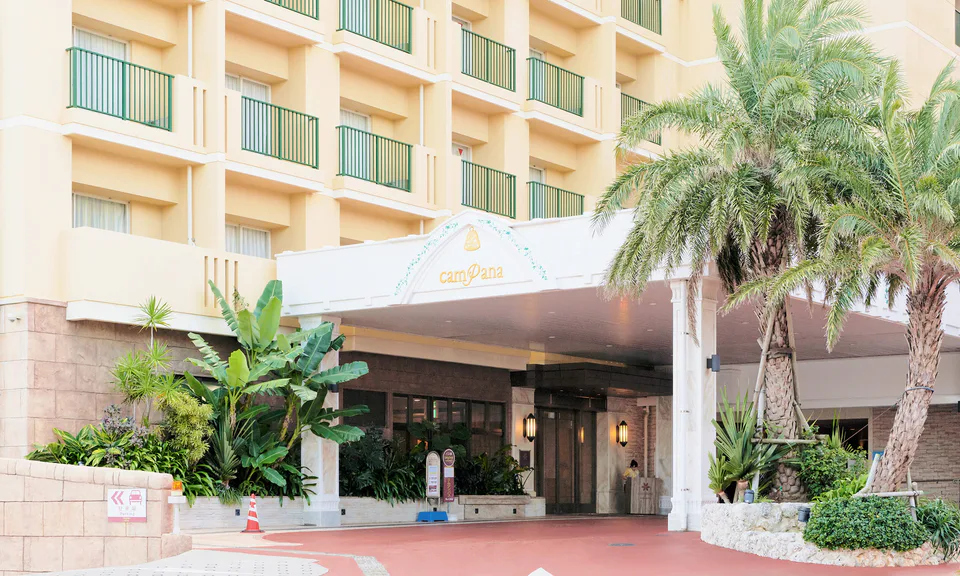
Chatan is possible without a car, but the transport pattern is less forgiving than central Naha. Vessel Hotel Campana Okinawa’s current access information lists airport limousine-bus access via the LeQu stop followed by roughly a five-minute walk, and route bus 120 to the Mihama American Village entrance followed by roughly a ten-minute walk. That is workable—but it is still a timetable-dependent trip rather than Naha’s dense monorail-city pattern.
Chatan earns the move when the district itself becomes part of the night. If your ideal evening is sunset, dinner, another walk through American Village and then a short walk to the room, you are paying to remove the final transport task. Use the Chatan hotel comparison only after deciding that at least two evenings genuinely belong there.
The case collapses when American Village is one daytime stop. Moving luggage to Chatan for one dinner and some neon photographs can add more transport work than it removes. In that itinerary, visit Chatan and keep sleeping where the rest of the trip works better.
Onna | A resort night only works if you protect resort hours
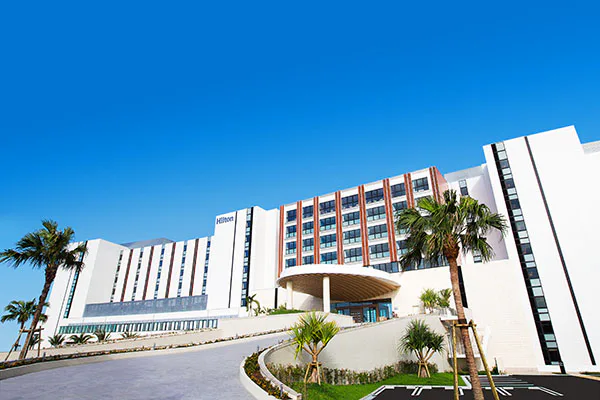
Onna is where solo travelers can overbuy most easily. Nobody is sharing the room premium, yet a pool, beach, ocean view and breakfast buffet do not generate value merely by existing. If the itinerary leaves the hotel at 07:30 and returns at 20:30, most of the resort premium is being consumed as a nicer bedroom.
Use a Resort Hours Test: for every expensive resort night, identify at least one meaningful block of time that belongs to the hotel—an afternoon by the pool, a slow breakfast plus beach morning, a spa / room reset, or an intentionally quiet evening. If you cannot find that block, compare a better-located or less expensive room instead.
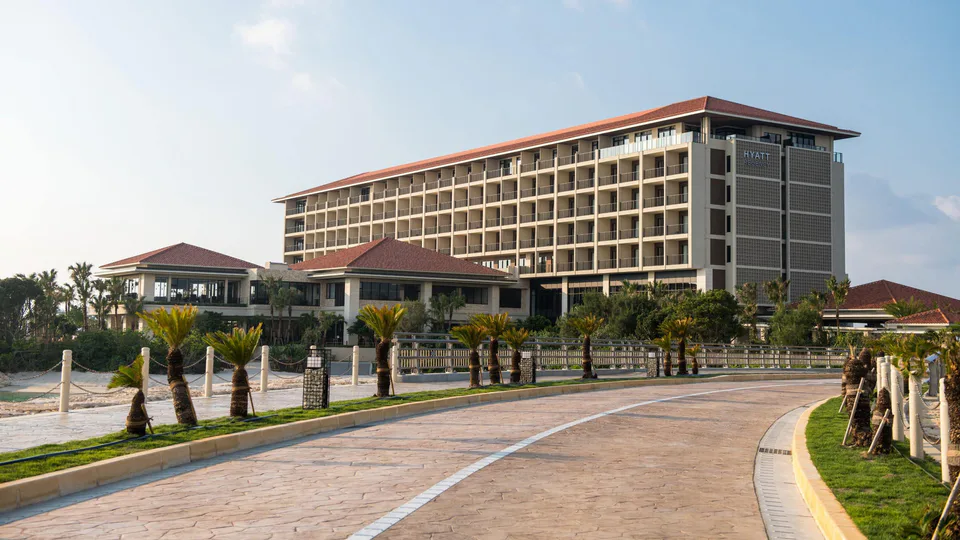
This is what guides such as Hyatt Regency Seragaki for two nights, the Onna resort comparison and Halekulani Okinawa room-location guide should solve. They are not reasons to upgrade automatically; they are ways to decide whether the resort itself deserves hours in your itinerary.
Car or no car | Count car-use days, not trip days
The solo answer is often neither “rent for the whole trip” nor “never rent.” First list the days where the car changes what you can realistically do. A Naha city day may not need it. A scattered north-coast day may benefit substantially. If only two or three days require driving, a partial-trip rental can avoid paying for a car that mainly sits outside the hotel.
The car still may be worth carrying alone when it buys back enough schedule control: two or three dispersed stops, an early start, flexible weather changes or a route that public transport would force you to simplify. But calculate the whole fixed-cost stack—rental, insurance, fuel, parking and tolls—rather than comparing only the headline daily rate. Use the Okinawa car-or-no-car guide for that decision before optimizing the hotel around the vehicle.
One Churaumi day usually does not justify a second base
Solo travelers carry less luggage than many families, but a hotel move still consumes checkout time, luggage handling, another check-in and a disrupted sightseeing day. One northern attraction is rarely enough reason by itself.
A second base begins to earn its place when it removes repeated backtracking or creates two useful northern mornings / evenings. If Churaumi, Motobu, Nakijin, Kouri or Yanbaru occupy two consecutive days, Nago or Motobu can become operationally useful. If the north is one day, staying in the same base can be simpler even if the map looks less elegant.
Solo Room Premium Test | Never divide a two-person room rate by two
Search with one adult from the beginning. Hotels and booking platforms can expose different room inventory, breakfast terms or occupancy pricing for one guest. The meaningful number is the total for one person under your dates and cancellation terms—not a double-occupancy rate divided mentally by two.
Do the same with room size. One traveler may already have enough usable space in a 20–25 m² room. An upgrade to 30–35 m² should add a function you can name: washer-dryer, better desk, separate bathing area, genuinely useful view, balcony, or a layout that changes how you spend hotel time. “More square metres” alone is weak value for someone using one bed and one suitcase.
Breakfast, lounges and pools | Count uses before buying the package
Solo travel makes optional hotel features easier to abandon. You can grab breakfast elsewhere, leave early, stay out for dinner or skip the lounge without negotiating with anyone. That means the booking decision should count expected uses.
If you will sit down for hotel breakfast once, do not automatically buy a four-night breakfast package. If you will use the pool on one afternoon, do not assume every resort night needs the highest room category. Mixing efficient city nights with one or two deliberately indulgent resort nights can be more rational than paying one premium for the entire trip.
Arrival and departure | Do not turn independence into unnecessary transfer difficulty
Traveling alone does not make a late-night or dawn transfer easier. You are still carrying all your own luggage, watching the time and solving disruptions alone. For a very late arrival or early departure, use the late-arrival / early-flight hotel guide rather than forcing another long cross-island transfer.
For the final night, decide from flight time, rental-car return and the last day’s itinerary. Onna vs Naha for the last night is useful precisely because “closer to the airport” is not automatically worth another hotel move.
Three NO-GOs for solo hotel planning
Do not buy the cheapest room if it creates a repeated last-mile problem. One extra transfer every night can erase the comfort of the lower rate.
Do not buy four resort nights for an imaginary relaxed version of yourself. If the itinerary already fills every daylight hour, the pool and beach photographs are not your real trip.
Do not refuse a rental car on principle. If two or three days contain dispersed stops that become awkward by public transport, rent for those days rather than redesigning the whole itinerary around avoiding the car.
Before payment | Answer these eight questions
1. Where will I finish dinner on most nights? 2. How hard is the final trip back to the room after 21:00? 3. Which exact days truly need a car? 4. Do at least two evenings genuinely belong to American Village? 5. How many protected hours will I spend inside an Onna resort? 6. Are northern sights one day or a two-day block? 7. Does the first / final flight make luggage transfer fragile? 8. Which room upgrade changes something I will actually do?
If those answers are still vague, do not solve the uncertainty with a bigger room or a more famous hotel. Keep the base and transport structure flexible first.
Final verdict | Naha is the default; Chatan and Onna need a reason to beat it
For a first solo Okinawa trip without a full-time rental car, I would start in Naha because it gives the strongest 4 p.m. freedom: more ways to change the day without rebuilding the whole trip. Choose Chatan when American Village is an evening habit. Choose Onna when resort hours are explicitly protected. Add Nago or Motobu only when a northern block removes repeated backtracking.
The solo advantage is not that you should spend less. It is that you can spend more selectively. Pay for the location, car days, resort hours or room feature that changes your own trip—and cut the conveniences designed for a group you are not traveling with.
If you still have not settled on the base, return to the Okinawa hotel decision guide and re-run the choice by night-return location, driving frequency and the final day.
Where to Stay in Furano: Furano Station, Nakafurano, Asahikawa or Sapporo?
Where to Stay in Osaka for Couples: Choose Your Evening Before the Hotel
Sapporo Shopping Hotels: Stay Where You Can Drop Your Bags, Not Just Where the Shops Are
Where to Stay in Kyoto: Kyoto Station, Kawaramachi or Higashiyama?
Where to Stay in Tokyo With Parents: I’d Eliminate These “Convenient” Hotels First
Sources
Facts rechecked on August 27, 2026. Transport routes, hotel access and timetables can change; recheck the exact route for your travel dates before relying on it.
Vessel Hotel Campana Okinawa | Official airport limousine and route-bus access